
Second dog planning
Introducing a new dog consultation: a plan for the first meeting and the first weeks
Most trouble between two dogs in a new household starts early: a rushed hello in the living room, two food bowls a foot apart, one couch and two dogs who both want the corner. Planning the first meeting is far easier than repairing a relationship that started badly.
- $99per session
- Phone or Zoomone-on-one
- Anywherein the US
Who books this
Book it when a second dog, a foster or a partner's dog is about to move in.
Adding a dog changes the life of the dog you already have. Sometimes that is welcome, and sometimes your resident dog has spent ten years as the only one and has opinions about it. This consultation is for any household where two dogs who do not know each other are about to share floors, people and food.
We see a few situations again and again, and each needs a slightly different plan. Tell us which one is yours and the call starts there.
- A puppy joining a 12-year-old resident dog
- Adopting a second adult dog from a rescue
- Moving in with a partner who has a dog
- Fostering dogs in a home with a resident dog
- A family member moving back home with their dog
The first meeting
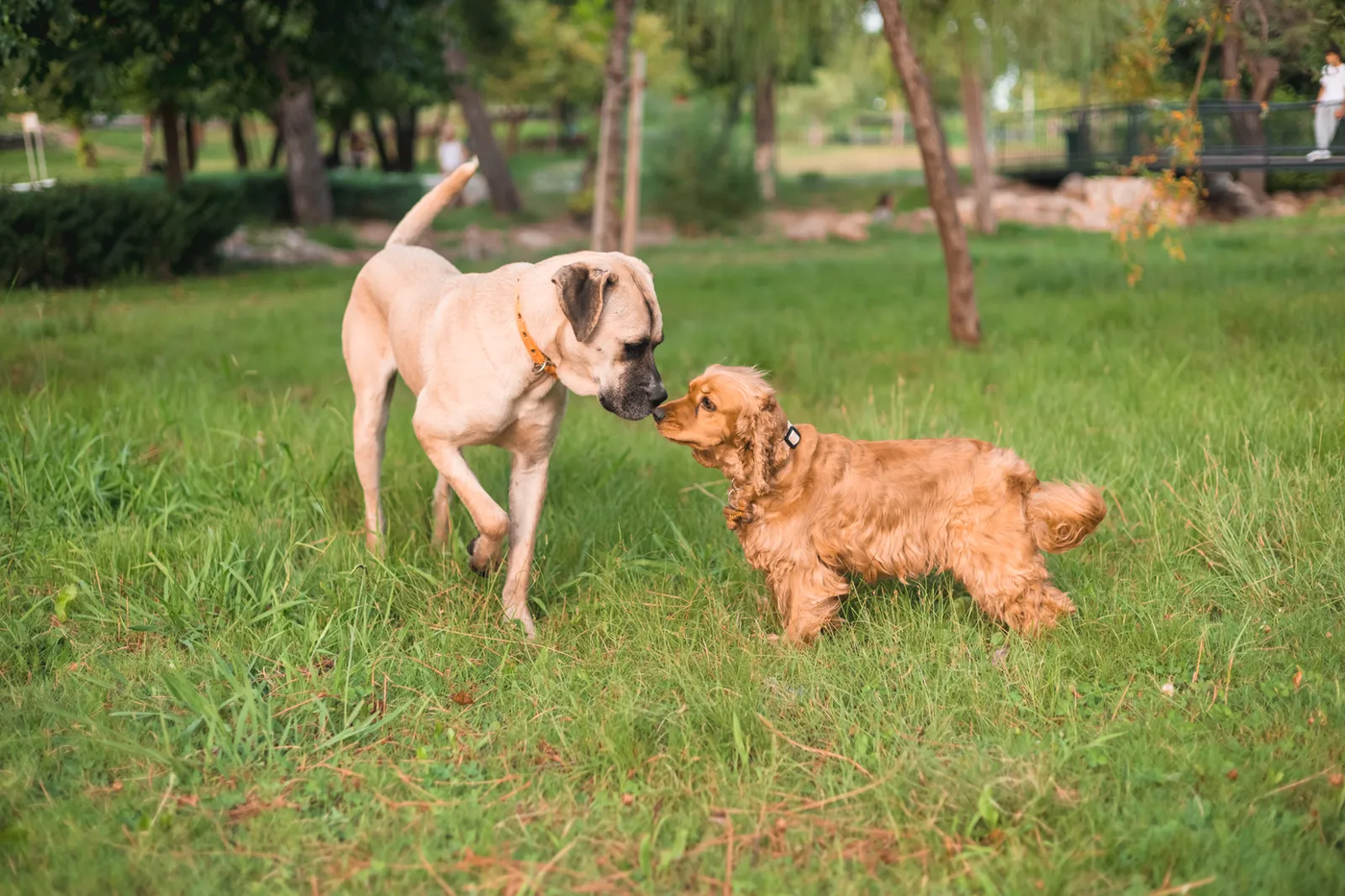
The first greeting happens outside, on leash, walking side by side.
Two dogs meeting face to face in a doorway is about the hardest introduction there is. A parallel walk on neutral ground lets them read each other at a comfortable distance first. This is the outline our head trainer adapts to your two dogs during the session.
- Pick neutral ground neither dog has claimed: a quiet street or a park at an off-hour, never your yard or driveway.
- Bring two calm handlers, each with one dog on a loose six-foot leash and treats in a pocket.
- Walk in the same direction with enough space between the dogs that both can still sniff the ground and take food.
- Close the gap a little at a time while both bodies stay loose, and let each dog sniff where the other has been first.
- Allow a brief greeting of a few seconds, then call both dogs away cheerfully and keep walking.
- Walk home together and go inside with the resident dog first, leashes still on, then drop them only when both are relaxed.

Reading the dogs
We teach you which signals mean continue and which mean stop.
Good signs are boring: loose, wiggly bodies, curved approaches, sniffing the ground, play bows that are returned, and dogs who move away from each other on their own and come back. Warning signs are quieter than people expect. A sudden freeze, a hard stare, a closed mouth after panting, a tail held high and stiff, hackles raised, or one dog trying to hide behind your legs all mean add distance now.
On Zoom we can look at a clip of the first meeting, or of the two dogs at home, and point out what you might have missed in the moment. Many owners find this the most useful part of the session, because after they see it once they start spotting the early signals on their own.
The first weeks
At home, the first weeks are about management, not friendship.
Owners want the dogs to be best friends by the weekend. The dogs need time, structure and fewer chances to argue. Most fights in new households start over food, chews, toys, doorways and resting spots, so the plan removes those flashpoints before they cause trouble and adds privileges back one at a time.
The resident dog keeps his routine, his bed and his walks. The newcomer gets a crate or gated room of its own for downtime. Time together starts short and supervised, often right after a shared walk when both dogs are tired.
- Separate feeding spots, out of sight of each other
- No bones, chews or favorite toys left loose at first
- Baby gates or crates for rest time
- Shared walks before shared free time
- Couch and bed access earned back slowly
Limits and booking
If either dog has fought or bitten, meet a trainer in person first.
A virtual plan coaches you; nobody from our team is standing between the dogs. If either dog has injured another dog, has a history of fights, or guards food so hard that you cannot pick up a bowl, the introduction should happen with an in-person professional. If your older dog has stiff joints, ask your veterinarian about pain before the puppy arrives, because a sore dog who gets jumped on may snap. Houston-area families can book in-person private lessons with our team.
To plan your introduction, request a $99 session on our virtual dog training page. Have both dogs' ages, sizes, histories with other dogs and the arrival date ready, and on Zoom we can walk through the rooms the dogs will share.
The programs
Plan the introduction before the dogs meet.
The $99 virtual session covers the first meeting and the first weeks. In-person lessons suit pairs with a history of fighting.
$99per session
Phone or Zoom, anywhere in the US
Virtual consultation with our head trainer
One-on-one guidance for behavior, a new dog, introductions or a new puppy.
Should the dogs meet before adoption day?
If the rescue or breeder allows it, yes. A calm parallel walk on neutral ground before you commit tells you a great deal about how the two dogs are likely to get along. If a pre-meeting is not possible, plan the first walk for arrival day before the new dog ever enters your house.
How long until two dogs get along?
It varies widely. Some pairs relax around each other within days; others need several weeks or a few months of careful management before they share space freely. Age, temperament and how well the first weeks go make the biggest difference. We help you judge progress by behavior rather than by the calendar.
What if my older dog growls at the new dog?
A growl is communication, and punishing it can remove the warning without removing the feeling. Often the older dog is asking a pushy newcomer for space. We look at when the growl happens and help you manage the situations that cause it so the older dog does not feel the need to escalate.
How is this different from the new dog consultation?
The new dog consultation helps you choose a breed or dog before you bring one home. This session assumes you have chosen, or are close, and focuses on the meeting, the household setup and the relationship between your current dog and the new one. Both are $99 by phone or Zoom.
Can you help when two dogs already live together and fight?
If the fights have caused injuries, start with an in-person professional so someone can assess both dogs and keep everyone safe. If the problems are tension, stiff posturing and the occasional scuffle without injury, a virtual session can map the triggers and a management plan to reduce them.
Virtual session, $99
Plan the first meeting before it happens.
Book a $99 virtual session by phone or Zoom from anywhere in the US and get a plan for the greeting, the house setup and the first weeks.