
Puppy zone setup
How to set up a puppy pen and crate area
A pen and crate area gives a new puppy a safe place to be when you cannot watch every second, which in the first weeks is most of the day. Set it up well and it makes potty training, chewing and sleep easier for everyone.
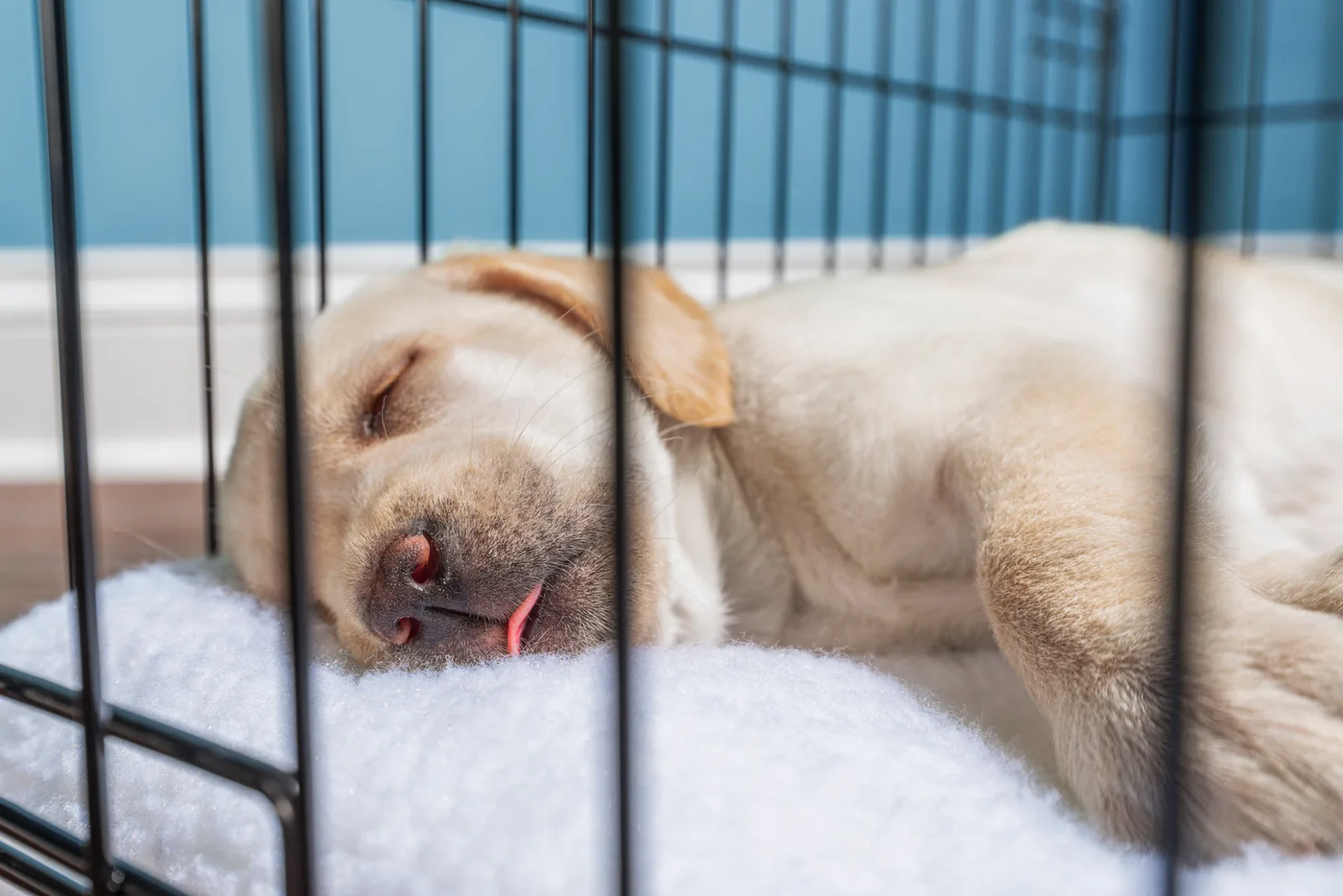
Location
Put the puppy area where life happens, not in a back room.
Puppies settle better when they can see and hear the family. A corner of the kitchen or living room usually works best, away from the front door and the busiest walkway. A laundry room or garage feels isolating to a young puppy and often leads to more crying, not less.
Choose a spot with easy-to-clean floors, out of direct sun and away from heating or cooling vents. In an apartment, a corner of the main room near the door you use for potty trips saves time on those urgent middle-of-the-night runs. Many families also keep a second crate by the bed for the first weeks so the puppy sleeps near someone.
- A corner of a room the family uses
- Easy-to-clean floor
- Away from the front door, vents and direct sun
- Near the door you use for potty trips

Build it
Set up the pen and crate in six steps.
Do this a few days before your puppy arrives, so you are not assembling a pen while a puppy chews the box. The layout below separates sleeping, playing and, if you use one, potty areas, because most puppies avoid soiling where they sleep.
- Set up an exercise pen about four by four feet around your chosen corner, with the panels secured so they cannot fold or tip.
- Place the crate inside the pen against the wall, door open, sized so the puppy can stand, turn and lie flat, using a divider if it is a crate for the adult size.
- Put a washable bed or towel in the crate and a spill-proof water bowl in the pen.
- If your puppy cannot yet get outside often enough, put a potty pad or grass tray at the end of the pen farthest from the crate.
- Add two or three safe chews and one toy, and rotate them daily rather than filling the pen.
- Check the space from puppy height: unplug or cover cords, move plants, and remove anything within reach through the pen panels.
Puppy-proofing
Puppy-proof the area from the floor up.
Get down on your knees and look around. Puppies chew cords, baseboards, rug edges, shoes and anything that dangles. Move houseplants out of reach, because some common ones are toxic to dogs; check any plant you keep with the ASPCA's poison control resources. Keep cleaning products, medications and trash cans well away from the pen.
Watch what goes in the crate as well. Some puppies shred and swallow bedding, and that can cause a blockage. If your puppy chews his bed, swap it for a firm mat or nothing for a while. Collars with tags can catch on crate wire, so many owners remove them while the puppy is crated.
- Cords covered, unplugged or moved
- Plants, cleaners and medications out of reach
- No shreddable bedding for a puppy who chews it
- Collars with tags removed in the crate
Using it
Use the pen for safe downtime and the crate for sleep.
The pen is where your puppy goes when you cannot supervise: while you shower, cook or take a call. The crate inside is for naps and nights. Feed meals in the crate with the door open at first, toss treats in during the day, and let the puppy choose it often. That makes the crate a good place before you ever close the door.
Follow a simple rhythm: out to potty, a few minutes of play or training, then back in the pen for a nap. Puppies need a lot of sleep, and an overtired puppy is the one who bites hands and ankles. Our crate training guide for puppies covers building time with the door closed.
Getting a plan
Get a tailored routine if your setup or schedule is complicated.
Every home is different: a third-floor apartment with a long walk to grass, a house with a resident cat, two working parents and a toddler. If your layout or schedule makes the standard setup hard, a $99 virtual session by phone or Zoom lets our team look at your space on camera and build a routine around it.
A virtual session covers setup, routines and habits; it is not hands-on training of your puppy. Health questions, such as diarrhea, not eating or a puppy who seems lethargic, go to your vet. Families near Cypress, Texas can also book the Puppy Development Bundle in person.
The programs
Help setting up for your puppy.
A $99 virtual session by phone or Zoom anywhere in the US, or in-person puppy sessions near Cypress, Texas.
$99per session
Phone or Zoom, anywhere in the US
Virtual consultation with our head trainer
One-on-one guidance for behavior, a new dog, introductions or a new puppy.
Should the crate go inside the puppy pen?
Yes, for most homes. A crate inside a pen gives your puppy a den for sleeping and a small area for play, water and, if needed, a potty pad. It also lets you leave the crate door open during the day so the puppy can choose to rest there.
How big should a puppy pen be?
About four by four feet suits most puppies. That is enough room for a crate at one end and a play or potty area at the other, without so much space that the puppy uses one corner as a bathroom and ignores the rest. Larger breeds may need a bit more.
Where should the puppy sleep the first night?
Near a person. Many families keep a second crate by the bed for the first weeks, which helps the puppy settle and lets you hear when he needs a potty trip. The pen and day crate stay in the family room for daytime naps.
Should I put a potty pad in the pen?
Only if your puppy cannot get outside often enough, for example in a high-rise apartment. Put it at the far end from the crate. If you can take your puppy out regularly, skipping the pad usually makes outdoor potty training faster and clearer.
Can a virtual session help me set up for a new puppy?
Yes. In a $99 session by phone or Zoom, our team can look at your space on camera, help you choose the location and layout, and build a daily routine around your schedule. Medical questions about your puppy go to your veterinarian.
Virtual session, $99
Set up the puppy area before day one.
Book a $99 virtual session by phone or Zoom. Our team looks at your space and schedule and helps you build a routine that works from the first night.