
Before arrival day
How to prepare your home for a new dog
A dog does not need a perfect house on day one. It needs a house where the wrong choices are hard to make and the right spots are obvious. An afternoon of preparation saves weeks of chewed cords and accidents.
Zones first
Decide where the dog sleeps, eats, rests and toilets before you shop.
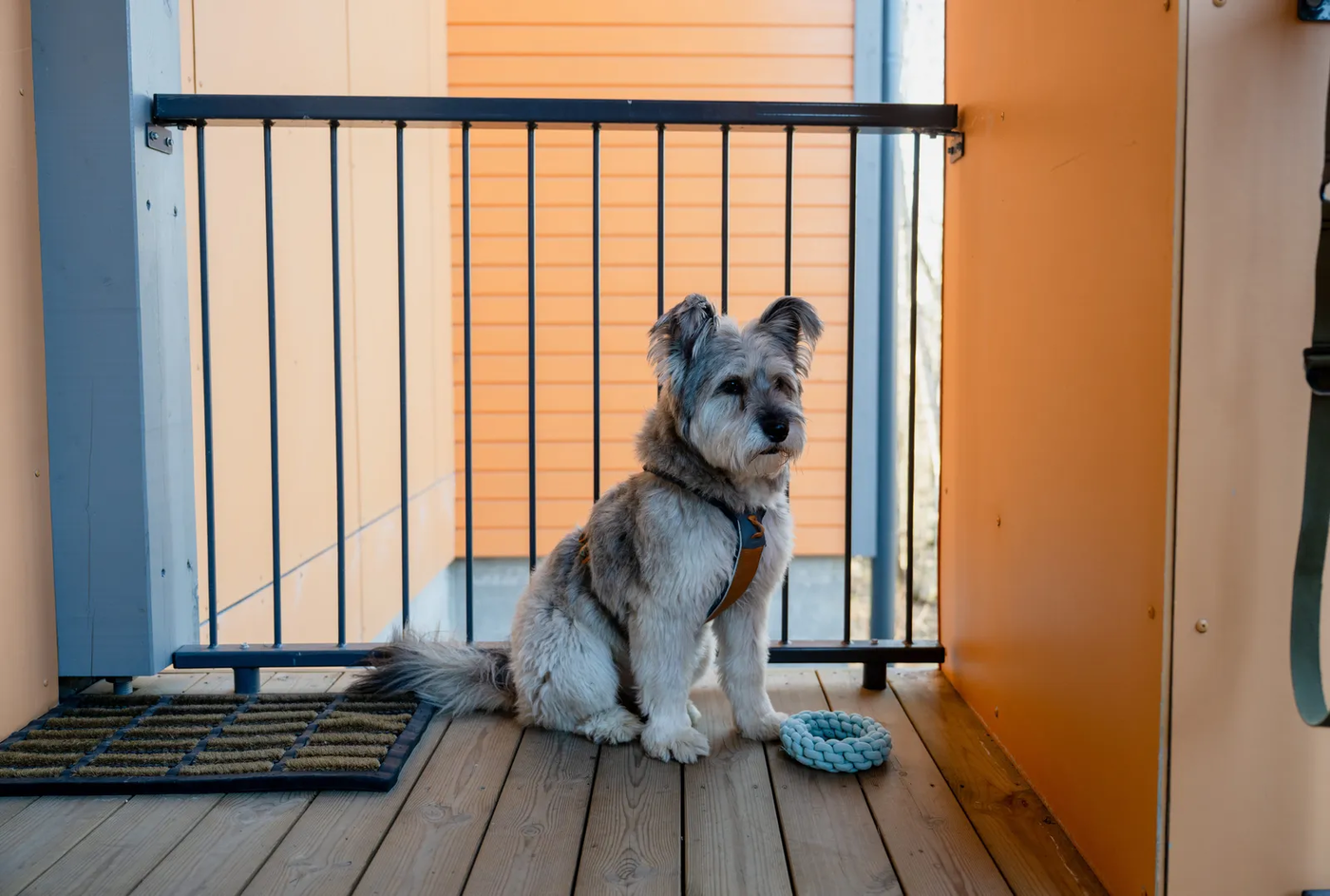
Picture the dog's day and give each part a fixed place. A crate or pen near where the family spends evenings works better than a laundry room, because a new dog settles faster near people. Choose a feeding spot that is out of the walkway and away from other pets. Pick one potty spot outside and plan to take the dog there every time.
Then decide which rooms are closed for now. Bedrooms with shoes on the floor, a home office full of cables and stairs for a puppy or a senior are good candidates for a baby gate. You can open rooms one at a time as the dog earns the freedom.
Dog-height sweep
Get down on your knees and walk every room at the dog's eye level.
You will be surprised what is in reach: charger cables behind the couch, a handbag with sugar-free gum on a chair, cleaning sprays under an open sink, kids' small toys under the sofa. Gum and candy sweetened with xylitol, grapes and raisins, chocolate, onions, many human medications and rodent bait are all dangerous to dogs. Store them high or behind a latch.
Keep the ASPCA Animal Poison Control number and your nearest emergency vet saved in your phone before the dog arrives. If you think your dog swallowed something harmful, call right away rather than waiting for symptoms.
- Kitchen: lidded trash can, food off counters, latched lower cabinets
- Bathroom: medications and razors up high, toilet lid down
- Living room: cords tucked or covered, small toys picked up
- Garage: antifreeze, fertilizer and rodent bait locked away
- Bedrooms: shoes, socks and laundry off the floor
Yard, gate and pool
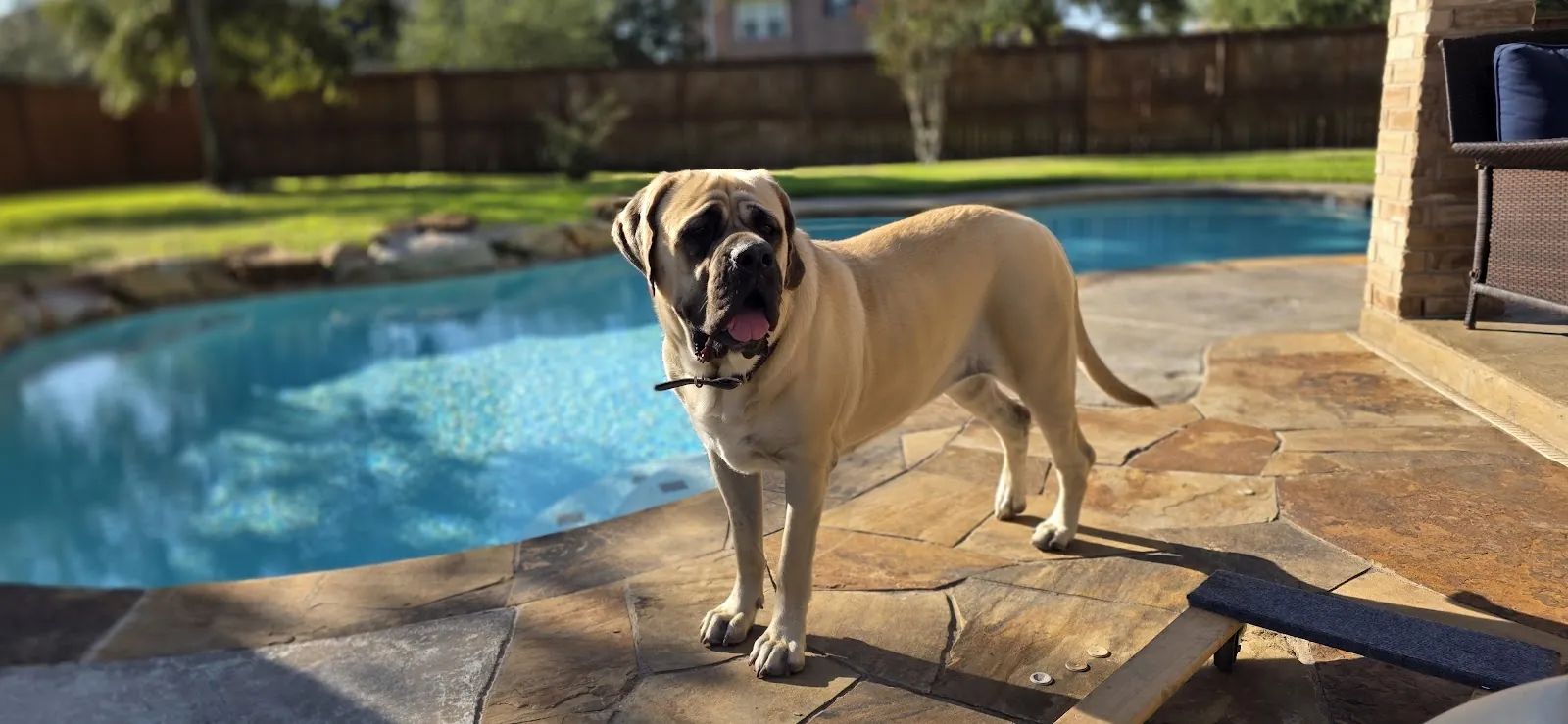
Walk the fence line and the pool edge as if you were trying to escape.
Check for gaps under the fence, loose boards, gates that do not latch on their own and anything a dog could climb, such as a woodpile or an air conditioning unit next to the fence. Many new dogs bolt in the first weeks, before they know where home is, so a secure yard and a properly fitted collar with an ID tag matter from the first hour.
If you have a pool, never assume a dog can get out. Fence it off, or teach the dog where the steps are by guiding it in and out on a leash many times before it ever has the yard alone. A dog in a pool with no way out can tire quickly.
The shopping list
Buy the basics that make the first week work, and wait on the rest.
Pet stores sell far more than a new dog needs. Start with the items you will use every day and add the rest once you know the dog, its chewing style and its coat.
- A crate or pen sized for the dog, plus washable bedding
- A flat collar with an ID tag and a six-foot leash
- The food the dog already eats, to switch slowly later
- Two bowls, poop bags, enzyme cleaner for accidents
- Two or three sturdy chews and a baby gate or two
The last 48 hours
Use the two days before arrival to set the routine, not just the furniture.
Your preparation is finished when the whole household knows the plan, not when the crate is built.
- Assemble the crate or pen and put the bedding, a chew and a water bowl in place.
- Fit the gates and test them with a person pushing on them.
- Write a simple daily schedule: wake, potty, meals, walks, rest, bedtime.
- Agree on the house rules and the cue words everyone will use.
- Book a vet appointment for the first week and save the emergency vet's number.
- Plan a quiet first weekend at home, with no parties and few visitors.
Tailored help
Want the set-up checked for your house and your dog?
In a $99 virtual session by phone or Zoom, you can walk our head trainer through your floor plan, the yard and the dog you are bringing home, from a young puppy to a retired racer. We will suggest where the crate goes, which rooms to close and how the first week should run. It works for families anywhere in the US.
The programs
Have the set-up checked by a trainer.
A $99 one-on-one virtual session by phone or Zoom for families anywhere in the US getting ready for a new dog.
$99per session
Phone or Zoom, anywhere in the US
Virtual consultation with our head trainer
One-on-one guidance for behavior, a new dog, introductions or a new puppy.
Where should the crate go in the house?
In or near the room where the family spends its evenings, against a wall and out of the main walkway. Most new dogs settle faster when they can see and hear people. Some families move a second crate or the same crate into the bedroom at night for the first weeks, which helps a lot with puppies.
Do I need to puppy-proof for an adult dog?
Yes, at least for the first weeks. A new adult dog does not know your rules yet, and stress can bring out chewing and counter surfing even in a well-mannered dog. Run the same sweep, then relax it gradually once you see how the dog behaves in your home.
What houseplants are toxic to dogs?
Several common houseplants and garden plants can make dogs sick, including sago palms, which are especially dangerous. The ASPCA maintains a searchable list of toxic and non-toxic plants. Check each plant you own against it, move doubtful ones out of reach, and call poison control or your vet if your dog chews one.
Should I buy lots of toys before the dog arrives?
No. Buy two or three sturdy chews and wait. You do not know yet whether your dog shreds soft toys, ignores balls or swallows pieces. Too many toys on the floor also makes it harder to teach the difference between the dog's things and your things.
How do I prepare if I live in an apartment?
Plan the potty route first: the elevator or stairs, the nearest patch of grass and what you will do at night or in bad weather. Keep a leash and bags by the door. Practice calm elevator and hallway manners from the first day, since neighbors and other dogs will meet you there constantly.
Virtual session, $99
Getting the house ready for a new dog?
Talk it through in a $99 virtual session by phone or Zoom. Our team will help you place the crate, close the right rooms and plan the first week.