
Dogs and children
How to introduce a new dog to kids
Children move fast, make noise and reach for faces, which is everything a nervous dog finds hard. The introduction is less about the dog liking the kids on day one and more about setting rules that keep everyone safe for years.
Rules before the dog arrives
Teach the kids the rules before the dog walks in, not after something goes wrong.
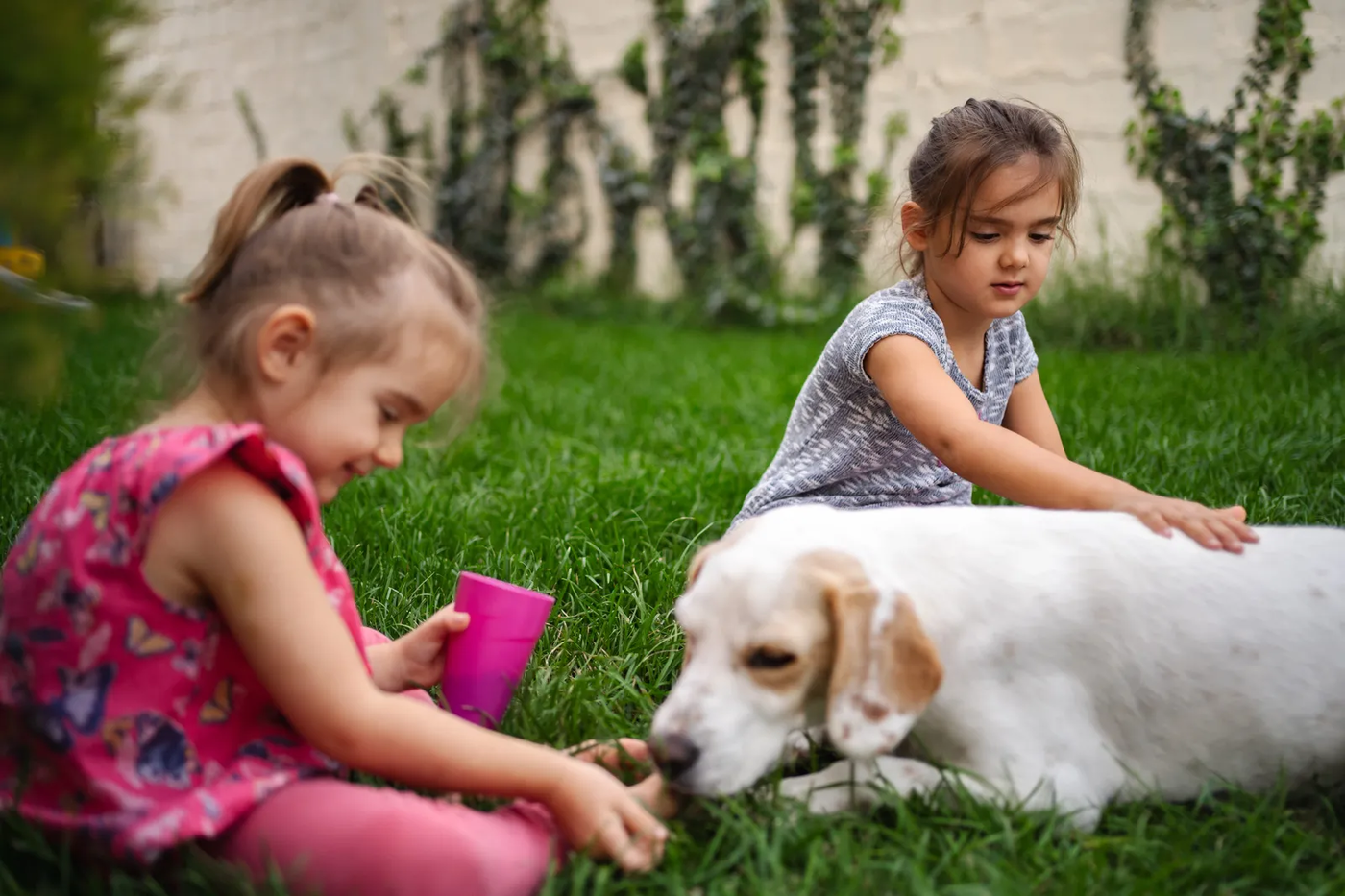
Sit down as a family a few days before the dog comes home and agree on the rules. Keep them short, and have the children say them back to you. Practice with a stuffed animal: show them how to let a dog sniff a closed fist, how to stroke the side of the neck, and how to stand still and quiet if a dog jumps.
Give each child a job they can actually do, such as tossing a treat on the floor when the dog sits or filling the water bowl with a parent. Jobs make the dog someone they help rather than a toy.
- No hugging, kissing or lying on the dog
- No reaching over the dog's head
- Leave the dog alone when it is eating, sleeping or in its crate
- If the dog jumps, freeze like a tree and fold your arms
- Ask a grown-up before taking anything from the dog's mouth
The first meeting
Set up the first meeting so the dog chooses to come to the children.
Walk the dog first. Then bring it into a calm room on a leash held by an adult, with the children already seated. The dog decides whether to approach. Kids stay seated the whole time, which removes the running and grabbing that worries a new dog.
- Seat the children on the floor or a couch with a few small treats each, voices quiet.
- Bring the dog in on a loose leash and let it look around the room before it approaches anyone.
- Have each child toss a treat on the floor near them rather than holding it out at face level.
- If the dog comes close, let it sniff a closed hand, then one child strokes the side of its neck for three seconds and stops.
- Pause and watch. If the dog leans in for more, repeat. If it moves away, let it go.
- End after five to ten minutes with the dog going to its crate or bed to rest.
Age matters
A toddler at eye level and a ten-year-old who can help train need different plans.
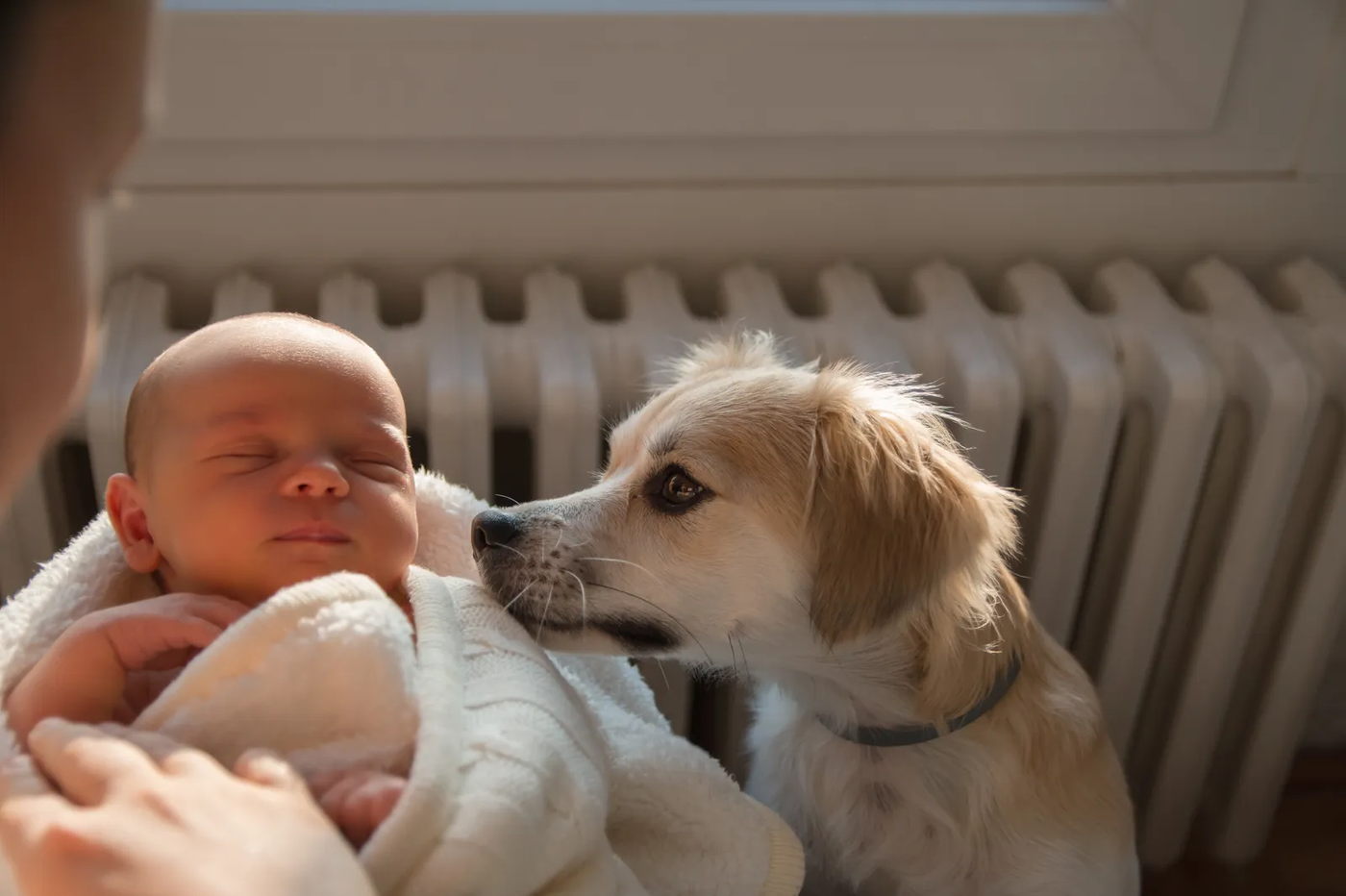
Toddlers are the highest-risk group because their faces are at the dog's height and they cannot follow rules reliably. Keep them separated by a gate or a playpen unless an adult is actively watching, not just in the room. Never leave a toddler and a dog alone together, even for a minute while you answer the door.
Children from about seven upward can learn to read the dog and help with simple training under supervision. Teenagers can walk a calm dog and practice cues. Match each child's role to what they can do consistently, and still keep the dog's rest area off limits to all of them.
Stress signals
Teach parents and older kids to spot the signals a dog gives before it growls.
Dogs nearly always warn before they bite, but the early warnings are quiet. Lip licking with no food around, yawning when not tired, showing the whites of the eyes, ears pinned back, turning the head away or freezing all mean the dog wants space. A growl comes later, and it is a gift: it tells you to stop.
When you see these signs, calmly call the child away and let the dog go to its spot. Never punish a growl. Instead, look at what led to it and change the set-up, such as more distance, less handling or a gate.
- Lip licking or yawning out of context
- Whites of the eyes showing
- Freezing or stiffening when touched
- Moving away or hiding under furniture
Getting a plan
Talk to a trainer if the dog is nervous, mouthy or guards anything.
A $99 virtual session by phone or Zoom helps families anywhere in the US plan this around their own children and dog: the house layout, ages, the dog's history and the routine. If the dog has a bite history, or growls when children approach, we will tell you plainly that in-person help is the right next step.
The programs
A plan for your kids and your dog.
A $99 one-on-one session by phone or Zoom, available anywhere in the US.
$99per session
Phone or Zoom, anywhere in the US
Virtual consultation with our head trainer
One-on-one guidance for behavior, a new dog, introductions or a new puppy.
Should the kids be at home when the new dog arrives?
Yes, but calm and seated. Excited children at the door create the very rush you want to avoid. Have them wait in the living room, let the dog explore with an adult first, then run the seated introduction. Keep the first day quiet, with no visiting friends or neighbors.
How long should I supervise my kids with the new dog?
Every interaction for at least the first several weeks, and with toddlers, always. Supervision means an adult watching and close enough to step in, not cooking dinner in the next room. When you cannot watch, use a gate, a crate or a closed door between them.
What if the dog jumps on the kids?
Teach the kids to freeze, fold their arms and look away, which removes the reward. Keep the dog on a leash or drag line indoors at first so an adult can guide it off, and reward the dog when all four paws are on the floor. Most jumping is excitement and improves with consistency.
Is it okay for my child to hug the dog?
Discourage it. Many dogs tolerate hugs without enjoying them, and a hug puts a child's face right next to a dog's mouth. Teach a gentle stroke on the side of the neck or chest instead, then stop and see whether the dog asks for more.
What breed is best for a family with young children?
The individual dog's temperament matters more than the breed. Look for a dog that is relaxed with handling, recovers quickly from noise and seeks people out, and meet it with your children before you commit. A breed guide is a starting point, but meeting the actual dog tells you far more.
Virtual session, $99
Bringing a dog home to young kids?
A $99 virtual session by phone or Zoom with our team helps you set the rules, the layout and the first-week routine for your own children and dog.