
Expecting a baby
Dog and baby consultation: preparing your dog before the baby arrives
Babies change everything about a dog's world at once: the schedule, the rules, the attention, the noises and the smells. Dogs cope far better when those changes arrive gradually over months instead of all on the day you walk in with a car seat.
- $99per session
- Phone or Zoomone-on-one
- Anywherein the US
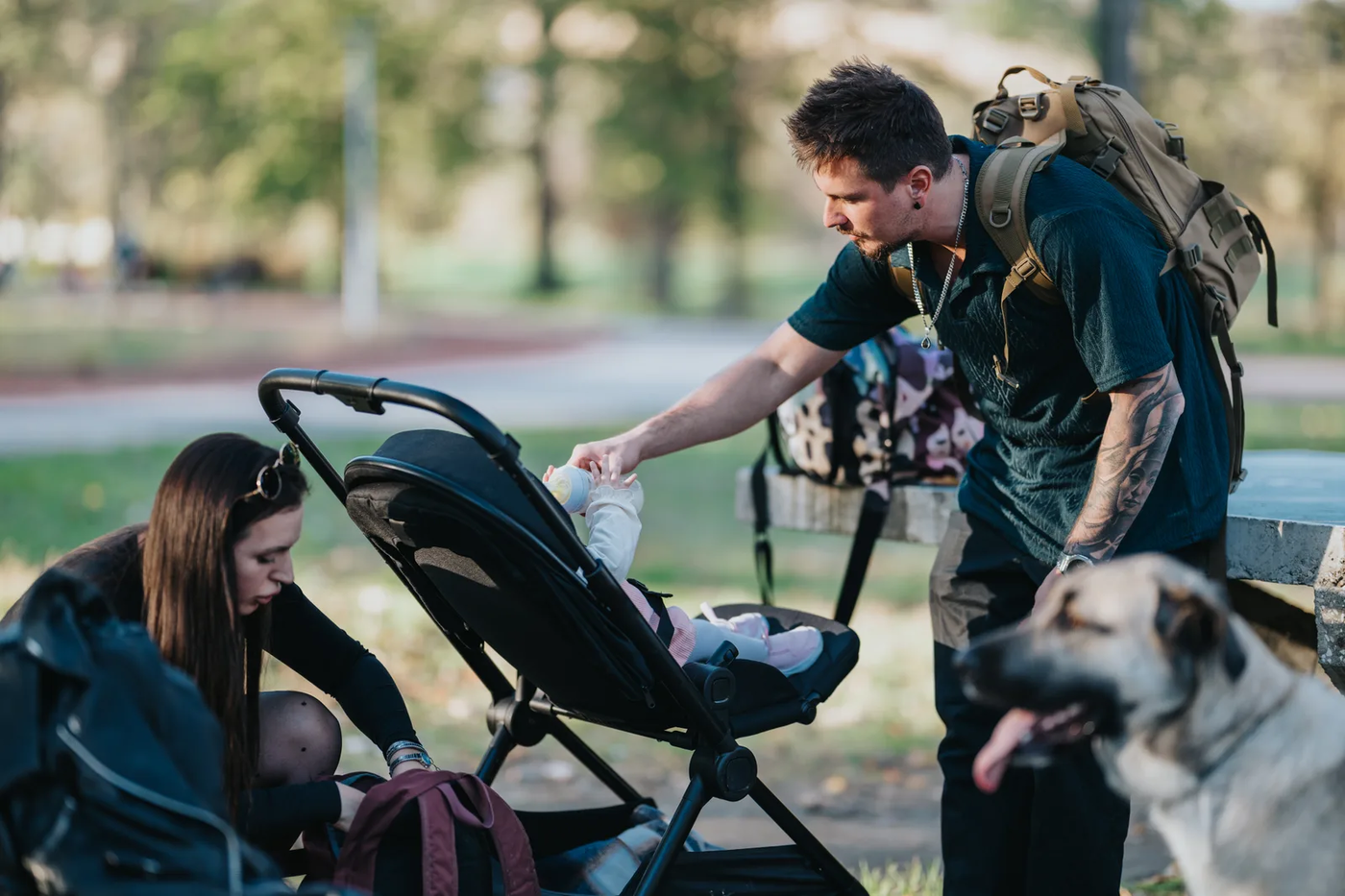
When to start
Start months before the due date, while you still have time and sleep.
The ideal time to book is the second trimester. That leaves room to adjust the dog's routine gradually, polish a few cues and set up the nursery rules before life gets busy. If the baby is due next month, the session still helps; the plan simply prioritizes the changes that matter most.
It is also worth booking if the baby is already home and something feels off. A dog who suddenly hides, steals baby items, barks at the bassinet or gets pushy when the baby is fed is telling you the transition is hard. Those are fixable signs, and they are easier to address early.
Change rules early
Change the dog's routine before the baby changes it for you.
If the dog will lose access to the couch, the bed or the nursery, make those changes now. When the new rule arrives with the baby, the dog links the loss to the baby. When it arrives months earlier, it is just how the house works. The same goes for walk and feeding times: shift them toward the schedule you expect to keep with a newborn.
This is also the time to sharpen a few cues that matter with a baby in your arms: a solid place on a bed, a reliable leave it for dropped items, waiting at doors and walking nicely beside a stroller. We pick the handful that fit your dog and your house.
- Nursery access decided and practiced now
- Couch and bed rules settled well before the due date
- Walk and meal times moved toward the new schedule
- Place, leave it and door waits solid one-handed
Practice ahead
Rehearse the baby before the baby is real.
Dogs handle new things best when they meet them a piece at a time. The practice plan below introduces the sights, sounds and routines of a baby while the house is still calm. Our head trainer adjusts the order and the pace to your dog during the session.
- Set up the crib, swing and changing table early and let your dog investigate them calmly on leash.
- Play recorded baby crying at a very low volume during meals or play, raising the volume slowly over days.
- Walk your dog beside an empty stroller until he holds a loose leash at its side.
- Carry a doll in a blanket while your dog holds place, and practice sitting on the feeding chair with the dog on his bed.
- Install a baby gate at the nursery and reward your dog for settling on the other side of it.
- Before the homecoming, bring home a blanket the baby has used so the new smell is familiar.
The homecoming
The first introduction is calm, brief and on your dog's terms.
Let the parent who has been away greet the dog first without the baby, so the excitement of the reunion is over before the baby comes in. Then bring the baby in with the dog on leash and a second adult handling him. Your dog can sniff from a polite distance while you reward calm. There is no need to push the dog closer, and no need to hold the baby out to him.
In the weeks that follow, good things for the dog should happen when the baby is around: a chew during feeding, a walk with the stroller, attention while the baby is awake. Boring alone time while the baby naps teaches the opposite lesson.
- Greet the dog first, without the baby
- Dog on leash with a second adult handling
- Sniffing from a polite distance, rewarded for calm
- Good things for the dog when the baby is awake
Supervision and limits
Supervision never ends, and some dogs need in-person help first.
The riskiest stage is often not the newborn but the crawler and toddler, whose face sits at the dog's eye level and whose hands grab ears and tails. A dog and a young child should never be left alone together, even for a moment, even with the gentlest dog. Gates, crates and a clear rule about who is watching keep everyone safe. If your dog has bitten, guards food or toys, or has growled at children, start with an in-person professional; Houston-area families can book private lessons with our team.
To plan your dog's transition, request a $99 session on our virtual dog training page. Bring your due date, the nursery layout and a list of the dog's current house rules.
The programs
Prepare the dog while you prepare the nursery.
The dog and baby consultation is a $99 virtual session by phone or Zoom, available to expecting families anywhere in the US.
$99per session
Phone or Zoom, anywhere in the US
Virtual consultation with our head trainer
One-on-one guidance for behavior, a new dog, introductions or a new puppy.
When should we start preparing the dog for a baby?
As early as you can, ideally several months before the due date. That gives you time to change routines and house rules gradually, teach the few cues that matter most and practice with baby equipment while you still have the energy. Starting late is still far better than not starting.
Should the dog be allowed in the nursery?
That is your choice, but decide it now and practice it before the baby arrives. Many families use a baby gate so the dog can see and hear the room without entering it. Others allow the dog in only on a cue and onto a bed. Consistency matters more than which rule you choose.
Our dog jumps on everyone. Will that be dangerous with a baby?
Jumping on someone carrying a baby is a real hazard, so it is one of the first habits to address. The fix starts now, with greetings that reward four paws on the floor, a place cue at the door and leash practice with visitors. We plan the steps for your dog during the session.
Is it normal for a dog to seem sad after the baby comes?
Many dogs show changes, such as moping, clinginess or acting out, when routines and attention shift. Keeping some one-on-one time with the dog, protecting walks and linking the baby's presence with good things all help. A sudden change in appetite or energy deserves a veterinary check.
What if our dog growls at the baby?
Take it seriously and do not punish the growl, since that can remove the warning. Increase distance and supervision right away, use gates to separate the dog and baby, and get professional help. Growling at a child is a situation for an in-person professional who can assess the dog directly.
Virtual session, $99
Get the dog ready before the baby is.
Book a $99 dog and baby consultation by phone or Zoom from anywhere in the US and plan the routines, rules and homecoming months ahead.