
One plan, every person
How to get your family on the same dog training plan
A dog who listens to one parent and ignores everyone else is usually not stubborn. He is hearing four versions of the rules: down means lie down to one person and get off the couch to another, and the couch is allowed on weekends.

The problem
Dogs struggle when every person uses different words and rules.
Dogs learn by pattern. When one adult says off for the couch and another says down, when the kids let the dog jump and the grandparents push him away, the pattern breaks. The dog is not choosing to ignore some people. He is learning that rules depend on who is in the room, and that some people are worth testing.
The fix is not more training sessions. It is fewer, clearer rules that every person follows the same way. A short agreement that the whole household can remember will do more than a long plan that only one person reads.
- Listens well to one person, ignores others
- Jumps on some family members but not all
- Allowed on furniture some days, scolded for it on others
- Begs most from the person who gives in
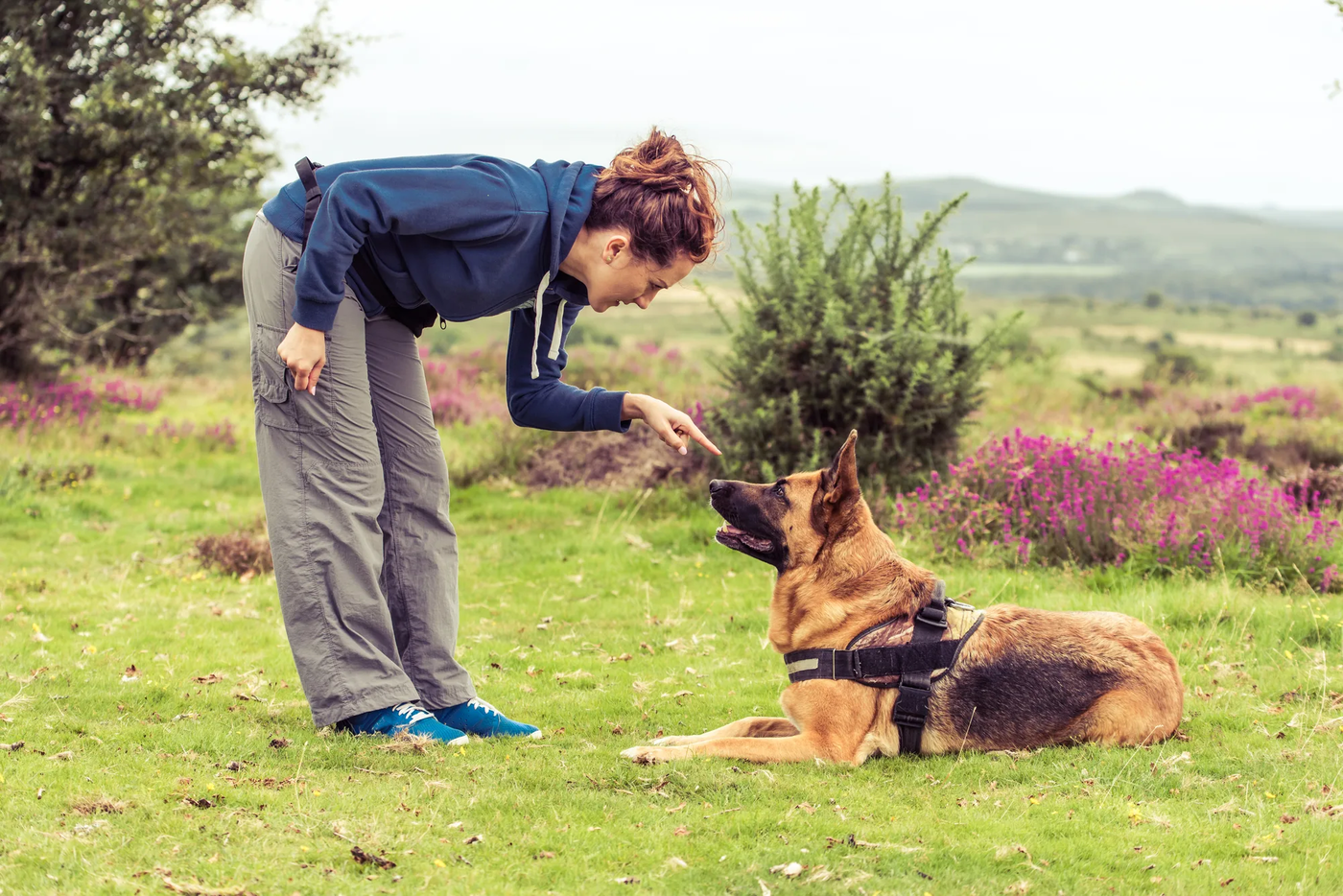
The family meeting
Hold one short meeting and leave with a written plan.
Gather everyone who lives with the dog, including older kids, and anyone who regularly helps, such as a grandparent or dog walker. Keep it to about 20 minutes. The goal is a single page, not a debate about training philosophy. Run through these steps in order.
- List the cues you actually use and pick one word for each: sit, down for lying down, off for four paws on the floor, place, wait, come, and a release word such as okay or free.
- Agree on five or fewer house rules, such as no dogs on beds, four paws on the floor for greetings, and no food from the table.
- Decide what happens when a rule is broken, the same way for everyone: for example, a calm off and a redirect to place, never yelling.
- Assign daily jobs by name: who feeds, who walks morning and evening, who runs the five-minute practice session, who handles bedtime.
- Write it on one page, post it on the fridge or by the leash hook, and send a photo to the family group chat.
- Set a weekly check-in of ten minutes to fix what slipped and add one new skill at a time.
Jobs by age
Give each person a job that suits their age and size.
Not every job fits every person. A strong adolescent Lab can pull a nine-year-old off the sidewalk, so young kids should not be the only person on the leash. They can still help: asking for sits before meals, tossing treats onto a place bed, or practicing come in the hallway with an adult nearby. Toddlers at eye level with a dog should never be left alone with him, whatever the job chart says.
Teenagers can often handle a walk or a training session, and many are better at consistency than adults. Grandparents or visitors who see the dog weekly need only two rules: ask for a sit before petting, and do not feed from the table. Keep their part small and they will follow it.
- Young kids: treat tosses, sits before meals, with an adult present
- Older kids and teens: short sessions and supervised walks
- Adults: leash work, corrections, new skills
- Visitors: sit before petting, no table scraps
Keeping it going
Consistency slips quietly, so check it every week.
Most family plans hold for about a week, then one person starts letting the dog on the couch during movie night. That is normal. The weekly check-in is where you catch it without blame. Ask three questions: which rule broke most, where did it happen, and what would make it easier? Often the answer is practical, such as a gate across the living room or a place bed next to the couch.
Keep a short log on the fridge: date, who practiced, which cue, and how it went. A few lines a day lets everyone see the progress and spot the one rule that never sticks.
When you disagree
If the adults disagree on methods, get one outside plan.
Sometimes the real issue is that two adults disagree about how to train. One wants rewards only, another wants firmer boundaries, and the dog sits in the middle. Balanced training uses both: rewards for what you want, fair and consistent boundaries for what you do not, and the right tool for the dog. An outside plan can end the argument.
A $99 virtual session by phone or Zoom is a good fit for this, because the whole family can join from one living room. Our team helps you agree on cues, rules and responsibilities that fit your household. A virtual session coaches the people; if your dog has a bite history or is a danger to family members, he needs an in-person professional.
The programs
One plan for the whole household.
Get everyone on one call for a $99 virtual session by phone or Zoom.
$99per session
Phone or Zoom, anywhere in the US
Virtual consultation with our head trainer
One-on-one guidance for behavior, a new dog, introductions or a new puppy.
What cues should a family agree on first?
Start with the handful you use every day: sit, down for lying down, off for getting off people or furniture, place, wait at doors, come and a release word. One word per behavior, used by everyone. Add new cues only after the first set is consistent across the household.
How do I get my partner to follow the dog rules?
Keep the list short, write it down together, and make the rules easy to follow. A rule that needs willpower every night, like keeping the dog off the couch, works better with a gate or a place bed beside it. A weekly check-in without blame helps more than reminders in the moment.
Can young kids help train the dog?
Yes, with jobs that suit their size and with an adult present. Kids can ask for sits before meals, toss treats onto a place bed or practice come in a hallway. They should not walk a strong dog alone or be left unsupervised with any dog, especially at toddler height.
Should only one person train the dog?
One person can lead new skills, but everyone who lives with the dog has to use the same cues and rules. A dog who only listens to one person has learned that the rules change by person. Shared, simple rules matter more than who teaches.
Can the whole family join a virtual session?
Yes. A $99 virtual session works by phone or Zoom, so the family can sit together in front of one screen. Our team helps you agree on cues, house rules and jobs, and answers each person's questions so the plan works for everyone who handles the dog.
Virtual session, $99
Get the whole household on one plan.
Book a $99 virtual session by phone or Zoom with the family on the call. Our team helps you agree on cues, rules and jobs that everyone can keep.