
Dogs and young children
What is the best dog breed for a family with young kids?
Parents often ask which breed is safe with a toddler. The honest answer is that safety comes from the right individual dog, sensible house rules and an adult paying attention. Breed tells you about likely size, energy and grooming. Here is how to use it well.
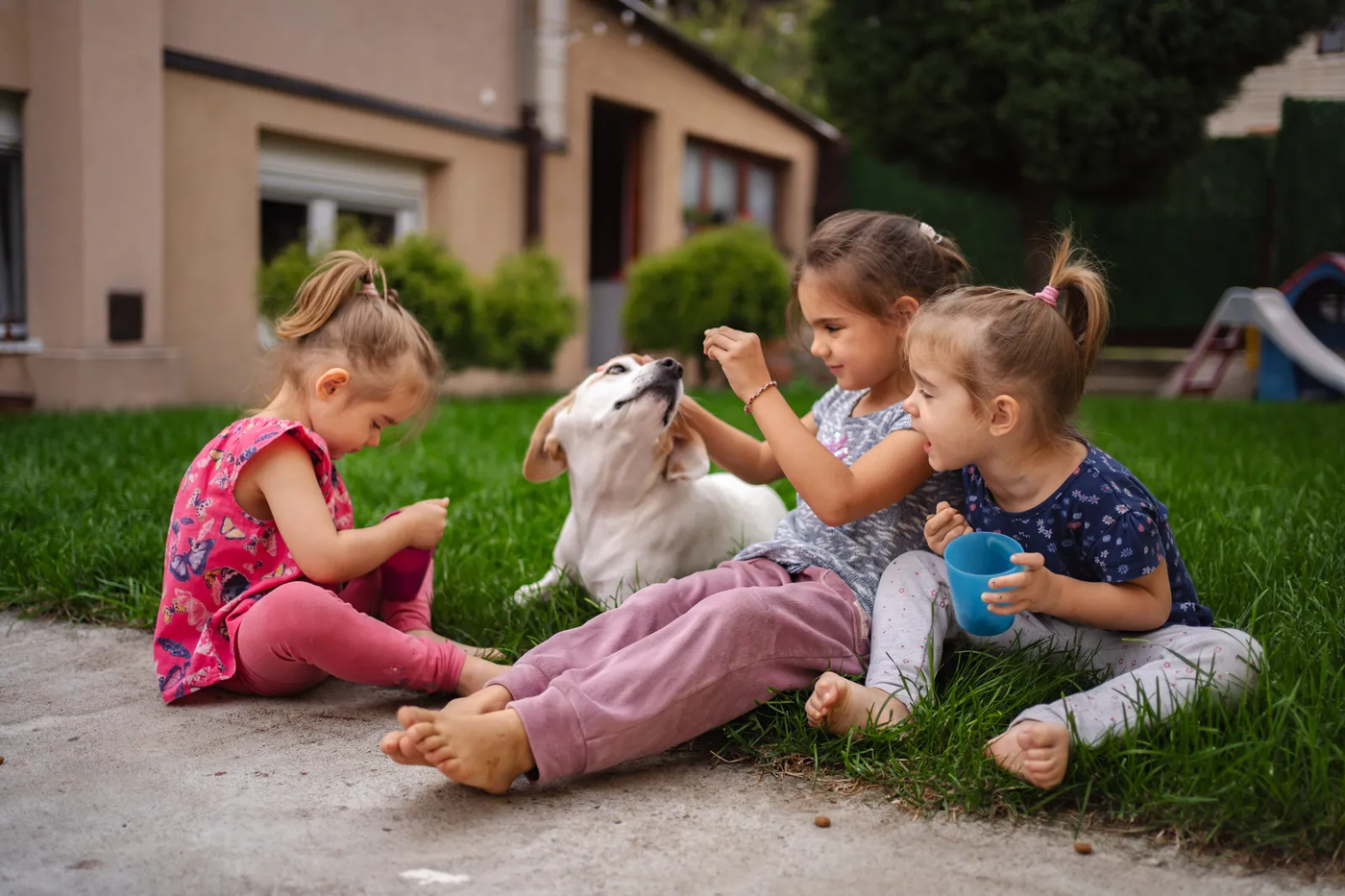
Traits first
Choose for tolerance, sturdiness and moderate energy.
Young children are loud, sudden and grabby. They fall on dogs, drop food and run screaming through the house. The dog who thrives in that home is one who shrugs off bumps, recovers quickly from a startle, and would rather walk away than react. Those traits vary from dog to dog within every breed, so think of breed as a starting point.
Size matters in two directions. A tiny dog can be injured by a toddler who sits on her or drops her, and a fragile dog may snap to protect herself. A very large, bouncy adolescent can knock a three-year-old flat. A sturdy medium to large dog with a calm adult temperament is often the easiest fit for a home with small children.
- Recovers quickly from bumps and noise
- Chooses to walk away rather than react
- Sturdy enough to handle a clumsy toddler
- Moderate energy that fits your real schedule
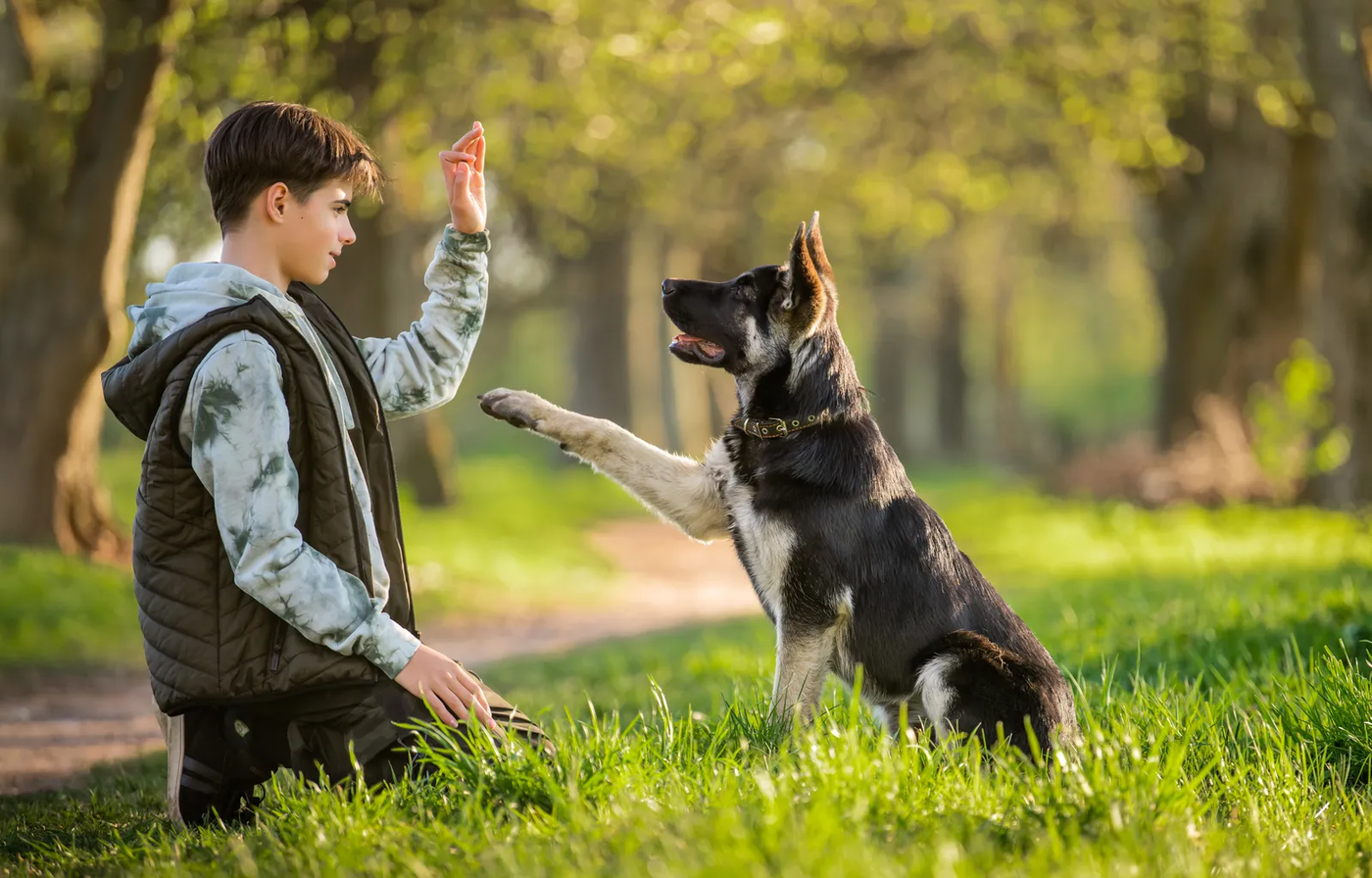
Breed realities
Retrievers are common family choices, and every breed has tradeoffs.
Labrador and golden retrievers are popular with families because they are typically friendly, eager to please and sturdy. They are also energetic, mouthy and very strong as young dogs, and goldens shed heavily. Poodles and many poodle mixes are smart and lower shedding but need regular professional grooming. Some sturdy companion breeds suit quieter families well.
Herding breeds, such as border collies and Australian shepherds, can be devoted family dogs, but many feel the urge to chase and nip at running children. Guardian breeds may be wary of visiting kids. Toy breeds can be fragile. None of these is a rule. Individual dogs vary, and a calm adult of almost any breed may beat a lively puppy of a family favorite.
Puppy or adult
An adult dog with a known record around children is often the safer start.
A puppy and a toddler at the same time is a lot. Puppies have needle-sharp teeth and nip constantly, and young children squeal and run, which teaches the puppy to nip more. It can be done, but it means months of supervision, gates and short training sessions while also caring for small children.
An adult dog, two years or older, who has lived calmly with children in a foster home gives you something a puppy cannot: a track record. You can see how she reacts when a child hugs her or grabs her tail. For many families with kids under five, that known temperament is worth more than the experience of raising a puppy from eight weeks.
House rules
Set kid and dog rules on the first day and keep them.
Even the gentlest dog has limits, and young children cannot be expected to remember them alone. These rules protect both the dog and the kids, and they work with any breed.
- Give the dog a crate or bed that is off limits to children, and enforce it every time.
- Teach kids to pet with one flat hand on the side of the dog's body, not hugs around the neck.
- Never leave a child under about six alone with the dog, even for a minute; use a gate or crate.
- Feed the dog away from children and keep kids away from the bowl and from chews.
- Teach the dog a place command so she has a job when the house gets loud.
Stress signals
Learn the quiet signs that a dog has had enough.
Dogs nearly always warn before they bite, but the warnings are subtle. A dog who turns her head away from a child, licks her lips, yawns, shows the whites of her eyes or freezes is asking for space. If the child keeps going, the next step may be a growl or a snap. Learn these signals and step in early.
If your dog has already growled or snapped at a child, take it seriously. Separate them, talk to your veterinarian about pain, and get a professional to assess the dog in person. For planning ahead, a $99 new dog consultation by phone or Zoom helps families choose a breed and set up the home before the dog arrives.
- Head turning away and lip licking
- Whites of the eyes showing
- Freezing or going stiff when touched
- Leaving the room, then being followed
The programs
Match the breed to your family.
The $99 new dog consultation, by phone or Zoom, helps families with young children choose a breed and set house rules before the dog comes home.
$99per session
Phone or Zoom, anywhere in the US
Virtual consultation with our head trainer
One-on-one guidance for behavior, a new dog, introductions or a new puppy.
Is a golden retriever or a Labrador better for young kids?
Both are common family choices and both are typically friendly and sturdy. Labs are often a bit more boisterous as youngsters, while goldens shed more and need more brushing. The individual dog and your family's energy level matter more than which of the two breeds you choose. Meet the parents or the adult dog first.
Are small dogs good with toddlers?
Some are, but very small and toy breeds can be injured by a toddler who falls on them or picks them up, and a frightened small dog may snap to protect herself. If you love small dogs, look for a sturdier small breed or an adult with a calm record around children, and supervise closely.
What age should my child be before we get a dog?
There is no single right age. Many families find it easier once the youngest child is old enough to follow simple rules, often around five or six. Families with toddlers can absolutely have dogs, but they should plan for gates, crates and constant supervision, and should consider an adult dog.
Which breeds are not good with young children?
No breed is automatically bad with kids, but some are harder fits: very high-drive working breeds that need hours of work daily, herding breeds prone to nipping at running children, and fragile toy breeds. Individual dogs vary. A calm adult dog's record matters more than a breed list.
Can I get help choosing a family dog without an in-person visit?
Yes. Families anywhere in the US can book our $99 new dog consultation by phone or Zoom. Our head trainer talks through your children's ages, your home and your schedule, then helps you narrow breeds and set the house rules. It is coaching for your family, not an evaluation of a specific dog.
Virtual session, $99
Choose a family dog with a trainer's help.
A $99 new dog consultation by phone or Zoom, available anywhere in the US, helps your family pick a breed that fits young kids and plan the first weeks together.