
Senior dogs
How to introduce a new dog to an older dog
A twelve-year-old dog has spent years with a routine that suits it. A new arrival, especially a young one, can bring energy the senior enjoys or pressure it cannot escape. The difference is usually how well you manage the first month.
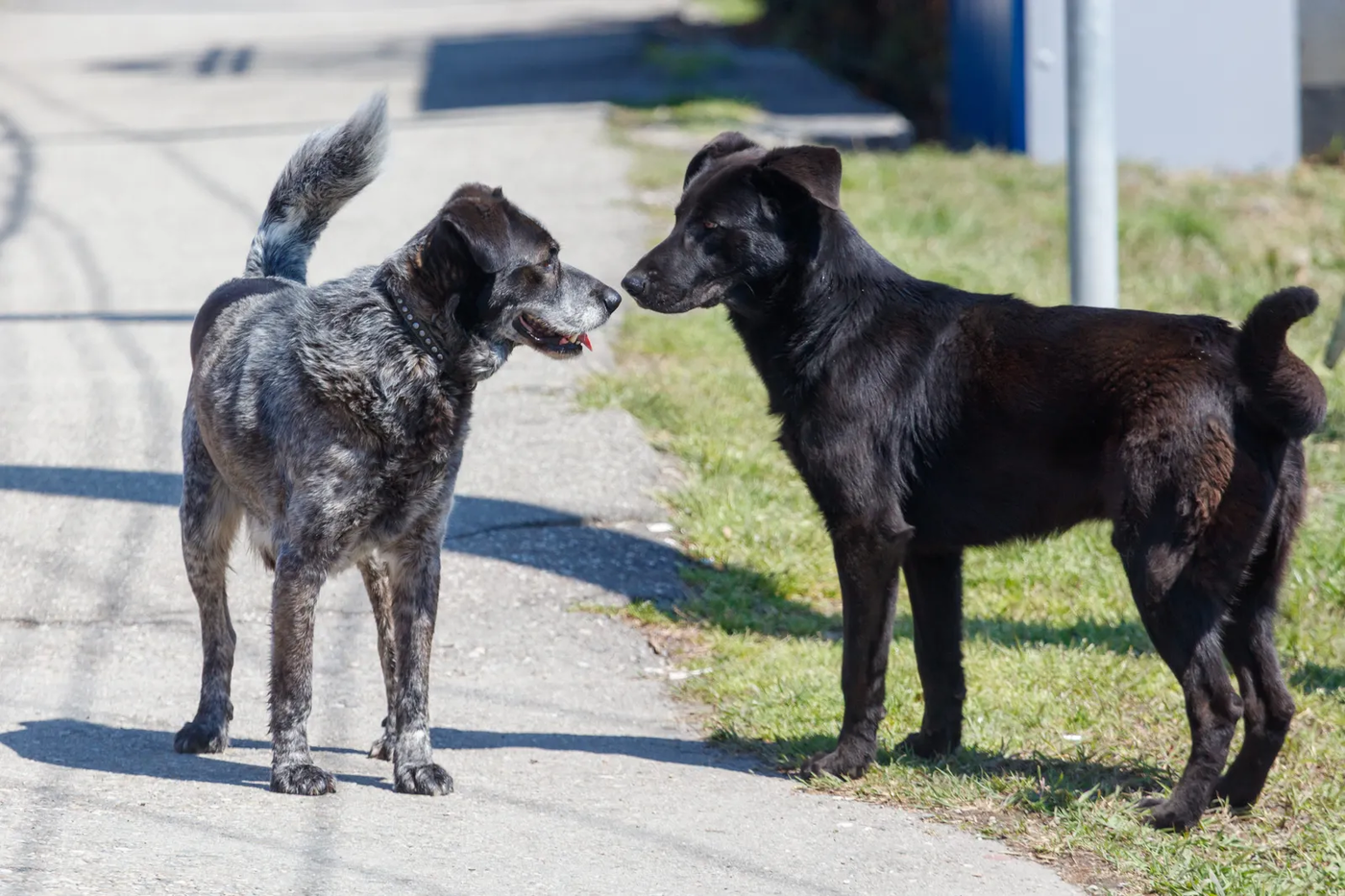
Before the newcomer arrives
Get the older dog checked and comfortable before you bring anyone home.
Arthritis, sore teeth, fading eyesight and hearing loss all lower a dog's tolerance, and older dogs hide pain well. Book a vet visit before the new dog arrives and ask specifically about joints and mouth. A senior who cannot see a puppy coming may startle and snap. That reaction comes from surprise, not from a dislike of the newcomer.
Then set up the house for the old dog first. Give it a bed in a room the newcomer cannot reach, behind a baby gate it can see through. Put runner rugs on slick floors so it does not have to scramble out of the way. Keep its food, water and favorite resting spot exactly where they have always been.
- Vet check for pain, teeth, eyes and hearing
- A gated retreat the newcomer cannot enter
- Non-slip rugs where the senior walks
- Its routine and bed left unchanged
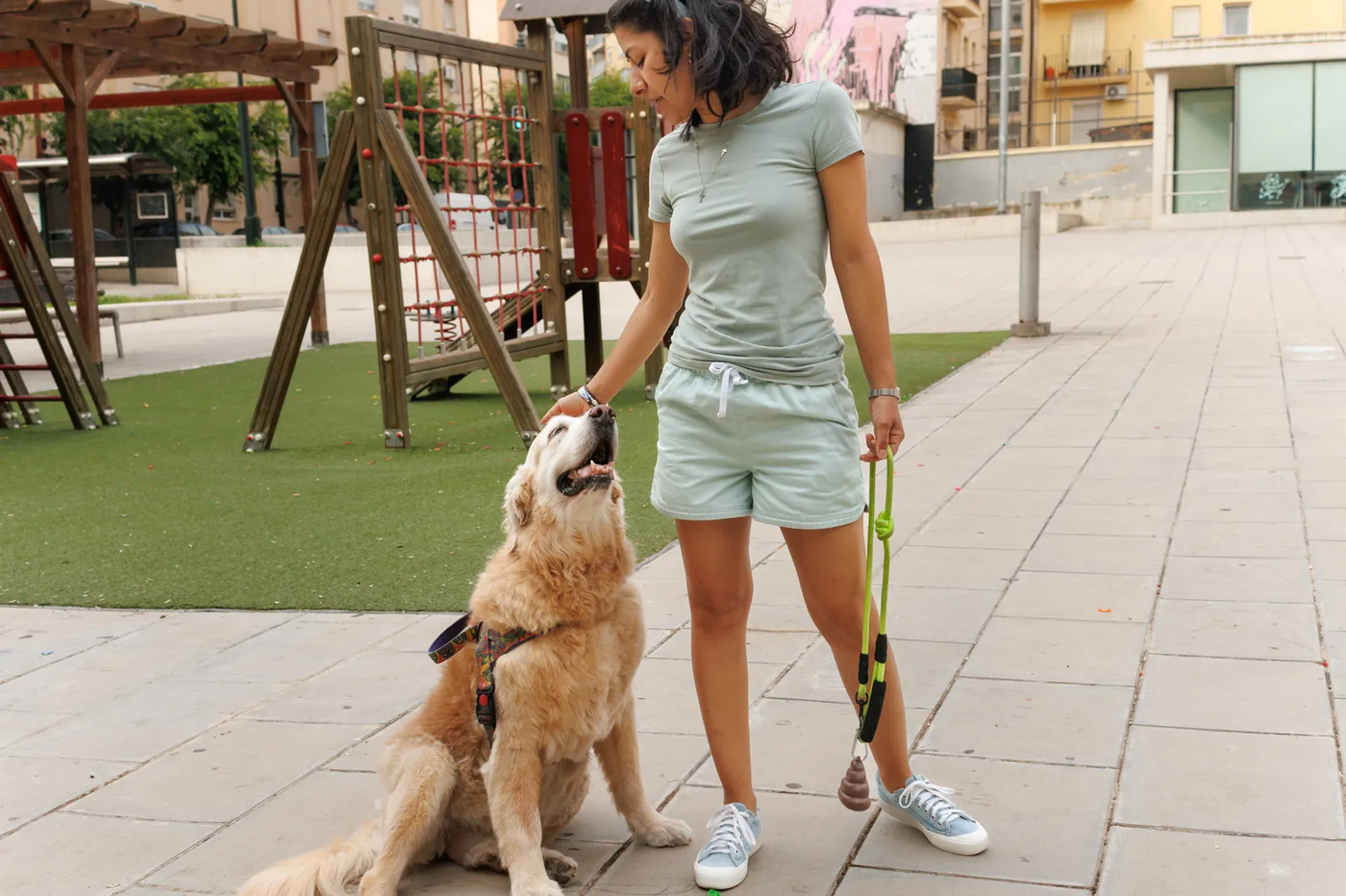
Choosing the newcomer
A calm adult usually suits a senior better than a rowdy adolescent.
Energy mismatch causes most of the trouble. A settled three-year-old who already knows house manners often slips in easily. An eight-month-old Labrador who wants to wrestle all day can wear a fourteen-year-old beagle down fast. Puppies can work with some seniors, but you will be managing the gap for months.
If you are adopting, ask the shelter or foster for a dog that has lived calmly with older dogs, and ask what happens when another dog says no. Take your senior to meet the candidate before you commit, and judge by the older dog's comfort, not the newcomer's enthusiasm.
The first week
Run the first week in this order and keep the old dog's life predictable.
Short, calm and separate is the rule. You are building trust that the newcomer will not take over the senior's world.
- Meet on neutral ground with a slow parallel walk at your senior's pace, then walk home together.
- Let the older dog enter the house first, with the newcomer on leash behind.
- Split the house with gates so the senior keeps its favorite room and the newcomer has its own space.
- Feed in separate rooms and pick up bowls afterward. Keep chews and toys for separate time only.
- Allow together time of ten to fifteen minutes while you are present, then give the senior a rest apart.
- Call the newcomer away when the old dog turns its head, licks its lips or gets up to leave.
- Keep the senior's own walk and quiet time with you every day.
Reading the old dog
Older dogs say no quietly, so watch for the small signals.
A senior rarely starts with a growl. First it looks away, moves off, lies down with its back turned or stiffens over its bed. If the newcomer ignores those signals, the next step is a growl or an air snap. That is normal communication and you should never punish it, because a dog that learns not to warn may bite without warning.
Your job is to make the correction unnecessary by stepping in earlier. A young dog who backs off after one growl is learning fine. A young dog who keeps pushing, a senior who starts hiding or stops eating, or any bite with contact means you need to separate more and get an in-person professional involved.
- Fine: a look away, a growl the newcomer respects
- Step in: repeated pestering, a senior who cannot get away
- Get help: hiding, not eating, or a bite with contact
For the long run
Protect the senior's comfort for the rest of its life, not just the first month.
As the old dog ages, the gap widens. Keep gates and separate rest in place long after the dogs seem fine, and give the newcomer its exercise elsewhere so it arrives home tired rather than looking for a play partner.
If you want a plan built around your two particular dogs, book a $99 virtual session by phone or Zoom. Our head trainer will talk through your senior's health, the newcomer's energy and your house layout, and help you set the routine.
The programs
A plan built around your senior.
A $99 one-on-one session by phone or Zoom for families anywhere in the US adding a dog to a home with an older dog.
$99per session
Phone or Zoom, anywhere in the US
Virtual consultation with our head trainer
One-on-one guidance for behavior, a new dog, introductions or a new puppy.
Will a new dog give my old dog more energy?
Sometimes. Some seniors brighten up with a calm companion and walk more because of it. Others find a young dog exhausting and become withdrawn or irritable. You cannot know in advance, so meet the candidate first, choose a lower-energy newcomer, and keep the senior's retreat in place either way.
Should I let my older dog correct the new dog?
A brief growl or air snap that the newcomer respects is normal and does not need you. What you want to avoid is the senior having to correct over and over, because that wears it down and can escalate. Interrupt the newcomer earlier, so the old dog rarely needs to say anything.
My old dog growls every time the new dog comes near. What should I do?
Do not punish the growl. Add distance and structure: more gated time apart, shorter supervised sessions, and the newcomer on a leash or drag line indoors so you can redirect it before it reaches the senior. Also check for pain with your vet, since a sudden increase in growling can be medical.
How long does it take a senior to accept a new dog?
Many pairs settle into a comfortable routine within a few weeks, but some seniors only ever tolerate the newcomer, and that is acceptable. Judge progress by whether the older dog eats, sleeps and moves around the house normally, not by whether they cuddle or play together.
Is it unfair to get a new dog while my old dog is still alive?
Not if you protect the senior's comfort first. Many families find a calm second dog eases the house through the old dog's last years. It is unfair only when the newcomer is allowed to take the bed, the food or the peace, which is exactly what the set-up on this page prevents.
Virtual session, $99
Protect your senior while the new dog settles in.
A $99 virtual session by phone or Zoom with our team covers your old dog's limits, the newcomer's energy and the gates, feeding and rest plan for your house.