
Two dogs, two ages
What is the best age gap between two dogs?
Age gap questions are really questions about energy, patience and training. A gap that works beautifully with one pair of dogs can be a struggle with another, so the number matters less than how the two dogs fit.
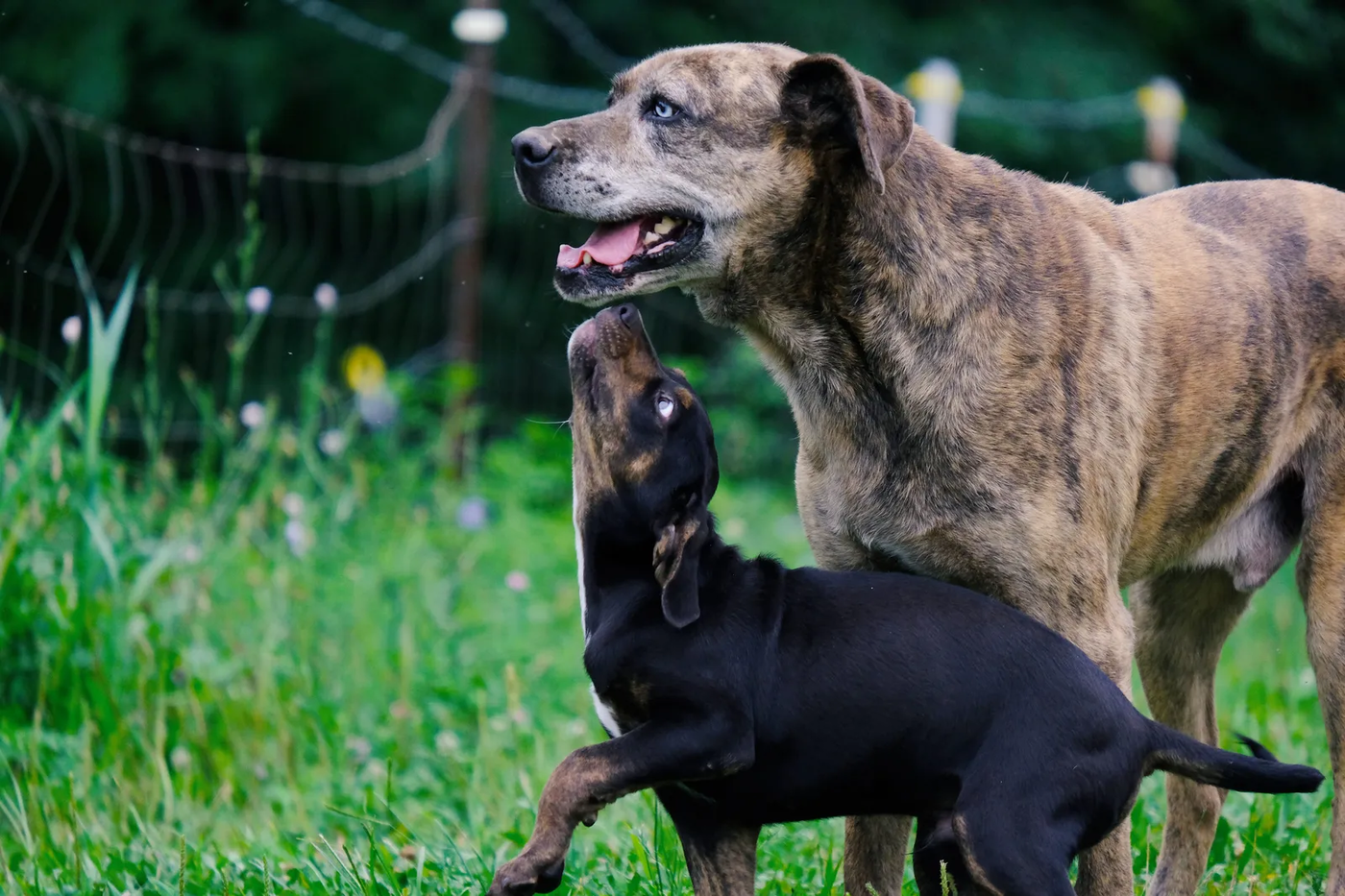
The rule of thumb
Wait until your first dog is trained and out of adolescence before adding another.
A dog in adolescence is still learning the rules and testing them. Add a puppy to that household and you have two dogs learning at once, often from each other rather than from you. Waiting until the first dog is settled and responsive gives the newcomer a steady example to follow.
Two young dogs close in age can bond strongly with each other, sometimes more than with their people. That can make training, recall and time apart harder. It is manageable, but it takes deliberate separate training and is more work than most owners expect.
- The resident dog already answers sit, place and come the first time
- It has settled out of adolescence
- It is calm and friendly around other dogs
- You have time for two training plans
Common combinations
Most pairings can work, but each age combination has its own pressure point.
Here is how different combinations tend to play out, and what to watch for with each one.
| Pairing | What tends to happen | Watch for |
|---|---|---|
| Two puppies together | Strong bond with each other, double the house training | Dogs focused on each other instead of you |
| Puppy and adolescent dog | Lots of play, lots of chaos | Rough play and both dogs ignoring cues |
| Puppy and settled adult | The adult models calm behavior | The adult needing breaks from the puppy |
| Puppy and senior dog | The puppy may energize or exhaust the senior | Sore joints, grumpiness, disrupted rest |
| Two adult dogs | Settled personalities, easier to predict | Matching energy and play style |
A senior resident
With a senior dog, protect the older dog's rest and joints first.
A 12-year-old dog with stiff hips spends much of the day resting, and a puppy sees that resting dog as a climbing frame. Without management, the older dog either puts up with it unhappily or starts correcting the puppy with growls and snaps. Neither is fair to the senior.
Give the older dog a protected space the puppy cannot reach, keep the puppy on a leash or behind a gate indoors at first, and keep play sessions short and supervised. Watch the senior for lip lifting, turning away or getting up to leave, which mean it has had enough.
- A gated or raised rest area just for the older dog
- The puppy on a leash or in a pen when not supervised
- Short, supervised play sessions that you end
- Separate one-on-one time and walks for the senior
- Feeding apart so meals stay calm

Energy over age
Energy and temperament matter more than the number of years.
A laid-back three-year-old Basset may enjoy a quieter companion of any age, while a nine-year-old working-breed mix that still wants to run may be thrilled by a playful younger dog. Look at how much exercise your dog actually wants, how it plays, and how patient it is with other dogs, not just its birthday.
Size matters too. A large adolescent can easily injure a small senior during play, even without meaning to. If sizes differ a lot, plan for more supervision and separate play.
The first weeks
Whatever the gap, manage the first weeks so the older dog never has to keep correcting the younger one.
The early weeks set the tone for the relationship. A simple routine helps both dogs settle.
- Introduce the dogs on neutral ground with a walk side by side before going home.
- Keep the new dog on a leash or behind a gate indoors so you can interrupt pestering early.
- Feed them in separate rooms or crates, and pick up high-value chews when both dogs are loose.
- Give each dog individual walks and training so both stay connected to you.
- Increase free time together gradually as their body language stays loose and relaxed.
The programs
Plan the pairing with a trainer.
A $99 virtual session by phone or Zoom, anywhere in the US.
$99per session
Phone or Zoom, anywhere in the US
Virtual consultation with our head trainer
One-on-one guidance for behavior, a new dog, introductions or a new puppy.
Is it bad to get two dogs the same age?
Not bad, but harder. Two puppies or two young dogs often bond closely with each other, which can make recall, training and time apart more difficult. If you go this route, plan separate training sessions, separate walks and separate crates so each dog learns to focus on you.
Should I get a puppy when my dog is 10 or older?
It can work for a healthy senior that still enjoys other dogs, but plan carefully. Give the older dog protected rest space, keep the puppy managed, and watch for signs of strain. For a frail or arthritic senior, a calm adult dog is usually a kinder choice than a puppy.
Does the age gap matter more than the size difference?
They both matter, but a large size difference can be riskier during play because a big dog can injure a small one by accident. With a big gap in size, plan for closer supervision, shorter play sessions and a safe retreat for the smaller dog, whatever their ages.
How old should my first dog be before I get a second?
As a general guide, wait until your first dog has settled out of adolescence and responds reliably to basic cues, which is often around two years old or later depending on the dog. What matters most is that the first dog is trained and calm, not the exact age.
Can an adolescent dog and a puppy live together happily?
Yes, with management. Expect lots of play and some chaos. Keep sessions short, interrupt rough play before it escalates, and train each dog separately so neither learns to ignore you. A virtual session can help you set a routine that works for both.
Virtual session, $99
Get the pairing right from day one.
Book a $99 virtual session by phone or Zoom. Our head trainer will help you judge the age gap and plan the first weeks for both dogs.