
Two dogs, one home
How long does it take for two dogs to get along?
Owners often expect two dogs to sort it out in a weekend. Some do, but rushing is the most common reason a new pair ends up with a grudge. Here is what normal progress looks like, week by week, and how to tell slow but steady from stuck.
The timeline
Expect weeks for a routine and months for a real bond.
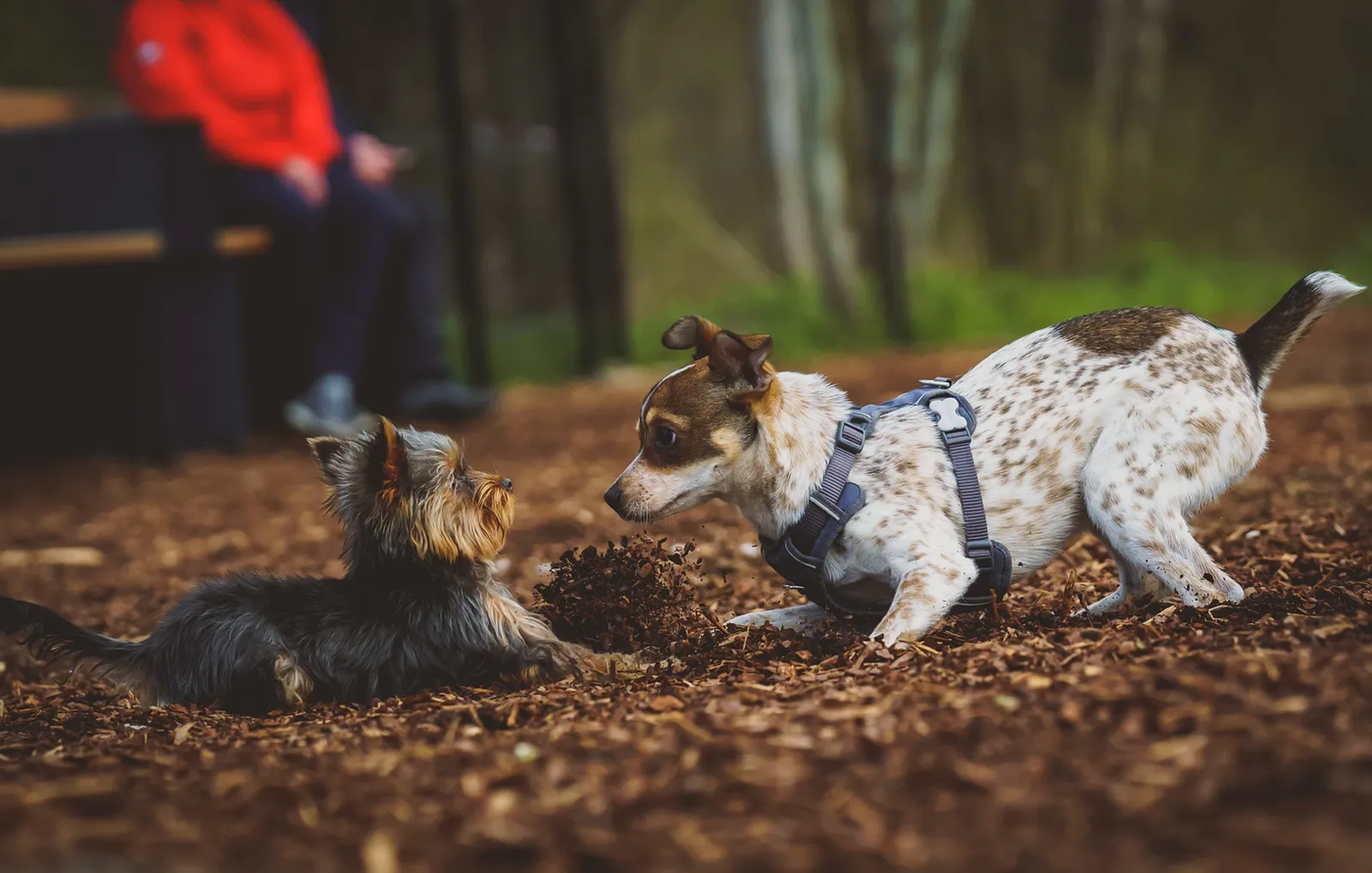
The first few days are about stress, not friendship. A new dog is learning where to sleep, when food appears and which doors lead outside, while your resident dog is processing an intruder on his turf. Behavior in that window is rarely the dog you will have in a month, good or bad. A dog who seems perfect on day two may push boundaries on day ten once he relaxes.
By about three weeks, most pairs have a routine: who goes out the door first, where each dog rests, how they pass in the hallway. The deeper part, where they choose to lie together or invite play without tension, usually builds over the following two months. The pace below is typical, not a deadline.
- Days 1 to 3: separate rest areas, separate meals, short supervised time together, mostly on leash or across a gate.
- Days 4 to 14: longer shared time in calm settings such as walks and quiet evenings, still no unsupervised time.
- Weeks 3 to 4: the routine is predictable; begin loosening management one piece at a time, starting with the easiest.
- Months 2 to 3: shared rest and play without tension; leave them alone together only after weeks of calm.
- After month 3: keep feeding and high-value chews separate if either dog ever stiffened over them.
What changes the pace
Age, history and the first meeting decide how fast it goes.
A puppy joining a tolerant adult often fits in within days, because the adult sets limits and the puppy accepts them. Two adults of similar age and confidence tend to take longer, since both have opinions about how the house works. A rescue with an unknown past may need the full three months just to show you who she really is.
The first meeting carries a lot of weight. Dogs who met on neutral ground, walked together first and entered the house calmly usually progress faster than dogs who were dropped into the same living room. A scuffle in the first week does not doom the pair, but it often sets the clock back, and it means the next steps should be slower.
- Puppy with tolerant adult: often days to a few weeks
- Two adults of similar confidence: often one to three months
- Newly adopted rescue: allow the full three months
- Any early scuffle: slow down and restart the steps
Good signs
Loose bodies and easy breaks in play mean it is working.
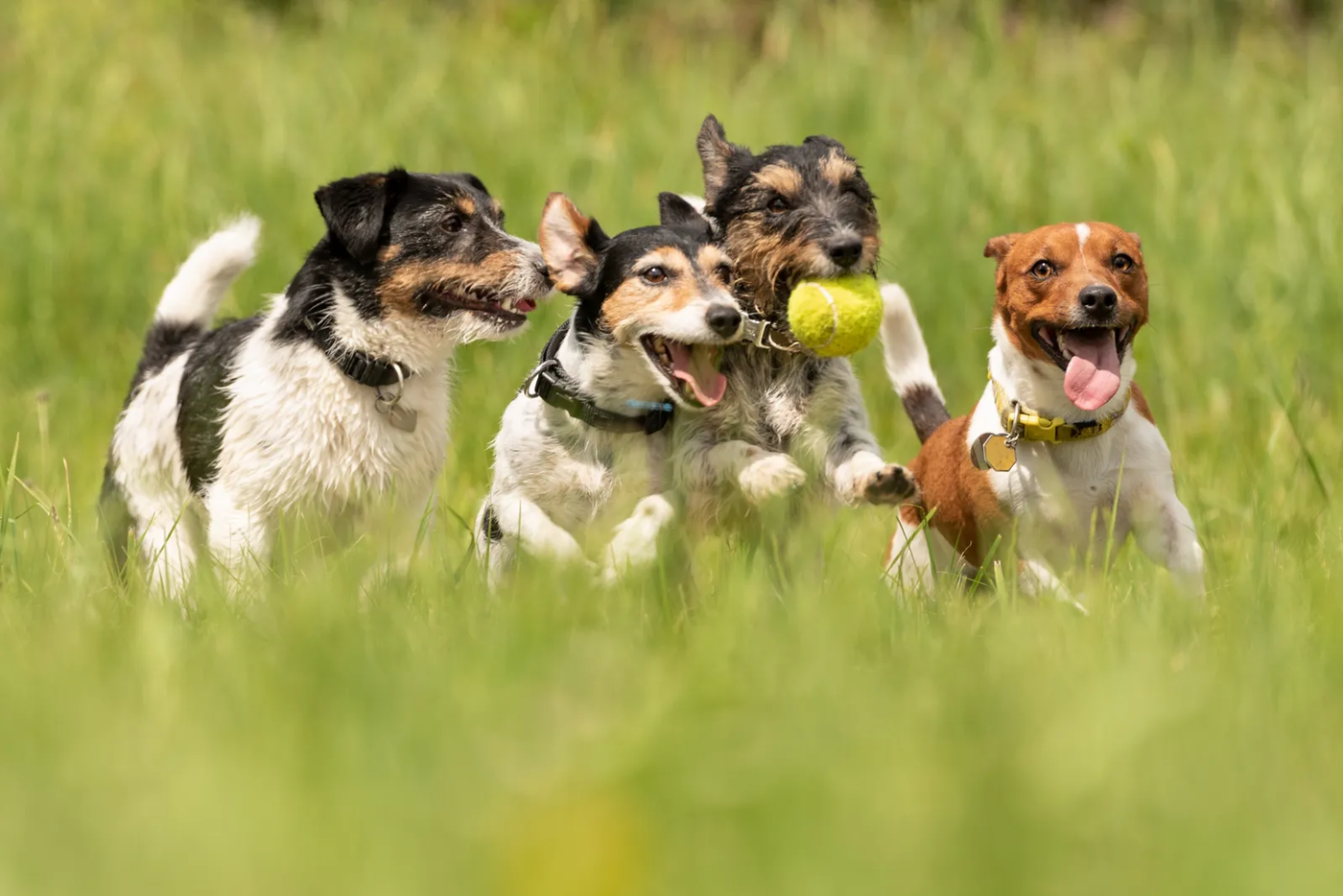
You will see progress before you see friendship. Look for two dogs who can pass each other in a narrow hallway without either one stiffening, who lie down in the same room, and who look away from each other easily. Play that pauses on its own, with the dogs taking turns chasing and being chased, is a strong sign the relationship is healthy.
Small grumbles are normal. A growl when the puppy jumps on the senior's head is communication, not a crisis, as long as the puppy backs off and the senior stops there. The question is whether disagreements end quickly and both dogs recover within a minute or two, or whether the tension lingers and comes back at the same spot.
- Relaxed passing in hallways and doorways
- Choosing to rest in the same room
- Play with pauses and role swaps
- Quick recovery after a grumble
Meanwhile
Management keeps the clock moving while the dogs learn each other.
The fastest way through the first months is to prevent the arguments that set pairs back. Feed in separate rooms or crates and pick up bowls when meals end. Keep bones and stuffed chews for crate time. Use a baby gate or a closed door whenever you cannot watch, so the dogs never practice a fight while you are in the shower.
Give each dog one-on-one time with you every day, too. A short walk alone or a few minutes of training reminds the resident dog that the newcomer did not replace him, and it gives the new dog a chance to bond with you without competition. Calm leadership from you is what lets two dogs relax around each other.
Stuck, not slow
If tension is growing after a month, change the plan.
Slow progress is fine. Going backward is not. If the dogs are stiffer around each other at week five than they were at week two, if one dog has started avoiding rooms, or if disagreements are getting longer and louder, the current setup is not working and more time alone will not fix it.
That is the point to get help. A $99 introduction consultation by phone or Zoom lets our head trainer hear the details, watch video you send of the dogs together and adjust the plan. If the dogs have injured each other, they need an in-person professional who can see them in the room.
The programs
A plan for the next eight weeks.
The $99 introduction consultation covers your dogs' first meeting, the management setup and when to loosen it, by phone or Zoom.
$99per session
Phone or Zoom, anywhere in the US
Virtual consultation with our head trainer
One-on-one guidance for behavior, a new dog, introductions or a new puppy.
What is the 3-3-3 rule for a new dog?
It is a rough guideline: about three days for a new dog to decompress, three weeks to learn the routine and three months to feel fully at home. It is not a schedule to hold a dog to. Some dogs move faster and some slower, and with two dogs, the slower one sets the pace.
Should I let my dogs fight it out?
No. Letting dogs fight it out teaches them that fighting works and can injure both of them. Interrupt tension early, separate calmly and add more structure, such as gates, separate feeding and supervised time. Scuffles that happen anyway are information about what to manage next, not a sign to step back.
When can I leave two new dogs alone together?
Only after several weeks of calm, supervised time with no stiff standoffs, and after you have tested short absences first, such as stepping outside for five minutes. Many owners keep a gate or crates in use while they are at work for the first few months. There is no prize for rushing this step.
My older dog ignores the new puppy. Is that a problem?
Usually not. Ignoring is a polite way for an adult dog to say not right now, and many seniors warm up once the puppy grows out of the pestering stage. Protect the older dog's rest with a gate or crate so the puppy cannot keep pushing, and the relationship often improves.
Can I get help with this without a trainer in my house?
Often, yes. In a $99 virtual session by phone or Zoom, our head trainer reviews your setup, your video and the dogs' history, then sets the next steps. If there has been a bite that broke skin between the dogs, an in-person professional is the right next call.
Virtual session, $99
Get a timeline built around your two dogs.
A $99 virtual introduction consultation by phone or Zoom, available anywhere in the US, turns the general timeline into a specific plan for your pair.