
Two dogs, two crates
How to crate train two dogs
Crating two dogs is not the same as crating one twice. The dogs watch each other, wind each other up, and compete for your attention at the crate door. The method below covers the two-dog parts; the basics of crate training a puppy or an adult dog have their own guides.
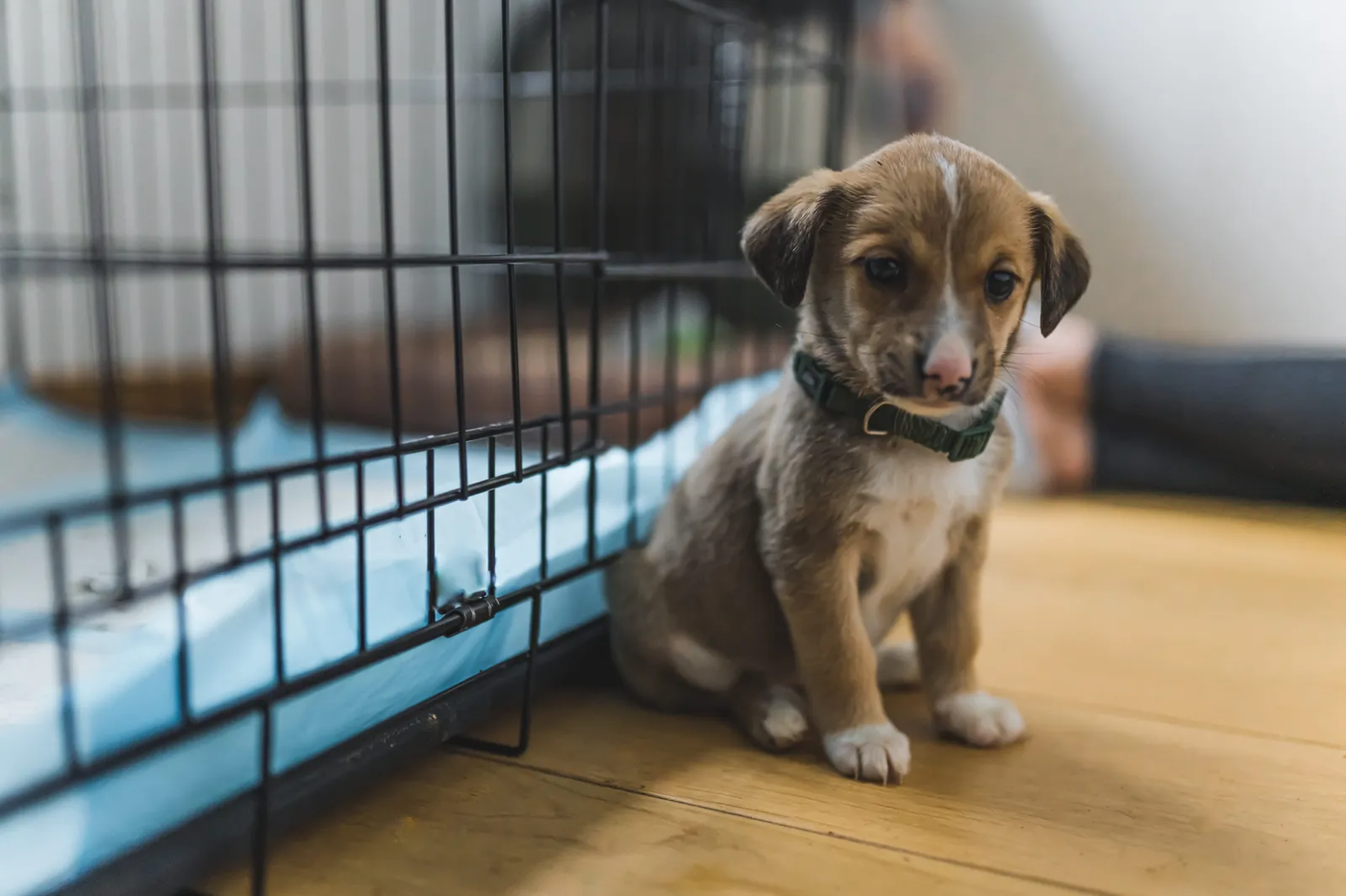
One crate each
Two dogs need two crates, never one shared crate.
Sharing a crate is a common shortcut and a risky one. Two dogs in one enclosed space cannot move away from each other if one gets sore, stressed or protective, and fights in crates are hard to stop safely. Each dog needs its own crate, large enough to stand, turn around and lie flat, and not so large that a young dog uses one end as a bathroom.
Separate crates also help the two-dog household beyond training. They give each dog a private rest spot nobody else can enter, a safe place to eat or chew without guarding, and a way to manage visitors, deliveries and the first weeks with a new dog.
- One crate per dog, sized to the dog
- Room to stand, turn around and lie flat
- Bedding the dog will not chew and swallow
- A spot away from direct sun, vents and drafts
Placement
Place the crates close enough to be calm, not close enough to argue.
Many dogs rest better with the other dog nearby, so crates in the same room often work. Leave a few feet between them rather than wire touching wire, and turn the doors so the dogs are not face to face. If one dog stares, barks or paws at the other crate, add a solid divider such as a board, a cover on the side panel or a piece of furniture between them.
Avoid pinch points. Crates at the end of a narrow hallway or next to the back door mean both dogs exit into the same tight space, which is where scuffles happen. Choose a quiet wall where you can open one door, let that dog walk away, and only then open the other.
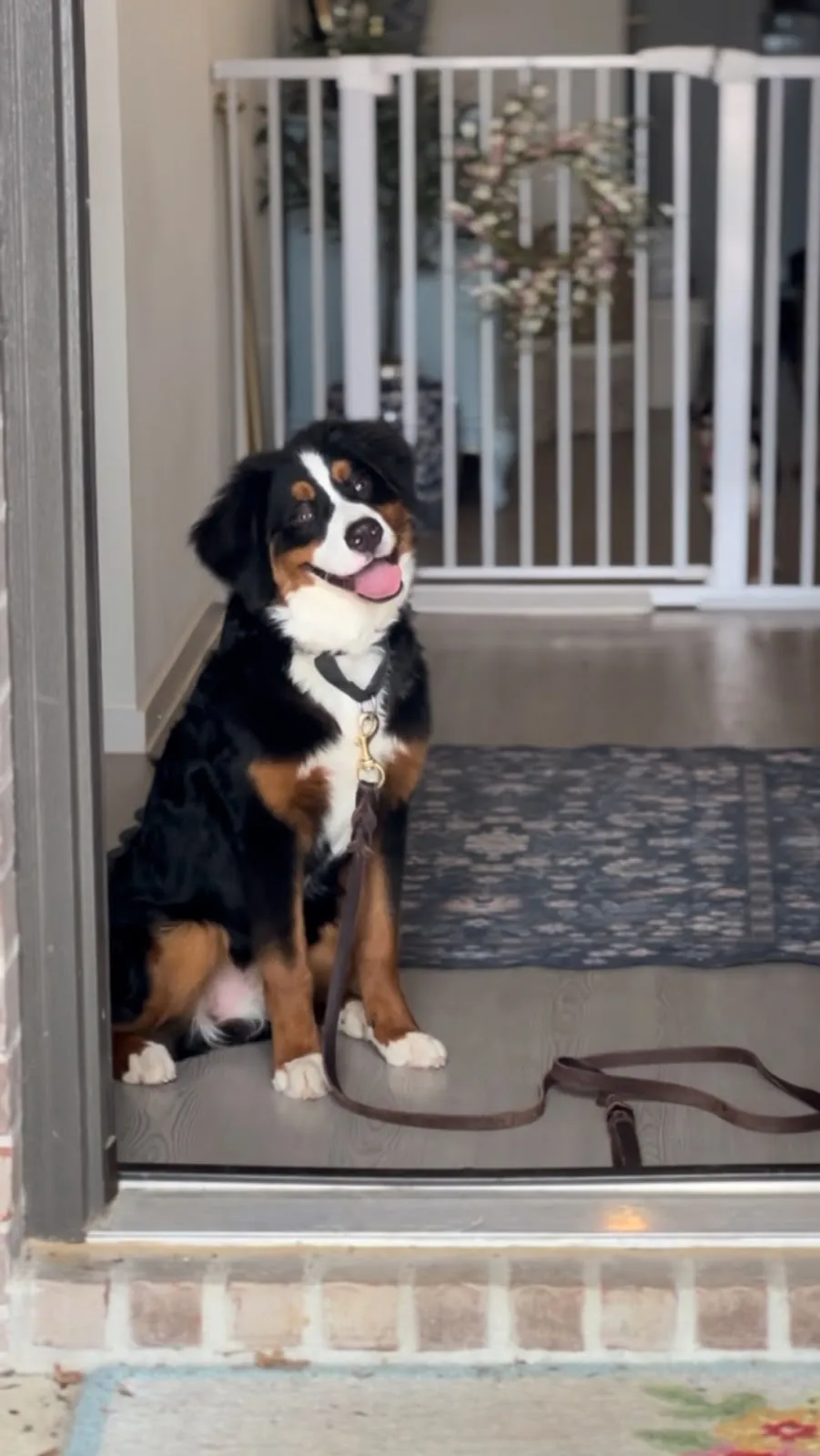
The method
Train each dog alone, then bring the crates together.
Work through these steps in order. Move on only when both dogs are relaxed at the current step. Short sessions, several times a day, beat one long one, and every session ends with a calm release rather than a dog bursting out of the door.
- Train each dog separately in its own crate, with the other dog out of the room: toss a treat in, reward going in, close the door for a few seconds, open before any fuss.
- Add a cue such as crate or kennel and build to a few minutes of calm with the door closed, then ten to twenty, with a chew or food toy inside.
- Bring both crates into the same room but crate only one dog while the other is on leash with you, rewarding calm from both.
- Crate both dogs at once for short periods while you stay in the room, then step out briefly and return before either one barks.
- Feed meals in the crates and give long-lasting chews only there, so the crate becomes the place good things happen.
- Release one dog at a time: open a door, ask for a wait, release, let that dog move off, then repeat with the other.
Common problems
Barking, racing and rivalry at the crate door each have a fix.
If one dog barks whenever the other is let out first, change the order often so neither dog can predict it, and reward quiet with an early release. If both dogs race to one crate, use a cue and a name for each dog and send them one at a time. If one dog guards the area around his crate, keep the other dog on leash near it until the tension fades.
If one dog panics in the crate, howling, drooling, injuring himself on the door, stop. That can be separation distress or confinement anxiety rather than a training gap, and pushing through it can make it worse. Ask your vet and a trainer before continuing.
- Vary which dog comes out first
- Send dogs into crates one at a time by name
- Leash the second dog near a guarded crate
- Stop if a dog drools, howls nonstop or hurts himself
Time and help
Keep crate time reasonable and get a plan if it stalls.
A crate is for rest and management, not for a whole day. Plan exercise, a walk and a bathroom trip before longer crate periods, and break up long workdays with a midday visit or a walker. Puppies need far more frequent bathroom breaks than adults, so time puppy crating to their bladder rather than to the adults' schedule.
If one dog settles and the other will not, or the pair keeps winding each other up, a $99 virtual session by phone or Zoom can help. Our team looks at your layout and routine and adjusts the steps for each dog. A dog showing panic in the crate may also need a vet visit and in-person help.
The programs
Crate help for a two-dog home.
A $99 virtual session by phone or Zoom anywhere in the US. Puppy sessions are also available in person near Cypress.
$99per session
Phone or Zoom, anywhere in the US
Virtual consultation with our head trainer
One-on-one guidance for behavior, a new dog, introductions or a new puppy.
Can two dogs share one crate?
We do not recommend it. Two dogs in one enclosed space cannot get away from each other if one becomes stressed, sore or protective, and a fight inside a crate is hard to stop safely. Give each dog its own crate, even if the dogs sleep together happily elsewhere.
Should two dog crates be in the same room?
Usually yes, if both dogs stay calm. Place them a few feet apart with the doors angled away from each other. If one dog stares, barks or paws at the other crate, add a solid divider or move the crates to separate rooms for a while.
How do I stop one dog barking when the other is let out?
Vary which dog comes out first so neither can predict it, keep the release calm, and open the barking dog's door only once he has been quiet for a moment. Short, frequent practice of crating and releasing helps the routine become boring.
Can I crate train a new dog and an older dog together?
Train the new dog alone first, with the resident dog out of the room, so the newcomer learns the crate without distraction. Then follow the same steps of bringing the crates together. Many resident dogs already know the crate and help the new dog settle by example.
Can a virtual session help with crate training two dogs?
Yes. In a $99 session by phone or Zoom, our team goes through your layout, schedule and each dog's reaction to the crate, then adjusts the steps and order. A dog showing real panic in the crate needs a vet check and possibly in-person help.
Virtual session, $99
Two crates, two calm dogs.
Book a $99 virtual session by phone or Zoom and our team will help you set up crates, order and timing for your two dogs.