
Why does my dog
Why does my dog hate the crate?
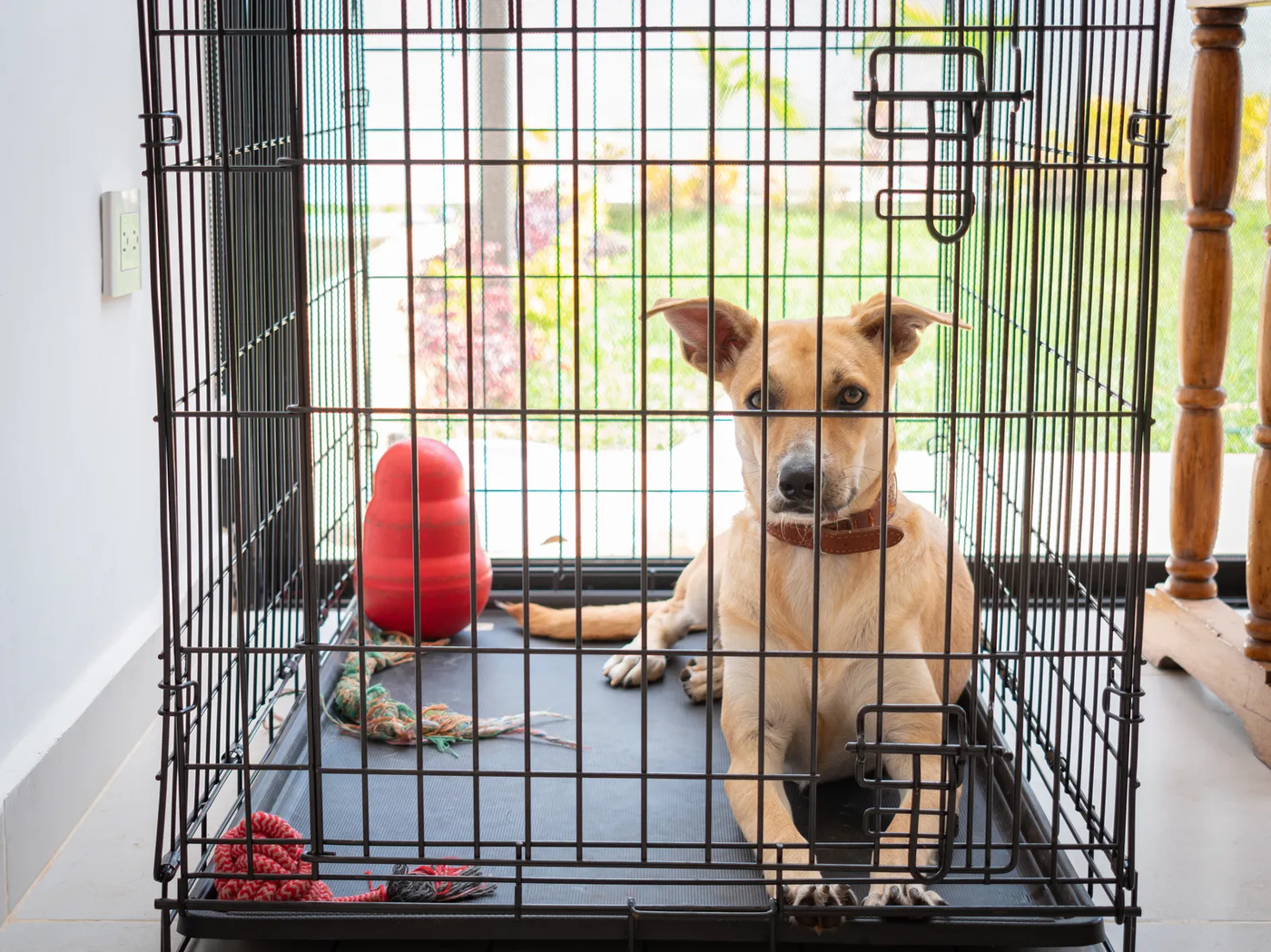
Every dog that comes to the training home sleeps in a crate, and a fair number arrive hating it. Two weeks later they nap in it with the door open, and the difference is entirely what the crate has come to mean. Here is how it goes wrong, and how it gets rebuilt.
Last reviewed September 11, 2026 · by the Best Dog University Team
The short version
The crate is neutral; what happened in it is not.
A crate is a box, and a dog's feeling about it comes from what has happened inside it. Introduced in an afternoon and shut for the night, it means abandonment. Used after the dog did something wrong, it means punishment. Used for ten hours a day with no exercise and nothing to do, it means boredom and a full bladder. Placed by a window during a storm or on July 4, it means terror. Too small, or on a slick floor, or in a garage in summer, it means discomfort. A dog that has learned any of those fights the crate, and a dog that fights the crate and wins learns that fighting works. Rebuilding starts with none of that ever happening again.
- Introduced too fast: abandonment
- Used after mistakes: punishment
- Ten hours with nothing: boredom and a full bladder
- A storm or fireworks inside it: terror
- Too small, too hot, too slick: discomfort
The reasoning
Why dogs choose dens, and why a rebuilt crate becomes one.
Dogs rest in enclosed, dark, quiet places when they are allowed to choose, which is why the dog sleeps under the desk and behind the couch. A crate that is covered, in an interior room, big enough to stretch in, with a bed and a chew, and that has only ever held good things, becomes that place. The rebuild works because every meal, every nap and every chew inside it deposits a good memory, and after enough of them the old memories stop mattering. The door is the last thing: it stays open until the dog naps inside by choice, then closes for seconds, then minutes, and it opens again before the dog objects, every time.
What the rebuild cannot survive is a shortcut. One night of the dog screaming in a shut crate because the family was tired sets the whole thing back a week.
- Dogs choose dens when they can
- Every meal and nap inside deposits a good memory
- The door stays open until the dog naps inside by choice
- It closes for seconds, then minutes, and opens before the objection
- One shortcut costs a week
What it means for your dog
Puppies, adults with a bad history, and the dog that panics inside.
A puppy that cries in a new crate is normal and needs the slow version: meals inside, the crate in the bedroom at night for the first weeks, a chew, and short daytime naps with the door closed after it is napping inside by choice. An adult with a bad history needs the full rebuild from scratch, ideally with a different crate in a different room, so nothing about it reminds the dog of the old one. A dog that panics in the crate, salivating, breaking teeth on the bars, injuring itself, is a separation or noise-phobia case, not a crate case, and it needs that plan and a veterinary conversation before any crate work; in the meantime it is confined to a room rather than a crate.
- Puppies: meals inside, the bedroom at night, naps by choice
- Adults with a history: a new crate in a new room, rebuilt from scratch
- Panic inside: the separation or noise plan and the vet first
- A room, not a crate, until panic is addressed
The Houston factor
A crate is a hurricane skill, a storm skill and a stay skill in Houston.
A Houston dog needs a crate more than most: for the evacuation in September, when a pet-friendly shelter or a hotel requires one; for the storm nights in spring, when a covered crate in an interior room is the den; for the fireworks on July 4 and New Year's Eve; for a vet stay after a snake bite; and for a stay with us, where every dog sleeps in a crate in the house. The crate also has to be placed for the climate, in the air conditioning, never in a garage, with water, and away from windows during storms so the crate never becomes the place where the terror happened.
A new crate if the old one has a history, big enough to stand and turn in, covered, in a quiet interior room
Every meal inside, door open, for a week
A chew that only appears in the crate
Naps inside by choice before the door ever closes
The door closed for seconds while the dog eats, then minutes, opened before the dog objects
Nights in the crate in the bedroom, then wherever it will live
Never a punishment, never a storm, never ten hours with nothing
The program
Crate calm is part of every stay, and the rebuild is a lesson at home.
Every dog in the training home sleeps in a crate in the house, and a Gold stay, two weeks at $2,500, rebuilds the crate as part of the structure it installs, with the go-home session setting it up in your house. A dog whose crate problem is really separation or noise panic is a Platinum case, three weeks at $3,750, with the plan and the lessons afterwards. For a family that wants to do the rebuild itself, in-home lessons at $220 get the setup right in an afternoon. The crate training page describes the method in full.
The programs
Programs that rebuild the crate.
Gold for the crate inside the full structure, Platinum for the dog that panics, in-home lessons to set up the rebuild.


Asked and answered
Questions people ask about this.
Is it cruel to crate a dog that hates it?
Forcing a dog into a crate it fears and shutting the door is not kind and it does not work. Rebuilding the crate so the dog chooses it is neither cruel nor optional in Houston, where a hurricane, a storm night or a vet stay will require one. The rebuild takes weeks and no shortcuts.
How long does it take to crate train an adult dog?
Two to four weeks for a dog with a bad history, run without shortcuts: meals inside, naps by choice, the door closed for seconds and then minutes, never shut on a screaming dog. A dog that panics in the crate needs the separation plan first and takes longer.
Should the crate be in my bedroom?
For a puppy and for the first weeks of a rebuild, yes; the dog rests better near its people and the family hears a real need. It moves to an interior room away from windows later, which is where it needs to be for storms and fireworks.
What size crate does my dog need?
Big enough to stand, turn around and lie stretched out, and no bigger for a puppy in house training, with a divider if the crate is bought for the adult size. A crate too small is a reason to hate it; a crate too large is a bathroom at one end.
Keep reading
Free consultation · 10% off this fall
Rebuild it so the dog chooses it.
Tell our team what happened in the old crate. The free phone consultation is a direct call.