
Board and train · The crate
Are dogs crated at board and train?
Crates worry some families and relieve others. Here is how much of the day is spent in one, why the crate is part of the training rather than a place to park a dog, and what we do with the dog that screams in one.
Last reviewed September 29, 2026 · by the Best Dog University Team
The short version
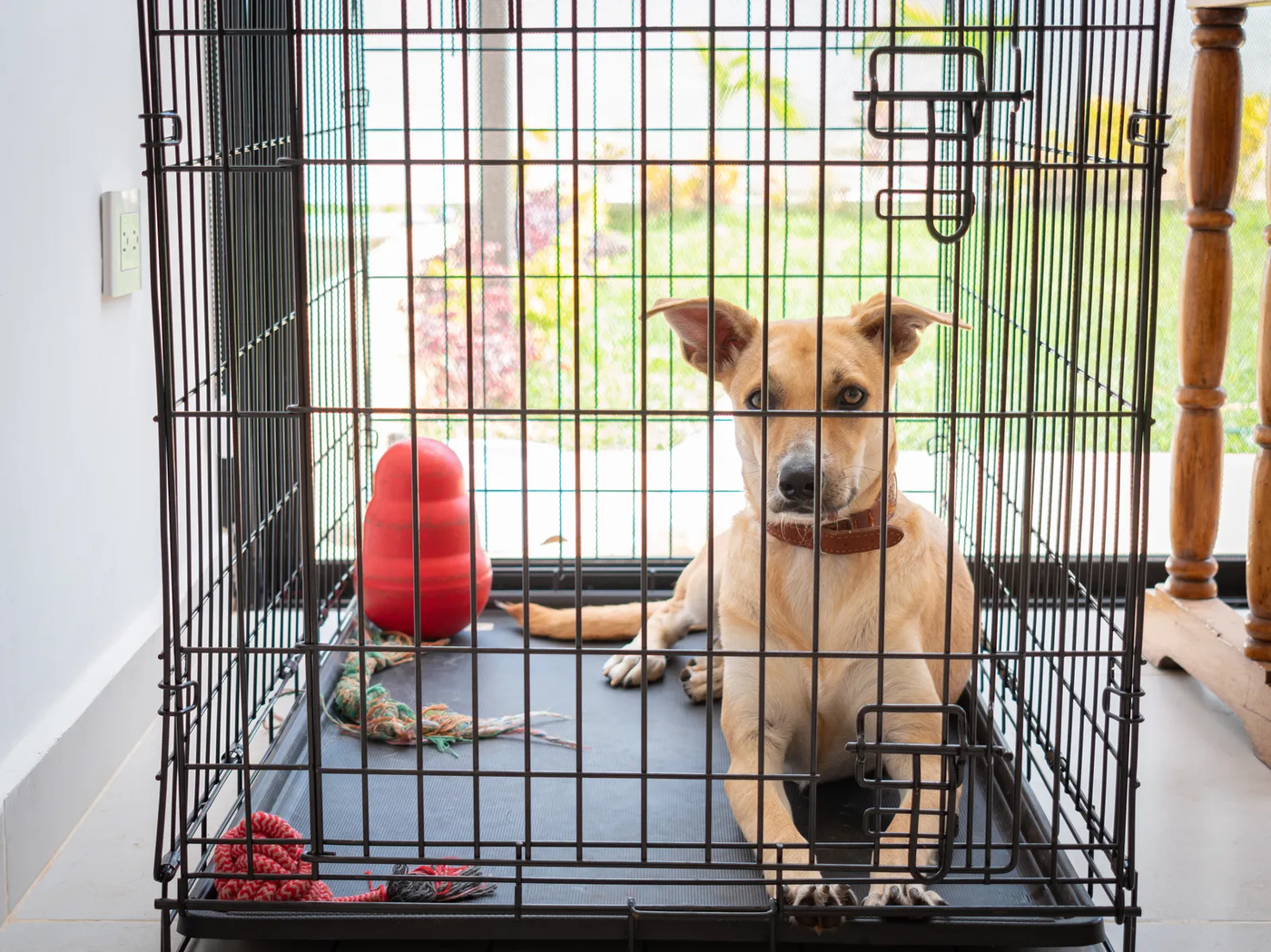
The crate is for sleep and rest; the rest of the day happens outside it.
A board and train dog's day alternates between work and rest. The work happens on walks, in the yard, in the house and on outings; the rest happens in the crate or on a place bed. At night the crate is the bed. That rhythm, a few minutes of focused work followed by real rest, is how dogs learn fastest, and the crate is simply the calmest place to rest in a house with other dogs.
What a good program never does is keep dogs crated for most of the day with two short breaks. That is a kennel with extra steps. If you are comparing programs, ask how many hours a dog spends crated and what fills the rest, and expect a specific answer. Ask to see a photo of where the dogs rest, too; a program with nothing to hide will send one.
- Crated at night, like a bed
- Crated or on place for rest between sessions
- Out for walks, training, the yard and outings
- Never crated for most of the day
Why the crate helps training
A dog that can rest calmly in a crate has learned the off switch most families want.
Calm is a skill. A dog that has spent its life on the move, following people from room to room, pacing at windows and never really resting, is a dog that barks, jumps and pulls because it is always switched on. Short, predictable crate rests teach a dog to switch off, and a dog that has rested is ready to learn in the next session.
The crate also protects the training. A dog that cannot rehearse counter surfing, chewing or door rushing while nobody is watching stops practicing those habits, and the new ones have room to grow. The same logic applies at home, which is why the crate is part of the plan you take away. For the first weeks after a stay, a crate when you cannot watch is the simplest way to keep the new habits from being undone by the old ones.
- Rest teaches the off switch
- A rested dog learns faster
- No rehearsing old habits when nobody is watching
- The same rule carries home
If your dog hates the crate
A dog with a crate history gets it rebuilt slowly, and a panicking dog is a different conversation.
Many dogs arrive with a bad history: a crate introduced in a day, used as punishment, or where a storm happened. Those dogs get the crate rebuilt from scratch, with meals inside it, naps by choice and the door closed only for short, successful stretches that grow. Because the rest of the day is busy and predictable, most dogs accept it within the first days.
A dog that truly panics, salivating, injuring itself or breaking teeth on the bars, is not just disliking the crate. That is often separation or noise panic, and it needs to be discussed with our team before the stay so the plan for that dog is set in advance, sometimes with the vet involved. Tell us everything on the consultation call.
A week before the stay, feed every meal inside the crate at home.
Add short naps in the crate with the door open.
Close the door for a few minutes while you are home, then open it on quiet.
Crate your dog at night in the bedroom that week.
Tell our team exactly how your dog reacts, including any panic.
Send a worn shirt for the crate if your dog is nervous.
The Houston factor
Where the crate sits matters as much as how it is used.
In a Houston summer a crate belongs inside, in the air conditioning, never in a garage or on a porch, and ours are. Water is clipped to the door or offered often. A crate in the quietest room also helps on storm nights and on July 4 and New Year's Eve, when fireworks go on for hours and a covered crate with a chew is where a nervous dog feels safest.
Hurricane season, June 1 to November 30, is another reason a crate-comfortable dog is safer. A dog that rests calmly in a crate travels better in an evacuation and copes better in a strange place, which is worth knowing for your own household plan as well as ours. Ready Harris has the county's current preparedness advice, including what to pack for a pet if you ever have to leave.
What we do at Best Dog University
Every program uses the crate the same way, and the handover includes your home setup.
Silver, one week at $1,500, Gold, two weeks at $2,500, Platinum, three weeks at $3,750, and VIP, six weeks at $10,000, all use crate rest the same way in our trainer's house. Crates are already there, sized for the dogs in residence, so you do not need to send one. The go-home session covers where the crate goes in your house and how the rest periods fit into your day.
Crate problems that are really separation anxiety are Platinum work, because the anxiety is tied to your departures and the unlimited private lessons let our trainers work on it in your own home. A dog that simply needs manners and a calm off switch is a Gold dog, and the crate is just part of the routine.
The programs
Programs that teach rest as a skill.
Gold for manners and the off switch, Platinum when the crate problem is really anxiety.


Asked and answered
Questions people ask about this.
How many hours a day is my dog crated?
The night, plus rest periods between training blocks, which are shorter during the day because walks, sessions, yard time, outings and time on place in the living room fill it. The exact balance depends on the dog: puppies and seniors rest more, young working breeds are out more. Ask our team what your dog's day would look like.
Is crating a dog during board and train cruel?
Not when the crate is a bed in a house rather than a cage in a building, and the day around it is full of walks, training and time with people. Dogs rest in crates here the way they would in a good family home. A dog crated nearly all day with short breaks is a different matter entirely.
My dog has never been crated. Can it still come?
Usually, yes. Start at home a week before the stay: meals inside the crate, naps with the door open, then short closed-door stretches while you are home. Tell our team how it went on the call. A dog that panics rather than protests needs its own plan, which our team discusses with you before any dates are set.
Do I have to crate my dog after board and train?
For the first weeks at home it helps a great deal, because it keeps the rest routine and prevents old habits while the new rules settle. Many families keep the crate for good as the dog's bed. Our trainer shows you the setup at the go-home session and explains when a well-trained dog can earn more freedom.
Keep reading
Free consultation · 10% off this fall
Ask how your dog's crate time would work.
Tell our team about your dog and the crate on the free consultation call. When the program fits, a $250 reservation deposit holds your dates and comes off the price.