
Board and train · Nights
Where do dogs sleep at board and train?
Where a dog sleeps tells you more about a program than its website does, and it is the first question our trainers suggest you ask any trainer. Here is ours, in detail, and what it means for the first nights at home afterwards.
Last reviewed September 29, 2026 · by the Best Dog University Team
The short version
In the house, in a crate, in a quiet room, in the air conditioning.
The training home is a house, and the dogs live in it. At night each dog sleeps in a crate set up in a quiet room, away from the front door and the busiest part of the house, and cool enough for a Houston summer. The crates are already there and sized for the dogs in residence, so you do not need to send one. A washable mat or a worn shirt from home is welcome for a nervous dog.
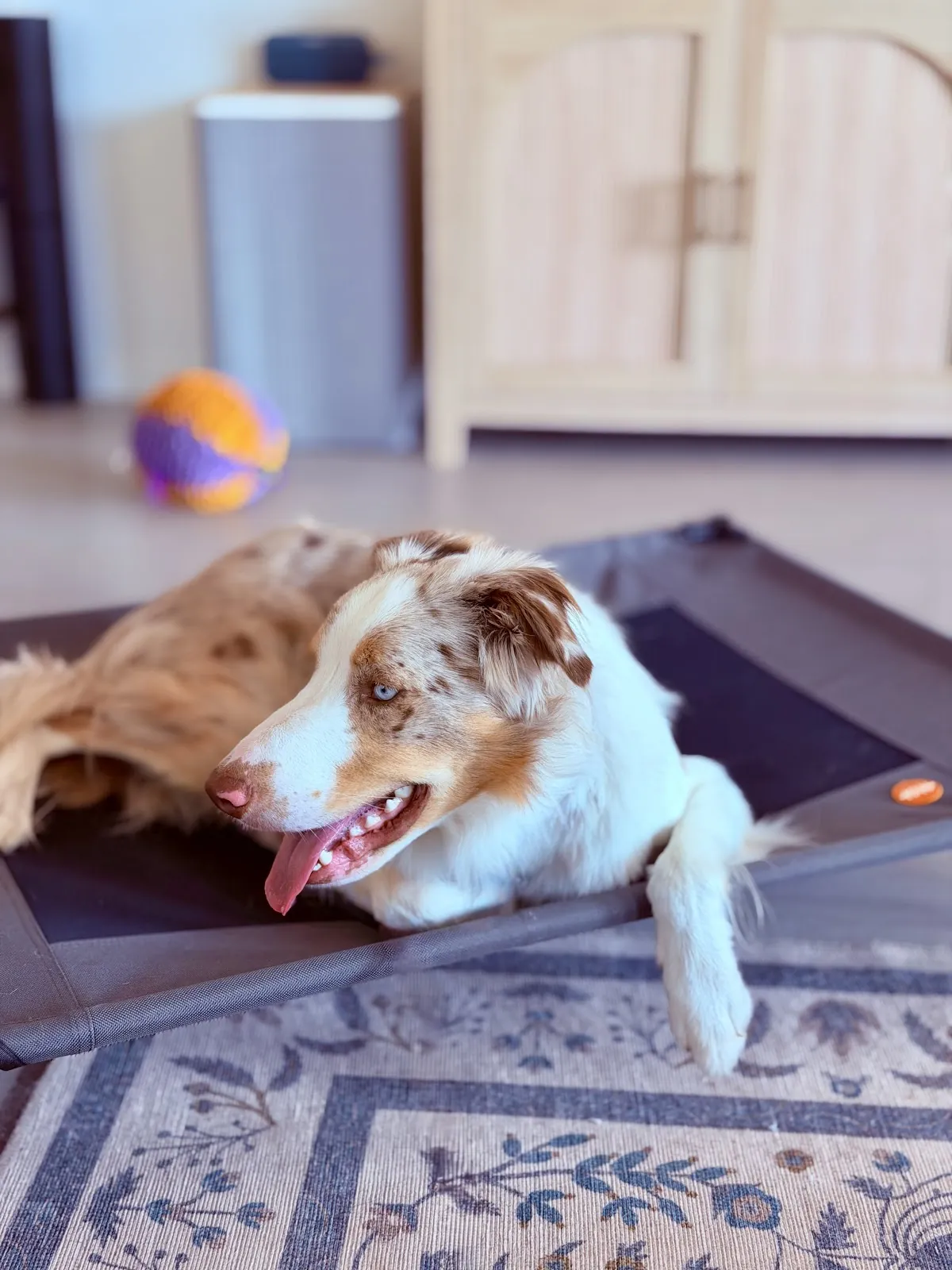
During the day the rest spots change. Between training blocks a dog rests in its crate or on a raised place bed in the living room while the household moves around it. That daytime rest is training too: a dog that can lie calmly while dinner is cooked and the doorbell rings is learning the off switch families want most.
- Inside the house, never a run or a garage
- A crate sized for the dog, in a quiet room
- Air conditioning and water
- A place bed in the living room for daytime rest
Why a crate at night
A crate at night is the calmest, safest bed in a house with several dogs.
A crate gives a dog a small, predictable space of its own, which is why most dogs settle in one faster than on an open floor in a strange house. It keeps dogs who have not yet met properly apart overnight, keeps chewers away from cords, and means nobody has to guess who was sick on the rug at 3am. It also rebuilds the crate as a calm place for dogs that arrive disliking one.
A crate is a bed, not a holding pen. The dogs are out of it for walks, training, yard time, outings and the evening settle, and the night is simply the longest stretch of rest. It is also the arrangement we will suggest for your house at the go-home session, at least for the first weeks.
- A small space of its own
- Dogs kept safely apart overnight
- No chewing cords or wandering at night
- The crate rebuilt as a calm place
Nights in Houston
Storms, fireworks and summer heat are planned for before they arrive.
Houston nights have their own problems. Spring and summer thunderstorms roll in after dark, and a dog that fears thunder sleeps in the quietest room with the television on for cover noise. July 4 and New Year's Eve bring hours of fireworks across the northwest suburbs, so those evenings are planned as quiet indoor nights with food, a covered crate and extra attention for the nervous dogs.
Heat matters at night too. A dog should never sleep in a garage, laundry room or porch in a Texas summer, and ours do not. In hurricane season, June 1 to November 30, every dog's records and your evacuation contact are on file from drop-off, so if a storm threatens, our team calls you before any plan changes.
An evening walk in the cool of the evening.
Dinner, earned with a sit and a release.
A settle on place in the living room with the household.
A last trip outside before bed.
Into the crate in a quiet, cool room with water.
White noise or the television on stormy or fireworks nights.
What we do at Best Dog University
Every program sleeps the same way, and you get the home version at handover.
Silver, one week at $1,500, Gold, two weeks at $2,500, Platinum, three weeks at $3,750, and VIP, six weeks at $10,000, all run the same nights in the same house, with a limited number of dogs at a time. What the program changes is the day. The night is always a calm, cool crate, because rest is where the day's training settles.
At the go-home session our trainer shows you the evening routine and where the crate should live in your house, often in a bedroom for the first weeks so the dog hears and smells its family. If your dog has never slept crated, tell our team on the consultation call; we will suggest starting at home a week before drop-off, so the first night here is not the first night in a crate.
The programs
Every program, the same calm nights.
Two, three or six weeks in our trainer's house in Cypress, each night in a cool, quiet room.



Asked and answered
Questions people ask about this.
Does my dog sleep in the trainer's bed?
No. Dogs sleep in crates in a quiet room of the house, which is safer with several dogs in residence and is also the routine we suggest for the first weeks at home. It keeps the rules simple, and a dog that sleeps well in a crate goes home already knowing the night routine.
Should I send my dog's bed?
Usually not. Crates and bedding are set up for the dogs in residence. A thin washable mat or a worn shirt that smells of home is welcome for a nervous dog. Leave the plush bed that has already been chewed and anything you would hate to lose at home.
What if my dog barks or cries at night?
A dog in a new house may be restless on the first night. Our trainers handle it the way they would teach you: a calm room, a real need answered with a quick trip outside, and nothing that rewards the crying itself. Most dogs are sleeping through by the second or third night.
Where should my dog sleep when it comes home?
Somewhere calm and consistent, usually a crate in your bedroom or a quiet room for the first weeks, set up the way you were shown at the go-home session. Keeping the night routine the same as the training home helps a dog settle quickly and keeps the rest of the training steady.
Keep reading
Free consultation · 10% off this fall
See where your dog would sleep.
Ask our team on the free consultation call about the house and the nights. If the program fits, a $250 reservation deposit holds your dates and comes off the price.