
Two dogs
Walking and managing a two-dog household
Two dogs pulling in two directions on a Cypress sidewalk is one of the most common sights in the neighborhood, and one of the most avoidable. The two-dog household runs on a few rules that are easy to keep and expensive to skip.
Last reviewed September 11, 2026 · by the Best Dog University Team
The walk
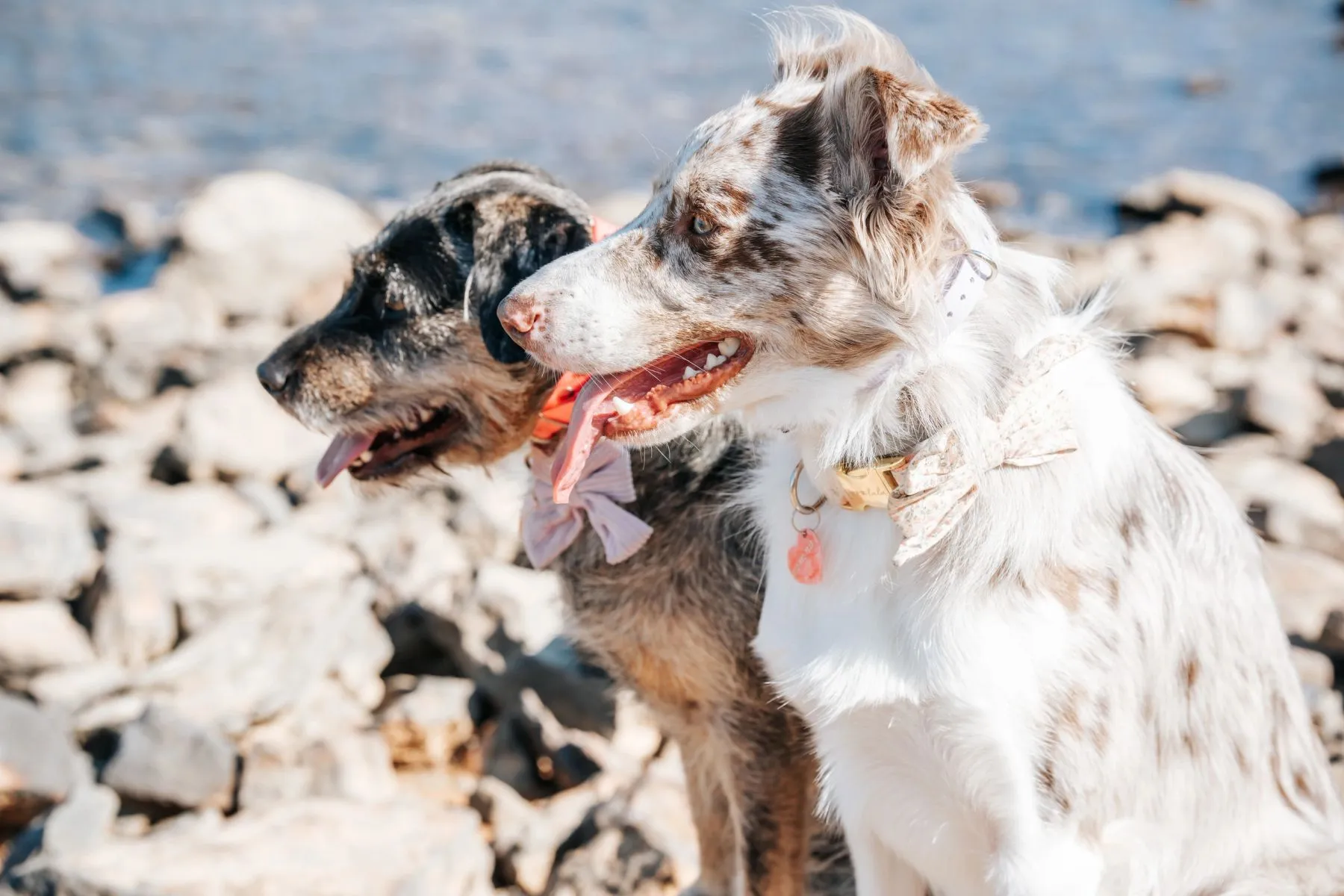
Two single walks before any double walk, and a heel from each.
A dog that pulls alone pulls twice as hard beside another dog, because the other dog is the biggest distraction on the walk. So each dog gets its own structured walk until the leash stays slack through distractions, which for an untrained pair means a few weeks of two walks a day. Only then do they walk together, both on the same side of you, on short leashes, with the calmer dog on the outside and the more reactive one nearest your leg.
The first joint walks are ten minutes on your own street at the quiet hour. Length and difficulty come later, and any pulling from either dog means back to single walks for a few days. A coupler that joins the two leashes is a shortcut that teaches the dogs to pull each other; skip it.
- A slack leash from each dog alone before they walk together
- Same side, short leashes, calm dog on the outside
- Ten minutes on a quiet street first
- Pulling from either means back to single walks
Weeks 1 to 3: two structured single walks a day, each dog alone
Week 4: the first joint walk, ten minutes, quiet street, quiet hour
Weeks 5 and 6: longer joint walks; the first passing dog at a distance
Ongoing: one single walk a week for each dog, to keep the heel honest
Any regression: back to singles for three days
Meals, crates and beds
Separate for life, side by side on purpose.
Two dogs eat in separate crates, every meal, forever. It removes the single biggest cause of fights between housemates and it keeps each dog's crate a good place. They sleep in separate crates too, in the same room if they are calm together. Chews and bones are given in the crates or not at all, because a chew on the living room floor is a fight in waiting.
Place beds are where the two dogs learn to share a room. Two beds a few feet apart, both dogs sent to them at meals and when guests arrive, both released together. A dog on its bed cannot be crowding the other one, guarding the couch or starting the game that ends in a scuffle.
- Meals in separate crates, every meal
- Chews only in the crates
- Two place beds, sent and released together
- Separate crates for sleeping and storm nights
Manners for two
The rules are the same for both, and each dog answers for itself.
The two-dog trap is training the pair instead of the dogs. Cues get given to the room, the faster dog answers, the slower one coasts, and within months one dog is trained and the other is a passenger. Give each dog its own name before its own cue, train them separately for five minutes a day, and expect each to hold place and wait at doors on its own. A dog that only behaves when the other one does has not learned anything.
Guests and doors need a script: both dogs to their beds, the door opens, the guest ignores them, both released one at a time. Two dogs launching at a visitor together is twice the weight and more than twice the chaos.
- Name before cue, every time
- Five minutes of solo training per dog per day
- Doors and guests: both on place, released one at a time
- No cues given to the room
When two becomes a problem
Fights, guarding and the dog that copies the wrong things.
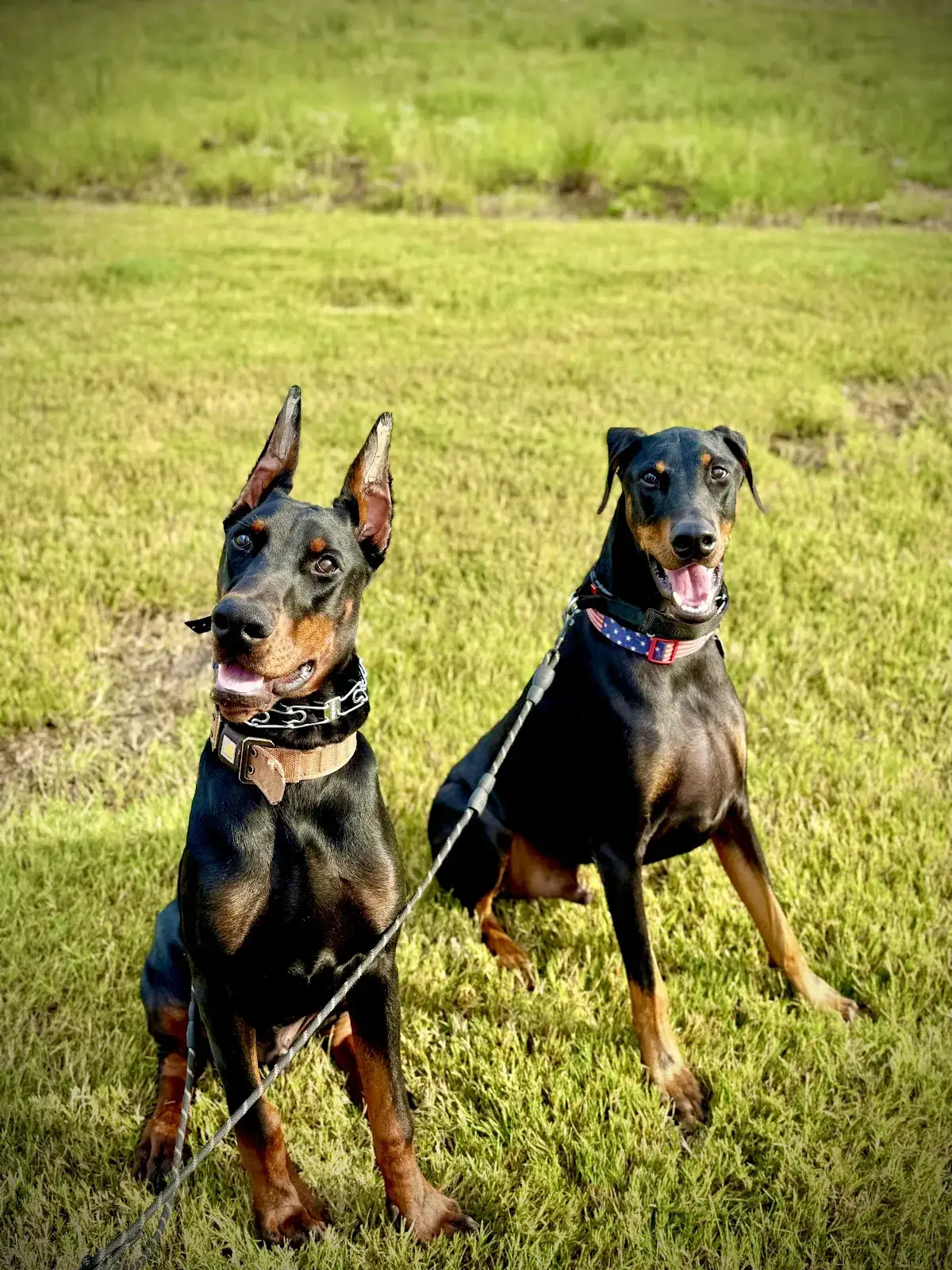
Two dogs that fight over a doorway, a person or the couch have a resource problem that structure fixes; two that have drawn blood need a plan from someone who does it for a living, and until then they are separated. A dog that has picked up the other's window barking or leash lunging has copied it, and both need the work. Our multi-dog household page covers the fighting cases and our two-dog board and train page covers how a pair is trained together and apart.
A lesson at home with both dogs, at $220, is the best-value fix for the ordinary two-dog household, because the problems live in your hallway and on your sidewalk.
Two dogs in Houston
Narrow sidewalks, other dogs and a long summer.
Houston's master-planned sidewalks are narrow and full of dogs, so the joint walk stays on the quiet streets at the quiet hours until both dogs can pass another dog calmly. Summer walks go at the pace of the hotter, slower dog, with the pavement test for both sets of paws and water for two. In storm season, two crates in the same interior room, two chews, and one calm human. A pair that has the rules above handles all of it; a pair that does not doubles every problem the season brings.
The programs
Programs for a two-dog household.
Lessons at home with both dogs for the ordinary pair, a Gold stay for the dog that needs the foundation the other has.

Asked and answered
Questions people ask about this.
How do I walk two dogs at once without being pulled over?
Teach each dog to walk alone first, then walk them on the same side on short leashes with the calmer dog on the outside, ten minutes on a quiet street, and back to single walks at any pulling. A coupler joining the leashes teaches them to pull together; avoid it.
Should my two dogs eat together?
No. Separate crates for every meal, for life. It removes the most common cause of fights between housemates and keeps each crate a good place. Chews and bones follow the same rule.
One of my dogs is trained and the other copies its bad habits. What do I do?
Train them separately for five minutes a day each, give each dog its own name before its cue, and expect each to hold place and doors alone. A dog that only behaves when the other does has not learned; it has followed.
Can you train two dogs in one board and train?
Yes, each at its own program price, and partly apart so that each dog learns to work with a person rather than only with the other dog. The go-home session covers the joint walk and the household rules for both.
Sources
Keep reading
Free consultation · 10% off this fall
Tell our team about both dogs.
The free phone consultation is a direct call: how each dog walks alone, what happens at the door, and whether a lesson at home with both is the fix.