
Two dogs
Adding a second dog: the first two weeks
The second dog is usually bought because the first one is good, and the first one is often good because it has never had competition. Add a second and the old dog guards, the new dog copies, and the walk with both becomes a sled ride. None of it is inevitable, and all of it is decided in the first fourteen days.
Last reviewed September 11, 2026 · by the Best Dog University Team
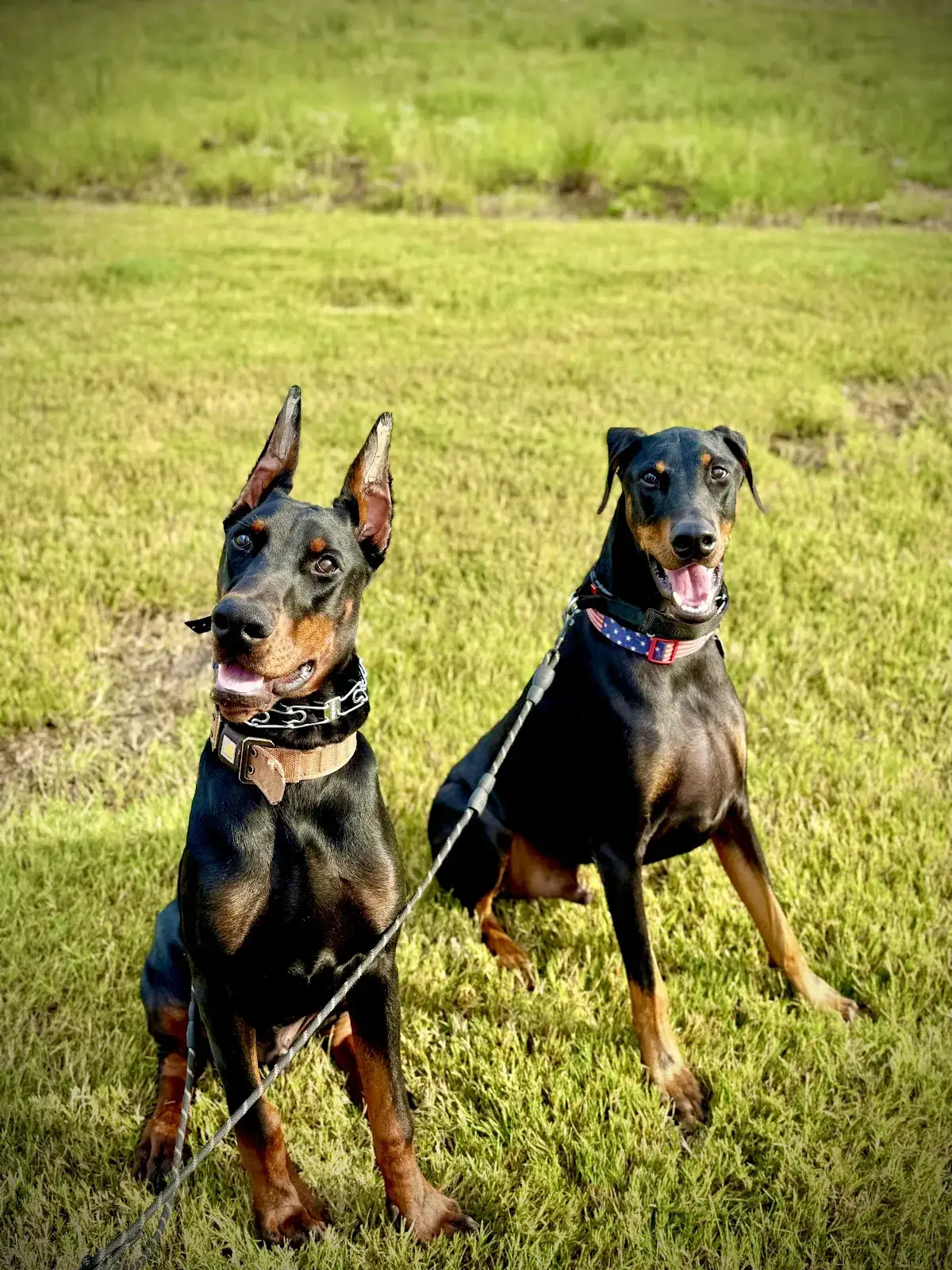
Before the second dog
The first dog's manners are the ceiling for the second.
A new dog learns the house from the resident dog faster than from you. If the first dog barks at the window, the second will within a week. If the first dog pulls, the second pulls harder. If the first dog is fed from the table, the second learns to stare. So the honest first step is a look at the dog you have: if its place, walk and door manners are solid, the second dog inherits them; if not, fix the first dog first, with lessons or a Gold stay, and add the second afterwards.
Choose the second dog with the first in mind too. An adolescent male added to an adolescent male, or a high-drive puppy added to a senior, is a harder two weeks than a calm adult of the opposite sex added to a settled dog.
- The first dog's place, walk and door manners solid before the second arrives
- Opposite sex and a calmer temperament make the introduction easier
- Separate crate, bowls and beds bought before day one
- A plan for who walks and trains which dog
Day one
Meet on a parallel walk, not at the front door.
The introduction happens outside, on leash, on a wide street or a field, with a handler for each dog. Walk parallel ten feet apart, then closer, then let them sniff briefly and walk on. Ten minutes of walking together tells you more than an hour of staring at each other in a hallway, and it ends with both dogs entering the house together, tired, rather than one defending the doorway from the other.
Inside, the new dog goes to its own crate in a separate room for the first night. The first dog keeps its routine exactly. Nobody is punished for the other's existence.
- Neutral ground, one handler per dog
- Parallel walk before any greeting
- Both dogs enter the house together after the walk
- Separate crates from the first night
Day 1: parallel walk, brief sniff, walk on; separate crates and meals
Days 2 to 4: short supervised time together in the house, leashes on; separate walks
Days 5 to 7: each dog trained alone daily; the first dog's rules enforced for both
Week 2: the first walk together, short and structured; place side by side at meals
Day 14: an honest look at guarding, tension over toys, and who copies whom
The first two weeks
Separate crates, separate meals, separate walks, separate training.
Everything is separate until each dog has its own relationship with you. Meals in separate crates, because food is the first thing dogs fight over. Walks alone, because a dog that has not learned to walk with you cannot learn it beside another dog. Training alone, five minutes each, because the second dog needs place and a name response before it can hold them next to a distraction that lives in the same house.
Time together is short, supervised and leashed for the first week, and it grows as the two show you they can share a room without stiffening. Toys are put away for the fortnight; they are the second thing dogs fight over.
- Meals in separate crates, every meal
- Each dog walked and trained alone daily
- Toys and chews away for two weeks
- Supervised time together, leashes on
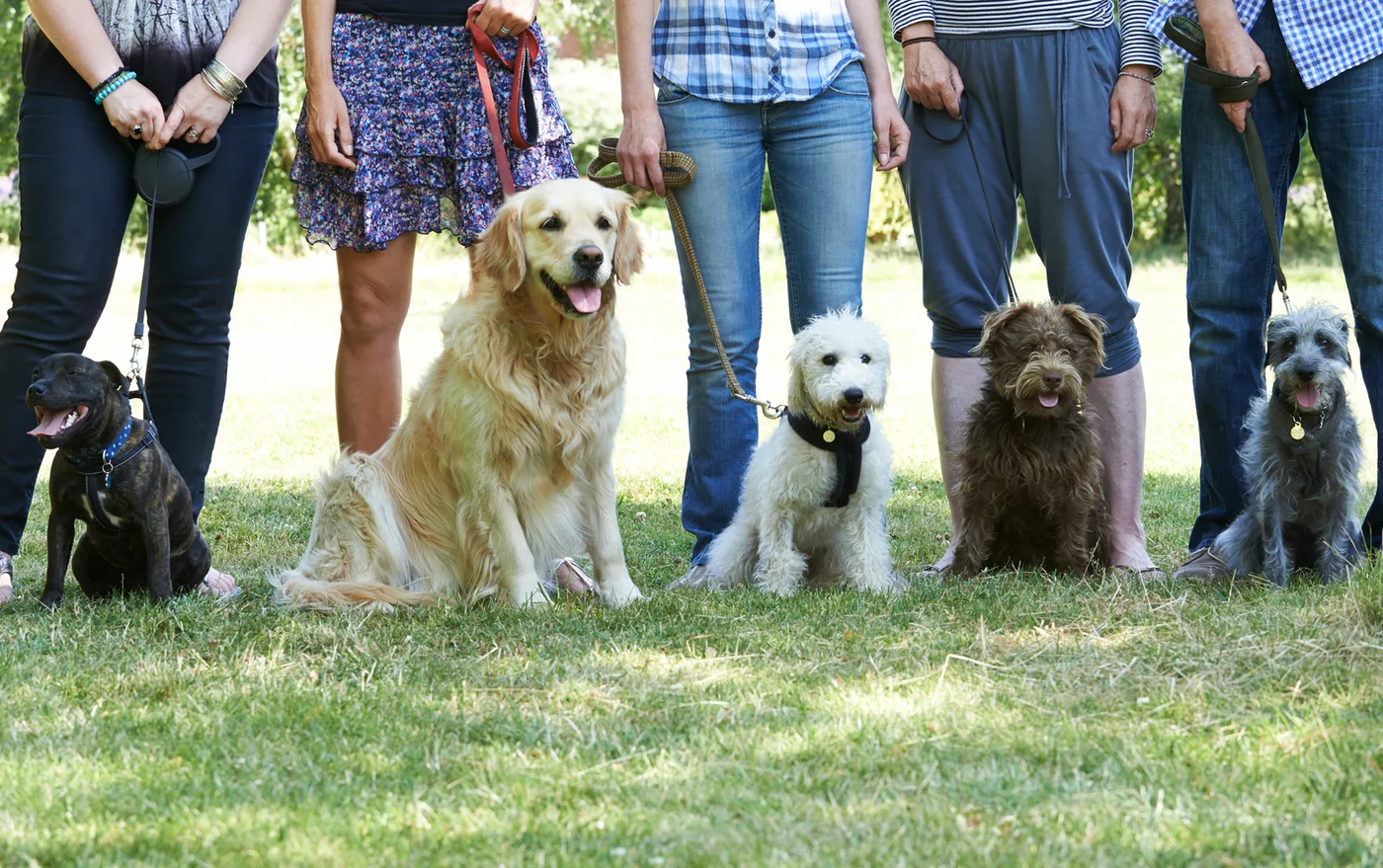
When it goes wrong
Guarding, fights and the sled-ride walk.
A growl over a bowl in week one is normal and is why the bowls are in separate crates. A fight, with contact, is not normal and means the setup was too fast; go back to separate everything and call our team. Two dogs that fight over a person, a doorway or a couch have a resource problem that structure fixes and time does not. And two dogs that pull together on the walk are two dogs that were never taught to walk alone.
Our multi-dog household training page covers the fighting cases. For the ordinary second-dog household, a lesson at home in week two, with both dogs, is the best money spent: it sets the rules for two before the habits set for two.
Two dogs in Houston
Two leashes, one sidewalk and a summer.
Houston's master-planned sidewalks are narrow and full of other dogs, so the two-dog walk needs a heel from each dog before it is attempted together, and the first joint walks should happen at the quiet hours. Summer doubles the heat problem: two dogs on one walk means the slower, hotter one sets the pace, and the pavement test applies to both. A two-dog household also needs two crates for storm season, in the same quiet room, because two anxious dogs in one crate is a fight waiting to happen.
The programs
Programs for a two-dog household.
A Gold stay for the first dog before the second arrives, lessons at home for both in week two, the bundle if the second is a puppy.

Asked and answered
Questions people ask about this.
Should I get a second dog to keep the first one company?
Only if the first dog is trained and you want a second dog for its own sake. A second dog does not fix separation anxiety, boredom or reactivity in the first; it usually doubles them. Fix the first dog, then decide.
How do I introduce a new dog to my current dog?
On a parallel walk on neutral ground with one handler per dog, ten feet apart and closing slowly, a brief sniff, and then both dogs entering the house together after the walk. Never at the front door and never nose to nose through a gate.
Can two dogs share a crate?
No. Separate crates in the same room, especially for meals and for storm nights. Sharing a crate is a fight waiting for a trigger, and it teaches neither dog to be calm alone.
Can you board and train two dogs at once?
Yes, each at its own program price, and usually with the two trained partly apart so that each learns to work with a person rather than only with the other dog. Our board and train for two dogs page covers how that runs.
Sources
Keep reading
Free consultation · 10% off this fall
Tell our team about both dogs.
The free phone consultation is a direct call: what the first dog does now, what the second is like, and whether the first needs work before the second arrives.