
Loose leash, step by step
How to stop a dog from pulling on the leash
Pulling is the first thing most Houston owners mention on the free phone consultation, and it is one of the fastest things to change once the person holding the leash changes first. This is the method our trainers hand families at the go-home session, written so you can start it in your driveway this evening.
Last reviewed September 10, 2026 · by the Best Dog University Team
Why dogs pull
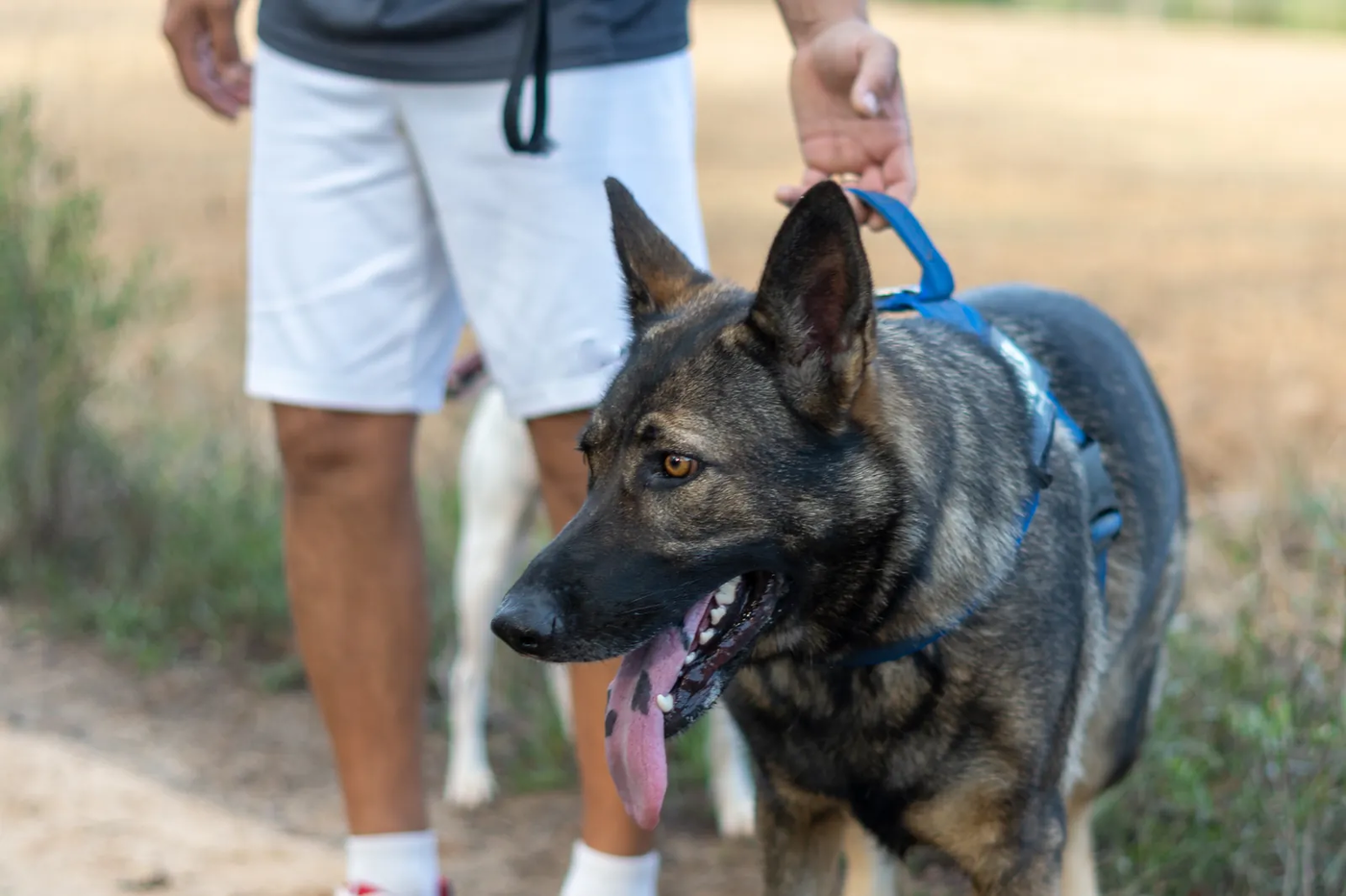
Dogs pull because pulling has always worked.
Every time your dog leaned into the collar and the walk kept going, the pull got paid. The tree, the mailbox, the other dog across the street: all of it arrived faster when he dragged you there. He is not being stubborn or dominant. He has learned a simple rule, tension moves me forward, and he applies it on every walk. The fix is to make that rule stop being true and to make a loose leash the only thing that moves the walk.
- The leash is tight for most of the walk
- Your dog is always a body length ahead of you
- He chooses the route, the pace and the stops
- You brace or wrap the leash around your hand
- Walks leave you tired and him still wired
Set up to succeed
Prepare the walk before you fix it: a short route, the right hour and one leash.
Choose a fixed four to six foot leash, not a retractable one. A retractable leash teaches tension by design, because it pulls back the whole time. Hold the leash in one hand with your arm relaxed and your elbow near your side, so the dog can feel the difference between slack and pressure. Pick a starting point where nothing interesting is happening: your driveway, a quiet cul-de-sac in Fairfield, the sidewalk in front of your own house.
- A fixed four to six foot leash, never a retractable
- A flat collar, or the tool our trainers recommend for your dog
- Ten small pieces of real food in a pocket
- A marker word and a release word, chosen in advance
- Five to ten minutes, in shade or before the heat
The method
The loose-leash method in six steps: stop, turn, mark, move.
Start with your dog on your left, leash slack, and say nothing. Walk. The whole session is a conversation between your feet and the leash, and your dog will read it faster than you expect. Talk less and move more. Food goes only to the spot beside your knee where you want him to be.
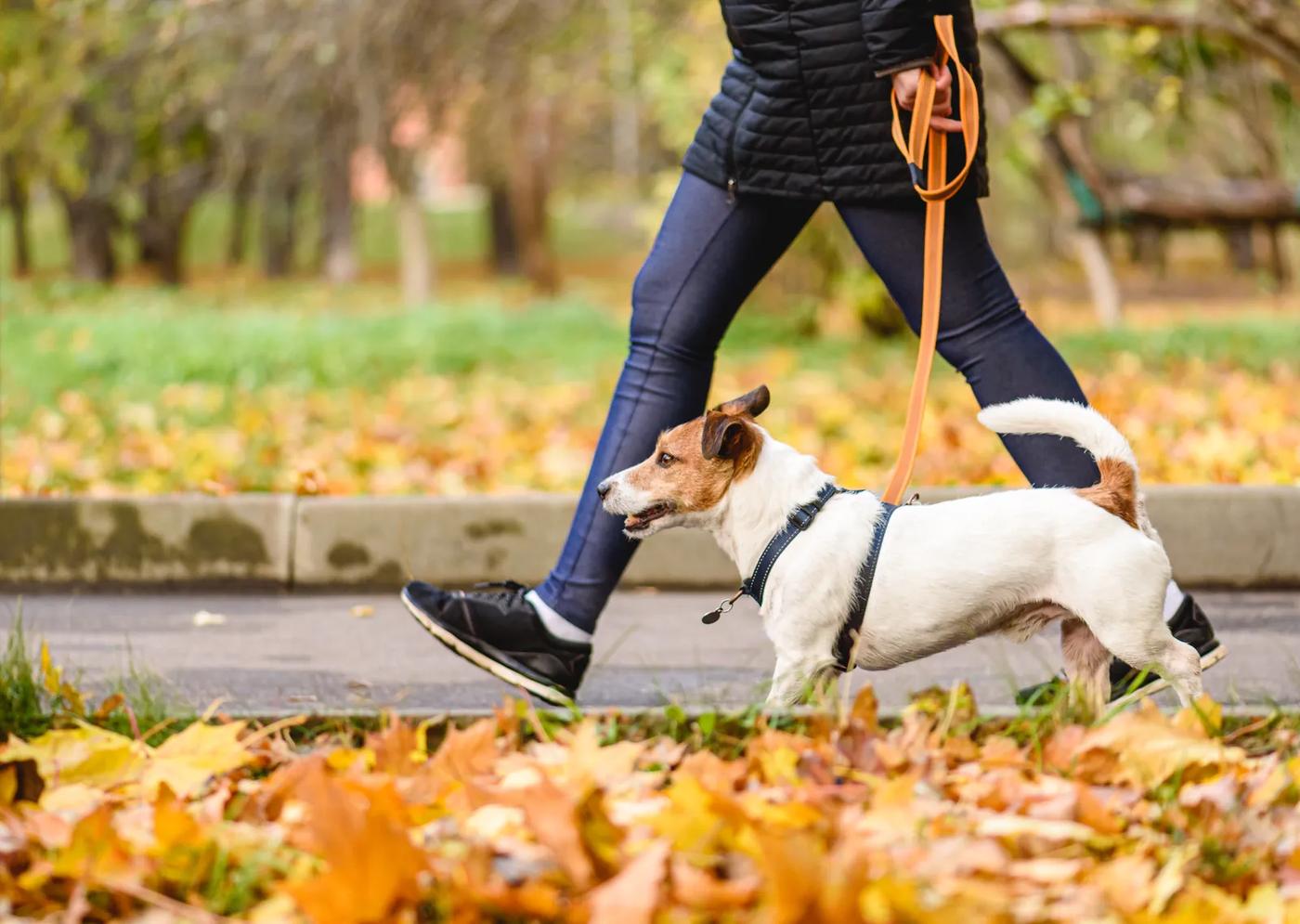
Step off with your dog beside you. The instant the leash tightens, stop dead. Do not yank and do not say his name. Wait.
The moment he looks back or the leash goes slack, mark it with one word, such as "yes", then take one step forward. Moving forward is the reward.
If he surges again, turn and walk the other direction at the same pace. He learns that pulling makes the walk go backward.
When he catches up and falls in beside you, mark and drop a piece of food at your left knee. Feed the position you want.
Add three, then five, then ten steps of slack before the next mark. Stretch the distance, not the difficulty.
End every session with a release word like "break" and a minute of sniffing. The sniff is the paycheck for a clean walk, and it is his to earn.
Where it falls apart
The mistakes that put the pulling right back.
The method fails in the same handful of ways every time, and almost all of them belong to the human. The most common is inconsistency: you hold the rule on the training walk and drop it on the rushed walk before work. Your dog does not count sessions. He counts whether tension worked today, and one paid pull outweighs twenty stops.
The second is letting the leash creep. You allow a foot of drift out front because it is not really pulling, then two feet, and by the weekend the tension is back and you wonder what happened. Slack means slack. The dog belongs at your side, and the rule is the same on every walk with every member of the family.
- One person enforcing it, the rest letting him drag
- Using the retractable for the quick potty trip
- Talking constantly instead of letting the leash teach
- Letting him greet every dog he pulls toward
- Skipping the release, so the walk is all work and no paycheck
Proofing around Houston
Once it holds on your street, take it to trails, storefronts and other dogs.
A loose leash in your driveway is step one. Now add the world, one layer at a time. Move to the sidewalk, then a neighbor's block, then a paved loop at a Cypress park on a weekday morning. Then a pet store aisle along 290: the carts, the smells and the other dogs are exactly the distractions your dog needs to practice around, and the air conditioning makes it the best training room in Houston from June to September.
When it is more than pulling
Lunging, barking or freezing on the leash is a behavior case, not a leash skills gap.
If your dog walks calmly until another dog appears and then explodes, the pulling is a symptom. That is reactivity, and it does not respond to stop-and-turn, because a dog over threshold cannot think about the leash. The same goes for a dog who plants his feet and refuses to move, or who pulls frantically toward home. Those dogs need a foundation and daily controlled exposure, not another harness.
The programs
Programs that build the walk for you.
If you would rather hand the leash to our trainers first, these programs teach loose leash walking every day in Cypress and hand it back at the go-home session.


Asked and answered
Questions people ask about this.
What leash and collar should I use to stop pulling?
A fixed four to six foot leash and a well-fitted flat collar are enough to start the method. Retractable leashes work against you because they keep constant tension on the dog. If your dog is strong or has years of practice, our team may recommend a training collar or slip lead on the consultation. The tool helps you communicate; the rule about tension is what changes the dog.
How long does it take to stop leash pulling?
Most dogs understand the stop-and-turn rule within a few sessions. Making it a habit on every walk, with every family member and around real distractions, takes a few weeks of consistency. A dog who has pulled for five years will test the rule more than a puppy, but age is not the limit. Consistency is.
Should my dog walk in front of me or beside me?
Beside you, roughly at your knee, on the same side every time. A dog out front is deciding the pace and the direction, and that position is where pulling starts. Sniffing and wandering are fine when you release him for them. The structured part of the walk keeps him at your side.
My dog only pulls toward other dogs. Is that the same problem?
No. A dog who walks nicely until another dog appears and then drags or lunges is reacting, not pulling. The stop-and-turn method will not hold once he is over threshold. Cross the street, add distance, and talk to our team about the Platinum program, which is built for exactly this pattern.
Can I walk my dog in the middle of a Houston summer day?
Generally no, from May through September. Concrete and asphalt hold heat long after the air cools, and paws burn before you notice. Walk early or after dark, test the pavement with the back of your hand, carry water, and move the training session indoors or into a pet store when midday is the only option you have.
Sources
Keep reading
Free consultation · 10% off this fall
Tell our team how your walks go.
A free phone consultation is a short, direct call. Describe the walk, and our team tells you whether a lesson, a Gold stay or a Platinum program fits your dog.