
Leash · Causes and fix
Why does my dog pull on the leash?
Owners in Houston walk on hot sidewalks, past fire ant mounds and along bayou trails, and a pulling dog turns every one of those into a problem. Understanding why he pulls is the first half of fixing it. The second half is a method you can actually repeat.
Last reviewed September 10, 2026 · by the Best Dog University Team
Five causes
Pulling is rewarded, practiced and rarely taught out.
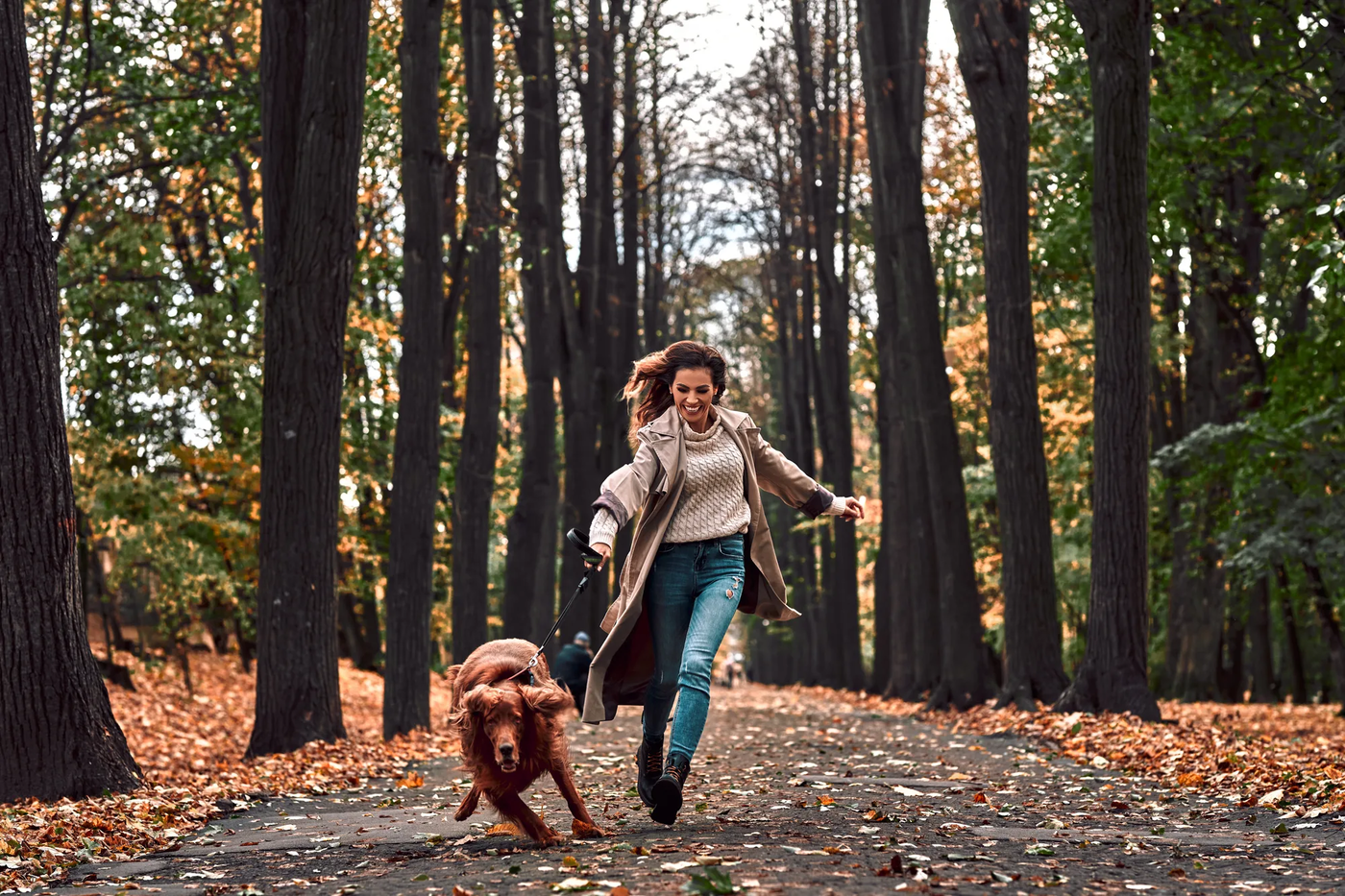
Dogs walk faster than we do, and the world in front of them is more interesting than the person behind them. That alone would produce a tight leash. What turns it into a habit is that the tight leash is followed by progress toward the smell, the dog or the corner every single time. A dog does what pays. Pulling has paid on every walk of his life.
There are a few multipliers. Opposition reflex means a dog leans into steady pressure instead of yielding to it, so a constantly tight leash actually invites more pulling. A back-clip harness gives him a comfortable place to load. And adolescent energy in a Lab, a doodle or a husky, with no other outlet, turns the walk into the only exercise he gets.
- Tension has always been followed by forward progress
- Opposition reflex: steady pressure invites leaning
- Harnesses give a comfortable place to pull from
- Retractable leashes reward pulling with more line
- Excess energy with no other outlet
What it is not
Your dog is not trying to be the boss.
The old idea that a dog in front is asserting dominance does not hold up, and it leads owners to yank and fight. The dog in front is usually excited, under-exercised or simply unaware that there is a rule. Our trainers see more pulling in friendly, social dogs than in tough ones. The fix is a clear rule, taught calmly, rather than a battle over who is in charge.
It is also not solved by equipment alone. A different collar or a head halter changes the mechanics, and our team uses the right tool for the dog, but a tool without a taught position just gives you a dog who pulls slightly less. The position, his shoulder next to your leg, is the thing to teach. The tool is the pencil, not the lesson.
Method
Teach a position, then pay for it and correct the leaving of it.
Here is the method our trainers teach at the go-home session. It works in the driveway before it works on the sidewalk, and it works on the sidewalk before it works past another dog. Do not skip the quiet steps.
Start in a quiet spot with a standard 6-foot leash, never a retractable, and the dog on your left.
Walk forward. The instant the leash tightens, stop, or turn and walk the other way without a word.
When the dog's shoulder is next to your leg and the leash is loose, mark it and feed it there, at your side.
Change direction often so the dog has to watch you to know where the walk is going.
Add a verbal cue such as heel only once the dog is offering the position on his own.
Move to the sidewalk, then to a route with a distant dog, and keep the rule the same.
End the walk with a sit at your door and a release into the house.
Houston walking
Where and when you walk in Houston changes the work.
From May to September the pavement on a Cypress or Katy sidewalk is too hot for pads by late morning, so training walks happen before 8 a.m. or after 7 p.m. Put the back of your hand on the concrete for seven seconds first. A pulling dog also drags you through whatever is on the verge, and in Houston that includes fire ant mounds along the sidewalk edges and, on bayou trails, water where alligators live. A dog at your side is a safer dog here.
Walk where the training can succeed. A loop through a quiet block in Towne Lake beats the busy path at Memorial Park until the position is solid. Mosquitoes are a year-round presence, so heartworm prevention is not optional for any dog who walks outdoors in this city.
- Before 8 a.m. or after 7 p.m. from May to September
- Seven-second hand test on pavement
- Stay out of the grass edge where fire ant mounds sit
- Quiet blocks before busy trails
Programs
Loose leash walking is the foundation of every program.
The one-week Silver Foundation program at $1,500 exists largely for this problem: a dog who pulls and blows through doors but has no deeper issues. The two-week Gold at $2,500 adds jumping, place and impulse control. For a dog who pulls because he lunges at other dogs, the three-week Platinum at $3,750 adds a structured heel and field trips past real triggers. Every program ends with a go-home session where the trainer hands you the leash and coaches you through the position.
If you would rather learn it together from the start, private lessons run $160 in Cypress or $220 in your home, and the first lesson often happens on your own street.
The programs
Programs that fix pulling.
Every board and train starts with loose leash walking. Our trainers recommend the length on the free phone consultation.



Asked and answered
Questions people ask about this.
Does a harness stop pulling?
A back-clip harness usually makes pulling easier for the dog, because it spreads the load across his chest. A front-clip harness reduces leverage but does not teach a position. Our trainers choose the tool for the dog and the owner, then teach the dog where to walk. Without the taught position, no piece of equipment ends pulling.
Why does my dog pull more at the start of a walk?
Excitement. The first few minutes carry the most pent-up energy, and the smells at the end of the driveway are the freshest. Ask for a sit at the door, wait for calm before you step out, and do the first block as pure training with direction changes. The rest of the walk gets easier once that energy is spent.
Is it too late to fix pulling in an adult dog?
No. Adult dogs learn a position as quickly as young ones, and often faster. The difference is the history: a dog who has pulled for five years needs you to enforce the rule on every single walk for the first month. In Houston, that means picking cool hours so you can be patient.
Should I let my dog sniff on walks?
Yes, on your terms. We teach a structured walk where the dog holds position, then a release word that allows sniffing for a minute before the walk resumes. Sniffing becomes a reward for walking well rather than the reason the leash is tight. Both the dog and the owner enjoy the walk more.
Keep reading
Free consultation · 10% off this fall
Ask our team about your walks.
Describe your dog, your route and your leash on the free phone consultation, and our team will tell you which program or lesson fixes the pulling.