
Walks · Definition and method
What is a structured walk for dogs?
Most Houston dogs get walked, and most of those walks change nothing. A structured walk is short, deliberate and tiring in the right way. Here is what it looks like, how to do one, and why our team treats it as the foundation for everything from leash reactivity to calm at home.
Last reviewed September 10, 2026 · by the Best Dog University Team
Definition
Structure means the dog follows and the owner decides.
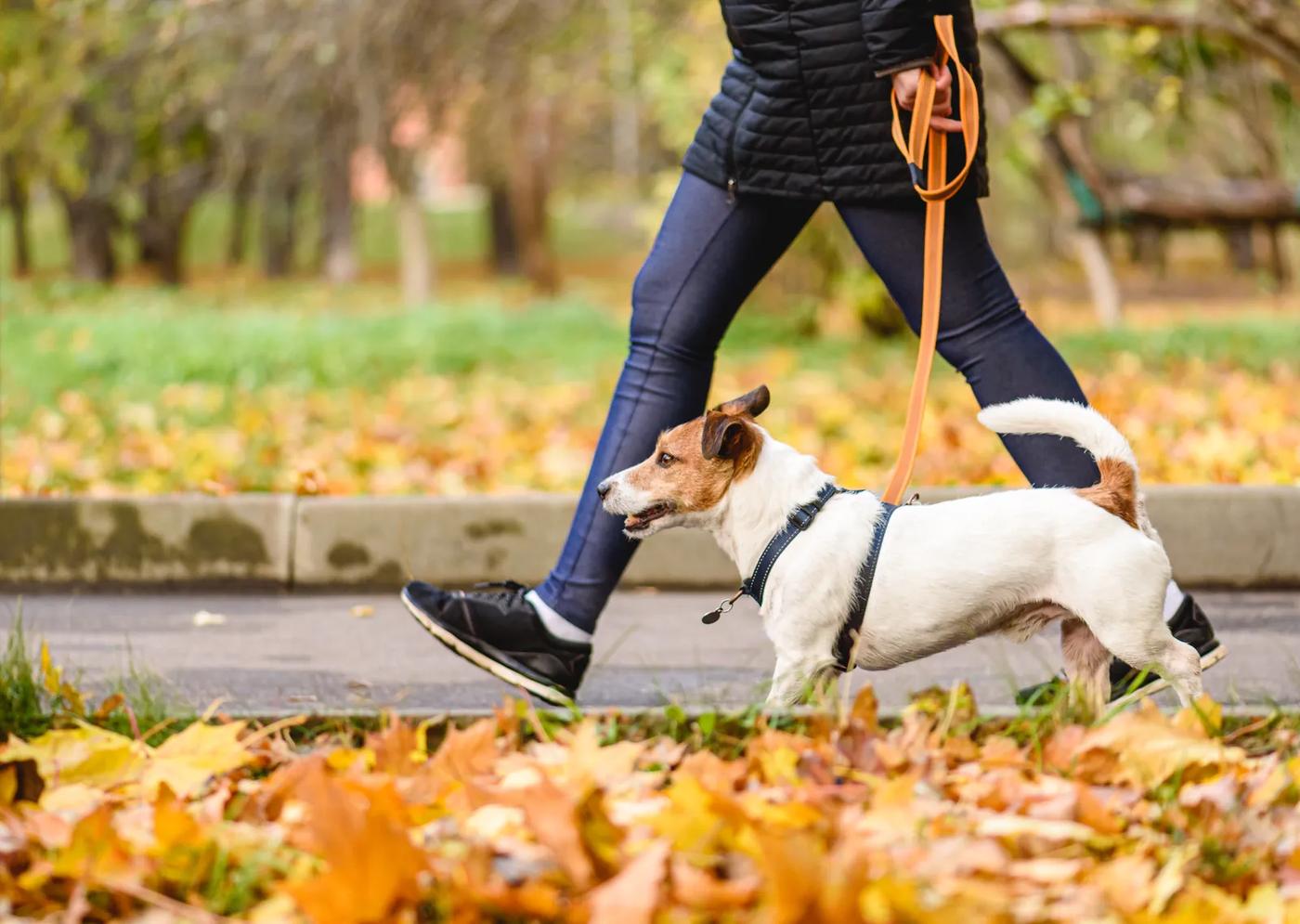
On a structured walk your dog walks in a set position, typically at your left side with the leash hanging in a J. He does not stop to sniff every mailbox, does not pull toward other dogs and does not decide when the walk turns. You set the pace, the route and the breaks. Sniffing, marking and greeting still happen, but only after you give a release word and only for as long as you allow.
That sounds strict, and dogs love it. A dog who is following does not have to scan for threats, guard the block or make a choice at every corner. The work of paying attention to you is mental exercise, and twenty minutes of it leaves most dogs calmer than an hour of dragging. Our trainers use the structured walk with reactive, anxious and pushy dogs for exactly that reason.
- Dog in a fixed position at your side, leash loose
- No sniffing, pulling or greeting until released
- You set pace, route and turns
- Release word opens a short sniff break, then structure resumes
How to do one
Start at the door and keep the first week short.
Here is the walk our team teaches at the go-home session. It begins before you leave the house, because a dog who blows through the door has already decided who is leading.
Have the dog sit at the door and wait while it opens. Step through first, then release him to follow.
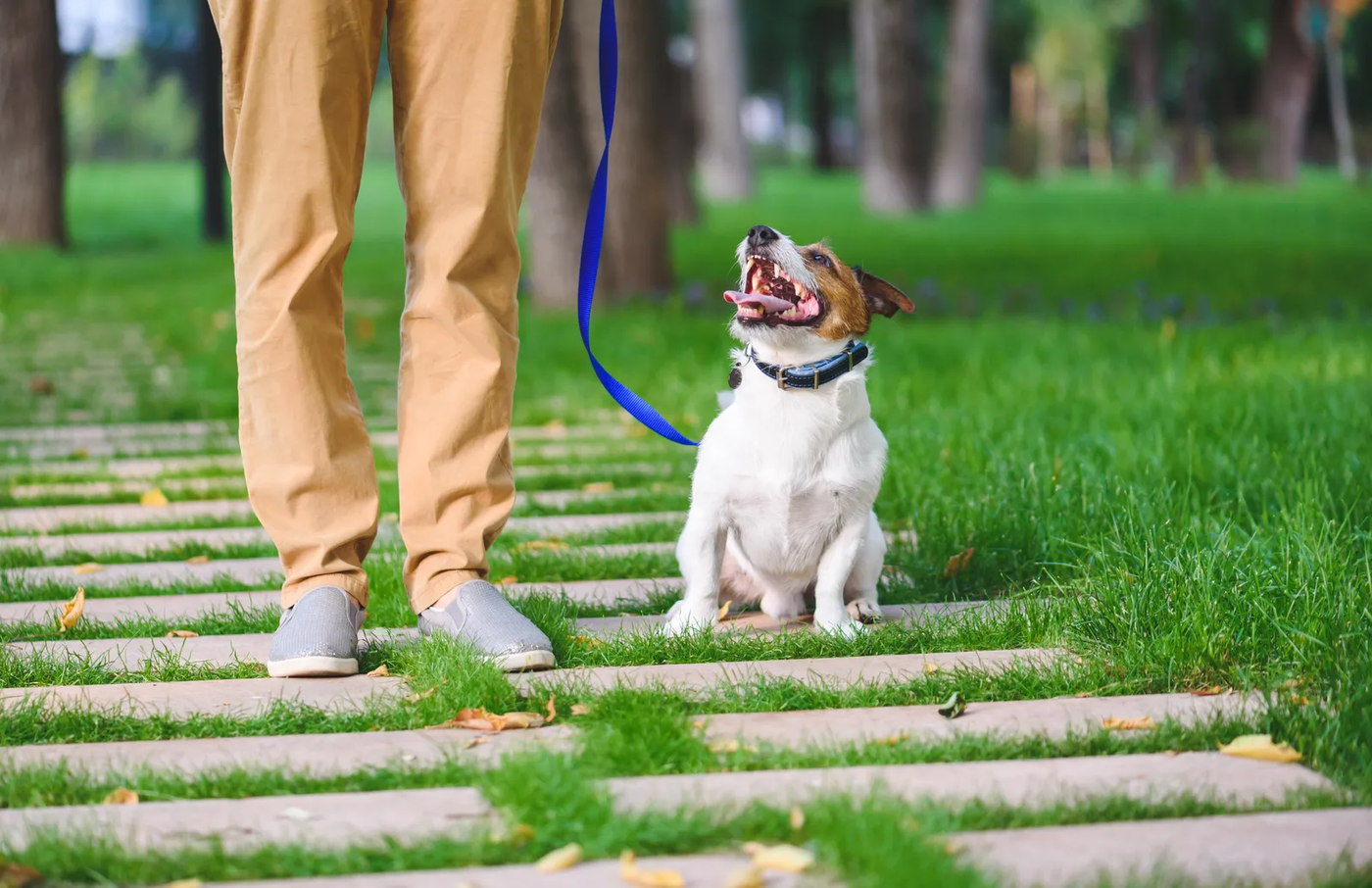
Use a standard leash held short enough that a loose J hangs between you, with the dog's shoulder at your leg.
Walk at a brisk pace. The moment the dog forges ahead, turn and go the other way.
When the dog holds position for a stretch, mark it quietly and keep walking. The walk itself is the reward.
After ten minutes of good position, give a release word and let him sniff for a minute or two.
Call him back to position and resume. End with a sit at your door and a calm entry.
Keep the first week's walks to fifteen or twenty minutes; the mental work is the point.
Why it matters
The structured walk fixes problems that seem unrelated to walking.
Owners come to us about jumping, barking at the window or a dog who cannot settle, and the first change our trainers make is the walk. A dog who practices following for twenty minutes every morning carries that mindset into the house. He is easier to put on place, calmer when the doorbell rings and less inclined to run the household. The walk is where the relationship gets decided, twice a day.
For reactive dogs it is the whole platform. A dog in a structured heel has a job that is incompatible with lunging, and a handler who can turn away from a trigger at any moment. The three-week Platinum program at $3,750 builds a structured heel and then takes it on field trips past other dogs, along Cypress sidewalks and through store parking lots, so the position holds where it is needed.
Houston version
In Houston the structured walk is early, short and away from the water's edge.
From May to September the walk moves to before 8 a.m. or after sunset. A structured walk is short by design, which suits the heat: twenty focused minutes at dawn does more than an hour of wandering in the afternoon. Test the pavement with the back of your hand for seven seconds before you step off the grass, and carry water in the truck for the drive home.
Houston's leash rules apply on city sidewalks and in city parks at the time of writing, and bayou trails deserve extra respect because alligators live in the water along many of them. A dog in position at your side is easier to keep out of the grass edge where fire ant mounds sit and away from the water. The Buffalo Bayou trails and the hike-and-bike path through The Heights are fine places to practice once the position is solid on your own street.
- Early morning or after sunset in summer
- Seven-second pavement test before every walk
- Leash on in city parks and on trails
- Stay clear of bayou edges and fire ant mounds
Common mistakes
The walk breaks in three predictable places.
First, the door. If the dog explodes out of the house, he will not walk in position, so the sit-and-wait at the door is not optional. Second, the retractable leash, which teaches pulling and makes position impossible; use a standard leash. Third, the owner's phone. A structured walk requires the handler to be present, turning at the right moment and noticing the good position before it ends. Ten distracted minutes teach the dog that structure is optional.
The last mistake is quitting on day four. The first few walks are stop-and-turn affairs that cover two blocks, and owners assume it is not working. It is. By the second week most dogs are holding position for the length of a Bridgeland loop, and the sniff breaks feel earned.
Programs
Every program teaches this walk, and the go-home session hands it to you.
Loose leash walking is in the one-week Silver at $1,500. The two-week Gold at $2,500 adds door boundaries and impulse control that make the walk hold. Platinum builds a formal structured heel and proves it in public. Whichever you choose, the go-home session ends with you holding the leash on your own street while the trainer coaches the turns and the release. If you want to learn it without a stay, a private lesson at $160 in Cypress or $220 in your home starts on your sidewalk.
The programs
Programs that build the structured walk.
From loose leash walking in Silver to a structured heel in Platinum, the walk is where every program begins.



Asked and answered
Questions people ask about this.
Is a structured walk cruel because the dog cannot sniff?
No. The dog still sniffs, on a release word, for breaks you choose. What he gives up is the job of leading the walk, and most dogs are visibly calmer without it. Our trainers see anxious and reactive dogs relax within days once someone else is making the decisions on the sidewalk.
How long should a structured walk be?
Fifteen to thirty minutes is plenty. The mental work of holding position is what tires the dog, and in Houston summer that length keeps the walk inside the cool hours. Two structured walks a day beat one long, aimless one. Add sniff breaks and off-leash play separately if the dog needs more exercise.
What is the difference between a structured walk and a heel?
A heel is a formal obedience position with precise placement and eye contact, used in short stretches. A structured walk is a looser, longer version: the dog stays beside you on a loose leash without pulling or sniffing, but the standard is calm position rather than competition precision. Platinum teaches both.
Can a puppy do a structured walk?
A short one, once he is walking comfortably on a leash, usually from around four months. Keep it to a few minutes with lots of release breaks, and skip hot pavement entirely. The Puppy Development Bundle introduces leash pressure and position, and the full structured walk grows from there.
Keep reading
Free consultation · 10% off this fall
Learn the walk from our team.
Tell our team how your walks go now on the free phone consultation, and they will recommend a lesson or a program to change them.