
Thresholds and the wait
How to teach a dog door manners and threshold boundaries
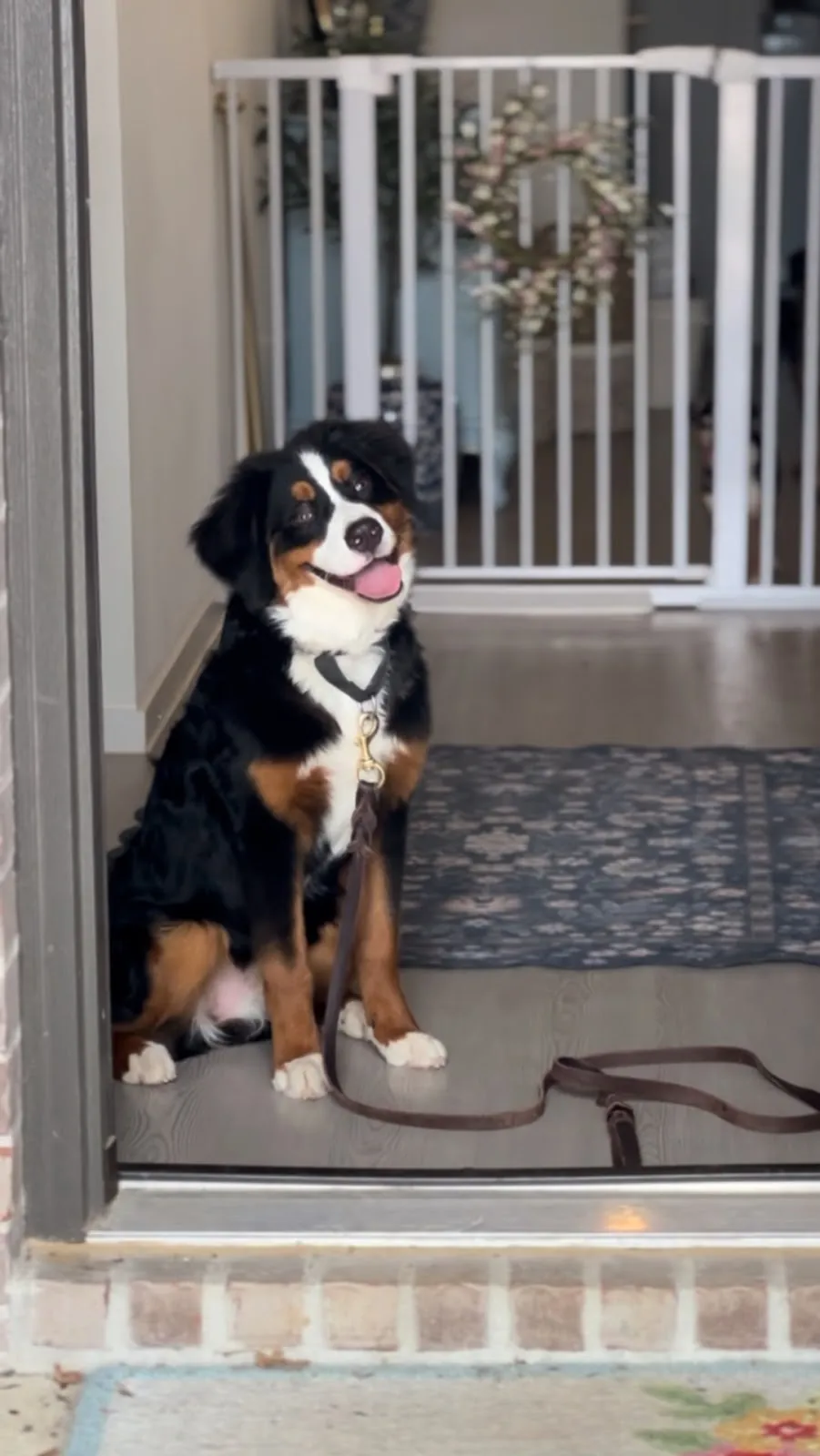
The front door is where structure shows first. Our trainers teach door boundaries in every program from the one-week Silver up, because a dog who waits at a threshold has learned to look to you before he acts. Here is how to build the same rule at every door in your house.
Last reviewed September 10, 2026 · by the Best Dog University Team
Which doors, which rule
Every threshold gets the same rule: sit, wait, release.
A threshold is any line the dog should not cross without permission: the front door, the garage door, the backyard gate, the car door, and for many families the nursery or the office. The rule is identical at each one. The dog sits, the door opens, the dog stays sitting, you go through first, and the dog follows only on the release word. One rule, applied everywhere, is far easier for a dog to learn than five different ones.
| Threshold | What goes wrong in Houston homes | The rule |
|---|---|---|
| Front door | Delivery drivers, guests, a sprint into the street | Sit, wait, you step out first, then release |
| Garage into the driveway | Cars backing out, hot concrete in summer | Leash on, sit on the step, wait for the door to finish |
| Backyard gate | Greenbelts, retention ponds, loose neighbor dogs | Wait at the gate even though the yard is fenced |
| Car or truck door | Parking lots along 290 and Fry Road | Stay in the vehicle until you say the word |
The method
Teach the wait in seven short steps.
Start indoors, at a door that leads nowhere exciting, and let the door do the teaching. Your voice is for the sit and the release only. The door opening and closing is the feedback, and dogs read it quickly because it is fair: hold the sit and the door opens, move and it shuts. No lectures, no repeated commands.
Start at an interior door, such as a bedroom, with your dog on leash. Ask for one sit. Do not repeat it.
Put your hand on the knob. If he stands, take your hand off, wait, and ask for the sit again. If he holds, mark with "yes".
Open the door one inch. If he moves toward the gap, shut it calmly. Open it again when he sits. No words, just the door.
Open it halfway, then fully. Each time he holds, mark, then close the door and release him away from it with "break".
Now walk through the door yourself while he waits. Turn, face him, count to three, and release him to come through to you.
Move to the front door and expect to go back to one inch. The world on the other side makes this a new exercise for him.
Finish every rep with the release word and a walk through together. Ten reps a session, two sessions a day, for a week.
Proofing
Add the doorbell, a delivery and a guest, one at a time.
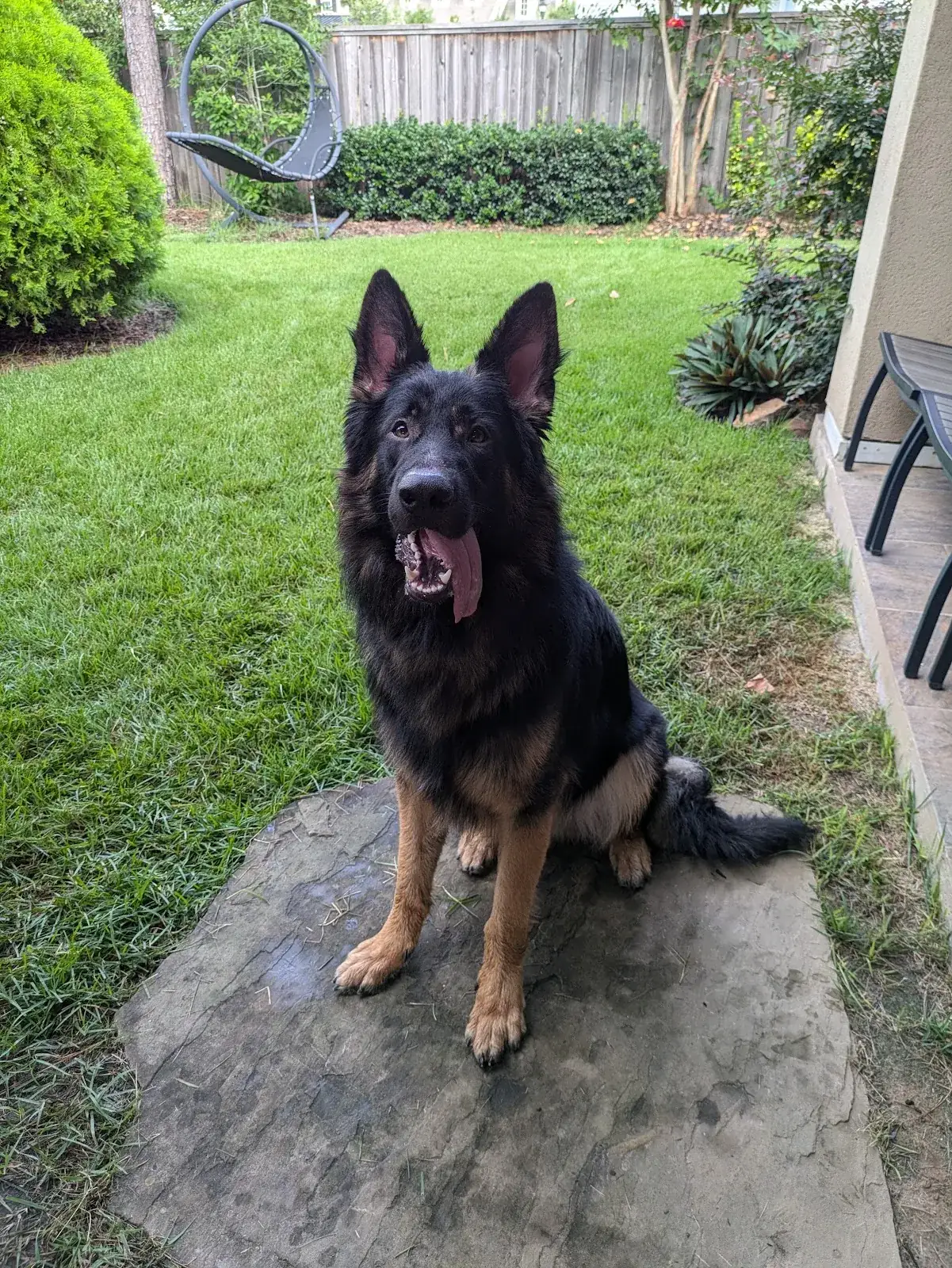
A wait that holds in a silent house is the beginning. The finished version holds while the bell rings, while a stranger stands on the porch, and while the door is wide open for groceries. Each of those is a separate lesson, taught in that order, and each one starts again at a low level. Do not move to the next rung until the current one holds ten times in a row.
Master-planned neighborhoods give you free practice. Packages arrive most afternoons in Towne Lake and Bridgeland, and every one is a chance to put the leash on, ask for the sit, and open the door while the driver walks away. The ladder below runs from easiest to hardest. Most dogs climb it in two or three weeks of daily reps.
- You knock on the inside of the door yourself
- A family member rings the bell while you hold the wait
- A real delivery lands on the porch, dog on leash
- A guest walks in past the sitting dog
- The door stands open while you carry groceries in
Mistakes
The mistakes that leave the door open.
Door manners break for the same reason every rule breaks: it was true on Tuesday and not on Wednesday. The late-night potty trip where he rushes out, the garage he bolts through because you have your hands full, the gate he charges because the yard is fenced anyway. Each exception teaches him that the wait is optional, and a dog who thinks it is optional will test it at the worst door.
- Repeating "wait, wait, wait" instead of letting the door close
- Letting him rush out for the quick potty trip because it is late
- Training only the front door and forgetting the garage
- Grabbing the collar as he bolts, which turns it into a game
- Releasing him into the yard while the gate to the street is open
Cars and the garage
The car door and the garage are where door manners matter most.
The rule you will use most is the one in a parking lot. A dog who launches from the back seat the second the door opens is one distracted moment from a car, and in Houston that moment happens in a pet store lot off 290 or a Katy driveway that backs onto a busy street. Teach the car door exactly as you taught the interior one: sit, door opens an inch, door closes if he moves, release only when you say.
When waiting is not enough
A dog who bolts, panics or guards the door is a behavior case.
Most dogs learn the wait in a week because it is a clear rule with a clear payoff. Some do not. A dog who slams into the door every time the bell rings, barks and bites at the frame, or freezes and trembles when it opens has more going on than manners. A dog who growls when you walk past him to the door is guarding it. Those are cases for our team, not for another week of repetitions.
The programs
Door boundaries, built in our training home.
Door manners are part of every program, starting with the one-week Silver Foundation. Every stay ends with a go-home session at your own front door.


Asked and answered
Questions people ask about this.
Should my dog always go through the door after me?
For the front door, the garage and the car, yes, because the wait is what keeps him from running into a street or a parking lot. It is a safety habit, not a status rule. At interior doors it matters less, and once the wait is reliable you can release him first when it is convenient. What matters is that he never decides on his own.
How do I teach door manners to a dog that bolts?
On leash, at an interior door, with the door doing the correcting. Ask for a sit, open an inch, and close it the moment he moves. He learns that pushing forward makes the door shut and holding still makes it open. Keep the leash on at every real door until the wait is automatic. A dog who has bolted for years may need a few weeks of repetitions.
What release word should I use?
Any short word you do not say in normal conversation. Our clients mostly use "break" or "free". It has to be one word, said once, in the same tone every time, and it has to be the only thing that ends the wait. Avoid "okay", because you say it constantly and the dog will release himself on it.
Does door training help with the doorbell?
It is the foundation for it. A dog who can hold a sit while the door opens has learned to wait when the door matters, and the bell is the next layer. Rehearse it: a family member rings, you ask for the sit or send to place, and the door opens only when he holds. Deliveries in a Houston suburb give you practice most afternoons.
Can an older dog learn to wait at the door?
Yes. The wait is a simple rule and dogs of any age pick it up when the door gives clear feedback. An older dog with years of bolting will test it longer, and a dog with stiff hips can wait in a stand instead of a sit. Our trainers have taught this to seniors in Cypress with the same method as puppies.
Keep reading
Free consultation · 10% off this fall
Tell our team which door is the problem.
A free phone consultation is a direct conversation. Describe the bolting or the doorbell chaos and our team will say whether the Silver, Gold or a private lesson fits.