
Calm greetings at the door
How to stop a dog from jumping on guests
In neighborhoods like Bridgeland and Cinco Ranch the front door opens a dozen times a day: packages, neighbors, the kids' friends, the pest control tech. Every one of those is a rehearsal, and most dogs have practiced jumping hundreds of times before anyone tries to fix it. This is how our trainers reset the door.
Last reviewed September 10, 2026 · by the Best Dog University Team
Why it keeps happening
Jumping works because somebody always pays it.
A dog jumps to get closer to a face, and faces respond. The guest laughs and rubs his ears. The kids squeal. You grab his collar and say his name, which is still contact and still attention. Even the person who pushes him away has touched him, and for a dog who wanted touch, that counts. The jump keeps happening because on most days, with most people, it gets exactly what it was for.
- Guests who say "it is fine, I love dogs"
- Kids who greet him at the door with the same energy
- You, at homecoming, when he is happiest to see you
- Anyone who pushes him down with their hands
The setup
Rehearse with a helper before you try it on real company.
You cannot train this during a dinner party. The dog needs a dozen low-stakes repetitions where the guest is a friend who knows the plan and the only job is the door. Recruit one helper, pick a quiet evening, and run it like a drill. Our trainers do the same thing in our Cypress training home with a rotating cast of visitors and deliveries, which is why board and train dogs come home already knowing the routine.
Teach place first. If your dog cannot hold a bed for five quiet minutes with nobody at the door, spend a week on that before you add guests.
Recruit a helper. Text them to arrive at a set time, and have your dog on a leash or on place before the doorbell rings.
When the bell rings, say nothing to the dog. Walk to the door with the leash in hand or your dog on the bed, and open it.
Your helper steps in and ignores the dog completely: no eye contact, no talking, no hand out. Any jump is met with a step back and a closed door.
The moment your dog stands or sits calmly, mark with "yes". Wait five seconds of calm, then release him with "break" to say hello on the floor.
If he jumps during the hello, the helper turns away and you walk him back to place. Then try again. Three or four reps, then stop for the day.
Repeat with a second helper, then with a family member coming home from work, then with real guests. Change the person, not the rule.
Your guests
Coach the visitor in one sentence at the door.
Guests want to be helpful and they want to be liked by your dog, which makes them the weakest link. Give them one instruction before they arrive, by text, so they are not surprised: ignore him until he is calm, then you can pet him. Most people will follow it if they know it is coming. The ones who cannot help themselves get a dog on leash for their visit and a greeting after they sit down.
- "Please ignore him until he is calm, then you can pet him"
- Text it before they arrive so nobody is surprised
- Dog on place or leash before the door opens
- Release to greet only after the guests are inside and settled
Mistakes
What keeps the jumping alive.
The first mistake is pushing the dog down with your hands. To a dog, hands on his chest are contact, and contact is what he wanted. Kneeing him is worse: it hurts, it teaches nothing, and it makes some dogs jump harder to get past it. Turn away, remove the attention, and let the leash and the bed do the work.
The second is inconsistency between people. If you hold the rule and your teenager wrestles with him at the door after school, the dog jumps on everyone, because sometimes it pays. The third is skipping the rehearsal and trying to train during a real party, with six guests and a dog who has never practiced. That is a test, not a session, and he will fail it.
Big dogs and small guests
A seventy-pound Lab and a grandmother are a safety problem, not a manners problem.
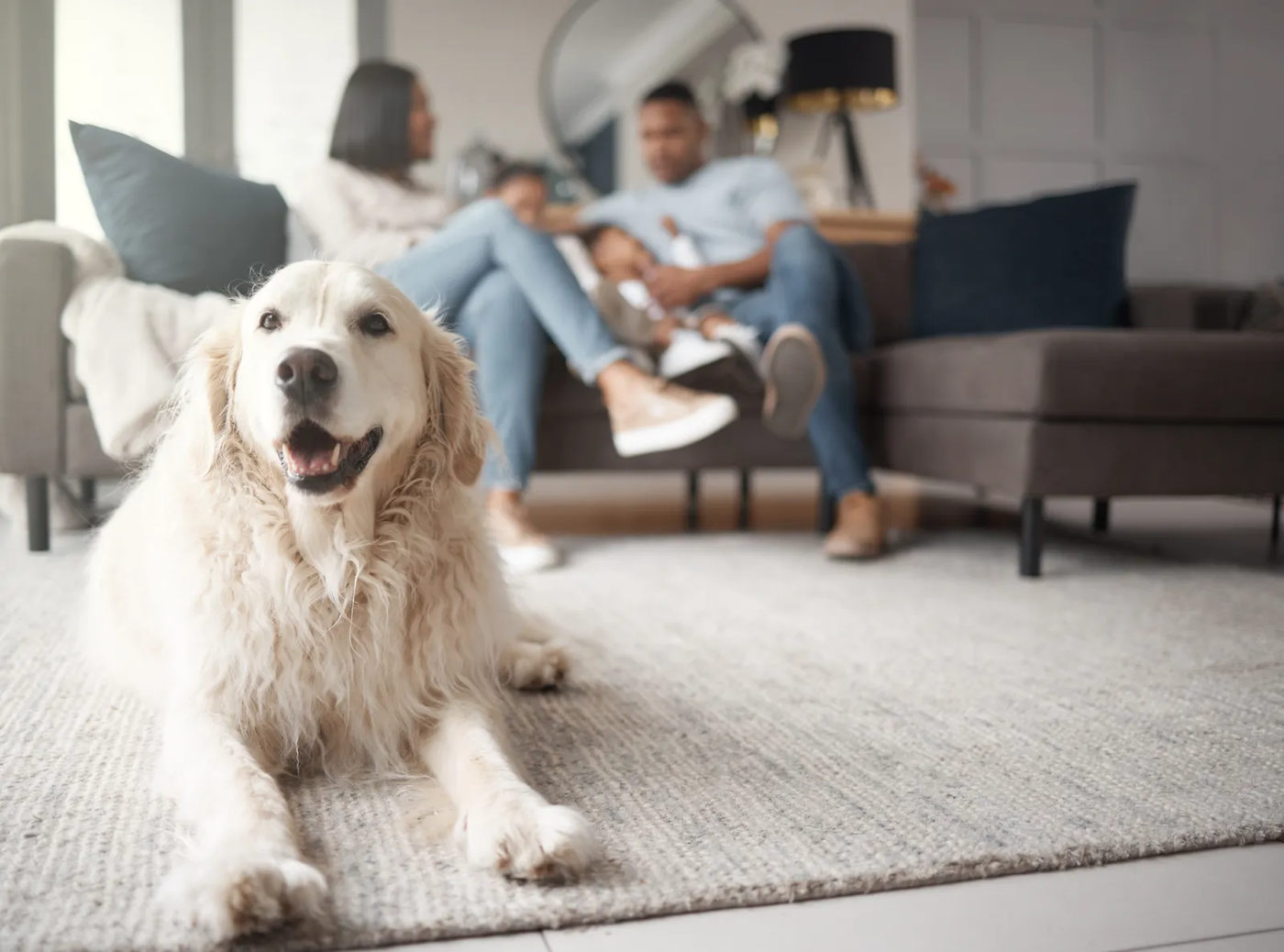
Manners become safety the moment the dog outweighs the guest's balance. Our team sees plenty of adolescent Labs, doodles and shepherds in Cypress that are friendly, sixty to eighty pounds, and launching at grandparents and toddlers. Those dogs need place before the door opens, not a correction after the jump, because by then someone is already on the floor.
Houston's hosting calendar makes this urgent. Thanksgiving, Christmas and football watch parties bring more people through the door than any other time of year, and the summer heat means visitors want in fast, with no patience for a slow greeting. Build the routine in September and October when the door is quiet, so it is ready when the house is full.
When it is more
Barking, backing away or mouthing guests is a behavior case.
Jumping with a wiggly body and a wagging tail is excitement, and this page fixes it. Jumping paired with barking that will not stop, a dog who backs away from the guest and then lunges, or a dog who mouths arms and sleeves is different. That dog is not saying hello. He is uncomfortable, and every guest who walks in without a plan makes it worse.
The programs
Programs that fix the door for you.
Jumping and door boundaries are built into every board and train from Gold up, and an in-home lesson lets our trainer work your actual front door.


Asked and answered
Questions people ask about this.
Why does my dog jump on guests but not on me?
Because you stopped paying it and they have not. Guests are new, exciting and unpredictable, and most of them respond to a jump with a laugh and a hand. Your dog has learned that visitors pay better than you do. The fix is the same routine for every person through the door, with you controlling the greeting on leash or from place.
Should I put my dog in another room when guests arrive?
As short-term management, yes, especially with elderly guests or small children. But a dog shut in a bedroom is not learning anything, and the jumping will be waiting when the door opens. Use the other room for the visits you cannot control and run the place routine for the ones you can. Over a few weeks the second list grows.
How do I stop my dog jumping on kids?
Keep the dog on leash or on place whenever children arrive, and release him to greet only once the kids are sitting or standing still. Teach the children to turn away and fold their arms if he jumps, rather than running or squealing. With a large dog, an adult always holds the leash. Calm is the only thing that earns a hello, from kids too.
Does the place command really stop jumping?
Yes, when it is built properly. A dog lying on a bed across the room cannot jump on anyone, and a dog who has held place while the doorbell rang fifty times has learned that guests are not an emergency. The bed replaces the jump with a job. It takes a week or two of duration work before it holds with real visitors.
What if my guest says they do not mind the jumping?
Thank them and hold the rule anyway. Every guest who allows it resets the dog's understanding, and the next visitor might be a grandparent with a hip replacement. Keep the dog on leash for that visit, let the greeting happen on the floor, and explain that you are training. Most people are happy to help once they understand why.
Keep reading
Free consultation · 10% off this fall
Ready for a calm front door?
Tell our team on a free phone consultation who your dog jumps on and how big he is. They will tell you whether a lesson at your door or a Gold stay is the faster fix.