
Place, taught properly
How to teach a dog the place command
Place is the command our trainers use more than any other in our Cypress training home, and it is the one families ask about most after the go-home session. Here is how they teach it from scratch, in the order that makes it hold, so you can build the same thing in your living room.
Last reviewed September 10, 2026 · by the Best Dog University Team
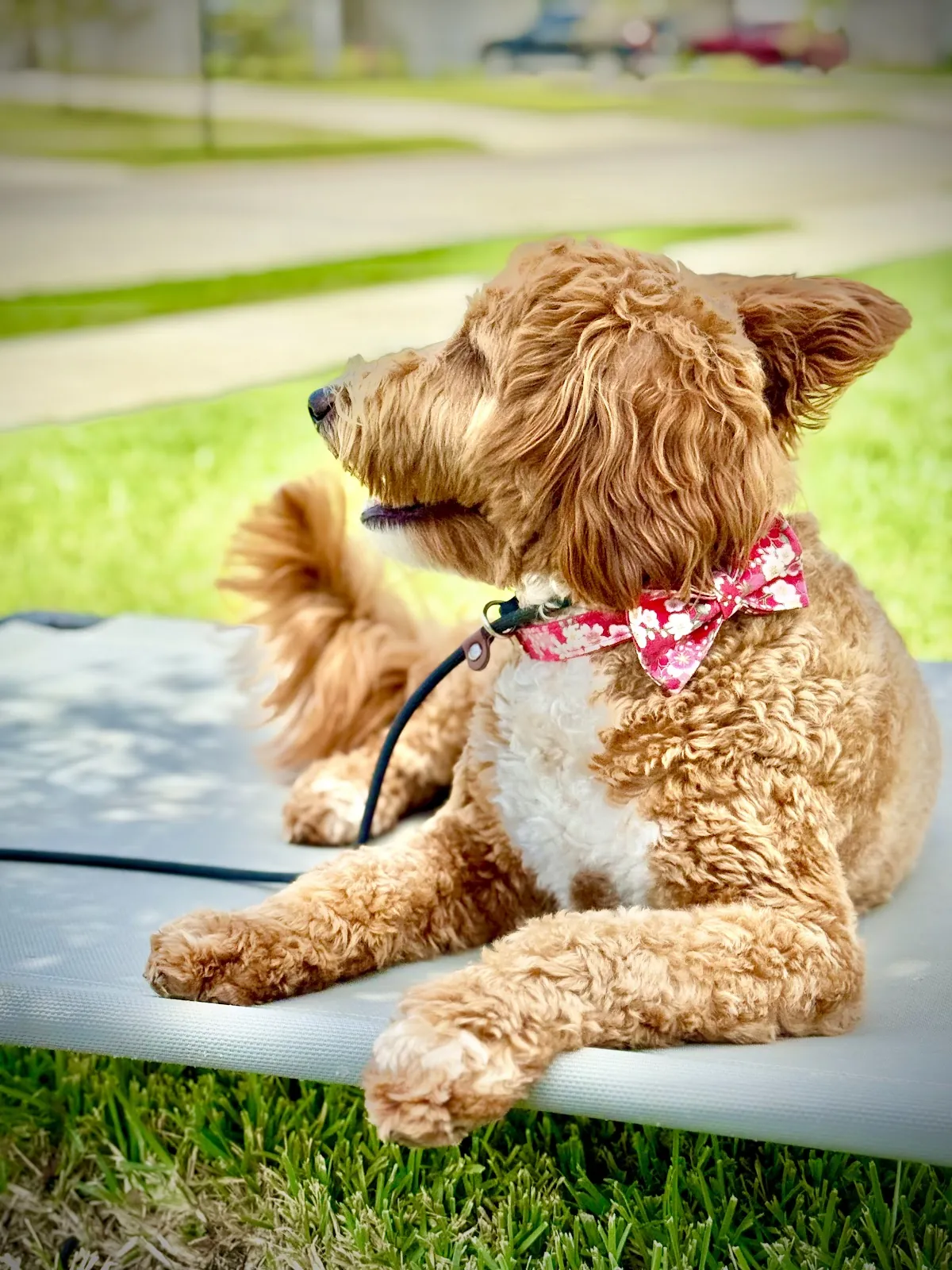
What you are building
Place means one thing: get on the bed and stay there until I say otherwise.
The command has three parts and the dog has to learn all of them. Go to the bed on one word. Stay on it, standing, sitting or lying down, without stepping off. Leave only when you give the release word. Most dogs who "know place" have learned the first part and nothing else, which is why they hop off when the pizza arrives. The whole value of the command is in the second and third parts.
- Raised cot or firm bed with a visible edge
- Big enough for a full down, small enough that off is obvious
- Placed where life happens: living room, kitchen edge, by the front door
- Same bed, same spot, for the first month
- Nothing else on it: no toys, no chews at first
The send
Teach the send and the release in the first two sessions.
Start with a leash on, a handful of small food pieces, and a quiet room. The goal of session one is simple: the dog goes on when you say the word and comes off when you say the other word, and nothing happens in between that he decides. Ten repetitions, then stop while he still wants more.
Put your dog on a four to six foot leash and walk toward the bed. Say "place" once as he steps toward it, then guide him on with gentle leash pressure if he hesitates.
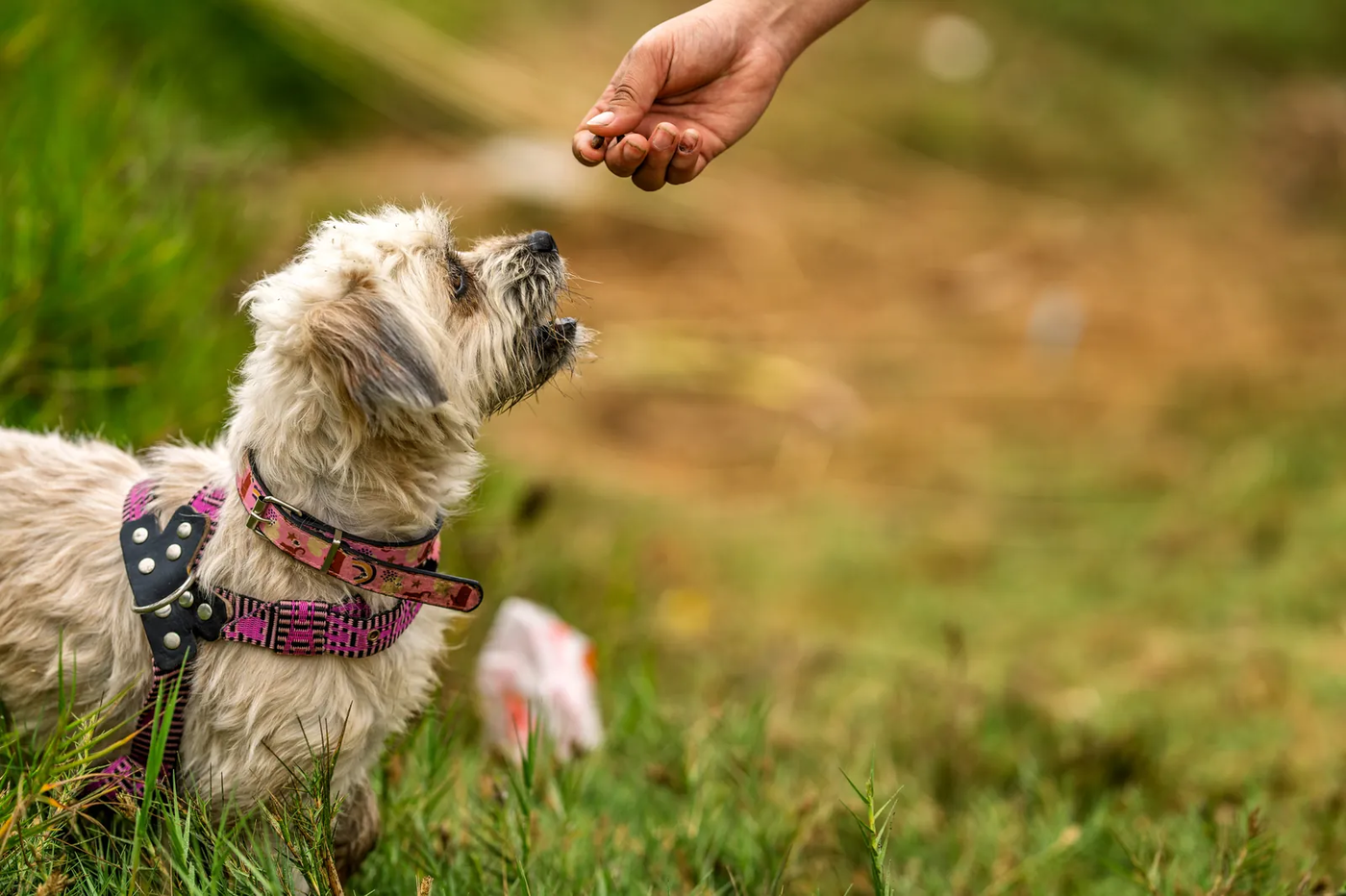
The moment all four paws are on the bed, mark with "yes" and give a small piece of food on the bed itself. Food stays on the bed, never at your body.
Wait one or two seconds, then say "break" and walk him off. Repeat this send, mark, release loop eight to ten times, then end the session.
In the second session, hold the mark until he sits or lies down on his own. Most dogs offer a down within a few reps once standing earns nothing.
Start dropping the leash on the floor while he holds. If he steps off before the release, calmly walk him back on without a word and start the count again.
Once he goes to the bed from six feet away on one word, begin the duration work below. Keep every session under five minutes.
The three Ds
Duration first, then distance, then distraction. Never in the other order.
Almost every failed place command was built in the wrong order. The owner got the dog on the bed, then immediately tried it with guests, and the dog learned that place is a thing that happens for a few seconds before the exciting part. Build it the way our trainers do: boring first. The dog holds the bed with nothing going on, for longer and longer, until lying there is the easiest choice in the room.
| Stage | Target | Move on only when |
|---|---|---|
| Duration | 30 seconds, then 2, 5 and 10 minutes, then a full TV episode | He holds ten in a row with you standing nearby |
| Distance | You leave the room, count to five, come back and mark | He holds while you are out of sight for a minute |
| Distraction | A knock you make, then a helper at the door, then dinner on the table | He holds through the doorbell without a reset |
Mistakes
What undoes place: repeating the word, ending on his terms, and using it as a time-out.
The command dies the day it becomes negotiable. If "place" is said three times before the dog moves, the real cue is the third one, and he will wait for it. Say it once, then use the leash. If he wanders off and you shrug and start dinner, he has released himself, and the next session starts from a weaker spot than the last one ended.
- Saying "place, place, place" until he finally goes
- Letting him wander off and calling that the end of the session
- Sending him to the bed as a punishment after something he did
- Rushing to the doorbell before he can hold ten quiet minutes
- Feeding from your hand so he keeps stepping off toward you
Place in a Houston house
Put it to work at the front door, at dinner and on July 4.
Once your dog can hold place for twenty minutes with you moving around, it becomes the tool for the moments Houston homes struggle with most. Deliveries land on porches in Bridgeland and Towne Lake all afternoon, and each one used to mean a sprint to the door. Now it means "place", a quiet dog on his bed, and you signing for the package without a knee in your back.
When place will not hold
A dog who cannot settle on place at all may be an anxiety case, not a training gap.
A dog who steps off a few times is testing, and the method handles it. A dog who shakes, pants, paces and cannot stay on the bed for five seconds no matter how calm the room is telling you something else. That dog is not disobeying. He has no off switch, and separation anxiety or a general inability to settle usually sits underneath it. More repetitions in the living room will not build one.
The programs
Programs where place is built for you.
Place and place-stay are cornerstones of every board and train from Gold up. Our trainers build duration, distance and distraction in our own training home and show you how to keep it.


Asked and answered
Questions people ask about this.
What kind of bed should I use for place?
A raised cot with a firm frame is the easiest to teach on because the edge is obvious to the dog. Any bed with a clear boundary works. Avoid a loose blanket or a plush bed that spreads across the floor, since the dog cannot tell where on ends and off begins. Keep the same bed in the same spot until the command is solid.
How long should a dog stay on place?
As long as you need him to. Early on, seconds. Within a couple of weeks, ten to twenty minutes with you moving around. A finished dog can hold place through a dinner or a movie and relax while doing it. The length grows in small steps, and the release word always ends it, not the dog's decision to get up.
Can I use a towel or mat instead of a raised bed?
You can, and a mat is useful later for restaurant patios and visits to friends. For the first month, though, a raised bed teaches faster because the dog feels the edge. Once he understands the rule, transfer it to a mat by placing the mat on the bed for a few sessions, then on the floor beside it, then anywhere.
My dog gets off place as soon as I leave the room. What now?
You moved to distance before duration was finished. Go back to holding place with you in the room until he can do ten quiet minutes without a reset. Then leave for one second, come back, mark and reward. Build the time away in seconds, not minutes, and keep a leash on him so a reset is calm and wordless.
At what age can a puppy learn place?
As soon as he comes home. An eight-week-old puppy can learn the send and a few seconds of duration in the first week, and it is part of our Puppy Development Bundle for puppies under four months. Keep puppy sessions to two or three minutes and expect duration to grow with age and attention span.
Is place the same as a crate?
No, and a dog needs both. The crate has a door and is where the dog rests when nobody is watching. Place is an open bed with an invisible boundary the dog chooses to respect while life goes on around him. Place is harder to teach and more useful during the day; the crate is safer for sleep and absences.
Keep reading
Free consultation · 10% off this fall
Want place built in a week, not a month?
Call us for a free phone consultation. Our team will tell you whether a single lesson or a board and train is the right way to get a dog who settles on one word.