
Dogs and children
When kids walk the dog: age, size and the rules
Every summer a child in a Houston neighborhood is dragged into the street by a dog that saw a squirrel. The parents thought the dog was fine because it walked fine for them. The rule is simple: the dog earns the child's leash by walking perfectly for the adult first, and the child earns the leash by following the rules.
Last reviewed September 11, 2026 · by the Best Dog University Team
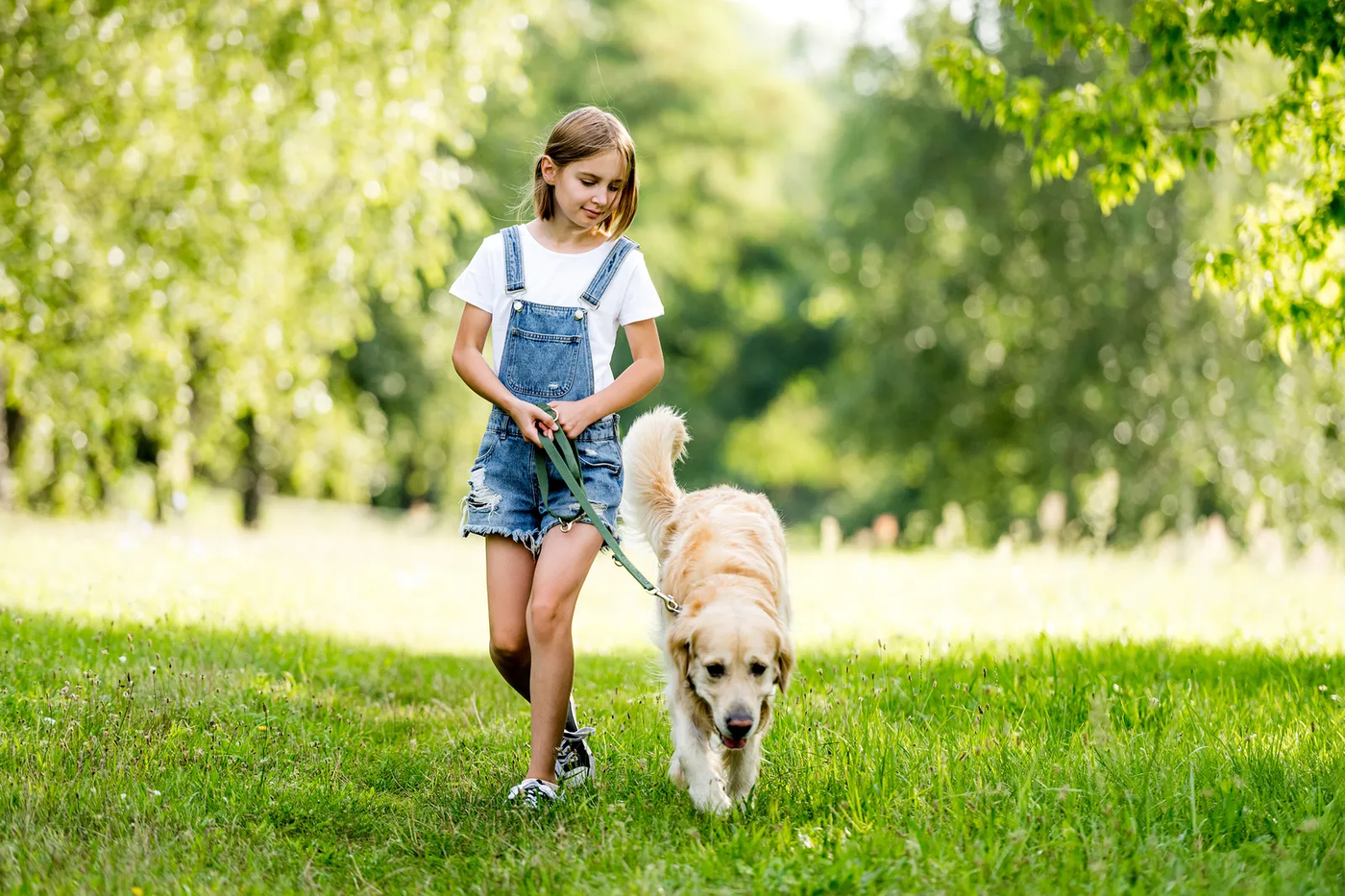
The dog first
A dog that pulls an adult cannot be walked by a child.
The test is honest: can the dog walk twenty minutes on a loose leash past another dog, a jogger and a squirrel without tightening the leash, with you holding it? If not, the dog is not ready for a child, and no amount of coaching the child changes that. A structured walk is built by an adult, in short sessions, with turns and rewards, until the leash stays slack through distractions. Only then is the leash handed down.
Size matters too. A forty-pound dog that lunges once will pull a sixty-pound child off her feet. A small dog can be walked by a younger child with the same rules, but a large dog waits for a bigger child and a better walk.
- Twenty minutes on a loose leash past distractions, for the adult, before any child holds it
- A dog that lunges at anything is not ready
- Size and strength matched to the child
- A heel, not just an absence of pulling
The child second
Two hands, a short leash, and drop it when told.
The child learns three things before the first walk. Hold the leash with two hands, looped over one wrist and gripped with both, never wrapped around fingers. Keep the leash short, at the length the adult sets, and walk on the side away from the road. And drop the leash the instant an adult says so, because a child who holds on to a lunging dog is the child who gets dragged. Practice all three in the yard with the dog on place before the sidewalk.
Age is a guide, not a rule: most children are ready for a supervised turn around eight, for a short solo walk on a quiet street around eleven or twelve, and for the full walk with a trained dog somewhere in the teens. A child who cannot keep the rules waits, whatever the age.
- Two hands, leash looped over the wrist
- Short leash, road side for the adult
- Drop it on command, practiced in the yard
- Ready at eight for a turn, eleven or twelve for a quiet solo street
Adult builds the loose-leash walk until it holds through distractions
Child practices the grip and the drop in the yard, dog on place
First walks: adult holds a second leash clipped to the same collar
Quiet street, ten minutes, adult alongside; any pulling ends the turn
Solo turns on a quiet street only when the dog has held for weeks
Never at dusk, never near the bayou, never with a dog that has lunged
The rules on the walk
Quiet streets, quiet hours, and no greetings.
A child walks the dog on the family's own street, at the quiet hours, and never near the bayou, the school pickup crowd or the dog park. The child does not let the dog greet other dogs on leash; if another dog approaches, the child stops, puts the dog in a sit on the far side, and waits for an adult. And any pulling, from the dog or toward another dog, ends the child's turn for the day, not as a punishment but because that is the rule that keeps the leash in a trained dog's hands.
A second leash clipped to the same collar and held by the adult is how the first weeks run. The child feels in charge and the adult has the dog.
- Own street, quiet hours, never the bayou
- No on-leash greetings; sit and wait for the adult
- Pulling ends the turn
- A second leash in the adult's hand for the first weeks
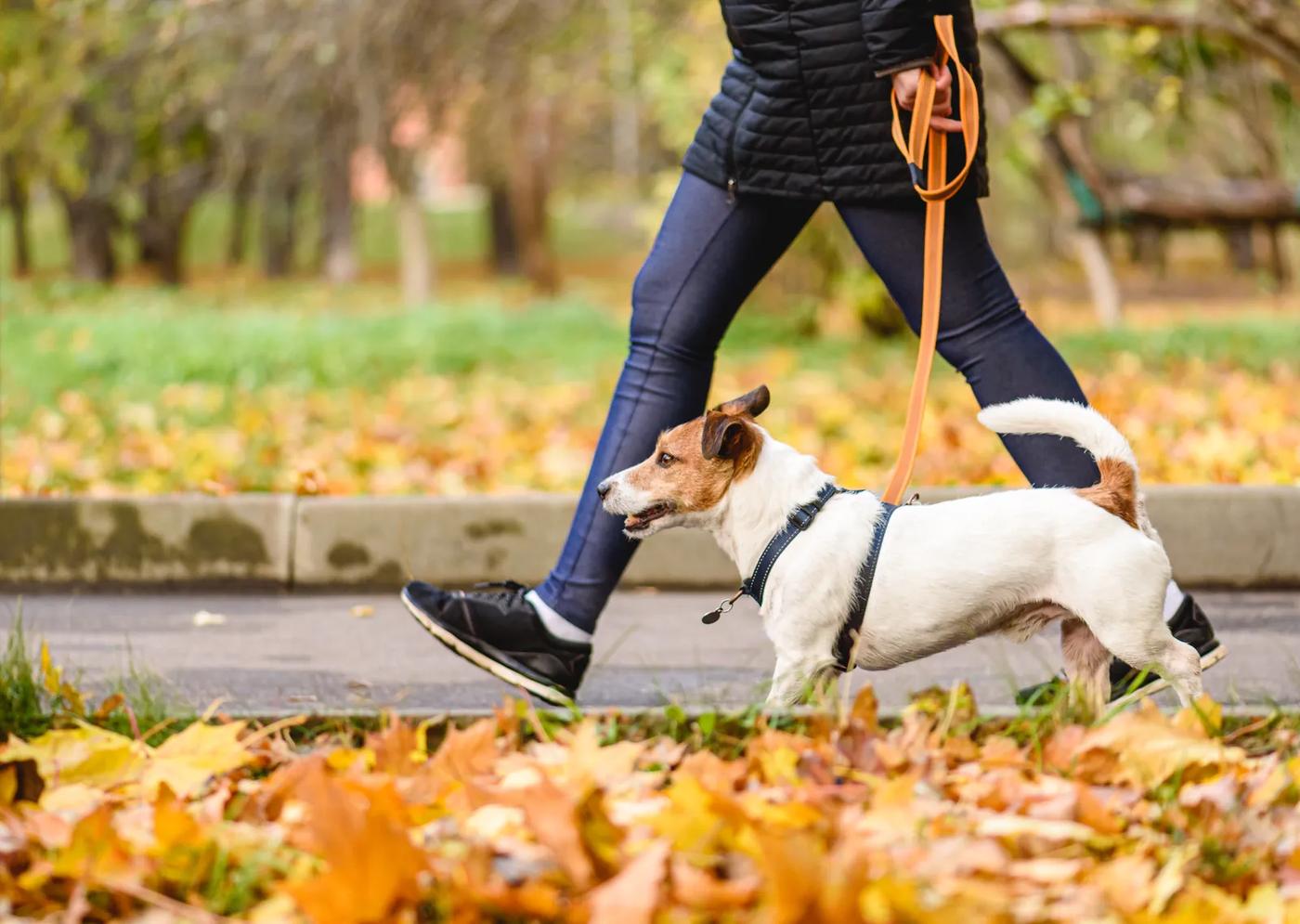
What we do
The walk is built in every program, and the children come to the go-home session.
A loose leash and a structured heel are in every Best Dog University program from the one-week Silver up, and the go-home session is where the children learn the grip and the drop with the dog holding a heel. Families with a dog that lunges book Platinum, because a child's leash and a reactive dog do not mix and the reactivity has to be worked before the leash is handed down. In-home lessons at $220 can be run with the children present for exactly this purpose.
A child who walks a trained dog well is a child with real responsibility and a dog with a real job. It is worth doing properly.
Houston streets
Heat, storms, the bayou and the school run.
Houston adds four rules of its own. In summer a child's walk is before eight in the morning and after seven at night, because the pavement test applies and a child will not think to check. No walks with a storm on the radar; the dog that has never bolted will bolt at thunder. Never along a bayou, because of the water and the alligators. And never through the school pickup traffic, where a dog that has never seen a hundred children and fifty cars at once will meet them all at the same time.
The programs
Programs that build the walk a child can hold.
Gold or Silver for the loose leash, Platinum for the dog that lunges, lessons at home with the children present.


Asked and answered
Questions people ask about this.
What age can a child walk a dog alone?
With a trained dog, a quiet street and a short walk, most children are ready for a supervised turn around eight and a short solo walk around eleven or twelve. The dog's training matters more than the child's age; a dog that pulls an adult should not be walked by a child of any age.
My dog is gentle but strong. Can my ten-year-old walk it?
Only if it walks on a loose leash through distractions for you first, and only with a second leash in your hand for the first weeks. Gentle does not matter when a squirrel runs; a strong dog that lunges once will pull a child over.
How do I teach my child to hold the leash?
Two hands, the loop over the wrist, a short leash, and drop it the instant an adult says so. Practice all three in the yard with the dog on place before the first sidewalk walk.
What if another dog approaches while my child has the leash?
The child stops, puts the dog in a sit on the far side of the sidewalk and waits for the adult. No on-leash greetings, ever, with a child on the leash. Practice it as a drill in the yard first.
Sources
Keep reading
Free consultation · 10% off this fall
Tell our team about the dog and the kids.
The free phone consultation is a direct call: how the dog walks for you now, how old the children are, and which program builds the walk a child can hold.