
Dogs and children
Dogs and toddlers: the rules that keep everyone safe
The most common serious bite in Houston, as everywhere, is a family dog and a child under five, in the home, with a parent in the next room. The dog usually gave warnings for weeks. This page is the rules that prevent it, and they start before the child can walk.
Last reviewed September 11, 2026 · by the Best Dog University Team
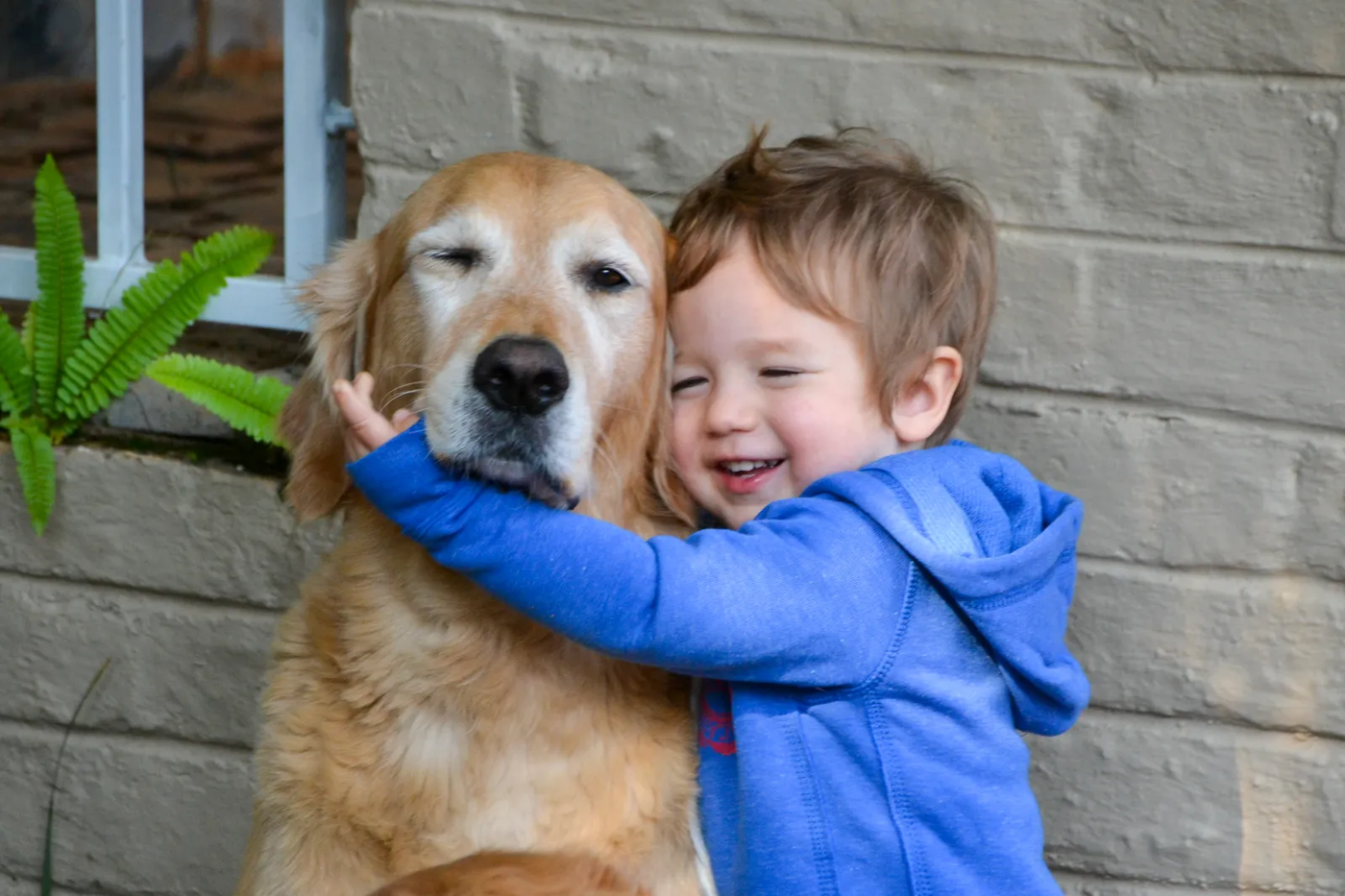
The three rules
A place the child cannot reach, supervision on the floor, and nothing between them.
The dog needs a retreat: a crate or a place bed in a room the toddler cannot enter, and the family rule that the dog is never followed there. The toddler is never on the floor with the dog without an adult within arm's reach, and never alone in a room with it; a baby gate is not supervision. And there is never food, a chew, a toy or a bone between the two of them, because those are the things a dog will guard from a child it otherwise tolerates.
These rules are not a comment on your dog. A dog that loves the child can still be pushed past its limit by a hug it cannot escape, a hand in its food, or a toddler falling on it while it sleeps. The rules make the limit unreachable.
- A crate or place bed the toddler cannot get to
- An adult within reach whenever both are on the floor
- No food, chews or toys between dog and child
- No hugging, climbing, riding or waking a sleeping dog
What the dog needs
A settle while the child moves, and a calm greeting that protects both.
The dog's job is a place command with duration while a toddler runs, shrieks and drops food, and a greeting that keeps four paws on the floor when the child arrives. Both are built the same way as for any dog: place with distance and duration first, then distraction added slowly, with the toddler as the final distraction. A dog that can hold place through a toddler's dinner has an off switch, and an off switch is most of what safety needs.
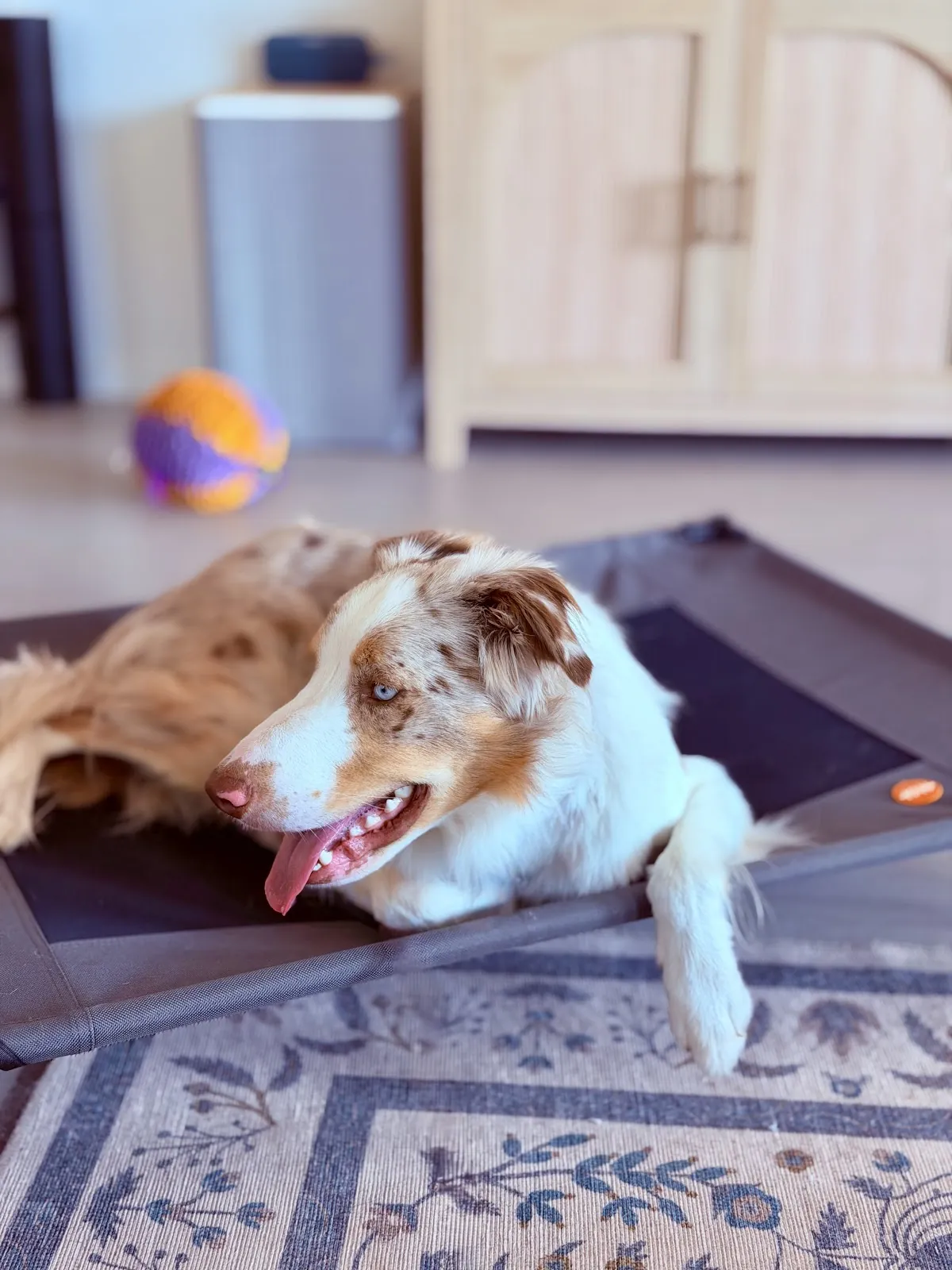
Herding breeds and high-drive dogs need one more thing: the rule that a running child is not a job. An Aussie or a cattle dog that nips at heels is herding, not aggression, and it is redirected with structure and an outlet, not punished into resentment.
- Place with duration through the toddler's meals
- Four paws on the floor when the child arrives
- No herding of running children
- A quiet cue for the barking that toddlers provoke
Before the child walks: place with duration, a crate the dog loves, a calm greeting rule
First steps: the dog on place or behind a gate during floor time; adults within reach
Toddler years: the retreat rule taught to the child too; no food or toys between them
Preschool: the child learns to ask before touching and never to approach a sleeping dog
Any growl: separate, thank the dog for the warning, and call for help
What the child needs
Rules a two-year-old can learn, taught by the parents every day.
A toddler cannot read a dog, so the rules are about what the child does, taught by repetition the way every other rule is. We do not hug the dog. We do not go to the dog's bed. We do not touch the dog when it is eating or sleeping. We stroke with a flat hand on the side, never the face. A four-year-old can learn to ask before touching; a two-year-old is managed by the adults until then.
Visiting children are the hardest case, because they have none of the rules and the dog does not know them. A visiting child and the family dog belong in separate rooms until the adults are sitting down and the dog is on place.
- Flat hand on the side, never the face
- Never the bed, the bowl or the sleeping dog
- Visiting children: separate rooms until settled
- An adult always the closest thing to the dog
Reading the warnings
A growl is information, and the last warning before a bite.
Dogs warn: a stiff body, a turned-away head, a lick of the lips, the whites of the eyes, a yawn that is not tired, then a growl. Most bites to toddlers were preceded by all of those, over weeks, unread. A growl at a child is not disobedience to be punished; punishing it removes the warning and leaves the bite. Separate the two, note what happened, and change the setup so that situation cannot recur.
A dog that has growled at a child, or snapped, or guards anything from a child, needs a plan built by someone who does it for a living. That is an in-person consultation with our team, an honest conversation, and usually a Platinum stay for the dog with a management plan for the house. The ASPCA's guidance on dog body language is a good place to learn the signs.
The programs
Programs for a dog in a house with small children.
Gold for the settle and the greeting, Platinum when there has been a growl or a guard, lessons at home for the rules.


Asked and answered
Questions people ask about this.
My dog growled at my toddler. Should I rehome it?
Not on the strength of one growl, which is a warning and a good sign that the dog is communicating. Separate the two, work out what pushed the dog, change the setup, and get an in-person consultation. Rehoming is a decision to make with real information, not in the first hour.
What breeds are safe with toddlers?
No breed is safe without rules and no breed is unsafe with them. Size matters for accidents, herding drive matters for nipping at running children, and the individual dog's history matters most. The rules on this page apply to every dog.
Can board and train make my dog safe around my child?
It can build the settle, the greeting and the neutrality, and it can reduce guarding dramatically. It cannot replace supervision. A Platinum stay plus the household rules is the plan; the stay alone is not.
When can I leave my child and dog alone together?
Not in the toddler years, however good the dog. Supervision within reach until the child is old enough to follow the rules reliably and read the dog's warnings, which for most children is well into school age.
Keep reading
Free consultation · 10% off this fall
Tell our team about the dog and the child.
The free phone consultation is a direct call. If there has been a growl, say so; it changes the plan, and the plan is what keeps everyone safe.