
Dog meets baby, calmly
How to introduce a dog to a new baby
A baby changes a dog's world: new sounds, new smells, less attention and a house full of visitors. Our trainers coach expecting families around Houston through this in in-home lessons, and the ones who start early have the easiest first month. This is the plan we give them.
Last reviewed September 10, 2026 · by the Best Dog University Team
Before the baby
Train for the baby three months out, not the week you get home.
The best time to prepare a dog for a baby is when the nursery is still a spare room. The skills the dog will need are ordinary: hold place while people move around, wait at doors, walk without pulling beside a stroller, settle while strange noises happen. None of them are hard to teach. All of them are impossible to teach in the first sleepless week with a newborn.
- Place for thirty minutes with someone moving around the room
- Sit and wait at the nursery door and the front door
- A loose leash beside an empty stroller on the sidewalk
- Walks moved to the early morning slot they will land in
- Baby-gear deliveries used as doorbell practice
The first day
The first meeting, step by step.
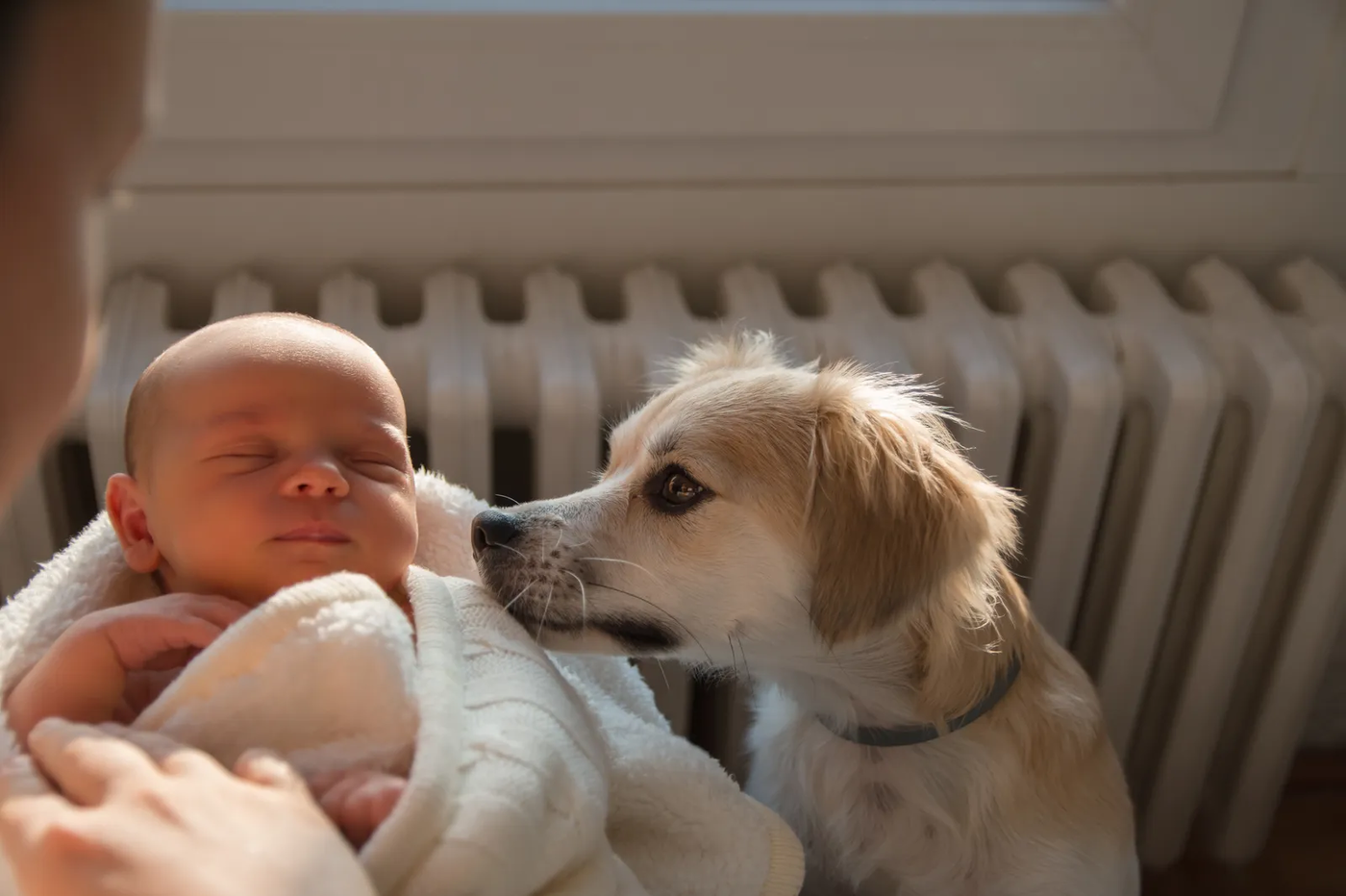
The homecoming is not the moment to find out whether the training worked. It is a rehearsed sequence, and the dog's excitement is spent before the baby is anywhere near him. Two adults, one leash, one place bed. Keep it quiet, keep it short, and let the dog discover that the baby is boring.
Have someone walk the dog long and slow before the car pulls in, so he is tired before anyone opens the door.
The parent who has been away goes in first, alone, and greets the dog outside or in the yard. Let the excitement pass with the baby nowhere near.
Put the leash on and send him to place. Bring the baby in held high against the other parent's chest. Say nothing to the dog.
Sit down across the room. When the dog is lying calmly, mark with "yes" and drop food on the bed. Let a few minutes pass.
Release him and let him approach on the leash. Allow a sniff of the feet or blanket, then guide him gently back to the bed and mark again.
Keep the first day short: a few of these calm approaches, walks as normal, crate or place when the house gets busy.
Run the same sequence when grandparents and visitors start arriving, because each new person resets the dog's excitement.
The first year
Rules that keep everyone safe once the baby starts to move.
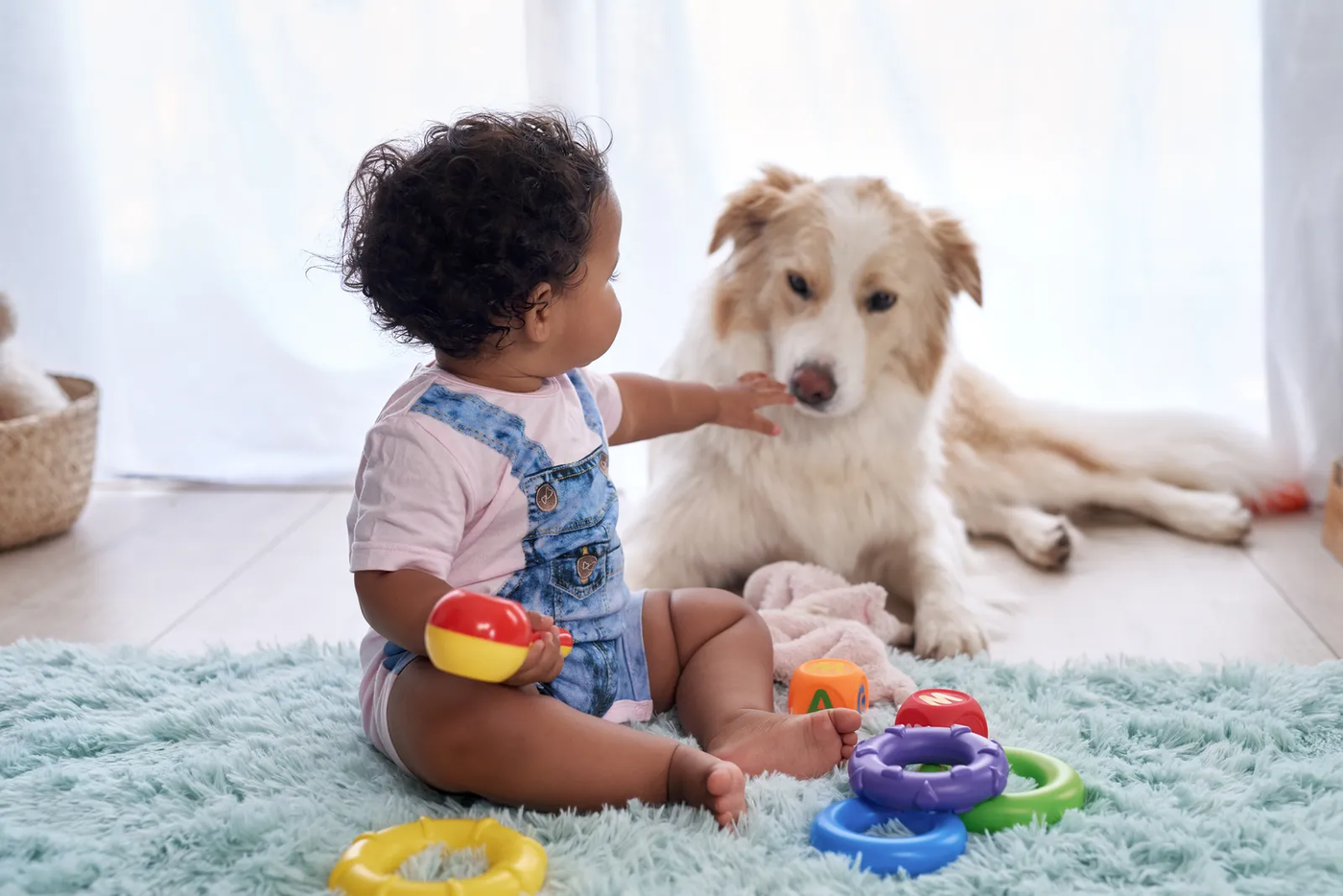
The newborn stage is the easy part. A baby who lies still is not very interesting to most dogs. The risk rises when the baby rolls, crawls, grabs fur and toddles toward the food bowl, which happens faster than any parent expects. The rules below are for the whole first year, and the most important one is the first: an adult is always in the room.
Structure is what keeps the dog steady through it. Place during feeds and diaper changes gives him a job while you are busy. The nursery stays a wait-at-the-door room. Chews and bowls move out of a crawler's reach. And the walk survives, even if it shrinks to fifteen minutes before the heat, because a dog with an outlet is a calmer dog around a baby.
- The dog and baby are never in a room without an adult, not for a minute
- Place or the crate for every feed and diaper change at first
- Walks and training keep their spot on the calendar
- The nursery is a wait-at-the-door room, not a dog room
- Toys, bowls and chews live where a crawling baby cannot reach them
Mistakes
The mistakes that make a good dog worse around a baby.
The biggest mistake is dropping the dog's structure the week the baby arrives. The walks stop, the crate is forgotten, and a dog who used to have a job now has nothing but a house that ignores him and a small thing that makes noise. Behavior slides fast in that gap. Ten minutes of place and a short structured walk a day keeps the dog steady, and it is the parent's break too.
When it is a case
Growling at the crib, guarding a parent or hiding from the crying: call our team before the baby crawls.
Some signs cannot wait. A dog who growls or stiffens near the crib, who guards one parent from the other, who fixates on the baby's movements, or who hides and shakes at every cry has told you the plan needs a professional. So has a dog with any bite history, or a dog who has been reactive to children on walks. None of those are fixed by a page on the internet, and a crawling baby in six months raises the stakes.
The programs
Help before the due date.
An in-home lesson sets the plan in your actual house. A Gold or Platinum stay builds the foundation while you finish the nursery.


Asked and answered
Questions people ask about this.
When should I start preparing my dog for a new baby?
As soon as you know, and no later than three months before the due date. The skills take a few weeks to teach and a few more to become habits, and the routine changes should be finished before the baby arrives so the dog is not absorbing everything at once. A dog with existing behavior problems needs longer, and possibly a board and train first.
Should I bring a baby blanket home from the hospital for the dog to smell?
It does not hurt, and many families do it. It matters less than people think. The dog will smell the baby within seconds of the door opening anyway. What changes the first meeting is a tired dog, a leash, a place bed and two calm adults who have rehearsed the sequence. Spend your energy on those rather than on the blanket.
Is it safe to leave my dog alone with the baby if he is gentle?
No. Not for a minute, not with any dog, not at any age of the baby. Gentle dogs startle, get stepped on, guard a dropped cracker or simply move wrong. The rule is simple and permanent: an adult is in the room or the dog is on place, in the crate or behind a gate. This is about physics and probability, not about your dog's character.
My dog growled at the baby once. What do I do?
Take it seriously and do not punish it. A growl is information: the dog is uncomfortable and told you before doing anything worse. Increase the distance, put the dog on leash or place whenever the baby is out, and call our team. An in-home lesson lets the trainer see what triggered it and build a plan before it happens again.
Can a trainer come to our house before the baby arrives?
Yes. In-home private lessons are $220 per session anywhere in the service area, including Houston, Cypress, The Woodlands, Katy, Spring and Tomball. Our trainer works in your actual rooms with your actual stroller and nursery door, and the plan you leave with is specific to your dog and your house rather than a general list.
What if the baby is due during hurricane season?
Plan for the dog too. From June 1 to November 30 a Houston family may need to leave quickly, and a dog who loads calmly into a crate and rides in the car with a newborn is one less emergency. Ready Harris publishes pet evacuation guidance. Practice the crate and the car now, while the house is still quiet.
Keep reading
Free consultation · 10% off this fall
Expecting? Get the dog ready first.
Call us for a free phone consultation. Tell our team your due date and what worries you about your dog, and they will map out what to train and when.