
Water safety
How to teach a dog to swim safely: pools, lakes and the exit
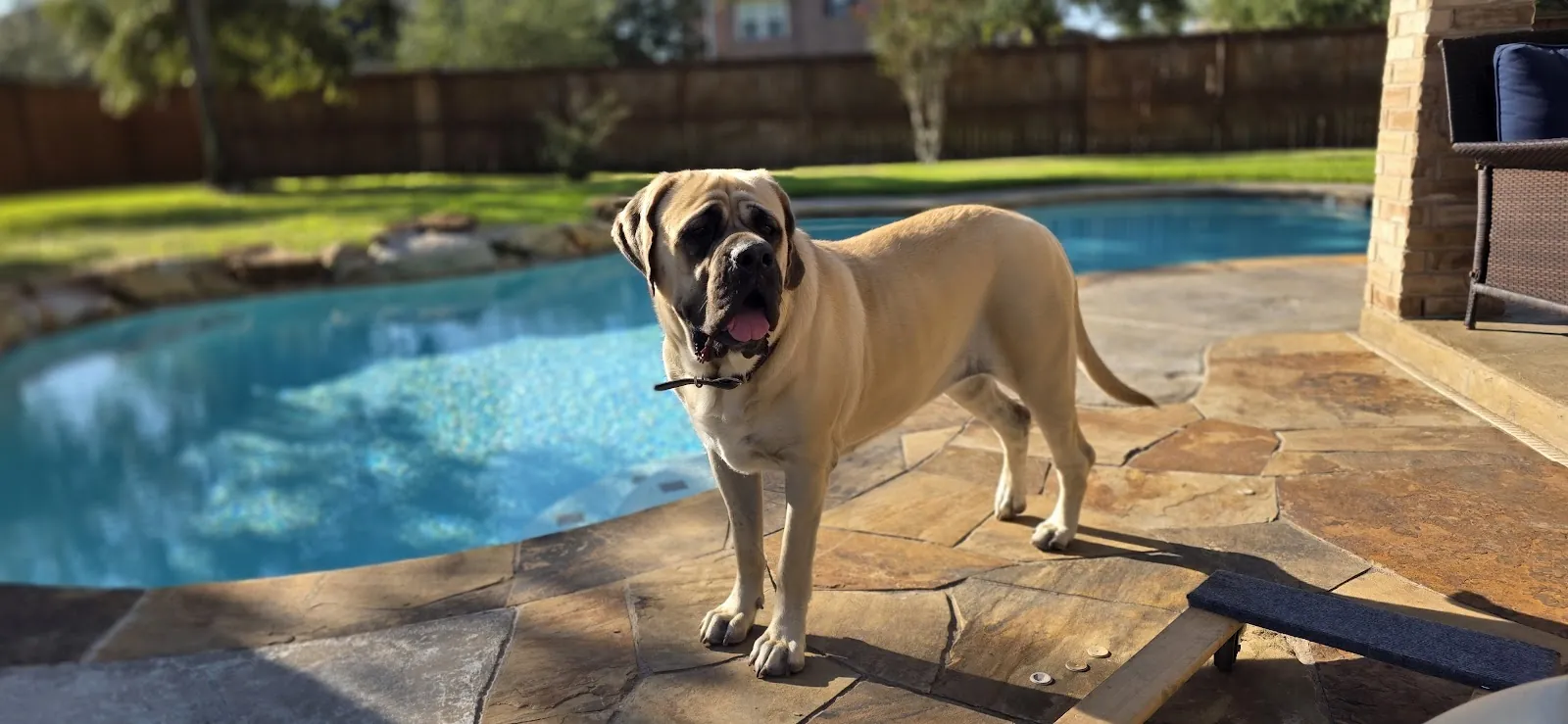
Most Houston dogs meet water long before anyone teaches them to swim, at a family pool, a neighborhood lake or a creek beside the trail. The paddling comes easily to many. Finding the way out, and staying out of the wrong water, is the lesson that keeps a dog safe.
Last reviewed September 29, 2026 · by the Best Dog University Team
Before you start
Before you start: a life jacket, a long line, the right water and the right hour.
Buy a dog life jacket with a handle on the back and a snug fit. Use it every time for the first weeks, always for flat-faced and heavy-fronted breeds, and for any dog on open water. Add a long line of fifteen to thirty feet clipped to a harness, never a collar, so you can guide the dog without pulling on its neck. Bring high-value food, a towel and fresh drinking water, because a dog should not be drinking the pool or the lake.
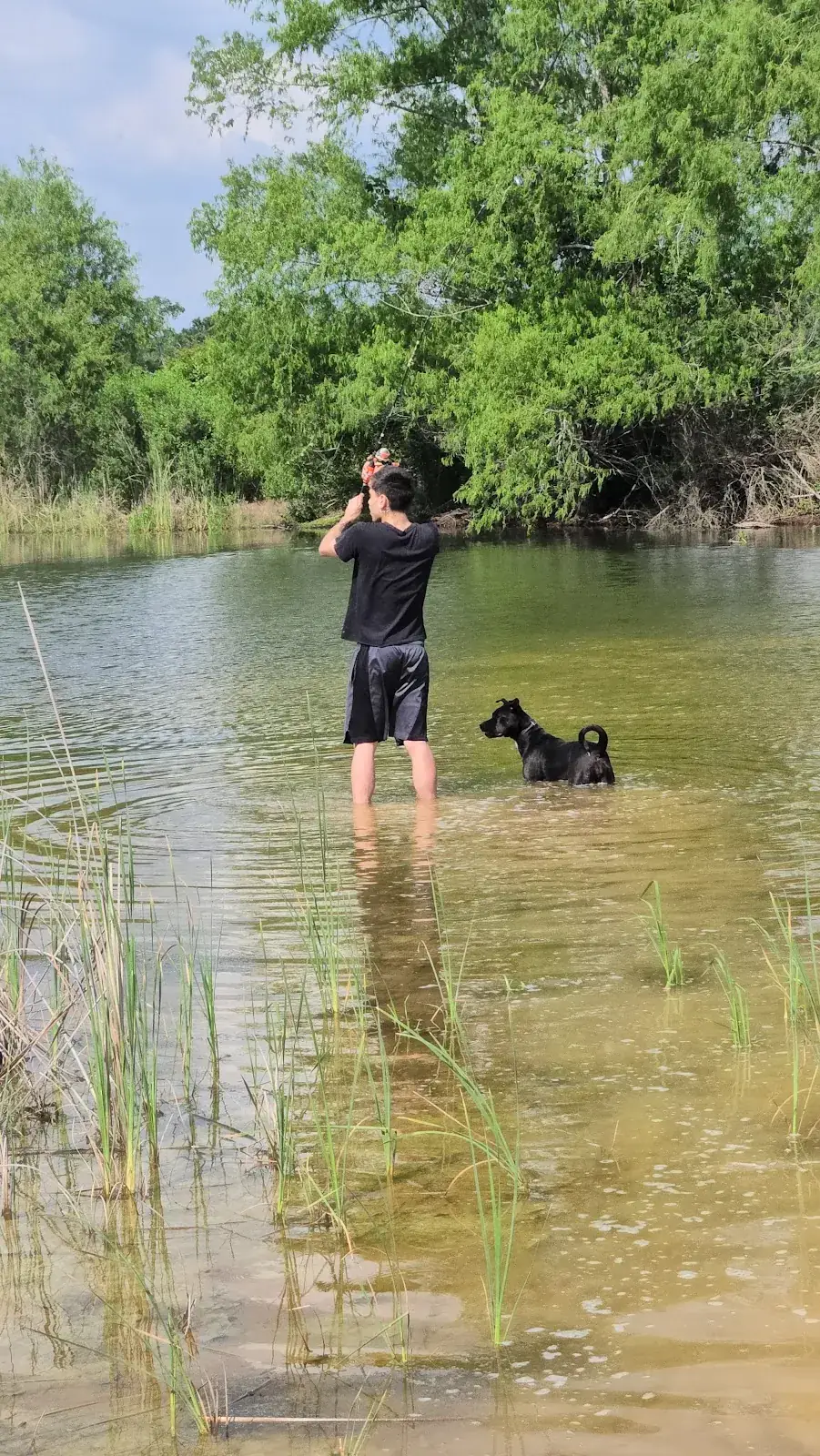
Choose the water with care. A backyard pool with wide steps, or a lake spot you know with a gentle bank, is where to begin; our trainers use the lake near the training home, on a long line. Bayous, drainage channels and retention ponds are not swimming water. Alligators live in them across the Houston area, bayous run fast after storms, and runoff after heavy rain carries bacteria. For water-quality questions, go to Harris County or the Flood Control District rather than a neighborhood forum.
- A fitted life jacket with a back handle
- A long line on a harness, not a collar
- Fresh water to drink, and a towel
- Pools and chosen lake spots, never bayous or retention ponds
The steps
Exit first, swim second: six steps over a few short sessions.
Keep sessions to five or ten minutes, at dawn or in the evening from May to September when the deck and the bank are cooler, and stop while the dog still wants more. Stay in the water or at the edge within arm's reach the whole time. A dog whose front legs slap the surface is struggling rather than swimming, so lift it by the jacket handle and try again in shallower water.
Walk the dog on leash to the pool steps or the lake shallows, paying it for putting its feet in and letting it walk back out whenever it likes
Sit on the steps or kneel in the shallows and call the dog to you, paying it for standing in water to its elbows, then walk out together
In the jacket, guide it a few feet into swimming depth with the line, support its belly with a hand if it slaps, and turn it straight back to the steps or the bank
Repeat the short loop, in and back out, until the dog heads for the exit by itself; that turn toward the steps is the skill you are teaching
Enter from different spots around the pool, or a few yards along the bank, so the dog learns to find the exit from anywhere
Add a recall out of the water on the long line and a wait at the edge until your release, before any toy or other dog joins the swim
When it is not working
Panic, a dog that will not come out, and a dog that cannot find the steps.
The panicking dog was taken too deep too fast, often by a well-meant carry into the middle. Go back to the shallows in the jacket for a week and let the dog choose its own depth. The dog that will not come out has learned the water is more fun than you are. Keep the long line on, call it out before it tires, pay the exit with the best food of the day, then send it back in as a second reward.
The dog that swims happily and then circles the pool wall looking for a way out never learned the steps, and it is the one that can tire in a backyard pool on a hot afternoon. Practice the turn to the steps from every side until it is automatic. English bulldogs, French bulldogs and pugs may never swim well, and that is not a training failure. For them, the goal is the steps, the jacket and a fence around the pool.
- Panic: back to the shallows, the dog chooses depth
- Will not come out: long line and a paid exit
- Cannot find the steps: practice from every side
- Flat-faced breeds: a jacket and a pool fence
When to get help
When to get help with water, and the program that includes the lake.
Water work depends on a recall that holds when the dog is wet, excited and some distance away, and that recall is built on dry land first. The Platinum Board & Train, three weeks at $3,750, includes behavior modification, field trips and public exposure, and our trainers take dogs to the lake on a long line as part of that work, so the wait at the edge and the recall out are practiced near real water. The VIP program, six weeks at $10,000, is for families who want complete off-leash reliability around lakes.
A dog that only needs to learn your own pool can often get there in a private lesson at home for $220, with a trainer at the steps beside you. Our pages on pool season in Houston and on dog swimming spots describe where dogs can swim and where they should not. Nothing here replaces your vet's view on whether your dog's heart, joints or breathing suit swimming, so ask before the first long session.
The programs
Programs that build the recall water depends on.
Platinum for the wait and the recall practiced near the lake, VIP for off-leash reliability, an in-home lesson for your pool.


Asked and answered
Questions people ask about this.
Can all dogs swim?
No. Many dogs paddle naturally, but flat-faced and heavy-fronted breeds tire fast and can sink, and any dog can panic in deep water the first time. Treat every dog as a non-swimmer until it has shown you, in a life jacket, that it swims calmly and finds the exit.
Can my dog swim in the bayous?
We do not swim dogs in bayous or retention ponds. Alligators live in Houston-area waterways, bayous run fast after storms, and runoff after heavy rain can carry bacteria. For water-quality advisories, check with Harris County or the Flood Control District, and choose a pool or a known lake spot instead.
How do I teach my dog to get out of the pool?
Start from the steps, not the deep end. Walk in and out on leash, then swim a few feet and turn straight back to the steps, until the dog heads for them on its own. Then practice from every side of the pool. A dog that finds the steps from anywhere is far safer.
Does my dog need a life jacket?
For the first weeks of swimming, yes, and always for flat-faced breeds, older dogs and any dog on a boat or open lake. Choose one with a handle on the back so you can lift the dog out, and check the fit at the start of each summer.
Is lake water safe for my dog to drink?
Assume it is not. Offer fresh water from home before and during the session, keep swims short, and watch for a dog gulping as it paddles. Some lakes post notices about algae or bacteria, so check with the operator or the county before you go, and rinse the dog off afterward.
Keep reading
Free consultation · 10% off this fall
Teach the way out first.
Tell our team where your dog swims, or wants to. The free phone consultation is a direct call with our team.