
Car manners
How to teach a dog to load into the car and wait: no bolting, no wrestling
The car is where a lot of dogs get hurt: a leap out of the back seat into a store parking lot, a scramble past a child in the garage, a big dog that refuses to get in on a steaming afternoon. Loading and waiting are two short skills, and both are taught in your own driveway.
Last reviewed September 29, 2026 · by the Best Dog University Team
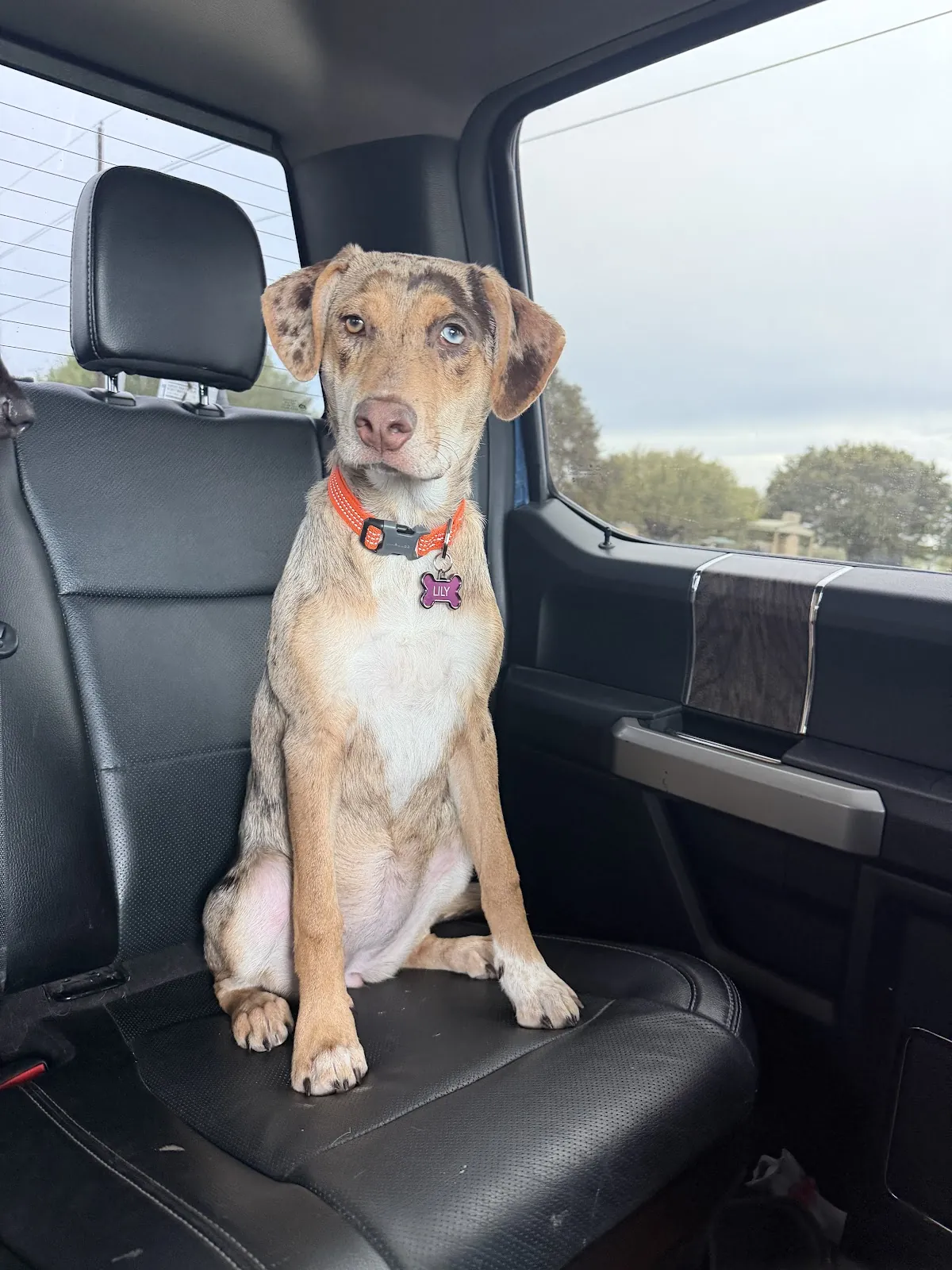
Before you start
Before you start: where the dog rides, what it wears, and the heat in a parked car.
Decide where the dog rides before you teach anything: a crate strapped into the cargo area, or the back seat with a harness clipped to a seat-belt tether. The front seat is out because of the airbag, and a dog riding loose in a truck bed is something we never do. A leash, a flat collar or harness, soft food and a release word the dog already knows complete the kit. Big, older or stiff dogs may need a ramp or a step, which is worth teaching early.
The Houston caveat is the parked car. From spring well into fall a closed car heats quickly even in shade, so practice in the early morning, or with the engine running, the air conditioning on and a person inside, never with the dog waiting alone. Start in your own garage or driveway, away from the street. The lot outside a busy store on FM 1960 or along 290 is the last stage, not the first.
- A crate or a seat-belt tether, never loose
- No front seat, no truck bed
- The leash clipped before the door opens
- Practice with the air on and a person inside
The steps
Load, wait, release: seven short sessions in the driveway.
Each stage is a few minutes, once or twice a day, and only one person gives the cues at first. Keep the leash on the dog throughout, even at home, so clipping it before the exit becomes a habit from the first day. Pick a load cue, such as load up or car, and a release, such as free, and use exactly those words every time the dog gets in or out.
With the door open and the engine off, toss food into the crate or onto the seat, say your load cue as the dog jumps in, and pay again once it is inside
After a few seconds, release it out on your word, step it down on leash, and ask for a sit on the ground before anything else happens
Say the load cue before the toss, then without any toss, paying only once the dog is in, until the cue alone loads the dog
With the dog inside, close the door, open it an inch and pay the dog for staying put; if it moves toward the gap, close the door gently and try again
Open the door wider over several sessions until the dog holds its place with the door fully open while you clip the leash
Add the engine running, a family member walking past and a grocery bag loaded beside it, then a drive around the block that ends in the same wait
Take it to a quiet parking lot, then a busy one, then the vet and the groomer: leash first, release second, feet on the ground third
When it is not working
The dog that will not jump in, the one that leaps out, and the one that climbs forward.
A dog that stands at the car and will not load is often worried about the height or about the car itself. Check first whether the jump hurts: an older or heavy dog may need a ramp, taught flat on the ground before you lean it against the car. If the dog is nervous about cars rather than jumps, start with our guide to car anxiety, because loading drills will not fix fear.
The dog that leaps out as the door opens has been let out that way before, usually in a rush, and the exit has become a reward in itself. Go back to the inch of open door and the gentle close. The dog that climbs into the front seat needs a physical boundary as well as the training, a crate, a tether or a cargo barrier, because a moving car is no place to teach a stay.
- Will not load: check the jump, then the fear
- Teach a ramp flat on the ground first
- Leaps out: back to the inch of open door
- Climbs forward: a crate, a tether or a barrier
When to get help
When to get help with car manners, and the programs built around doors.
Door boundaries are part of every program we run, and the car is the most important door your dog uses. The Silver Foundation Program, one week at $1,500, builds loose leash walking, door boundaries and basic structure, which is often enough for a dog that only bolts. The Platinum Board & Train, three weeks at $3,750, adds stays, impulse control and field trips into real public places, so getting in and out of a car in a busy lot becomes routine rather than a test.
A dog that growls when someone reaches into the car, or shakes and drools on every drive, is a behavior case rather than a manners gap. That dog fits Platinum's behavior modification, or a private lesson at $160 in Cypress or $220 at home as a first step. On the free phone consultation, our team will ask what happens at the car door, during the ride and when the door opens again.
The programs
Programs that put a wait on every door.
Silver for door boundaries and structure, Platinum when stays and field trips are needed, a lesson to start a nervous loader.


Asked and answered
Questions people ask about this.
Should my dog ride in a crate or on the seat?
A crate secured in the cargo area, or the back seat with a harness and tether, both keep a dog from moving around the car. A crate is easier for a dog that will not settle. Keep dogs out of the front seat because of the airbag, and never let one ride loose in a truck bed.
How do I get a big dog into the car?
Teach the load cue with food, and if the dog is heavy, older or stiff, add a ramp or a step. Teach the ramp flat on the ground, then slightly raised, then against the car. Lifting a large dog every time is hard on your back and often frightening for the dog.
How do I stop my dog jumping out of the car?
Never open the door until you can clip the leash, and make the release word the only thing that lets the dog out. Practice with the door opening an inch at a time and closing gently when the dog moves toward it. Within a week or two most dogs wait with the door wide open.
Can I leave my dog in the car for a few minutes in Houston?
We do not, for most of the year. A parked car heats quickly here, even with the windows cracked, and a few minutes in a store can easily turn into twenty. Take the dog in where dogs are welcome, or leave it at home in the air conditioning.
Sources
Keep reading
Free consultation · 10% off this fall
No more bolting at the car door.
Tell our team how your dog gets in and out of the car today. The free phone consultation is a direct call, and it costs nothing.