
Anxiety and fear
How to help a dog with car anxiety
A Houston dog rides in a car more than most, to the training home, the vet, the boardwalk, the in-laws in Katy and, one September, out of town ahead of a storm, and the dog that cannot ride is a problem the family meets weekly. Here is how our trainers rebuild the car, and the nausea question that comes first.
Last reviewed September 11, 2026 · by the Best Dog University Team
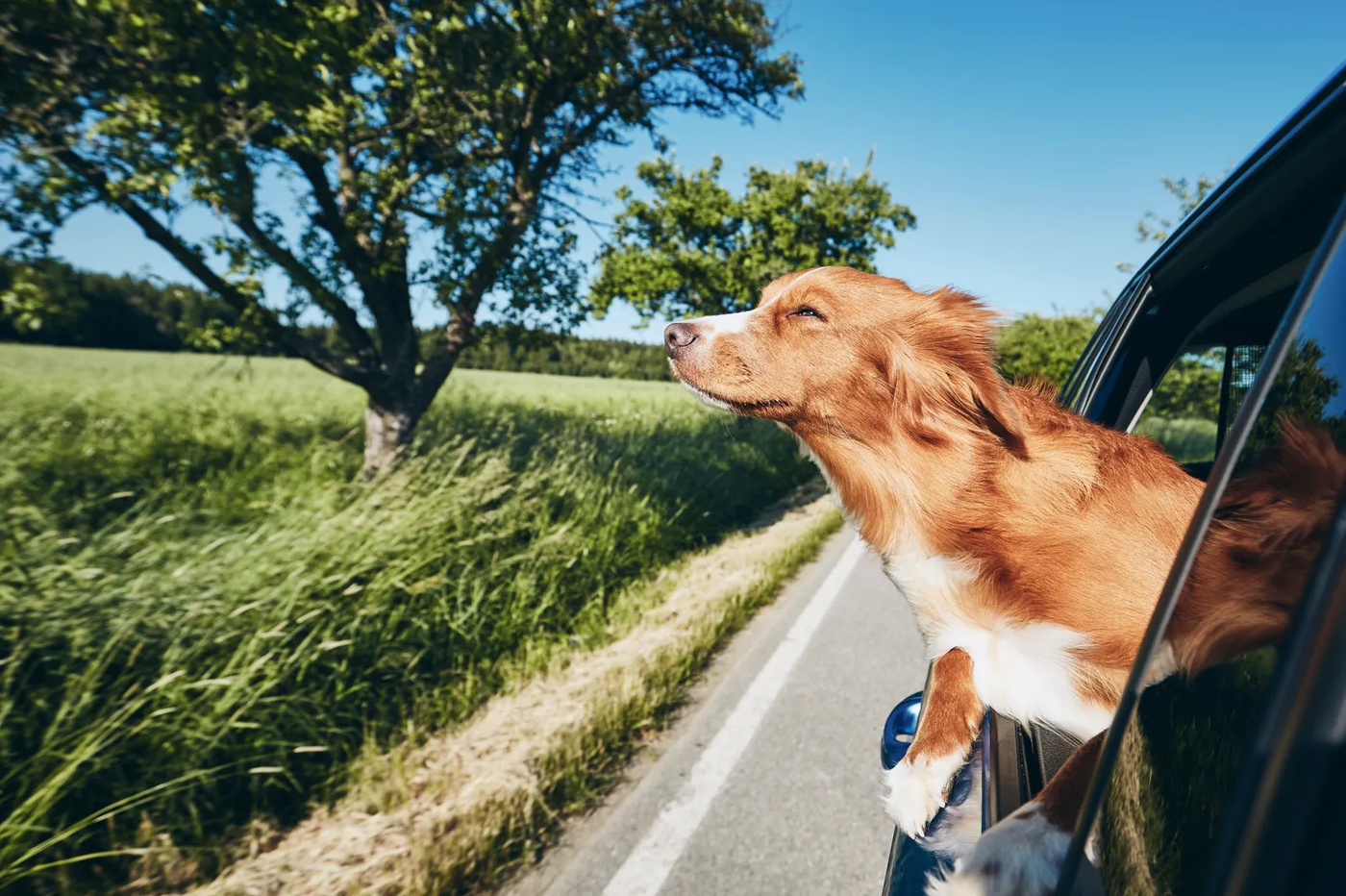
Why it happens
Nausea, fear, or a car that has only ever gone to the vet.
Car anxiety has three common sources and they look alike from the driver's seat. Nausea is the first and the most missed: puppies and many adults get car sick, drool, pant, vomit and then learn to dread the car, and a veterinarian can help with the sickness, which often ends the anxiety. Fear is the second: a dog frightened by a drive, a crash, a slam or a frightening destination files the car as dangerous. And the destination is the third: a dog whose every car ride has ended at the vet, the groomer or the boarding kennel has learned exactly what the car predicts. The rebuild treats all three the same way, with the car made boring and then good in stages, but the nausea conversation with the vet comes first, because no amount of training fixes a dog that is about to be sick.
- Nausea: drooling, panting, vomiting, then dread
- Fear: a frightening drive or destination
- The vet as the only destination
- The vet conversation first, then the rebuild
The method
Seven stages, each one held until the dog is relaxed.
The car is parked in the driveway with the doors open and the engine off for the first stage, and the dog's meals move into it. Every stage is held until the dog is relaxed before the next begins, and a dog that shows stress at any stage goes back one.
The parked car, engine off, doors open: meals and a chew in the car, the dog free to leave, for days, until it hops in on its own
The dog in its crate or harness in the parked car, engine off, for a chew, for longer each day
The engine on, the dog in the car, a chew, the car not moving, for a few minutes a day until the sound is boring
To the end of the driveway and back, then around the block, with a jackpot at the end and the dog released to somewhere good
Two minutes to somewhere good, a field, a friend's yard, a quiet store parking lot, never the vet, growing to ten and twenty minutes over weeks
The windows cracked, the air conditioning on, a crate covered or a harness fitted, and no food for two hours before a drive for a dog that has been sick
The vet and the groomer as one destination among many, with the good drives outnumbering them ten to one for life
The mistakes
Flooding, the vet as the first long drive, the loose dog, and the open window.
Flooding, a long drive to force the dog through it, produces a dog that is sick, frightened and more convinced than before. The vet as the first long drive after the rebuild teaches the dog that the rebuild was a trick. The loose dog in the car, on a lap or in the footwell, is a danger to everyone in a crash and a dog that cannot settle; a crate or a crash-tested harness gives it a place and keeps it alive. And the fully open window, with the dog's head out, is a dog that jumps or is hit by debris; the windows are cracked for air and the head stays in. Medication for travel sickness or for anxiety is a veterinary conversation and can make the rebuild possible for a dog that cannot start it.
The rebuild takes weeks for a dog with a long history, and a family that needs to make a drive before then manages it: a crate, a covered crate, a chew, an empty stomach and the shortest route.
- Never flood with a long drive
- Never the vet as the first long drive
- A crate or a harness, never a loose dog
- Windows cracked, head in
- A veterinary conversation for a dog that cannot start
Proofing around Houston
Everything is a drive, the heat inside a parked car, and the evacuation that might come.
Houston is a driving city: the training home in Cypress is half an hour from most families and an hour from some, the boardwalk, the trails and the stores are all drives, and the in-laws are across a metro that takes an hour to cross. A dog that cannot ride is a dog that cannot do most of what this site describes. The heat adds a rule: a parked car in Houston from April to October reaches deadly temperatures in minutes and the parked-car stages happen in the shade at dawn with the doors open, never with the dog alone inside. And hurricane season is the reason the rebuild matters most: a dog that can ride for hours in a crate is a dog that can leave with its family in September. Our trainers build car calm into every stay, because every graduate rides home.
- Every destination is a drive
- Parked-car stages in the shade at dawn, doors open
- Never a dog alone in a parked car
- The evacuation is the reason it matters
When to call
A dog that panics at the sight of the car, a dog that is sick every time, or a stay that the dog cannot get to.
A dog that panics at the sight of the car, shaking, refusing to approach, needs the rebuild started further back, in the garage with the car doors closed, and a trainer who can read the pace; an in-home lesson at $220 sets up the stages in your driveway. A dog that is sick on every drive needs the veterinarian before the trainer. A dog whose family cannot get it to a stay because of the car is exactly what the $250 transport is for, and our trainers build car calm during the stay and hand the dog back riding quietly. A Platinum stay at $3,750 is the program for a dog whose car fear is one of several fears, with unlimited lessons afterwards. The car anxiety page describes the program.
The programs
Programs that rebuild the car.
Lessons at home to set up the stages in your driveway, Platinum for the dog whose car fear is one of several, Gold with the transport for the dog that cannot get to a stay.


Asked and answered
Questions people ask about this.
How do I know if my dog is car sick or scared?
Drooling, lip licking, panting and vomiting point to nausea, and a veterinarian can help with that, which often ends the anxiety. Trembling, refusing to approach the car and panic at the sight of it point to fear. Many dogs have both, because a sick dog learns to dread the car. The vet conversation comes first.
How long does it take to fix car anxiety?
A few weeks for a dog with mild fear, rebuilt in stages from the parked car to short drives to good places. Months for a dog with a long history or one that panics at the sight of the car. Every stage is held until the dog is relaxed, and a stressed dog goes back one.
Should my dog ride in a crate or a harness?
One or the other, always, and never loose. A crate, covered, gives an anxious dog a den and keeps it safe in a crash; a crash-tested harness clipped to the seat belt does the safety job for a dog that settles better with a view. A dog on a lap or in the footwell is a danger to everyone.
Can I leave my dog in the car while I run into a store in Houston?
No. A parked car in Houston from April to October reaches deadly temperatures in minutes, with the windows cracked and in the shade. The parked-car training stages happen with you in the car or beside it with the doors open, at dawn, and never with the dog alone inside.
Keep reading
Free consultation · 10% off this fall
Rebuild the car in stages, the vet first.
Tell our team what your dog does when the car door opens. The free phone consultation is a direct call.