
Kennel up, one word
How to teach a dog to go to the crate on cue: kennel up in a week
A crate cue saves you from chasing a dog around the kitchen before work, and it is the command our trainers lean on most when a storm or a busy doorway calls for a quick, calm tuck-away. This plan assumes your dog already rests in a crate without panic.
Last reviewed September 29, 2026 · by the Best Dog University Team
Before you start
The crate has to be a good place before it can be a cue.
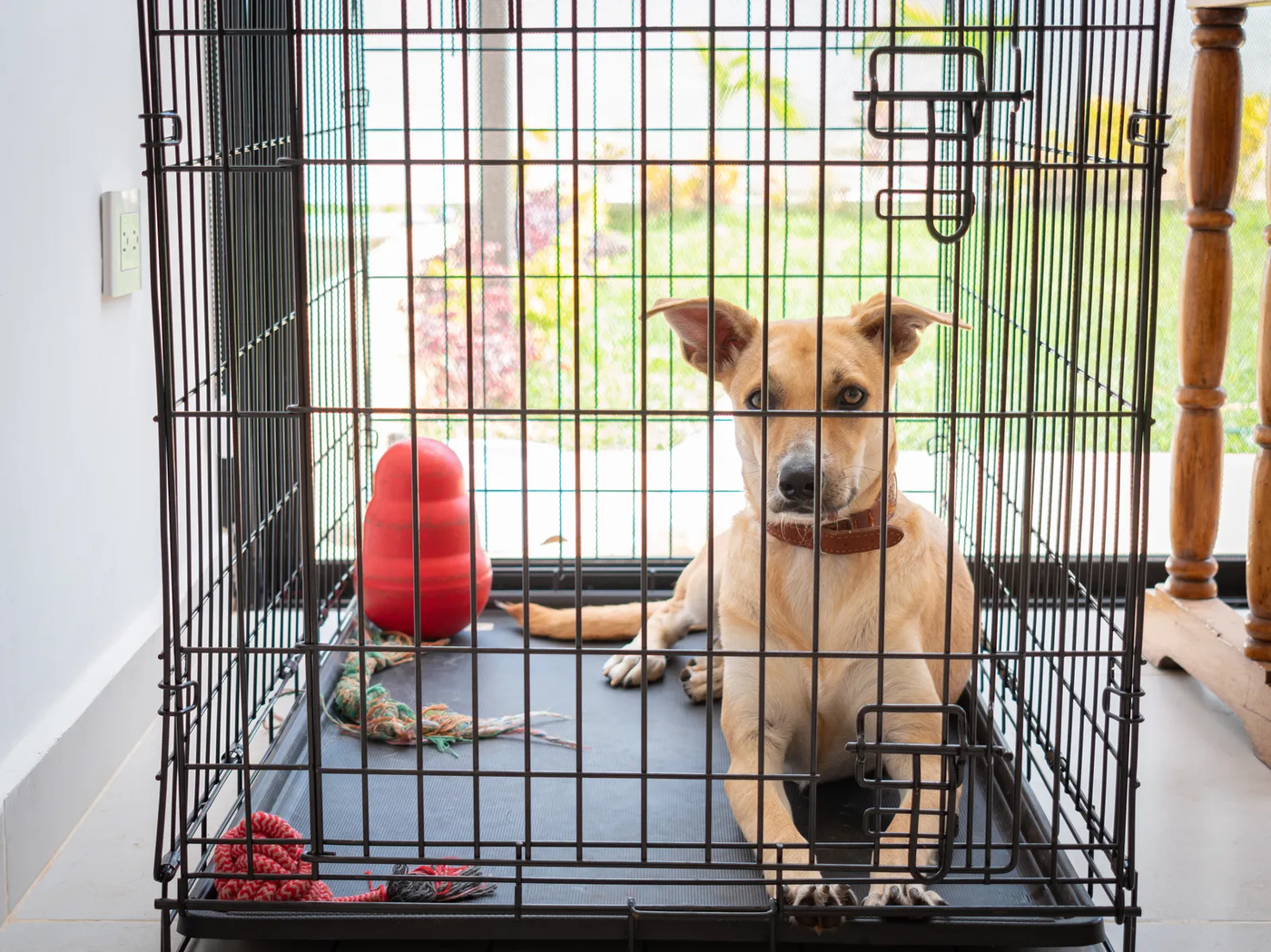
If your dog cries, claws or refuses the crate, go back to the crate training basics first: meals inside, naps with the door open, short closed stretches. A cue built on a crate the dog dislikes turns into a chase. For this plan you need a crate the dog can stand and turn around in, a pocket of treats, a chew reserved for crate time, and two words chosen in advance: one for going in and one release.
The Houston caveat is where the crate lives. It belongs inside in the air conditioning, not in a garage or on a covered patio from May to September. The cue also pays off in hurricane season, when a dog that walks into a travel crate on one word is far easier to load for an evacuation or a night at a relative's house.
- A dog that already rests calmly in the crate
- A crate sized so it can stand and turn
- A go-in word and a release word
- A chew kept only for the crate
- The crate in air conditioning
The steps
Seven days from tossed food to a send from the next room.
Run two or three sessions of five minutes each day. Every repetition ends with the dog inside and paid, and every exit happens on your release word, not on the dog's push at the door. That exit rule is what turns the crate into a real stay. Keep the treats small, because a week of kennel up adds up to a lot of food.
Day one: stand beside the open crate, toss a treat inside, and say "kennel" as the dog steps in. Pay again inside, then release with "okay". Ten reps.
Day two: say "kennel" first, then point. Pay the instant all four paws are in. Stop tossing the lure unless the dog stalls.
Day three: ask for a sit or a down inside, then close the door for five seconds, open it and release. The door opens only while the dog is calm.
Day four: send from three steps away, then across the room. If the dog hesitates, walk it in on leash rather than repeating the word.
Day five: send from the doorway of the next room, and hand the reserved chew through the door for a two-minute stay.
Day six: use the cue for real moments: before you leave, at bedtime, when the doorbell rings.
Day seven: try it with a travel crate or a crate in the car, and pay heavily for the first success in a new spot.
When it is not working
Three reasons a dog stalls at the crate door.
The first is a crate that only means bad news: it gets used only when you leave for ten hours or when the dog has done something wrong. Mix in short, pleasant crate visits all day, with a chew and the door open. The second is a cue that has been repeated. If "kennel" is said four times before the dog moves, the dog has learned to wait for the fourth.
The third is a door that opens on demand. A dog that barks or scratches and then gets let out learns that pushing ends the stay, and the cue loses its meaning. Wait for a calm moment before you open, and always use the release word, even when you are in a hurry to get out of the house.
- The crate used only for long absences or punishment
- The word repeated until the dog moves
- The door opened on barking or scratching
- No release word, so the dog decides when to leave
Using the cue around the house
A reliable kennel up is the calmest answer to a busy doorway.
Once the cue works, use it where life gets chaotic: when the lawn crew arrives, when a delivery comes during dinner, when a toddler's friends visit. A dog in the crate with a chew is safe and settled, and nobody has to hold a collar. Use it on ordinary days too, a few minutes at a time, so the crate never predicts only departures.
During July 4 and New Year fireworks, a covered crate in an interior room with white noise gives many dogs a den to settle in, and the cue gets them there without a struggle. If your dog panics in the crate during storms or fireworks, talk to our team about a noise plan rather than forcing it.
When to get help
Gold teaches kennel up with place and door manners; lessons fix a crate that has gone wrong.
Gold Board & Train, two weeks at $2,500, builds crate calm and a reliable kennel up alongside place, sit and down with duration, and door boundaries, and every dog sleeps in a crate in our Cypress training home. A dog that hates or panics in the crate needs the crate rebuilt first, and private lessons at $160 in Cypress or $220 in your home are the usual starting point.
Families with a new puppy get the crate routine in the Puppy Development Bundle, four sessions at $550 in Cypress or $750 in your home. The first session covers where the crate goes, how long a puppy can stay in it and how to add the cue. Our team can match your dog to the right option on the free consultation call.
The programs
Programs where the crate cue is built.
Gold for kennel up with place and door manners, private lessons to rebuild a crate the dog dislikes, the puppy bundle for young dogs.

Asked and answered
Questions people ask about this.
What word should I use to send my dog to the crate?
Any short word you will not use for anything else, such as "kennel", "crate" or "bed". The whole family needs to use the same one. Say it once, in a normal voice, and help with the leash if the dog does not move, rather than repeating the word.
How long does it take to teach kennel up?
Most dogs that already like their crate learn to go in on cue within about a week of short daily sessions. Sending from another room and using it in new places takes a little longer. A dog that dislikes the crate needs the crate itself rebuilt first.
Should I close the crate door every time?
Not at first. Early on, close it for a few seconds and open it while the dog is calm. Later, close it for short stays with a chew. Always open it on your release word, so the dog learns that you decide when the stay ends.
Can I use a crate cue for car travel?
Yes. Once the dog goes in on cue at home, practice with a travel crate in the living room, then in the car with the engine off. Pay heavily for the first success in the car. It makes vet trips and evacuations much calmer.
My dog runs into the crate but will not stay. What now?
Go back to short closed-door stays with you in the room. Ask for a down, close the door for five seconds, open it while the dog is calm and release. Build the time slowly and give a reserved chew for longer stays.
Keep reading
Free consultation · 10% off this fall
One word, and the dog is in.
Tell our team how your dog feels about the crate today. The free consultation is a direct call, and we will say whether a lesson or Gold fits.