
Problem behaviors
How to stop a dog from eating everything on walks
The dog that vacuums the sidewalk is the one that ends up at the emergency vet, and our trainers treat the leave-it for it as a safety skill built in a hundred boring repetitions. Here is the method, the muzzle that buys time, and the Houston hazards that make it urgent.
Last reviewed September 11, 2026 · by the Best Dog University Team
Why it happens
Scavenging is what dogs do, and the sidewalk pays every time.
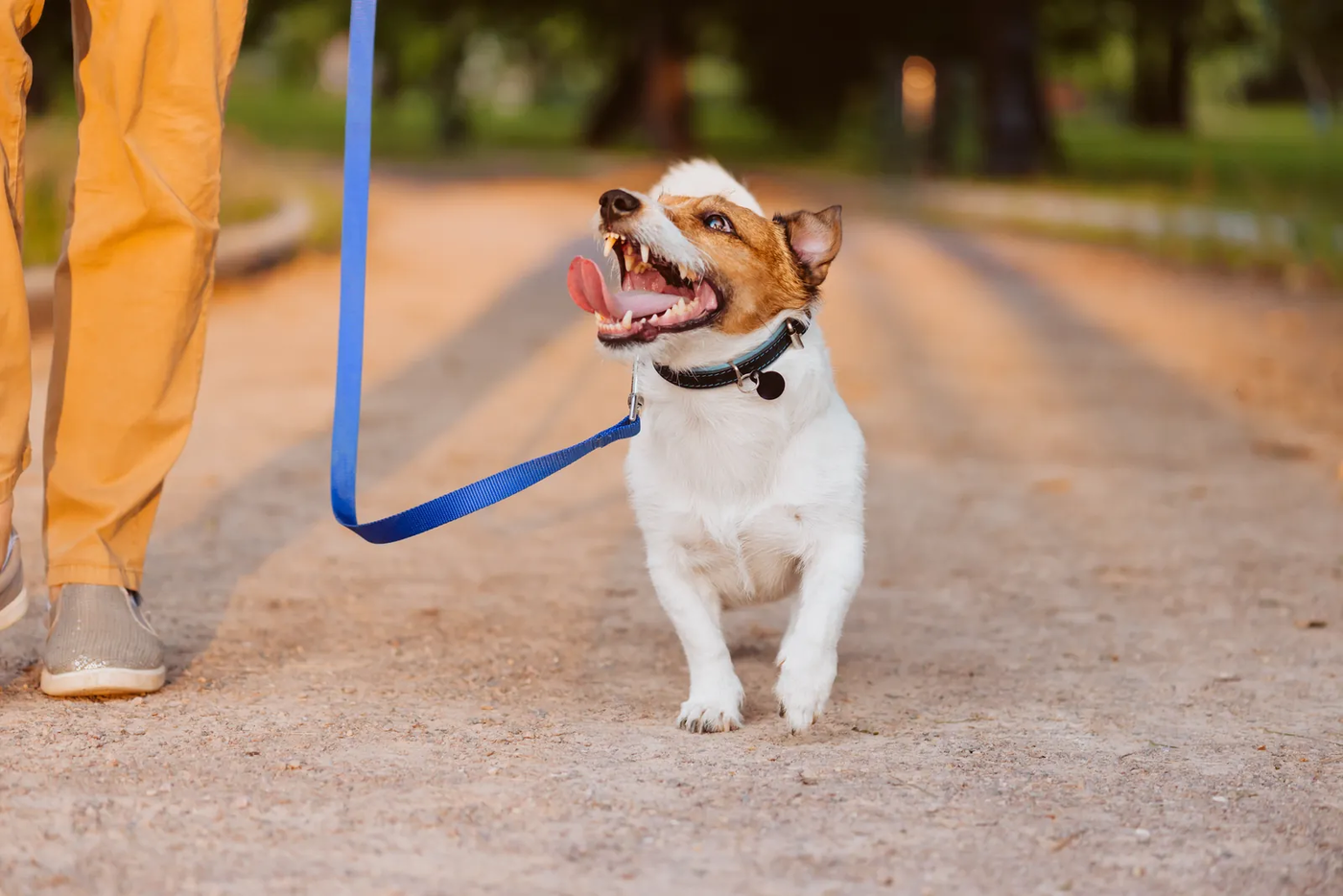
Dogs are scavengers, and a sidewalk in the Heights or a trail along the bayou is a buffet: chicken bones, dropped fries, dead lizards, cat food on a porch, goose droppings, a toad after a rain. Every find pays, so the dog scans the ground and eats before the owner sees, and the owner's lunge for the mouth teaches it to swallow faster. Some dogs do it more: hounds, Labs and beagles by breed, rescues that were hungry once, and any dog walked before breakfast. The fix has two halves: management, so the finds stop happening while the skill is built, and a leave-it proofed against the real things the dog finds, not against a treat in a fist.
- Scavengers by nature, and the sidewalk pays
- The lunge for the mouth teaches swallowing
- Hounds, Labs, beagles and once-hungry rescues
- Management, then a proofed leave-it
The method
Seven steps, and the muzzle comes early for the dog that swallows.
Feed the dog before the walk. Walk on a short leash through the hot spots at a heel, and let the dog sniff on a release only where the ground is clean. Then build the leave-it against real objects in your own yard first.
A meal before every walk, so the dog is not hunting
A short leash and a heel through the spots where things get dropped, with a release to sniff only on clean ground
Leave-it taught indoors with a closed fist, then food on the floor under a shoe, then uncovered, paid from the other hand for the look-away
Leave-it proofed in the yard on real finds you plant: a piece of bread, a chicken bone in a bag, a dropped fry, paid heavily for looking at you instead
Drop it taught as a trade, something better for the thing in the mouth, so a find that gets picked up can be recovered without a fight
A basket muzzle the dog is taught to love, worn on walks while the skill is built, for any dog that swallows before you can react
The leave-it used on every walk for life, paid often, because the sidewalk never stops paying
The mistakes
Grabbing the mouth, walking hungry, testing on the real thing, and skipping the muzzle out of embarrassment.
Grabbing the dog's mouth to get the find teaches it to swallow first and to guard the next one; the trade and the drop-it are the recovery method. Walking a hungry dog before breakfast turns a walk into a hunt. Testing the leave-it on a real chicken bone before it has been proofed on planted ones produces a failure and a vet visit. And skipping the basket muzzle because of what the neighbors will think costs dogs their lives every year; a dog that swallows socks, corn cobs or bones is a surgical case, and a basket muzzle that lets it pant and drink is the kindest thing between the habit and the training. Muzzle training takes a week with food and is on the fearful dog and bite pages too.
A dog that eats its own or other dogs' droppings is a separate habit with the same leave-it and a veterinary conversation about diet.
- Never grab the mouth; trade
- Feed before the walk
- Proof on planted finds before real ones
- A basket muzzle is kindness, not shame
- Droppings: the same leave-it and a vet conversation
Proofing around Houston
Toads, chicken bones, fire ants, goose droppings at the ponds and the trash day sidewalk.
Houston's sidewalks and trails are a scavenger's dream and a vet's nightmare: Gulf Coast toads on every patio and trail after a rain, which are seriously toxic if mouthed; chicken bones outside the taquerias and wing places on every busy street; fire ant mounds that punish a nose; goose and duck droppings at every retention pond in Bridgeland and Cinco Ranch; and trash day, when every curb has a bag with a hole in it. Our trainers proof the leave-it on the store aisles first, where dropped treats are everywhere, then on the trails at Kickerillo-Mischer and along Cypress Creek, then on busy sidewalks, and the hazards guide on this site names the things worth leaving.
- Toads after a rain
- Chicken bones on the busy streets
- Fire ant mounds
- Goose droppings at the ponds
- Trash day
When to call
A dog that has eaten something dangerous, a dog that guards its finds, or a dog you cannot walk without a fight.
A dog that has eaten a toad, a bone, a sock or a corn cob is an emergency and the ASPCA poison control line or the emergency vet is the first call. A dog that growls, freezes or runs off with a find and will not trade is guarding, and the resource guarding page and a Platinum stay at $3,750 are the plan. A dog that turns every walk into a fight over the ground is usually a walk problem first, and a Gold stay at $2,500 builds the heel, the leave-it and the drop-it into the foundation and proofs them on field trips where the finds are real. An in-home lesson at $220 sets up the muzzle and the planted finds in your yard in an afternoon.
The programs
Programs that build the leave-it for the sidewalk.
Gold for the heel, the leave-it and the drop-it proofed on real finds, Platinum for the dog that guards its finds, lessons at home to set up the muzzle and the yard.


Asked and answered
Questions people ask about this.
How do I stop my dog eating things off the ground?
Feed it before the walk, keep a short leash and a heel through the hot spots, teach leave-it indoors and then proof it on finds you plant in your own yard, paid heavily for looking at you, and teach drop-it as a trade. A dog that swallows before you can react wears a basket muzzle on walks while the skill is built.
Is a muzzle cruel for a dog that eats everything?
No. A basket muzzle that lets the dog pant, drink and take treats is the kindest thing between a scavenger and a surgical emergency, and a dog taught to wear one with food over a week does not mind it. It is worn on walks while the leave-it is built, and often for life on trash day.
What should my dog never eat on a Houston walk?
Toads, which are seriously toxic; chicken bones, which splinter; anything at a fire ant mound; goose and duck droppings at the ponds; and anything from a trash bag. If the dog eats a toad, a bone or a sock, the emergency vet or the ASPCA poison control line is the first call.
Why does my dog swallow things faster when I go for its mouth?
Because grabbing the mouth turns the find into a contest, and swallowing wins. Teach drop-it as a trade, something better for the thing in the mouth, so a hand coming toward the dog predicts a reward rather than a loss, and use the muzzle while the trade is learned.
Keep reading
Free consultation · 10% off this fall
Feed first, heel past, proof the leave-it.
Tell our team what your dog finds on walks. The free phone consultation is a direct call.