
Problem behaviors
How to stop a dog from chasing cats
A dog and a cat can share a Houston house for fifteen years or a single afternoon, and the difference is whether the first weeks were managed or left to chance. Here is the method our trainers use, the introduction in stages, and the dogs that should never be trusted loose.
Last reviewed September 11, 2026 · by the Best Dog University Team
Why it happens
Prey drive, arousal, play or a learned game, and the cat runs every time.
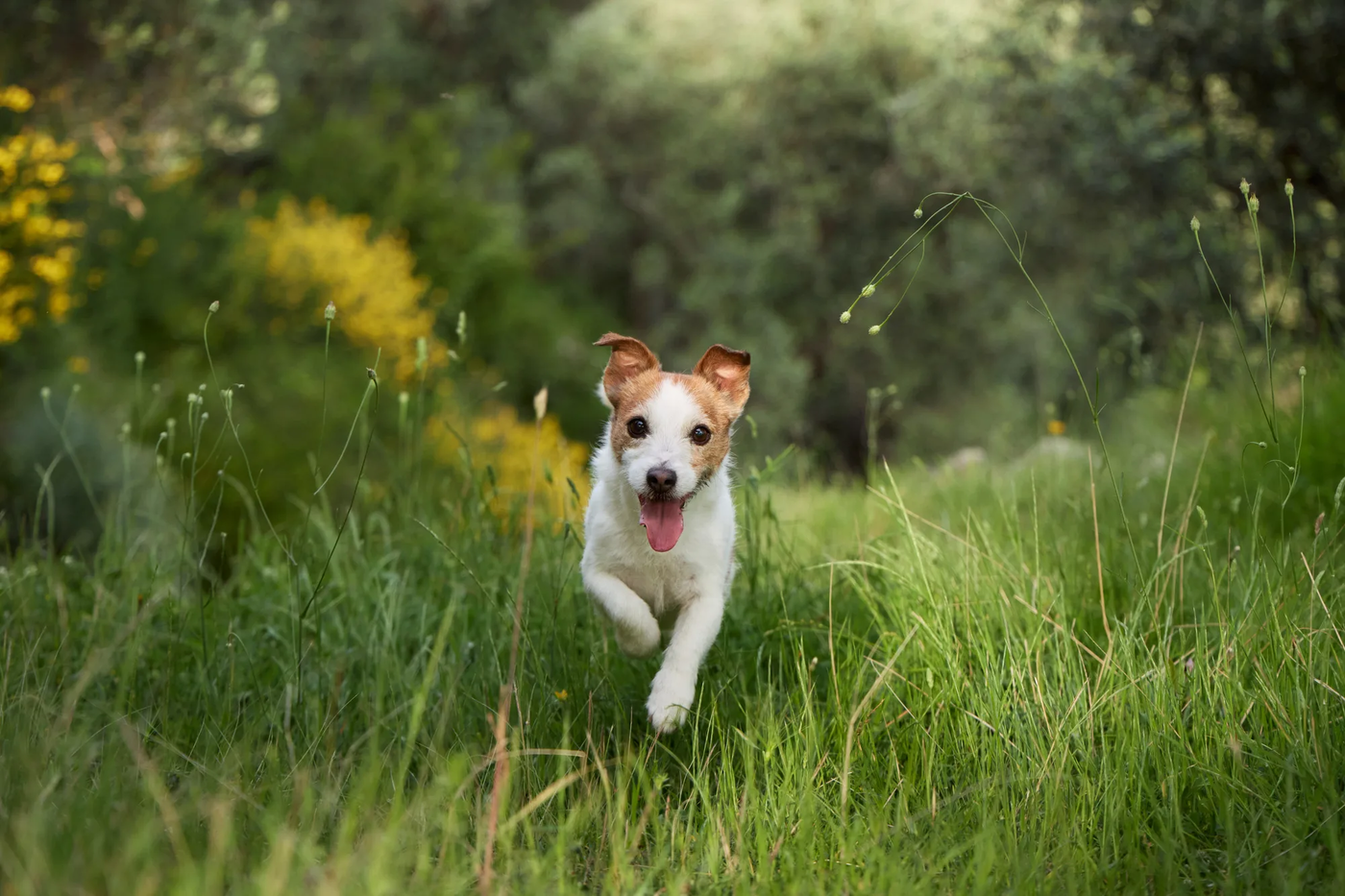
A dog chases a cat because the cat runs, and a running small animal switches on the oldest circuit a dog has. Some dogs chase from prey drive, sighthounds, terriers, huskies and herding dogs by breed, and for them the chase is the point and the catch is the risk. Some chase from arousal, an adolescent that chases anything that moves. Some chase in play and would stop if the cat did. And some have learned a game, because the cat runs, the dog chases, the cat gets away and it is the best minute of the dog's day. Whatever the reason, every chase makes the next one likelier and teaches the cat to run, which makes it likelier again. The rehearsal has to stop before any training can start.
- The cat runs, and the chase switches on
- Prey drive: sighthounds, terriers, huskies, herders
- Arousal and play: adolescents
- A learned game the cat keeps starting
- Every chase makes the next one likelier
The method
Seven steps, from separate rooms to a dog that ignores a walking cat.
The cat's safety comes first: separate rooms, a gate the cat can pass and the dog cannot, high places, and an escape route from every room. Then the dog is worked at a distance, on a leash, with the cat in view.
Separate the animals completely for the first week: rooms, a gate with a cat door, the cat's food, litter and beds where the dog cannot reach
Place with duration and a leave-it for movement taught to the dog with no cat present, until both are solid
The dog on a leash on place, the cat visible across a room or through the gate, the dog paid heavily for looking at the cat and then at you; sessions of five minutes, ended before the dog fixates
The distance closed over weeks, the cat moving, the dog paid for staying on place with a soft body; any stiffening or staring means more distance
A structured walk before every session so the dog arrives with the edge off
The dog off place but on a leash in the same room as the cat, then a dragging leash, then supervised freedom, over weeks, and never unsupervised until the dog ignores a walking cat
The cat's high places and escape routes kept for life, and a leave-it that covers the cat used every day
The mistakes
Letting them work it out, punishing the chase, a scared cat, and trusting a good week.
Letting the dog and the cat work it out is how cats get hurt and dogs learn the game. Punishing the dog for chasing teaches it that the cat predicts trouble, which makes some dogs worse and none better; the dog is paid for calm around the cat, not punished for the chase, and the chase is prevented by management. A cat that has been chased runs from the dog, which restarts the chase every time, so the cat's confidence has to be rebuilt too: high places, an escape route, and sessions where the dog is on place and the cat learns it can walk past. And trusting a good week, leaving them loose together because nothing has happened, is the mistake that ends badly; a dog that has been calm for a week has been calm for a week, and the leash stays on for a month more.
Prey drive is not removed by any of this. It is given rules and an outlet, tug with a start and a stop, a flirt pole in the yard, and the cat is made boring by weeks of paid calm.
- Never let them work it out
- Never punish the chase; pay the calm
- Rebuild the cat's confidence too
- A good week is a week, not a verdict
- Prey drive gets rules and an outlet, not a cure
Proofing around Houston
Outdoor cats on every block, the fence, and a rescue that arrived with no history.
Houston neighborhoods have outdoor cats on every block and a dog that chases the cat at home chases them through the fence and on the walk, so the leave-it for movement is proofed on the sidewalk and at the fence line too, on a leash, at a distance, with the same pay. A rescue from BARC or the county shelter usually arrives with no history with cats, and the first month at home, covered in the rescue guides on this site, is spent with the animals separated and the dog assessed before any introduction. Our trainers build place, the leave-it and the settle around real distraction in the training home and set up the gates and the sessions at the go-home session in your house.
- Outdoor cats on every block
- The fence line and the sidewalk proofed too
- Rescues: separated and assessed first
- The gates and the sessions set up at home
When to call
A dog that has grabbed a cat, a hard-driven breed, or a dog that fixates and cannot look away.
A dog that has grabbed or injured a cat is past this page, and management for life, gates, a leash, separate rooms, is the honest answer for most of them; our team says so on the phone rather than selling a stay that cannot make a sighthound safe loose with a cat. A dog that fixates, stiff and staring and unable to take food with the cat in view, needs the work run by a trainer who can read the threshold, and a Platinum stay at $3,750 builds the leave-it, place and the settle under distraction with unlimited lessons afterwards to run the introduction at home. A dog that chases in play or arousal is a Gold case at $2,500. The prey drive page describes the program.
The programs
Programs for the dog that chases cats.
Platinum for the dog that fixates, with the introduction run at home afterwards, Gold for the playful chaser, lessons at home to set up the gates and the sessions.


Asked and answered
Questions people ask about this.
Can a dog with prey drive live with a cat?
Many can, with management and weeks of paid calm at a distance, and some cannot: a sighthound, a terrier or any dog that has grabbed a cat may never be safe loose with one. Prey drive is given rules, not removed. Our team says which case a dog is on the phone.
How do I introduce a dog to a cat?
Separate rooms for a week, a gate the cat can pass, high places and an escape route; then the dog on a leash on place with the cat visible across the room, paid for looking at the cat and back at you, in five-minute sessions, with the distance closing over weeks. Loose together only when the dog ignores a walking cat, and never unsupervised for a month more.
Should I punish my dog for chasing the cat?
No. Punishment teaches the dog that the cat predicts trouble and makes some dogs worse. Prevent the chase with gates and a leash, pay the dog for calm around the cat, and give the drive an outlet with tug and a flirt pole. The cat becomes boring through weeks of paid calm.
My dog chases the neighbor's cats through the fence. Same method?
Yes, with the leave-it for movement proofed at the fence line and on the sidewalk, on a leash, at a distance, with the same pay. A dog that fence-fights over cats also needs the yard managed: no unsupervised time at the fence, and place indoors during the hours the cats cross.
Keep reading
Free consultation · 10% off this fall
Stop the chase, pay the calm, keep the gates.
Tell our team what your dog does when the cat moves. The free phone consultation is a direct call.