
Cooperative care
How to muzzle train a dog: so the muzzle means good things
A muzzle is a safety tool, not a verdict on your dog. Plenty of friendly dogs need one some day: at an emergency vet after a storm, with a painful injury, or in a busy waiting room. A dog taught to like its muzzle wears it without a fight when that day comes.
Last reviewed September 29, 2026 · by the Best Dog University Team
Before you start
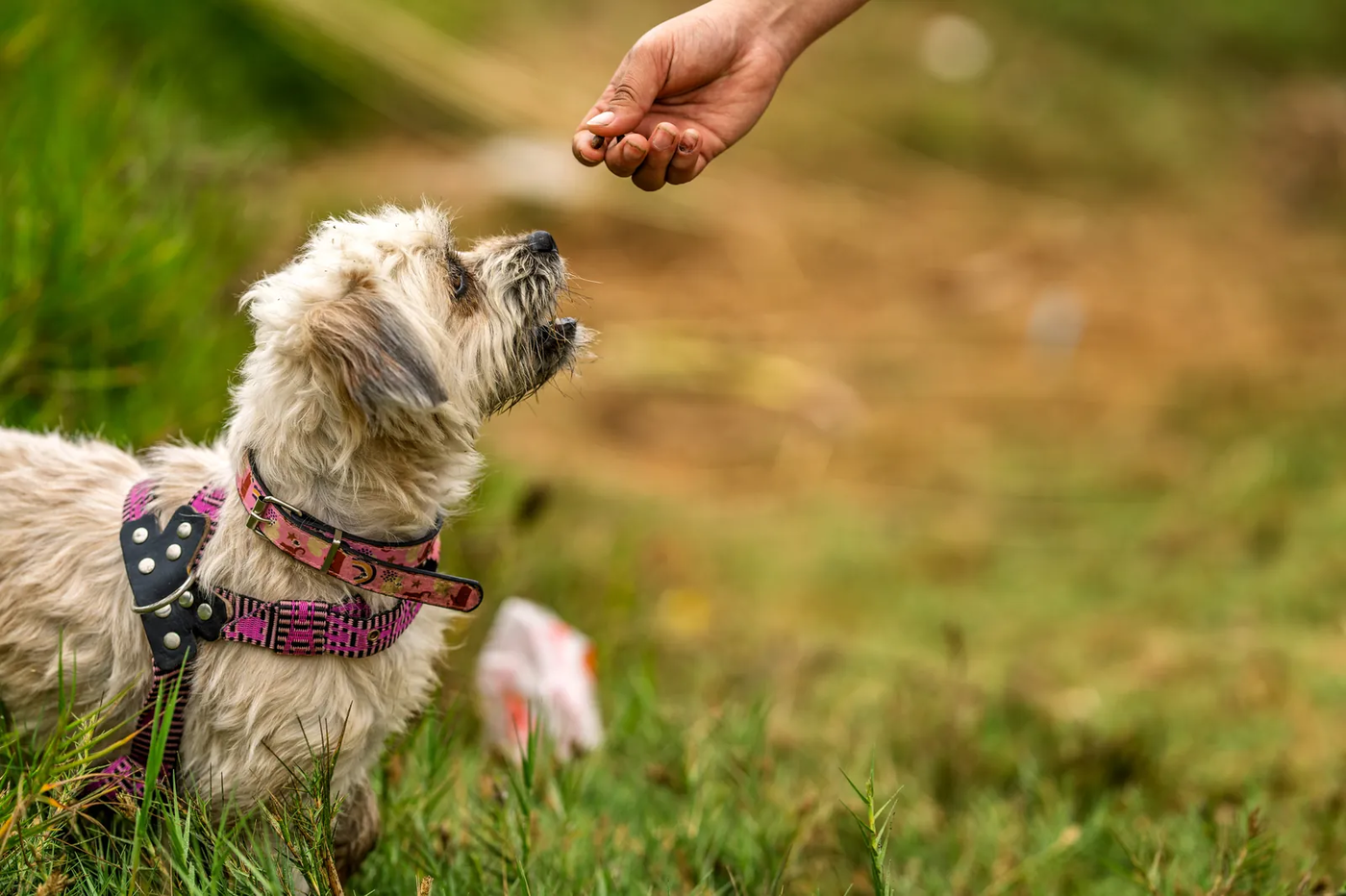
Before you start: the right muzzle, the right fit and a jar of the good treats.
Choose a basket muzzle, plastic, rubber or wire, with room for the dog to open its mouth, pant and take a treat through the front. The short fabric sleeve used at some grooming tables holds the mouth closed; it is meant for a few minutes of handling, never for training or walks. Measure around the widest part of the snout with the mouth slightly open, and from the tip of the nose to just below the eyes, then follow the maker's chart. Squeeze cheese or soft treats make the early steps easy; if you use peanut butter, check it contains no xylitol.
The Houston caveat is panting. A dog here cools itself by panting for most of the year, and from May to September a closed-mouth muzzle on a walk is dangerous. Even in a basket muzzle, keep early practice indoors in the air conditioning, keep summer walks in it short and early, and bring water the dog can drink through the front. If your dog may need a muzzle during a hurricane evacuation or a stay somewhere unfamiliar, start the training now rather than when a storm is named.
- A basket muzzle the dog can pant and drink in
- Snout length and width measured against the chart
- Soft food that fits through the front
- Summer practice indoors, summer walks short
The steps
Seven steps from a food bowl on the face to a walk in the muzzle.
Work in sessions of two or three minutes, a few times a day, and let the dog set the pace. The rule throughout is choice: the dog pushes its face in, you never push the muzzle on. End every session by taking the muzzle off while the dog is calm, not while it paws at it, and put it away out of sight between sessions so it stays special.
Hold the muzzle in front of the dog with a treat inside at the front, let the dog reach in to take it, and repeat until it dives in eagerly
Smear soft food inside the front so the dog keeps its nose in for a few seconds of licking, and pay again as it comes out
Hold the straps behind the ears without fastening them while the dog licks, then let go, building to ten seconds
Fasten the strap for one second, feed through the front, unfasten and put the muzzle away; repeat until the buckle sound makes the tail wag
Build the fastened time from seconds to a minute, then five, while the dog does something it enjoys: a sniff in the yard, a short game, a chew held through the front
Wear it on a short walk at a cool hour, feeding through the front, and take it off at home before the dog asks
Practice where it will matter: the car, the vet's parking lot, the groomer's door, a friend's house, with the same food and praise
When it is not working
Pawing at the face, backing away, or a muzzle that only shows up for bad news.
A dog that paws and rubs its face on the floor had the fastened time stretched too fast, or the muzzle rubs. Check the fit first: the straps sit snug behind the ears, the basket does not press on the eyes, and there is room to pant. Then go back to shorter wear with more food, and take the muzzle off only after a few calm seconds, so that pawing never becomes the thing that ends it.
The dog that backs away at the sight of the muzzle learned that it predicts something bad: a nail trim, a shot, being held down. Put it away for a week, restart from the first step with a new cue word, and use it only for good things until the dog's opinion changes. The third reason is time. Muzzle comfort fades without practice, so a dog that wore one happily a year ago needs a few refreshers before the next vet visit.
- Pawing: check the fit, then shorten the wear
- Never let pawing end the session
- Backing away: restart with a new cue word
- Refresh the skill before each vet visit
When to get help
When muzzle work belongs with a trainer, and what fits.
If your dog has bitten, or you are muzzle training because you worry it might, do not do this alone. That is a behavior case, and the Platinum Board & Train, three weeks at $3,750, is built for it: behavior modification for reactivity and aggression, field trips and public exposure, a comprehensive handover and unlimited private lessons afterward. If your dog needs a muzzle, conditioning it can be part of that plan, so the dog comes home able to wear one calmly.
For a dog that simply needs to accept a muzzle for vet and grooming visits, our cooperative care training pairs the muzzle with nail, ear and paw handling. Private lessons are $160 in Cypress or $220 in your home, and one or two are often enough to get the first stages right. On the free phone consultation, tell our team honestly why you want the muzzle, because the reason changes the plan.
The programs
Help with muzzles, handling and bites.
Private lessons for cooperative care and muzzle comfort, Platinum when the muzzle is there because of a bite or a real risk of one.

Asked and answered
Questions people ask about this.
Is it cruel to muzzle a dog?
A well-fitted basket muzzle that the dog has learned to like is not cruel; it lets a dog go safely to places it otherwise could not. What is unkind is a muzzle forced on in a crisis, or a closed-mouth muzzle left on in the heat. Teach it early and fit it well.
How long does muzzle training take?
Most dogs wear a basket muzzle calmly for a short walk after two to three weeks of daily sessions. A dog that already links the muzzle with something unpleasant can take longer, because you are changing an opinion as well as teaching a skill, so start from the first step.
Can my dog drink and eat with a muzzle on?
In a properly fitted basket muzzle, yes: the dog can pant, drink and take small treats through the front. A fabric sleeve muzzle holds the mouth closed, so the dog cannot pant or drink, which is why it is for a few minutes of handling and never for a walk.
My dog is friendly. Why would it need a muzzle?
Pain changes behavior. A friendly dog with a torn nail, a snake bite or a heat injury may snap at the hands that are helping, and emergency staff may need to muzzle it. A dog that already knows the muzzle skips the struggle, which is kinder for everyone in the room.
Should the vet or the groomer do the muzzle training?
They can put one on, but they rarely have time to teach it. Do the steps at home first, then bring the muzzle to a happy visit where nothing happens except treats and a walk out again, so the dog wears it there without worry.
Keep reading
Free consultation · 10% off this fall
Make the muzzle a normal thing.
Tell our team why your dog needs a muzzle and how it reacts to one today. The free phone consultation is a no-obligation call.