
Cooperative care
Cooperative care dog training in Houston: vet visits, nail trims and the groomer
The groomer along 290 has asked you to go elsewhere, the vet needs two techs to hold your dog for a heartworm test, and nail trims happen never. None of that is a bad dog; it is a dog that was never taught hands are safe, and that is teachable.
Last reviewed September 29, 2026 · by the Best Dog University Team
What it is
A dog that holds still for handling because it understands it, not because it is pinned.
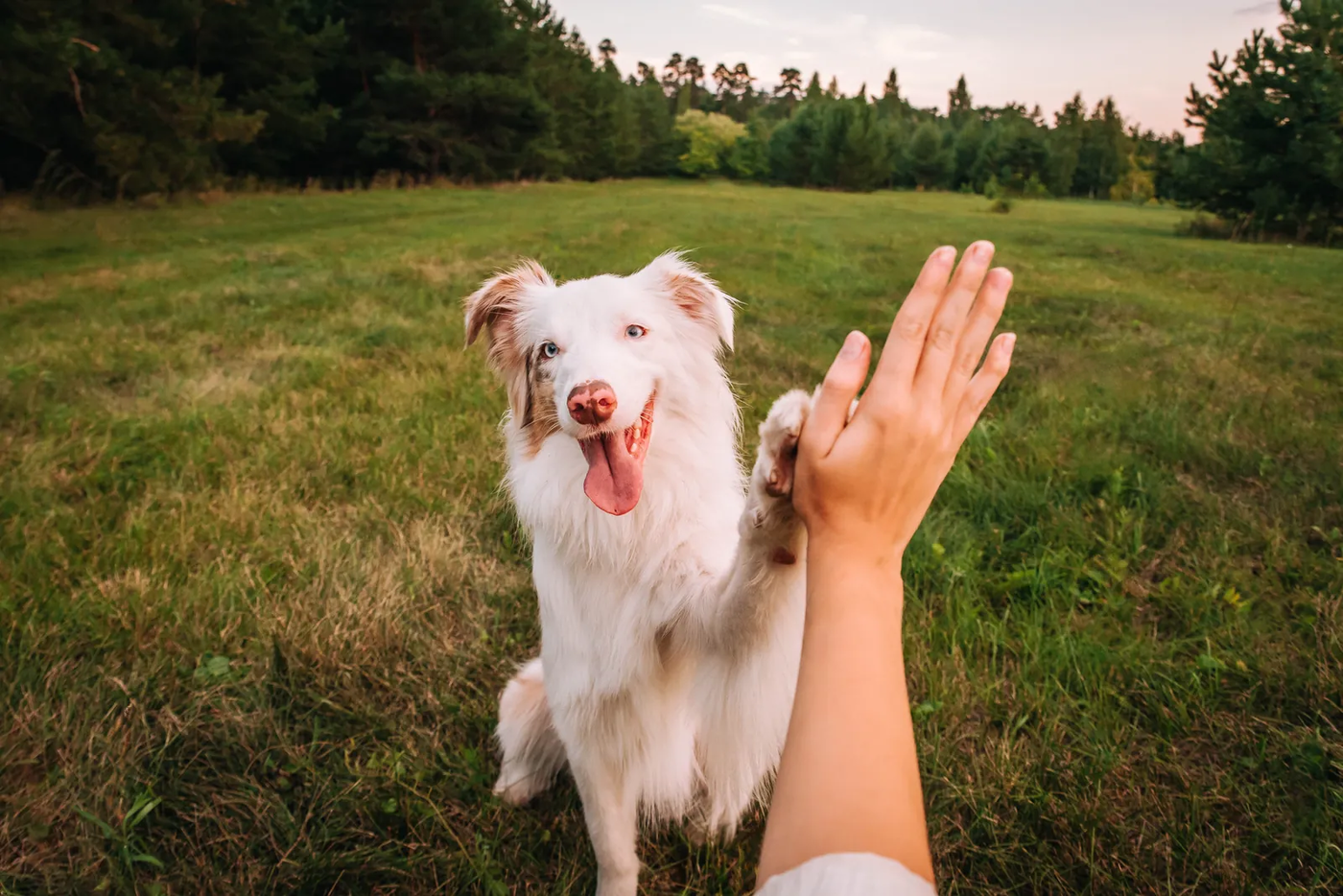
Cooperative care means the dog has a job during handling: a chin rest on a towel, a stand on a mat, a paw offered into a hand, held for a count and released, with the dog allowed to say not yet by lifting its head. The routine becomes so familiar that the nail grinder, the ear cleaner and the thermometer are predictable, and predictable is what a nervous dog needs most.
What it is not is restraint made gentler, and it is not sedation, which is a conversation for your veterinarian. It is also not a fix for a dog that guards its body because something hurts; that is checked first. A dog that has bitten a groomer is beyond a handling routine on its own and needs structure and controlled exposure first.
- A chin rest or a stand the dog chooses
- Handling in tiny paid steps with a clear release
- The dog can pause it, which is why it works
- A bite at the groomer changes the plan
Why it happens here
Year-round vet visits, doodle coats and a puppy that was never touched on purpose.
Houston dogs see the vet often: heartworm is a year-round pressure here, so there is a test and prevention every year, plus the ear and skin visits a humid climate produces. Doodles, the most common dog on our trainers' schedule, need a groomer every few weeks for life, and one that fights the tub at six months has a hundred groomings ahead. Fire ant bites on the paws and the summer coat mean hands on the dog.
Most of it starts in puppyhood: a puppy that was picked up, dried and kissed but never had a paw held for a count, never had its ear lifted, never met a nail file. Then the first real trim goes badly, the puppy wins by wriggling, and the fight is learned. Shelter dogs from BARC or Harris County Pets often arrive with the fight already in place.
- Heartworm tests and prevention every year
- Grooming every few weeks for doodles
- A puppy that was cuddled but never handled
- A first trim that went badly and taught the wriggle
How we teach it
One paw at a time, paid for the stillness, with a stop the dog controls.
Structure comes first: a dog that cannot hold a place for a minute cannot hold still for a nail, so place and a settled down are built before any tool appears. Then the chin rest: the dog rests its chin on a folded towel on your knee, is paid for two seconds, then ten, and learns that lifting its head pauses the game. Handling is layered in behind that: a hand on the shoulder, down the leg, the paw, a nail, each step paid and repeated until it is boring.
Then the tools, at a distance first: the clippers on the floor, the grinder running across the room, the ear bottle touched to the fur with nothing in it. A raised table, a tub and a scale are practiced at the training home before the real ones, and the handover teaches the family the routine and the rule: end before the dog says stop.
Place and a settled down before any tool appears
The chin rest, paid for two seconds, then ten
Hands on the shoulder, the leg, the paw, each step paid
Clippers and the grinder introduced at a distance, then closer
A table, a tub and a scale practiced at the training home
Handover: the routine, and end before the dog says stop
Which program
Lessons or the puppy bundle for most dogs, Platinum for the dog that has bitten.
Cooperative care is a family skill, so most dogs learn it in private lessons: $160 per session at our Cypress training home or $220 in your home, where the towel, the clippers and the hands are the ones the dog will live with. Two to four sessions is typical. A puppy under four months gets it inside the Puppy Development Bundle, four sessions for $550 in Cypress or $750 in-home.
A dog that has snapped at a vet tech or a groomer fits the three-week Platinum Board & Train at $3,750: structure and calm first, handling rebuilt daily by our trainers, and unlimited lessons afterwards that carry it into your groomer's tub. Gold at $2,500 fits the adolescent that mostly needs impulse control before it can hold still. No program removes a dog's dislike of the grinder; it teaches the dog to hold still anyway.
| Dog | Program | Price |
|---|---|---|
| Puppy under 4 months | Puppy Development Bundle | $550 Cypress, $750 in-home |
| Wriggles and avoids, no snap | Private lessons, 2 to 4 sessions | $160 Cypress, $220 in-home |
| Has snapped at the vet or groomer | Platinum, 3 weeks | $3,750 |
Houston specifics
Soft lawns that never wear a nail, the summer coat and hurricane season's crate.
Houston dogs walk on grass and cool pavement at dawn, not on miles of hard sidewalk that wear nails down, so nails grow long and need trimming often. The coat comes off in May for most doodles and Bernese, and the clippers run for an hour, which is a long time to hold still. Ear checks after every swim in the lake or the pool are a weekly job from May to September.
Hurricane season, June 1 to November 30, is the other reason: an evacuation means a crate, a car and strangers handling your dog, and Ready Harris and the AVMA both put a dog that can be crated and handled near the top of the pet-preparedness list. A dog that lets you check its paws, lift its lip and load into a crate is a dog you can take with you.
The programs
Programs for a dog that fights handling.
Private lessons for the family routine, the puppy bundle for a puppy, Platinum for the dog that has snapped at the vet or the groomer.

Asked and answered
Questions people ask about this.
Can you make my dog like nail trims?
Tolerate, reliably: yes for most dogs. Like: some never will, and that is fine. The goal is a dog that offers a paw, holds still for a nail and gets paid, with a routine so predictable that the grinder stops being news. One nail a day for a week beats a monthly wrestling match.
Should I just let the groomer sedate my dog?
That is a question for your veterinarian, not a trainer, and it is management rather than a fix. Cooperative care is what you do so the question stops coming up: the tub, the dryer and the clippers practiced in small steps until the dog can hold a stand through them.
My dog bites when I touch his paws. Is that aggression?
If the dog is otherwise easy and only reacts to paws, it is usually a handling gap and sometimes pain, so the vet checks first and then the paw work starts at the shoulder and moves down over days. A dog that has bitten hard, or guards its whole body, needs structure first.
How long does it take to teach a chin rest?
A few days for the chin rest itself, a few weeks to layer handling behind it, and months for the tools to become boring. Most families see the dog offering the chin rest on its own within the first week, the moment the dog stops being a passenger in its own care.
Do you practice at the groomer or the vet with the dog?
The table, the tub and the scale are practiced at the training home during a Platinum stay, and the store aisles on field trips cover the strangers and the noise. The handover walks you through the routine and what to ask your groomer to do the same way.
Keep reading
Free consultation · 10% off this fall
Tell our team what your dog will not let you do.
The free phone consultation is a short call about the handling your dog fights, whether it has snapped, and whether lessons, the puppy bundle or Platinum fits. A $250 reservation deposit holds your sessions or dates.