
Puppy raising
How to introduce a puppy to the leash
The leash is the single piece of equipment a dog wears for life and the one most puppies meet as a fight on a sidewalk at sixteen weeks. Our trainers introduce it in the yard in week one as a non-event, and here is how.
Last reviewed September 11, 2026 · by the Best Dog University Team
Why it matters
The leash taught in the yard is clothing; the leash taught on the sidewalk is a fight.
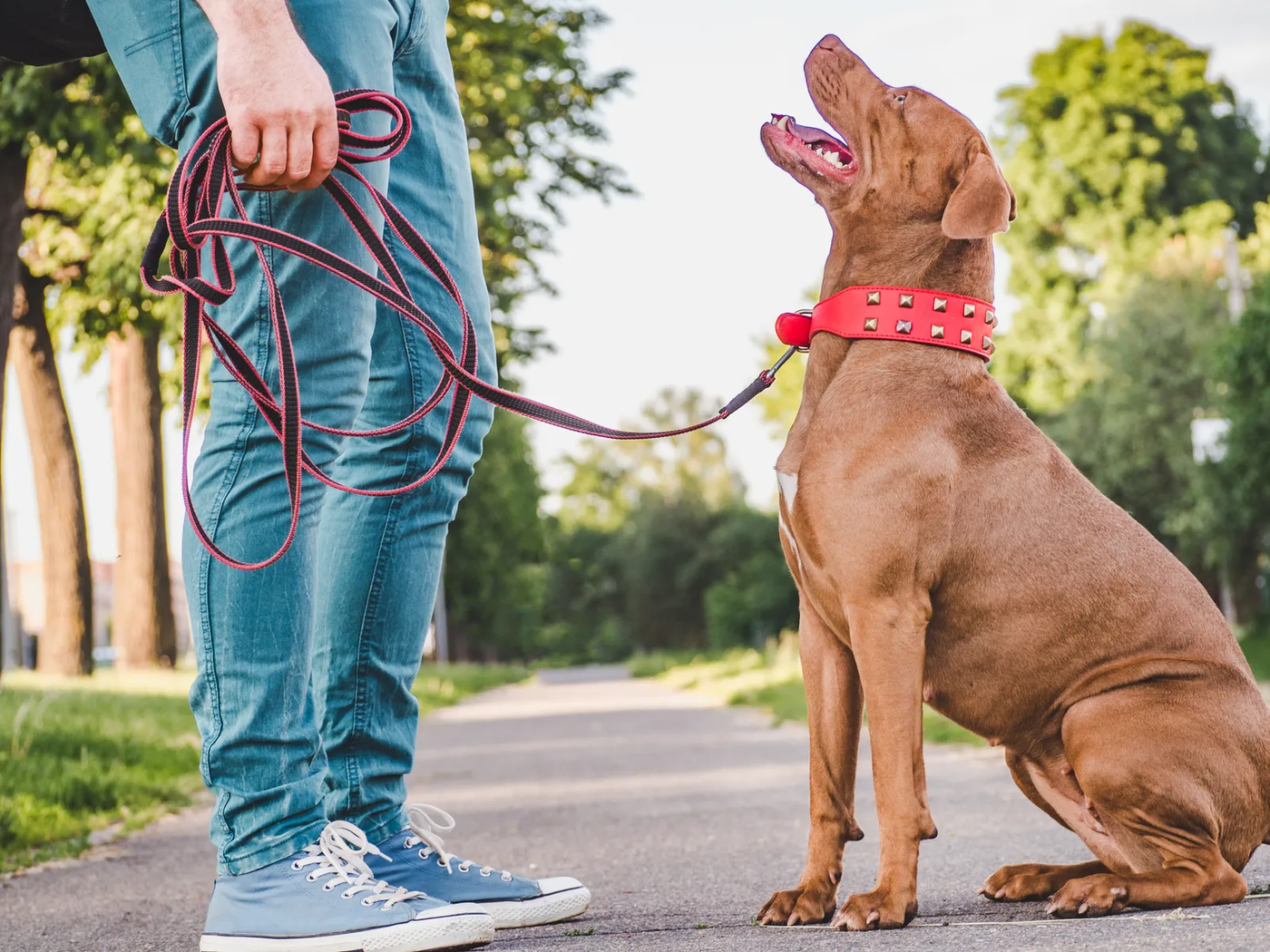
A puppy that meets the leash for the first time on a sidewalk, with the world in front of it and a person behind it, learns in one walk that the leash is a thing to pull against and that pulling gets it places. A puppy that meets the leash in the yard, dragging behind it while it plays, and then learns that the hand at the knee pays, files the leash as clothing and the knee as the good place, and when the sidewalk opens at sixteen weeks it already knows where to be. The first weeks on the leash are about the feeling of it, not the walk. Equipment barely matters at this age: a flat collar or a light harness and a six-foot leash, nothing that tightens or pinches, because the puppy is learning a position, not a consequence.
- On the sidewalk first, the leash is a fight
- In the yard first, the leash is clothing
- The knee as the paid place
- A flat collar or light harness, a six-foot leash
The method
Seven steps, from a collar worn for a minute to a minute on the sidewalk.
Start the day the puppy comes home. Sessions are two minutes, in the yard, with food, and they end before the puppy is bored.
The flat collar on for a few minutes at a time during play and meals, until the puppy forgets it is there; a day or two
A light leash clipped on and dragged in the yard while the puppy plays and eats, so it means nothing; two or three days, supervised so it does not snag
Following the hand: food in your hand at the seam of your trousers, the puppy paid every time it arrives at your knee, with the leash dragging; walk a few steps, pay on arrival
The leash picked up and held loosely, the puppy paid at the knee, a few steps at a time, the leash never tightening; if it does, stand still and wait for the puppy to come back to the knee, then pay
Yard walks of a minute, then two, around the edge of the yard, with the puppy paid every few steps and released to sniff on a word
The driveway and the hallway added, with a sit at the curb and a wait at the gate, before the vaccines are done
The sidewalk at sixteen weeks with the vet's go-ahead, a minute at a time, at dawn or dusk in summer, paid at the knee, with other dogs passed at a distance and never greeted
The mistakes
Dragging, the retractable leash, the first walk on a busy street, and greetings on leash.
Dragging a puppy that has sat down teaches it that the leash is a threat and that sitting down is how to fight it; stand still, wait, and pay the first step. The retractable leash teaches pulling by design, because the puppy learns that pressure produces more leash, and it is never used for training. The first walk on a busy street, the Heights trail or a Bridgeland path at a busy hour, floods a puppy with more than the leash; the first sidewalks are quiet ones. And greetings on the leash, letting the puppy meet every dog and person it pulls toward, teach it that pulling reaches things, which is the habit this whole page exists to prevent. Dogs on walks are looked at, paid for and passed.
A puppy that freezes on the leash is unsure of the leash, the surface or the world, and a week back in the yard with the leash dragging fixes it.
- Never drag; wait and pay the first step
- No retractable leash
- Quiet sidewalks first
- No greetings on leash
- A frozen puppy goes back to the yard for a week
Proofing around Houston
Hot pavement, a small yard, the hallway at noon and the store aisle at sixteen weeks.
A Houston puppy's leash training runs on the climate: in the yard at dawn and dusk on grass from May through September, because a puppy's pads burn on concrete in minutes; down the hallway at noon, which works fine for the position; and in the pet and hardware store aisles along 290 on cool floors once the vaccines are done, which is where our trainers take every puppy in the bundle for its first real leash work around distraction. The master-planned yards in Bridgeland and Cinco Ranch are small, which is enough for a puppy, and the HOA sidewalks and trails that open at sixteen weeks have a dog every fifty yards, which is why the rule about greetings starts on the very first street walk.
- The yard at dawn and dusk on grass
- The hallway at noon
- The store aisles at sixteen weeks
- The greeting rule from the first street walk
When to call
A puppy that panics on the leash, or a puppy that already pulls at five months.
A puppy that panics on the leash, thrashing, screaming or lying flat and refusing to move after a week back in the yard, is rare and worth a session in the puppy bundle at $550 or $750 in-home, where our trainer finds what frightened it and rebuilds the leash as clothing. A puppy of five or six months that already pulls hard missed this page and is rebuilt from a standstill on the leash-pulling page, and a Gold stay at $2,500 does it in the training home with field trips when the puppy is old enough. The when-to-start-leash-training answer on this site covers the timing, and the free phone consultation is where our team asks how the puppy walks in the yard.
The programs
Programs that introduce the leash right.
The puppy bundle from the yard up, Gold for the older puppy that already pulls, lessons at home for the first sidewalk walks.

Asked and answered
Questions people ask about this.
When should a puppy start wearing a collar and leash?
The week it comes home, at eight weeks: the collar for a few minutes at a time until it is forgotten, then a light leash dragged in the yard during play. The leash is introduced as clothing, not as a restraint, and the walk comes weeks later.
My puppy bites the leash. What do I do?
Let it drag more, so the leash is boring rather than a toy, keep a real toy in the puppy's mouth during the first held-leash sessions, and pay the knee heavily so the puppy's attention is on your hand. Leash biting fades within a week when the leash stops being interesting.
My puppy sits down and will not walk on the leash. Is something wrong?
Usually not. The puppy is unsure of the leash, the surface or the world. Stand still, say nothing, and pay the first step; never drag. A week back in the yard with the leash dragging and the hand at your knee fixes most of it. In summer, check the pavement first.
Should I use a harness or a collar for a puppy?
Either, as long as it is flat, light and does not tighten or pinch. The puppy is learning a position at your knee, not a consequence, and the food and the slack leash do the teaching. Retractable leashes teach pulling and are never used.
Keep reading
Free consultation · 10% off this fall
Clothing first, the knee second, the sidewalk last.
Tell our team how your puppy walks in the yard. The free phone consultation is a direct call.