
Puppies and lessons
When to start leash training a puppy?
The puppy that pulls at sixteen weeks was taught to pull at sixteen weeks, by a leash that stretched and an owner who followed, and our trainers see the result at a year. The walk is the cheapest thing to teach early and the most expensive to fix late.
Last reviewed September 11, 2026 · by the Best Dog University Team
The short version
Week one, in the yard, with food at your knee.
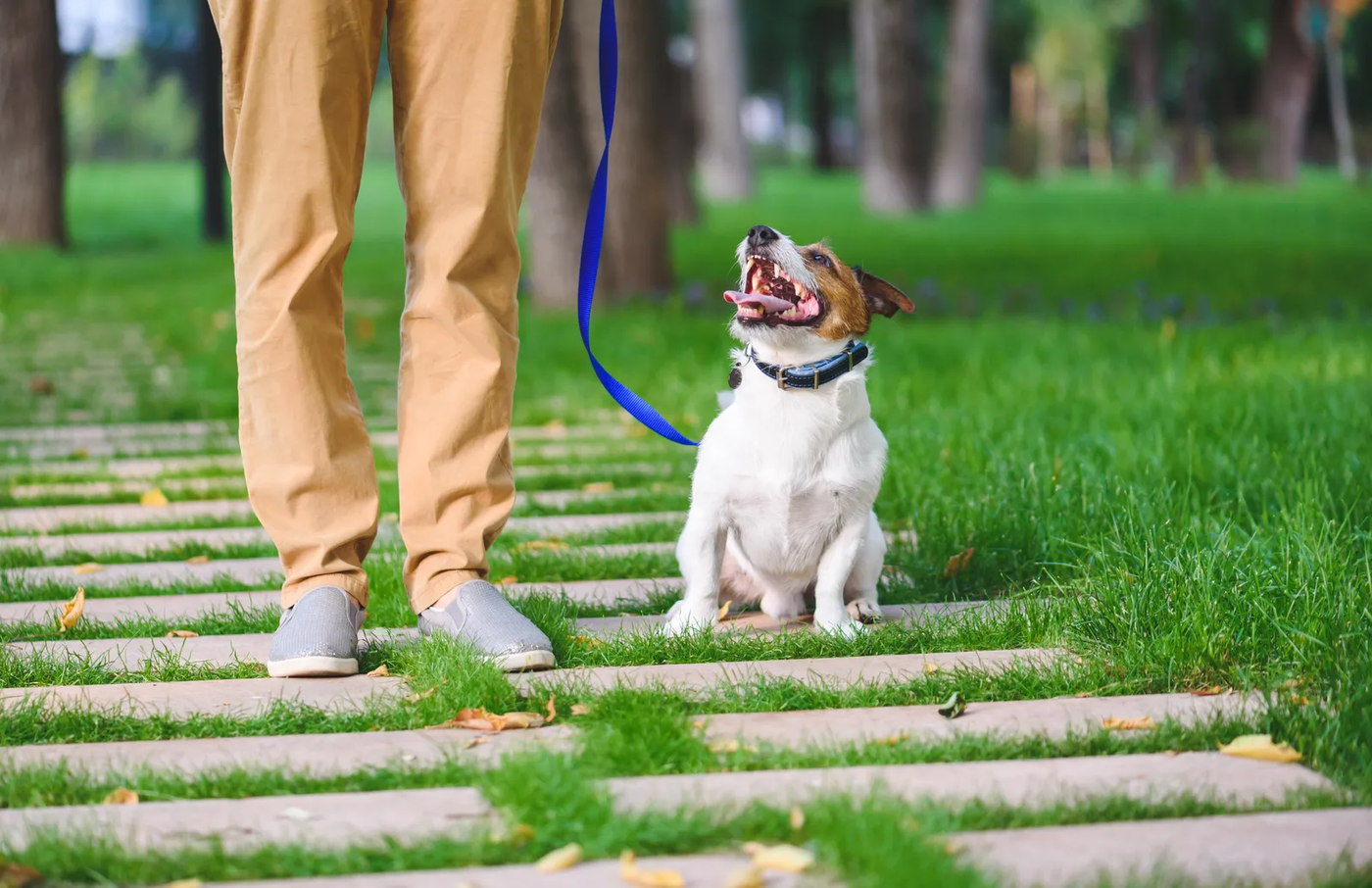
Leash training starts with a light leash dragging behind the puppy in the yard so the leash means nothing, then a hand with food at your knee so the puppy learns that following you there pays, then short walks around the yard with the leash held loosely and the puppy paid every few steps for being at your side. The puppy learns where to be before it ever feels a tight leash, and when the sidewalk opens after the vaccines, the first street walks are a minute long and paid the same way. Pulling never gets a chance to work. A puppy that arrives at four or five months and has already learned to pull starts the same way, from a standstill, with more patience.
- A light leash dragging in the yard first
- Food at your knee for following you
- Short yard walks, paid every few steps
- The sidewalk at sixteen weeks, a minute at a time
- Pulling never gets a chance to work
The reasoning
Why the first week on the street decides the walk, and why the yard comes first.
A puppy pulls for the simplest reason in dog training: it wants to get somewhere and the leash stretches and the owner follows, so pulling works on the first walk and is fluent by the tenth. The yard is the place to prevent it because there is nowhere the puppy wants to get to more than the hand with the food, and the puppy learns a position, at your knee, that has nothing to do with resistance. The leash is introduced as a piece of clothing, not a restraint, and the first time it tightens the puppy already knows where the good place is and goes back to it. Equipment matters less than families think at this stage: a flat collar or a light harness and a six-foot leash, nothing that pinches or tightens, because the puppy is learning a position, not a consequence.
The street comes later for two reasons: the vaccines, which make the ground unsafe until around sixteen weeks, and the distraction, which a puppy cannot handle until the position is solid somewhere boring.
- Pulling works on the first walk and is fluent by the tenth
- The yard has nothing better than your hand
- The leash as clothing, not a restraint
- A flat collar or light harness, nothing that pinches
- The street waits for the vaccines and the position
What it means for your puppy
Eight to twelve weeks, twelve to sixteen, sixteen to six months, and the puppy that already pulls.
From eight to twelve weeks the puppy drags the leash, follows the hand and does yard walks of a minute, paid constantly. From twelve to sixteen weeks the yard walks get longer and the driveway and the car come in, with a sit at the curb and a wait at the gate. From sixteen weeks to six months the sidewalk opens and the walks are short and early, paid at your knee, with other dogs passed at a distance and never greeted, and the store aisles along 290 become the distraction classroom. A puppy that already pulls at five months is taught from a standstill: the walk stops the moment the leash tightens, the puppy is paid for coming back to your knee, and the first sessions cover ten feet.
- Eight to twelve weeks: drag, follow, a minute in the yard
- Twelve to sixteen: the driveway, the car, a sit at the curb
- Sixteen weeks to six months: the sidewalk, short and early, no greetings
- Already pulling: from a standstill, ten feet at a time
The Houston factor
Hot pavement, a tiny yard, and a puppy that cannot walk outside until autumn anyway.
A Houston puppy's leash training is built for the climate: in the yard at dawn and dusk on grass from May through September, because an eight-week puppy's pads burn on concrete in minutes and the sidewalk is too hot from late morning to evening; indoors down the hallway at noon, which works fine for the position; and the pet and hardware store aisles on cool floors once the vaccines are done. The master-planned yards in Bridgeland and Cinco Ranch are small, which is enough, and the HOA sidewalks and trails that open at sixteen weeks have a dog every fifty yards, which is why the rule about not greeting on leash starts on the first street walk. Our trainers teach the walk in the yard first for every puppy in the bundle.
Week one: a light leash dragging in the yard, food at your knee for following
Weeks two and three: yard walks of a minute, paid every few steps, the leash loose
Weeks four to eight: the driveway, the hallway, the car, a sit at the curb and a wait at the gate
Sixteen weeks: the sidewalk, one minute at a time, at dawn or dusk in summer
Four to six months: the store aisles, then the trail, dogs passed at a distance and never greeted
Any tight leash: the walk stops, the puppy comes back to your knee, the walk resumes
Always: a flat collar or light harness, no pinching, no tightening, no pulling contests
The program
The walk is in the puppy bundle from the first session, and the stay rebuilds it for a puller.
The Puppy Development Bundle, four sessions at $550 in Cypress or $750 in your home, teaches the walk from the yard up, with the leash as clothing, food at the knee and the first street walks once the vaccines are done. A puppy of five or six months that already pulls goes into a Gold stay at $2,500 when it is old enough, where the walk is rebuilt from a standstill and proofed in the store aisles and on the trails. The leash pulling page describes the adult version, and the how-to on introducing a puppy to the leash walks through the first weeks step by step.
The programs
Programs that teach the walk before the pull.
The puppy bundle from the yard up, Gold for the older puppy that already pulls, lessons at home for the first street walks.

Asked and answered
Questions people ask about this.
Can I leash train a puppy at 8 weeks?
Yes, and you should: a light leash dragging in the yard so it means nothing, then food at your knee for following you, then yard walks of a minute. The puppy learns where to be before it ever feels a tight leash, and the sidewalk at sixteen weeks is easy.
What collar or harness should a puppy wear?
A flat collar or a light harness and a six-foot leash, nothing that pinches or tightens, because the puppy is learning a position, not a consequence. The equipment matters far less than the food at your knee and the leash staying loose.
My puppy sits down and refuses to walk on the leash. What do I do?
Stop, wait, say nothing and pay the first step, never drag. A puppy that freezes on a leash is unsure of the leash, the surface or the world, and a week back in the yard with the leash dragging and the hand at your knee fixes it. In summer, check the pavement first.
How do I stop my puppy pulling toward other dogs?
Never let a greeting happen on a leash, from the first street walk. Dogs are looked at, paid for and passed at a distance. A puppy that meets dogs on walks learns that every dog is for reaching, and the pull becomes a lunge by a year.
Keep reading
Free consultation · 10% off this fall
Teach the walk before the street does.
Tell our team how old your puppy is and how it walks in the yard. The free phone consultation is a direct call.