
Gear without a fight
How to get a dog used to a harness or collar: without the wrestling match
Plenty of dogs turn harness time into a chase around the kitchen table, and a new rescue may never have worn a collar at all. The fix is not a faster grab. It is a dog that walks into its gear because the gear has always meant good things.
Last reviewed September 29, 2026 · by the Best Dog University Team

Before you start
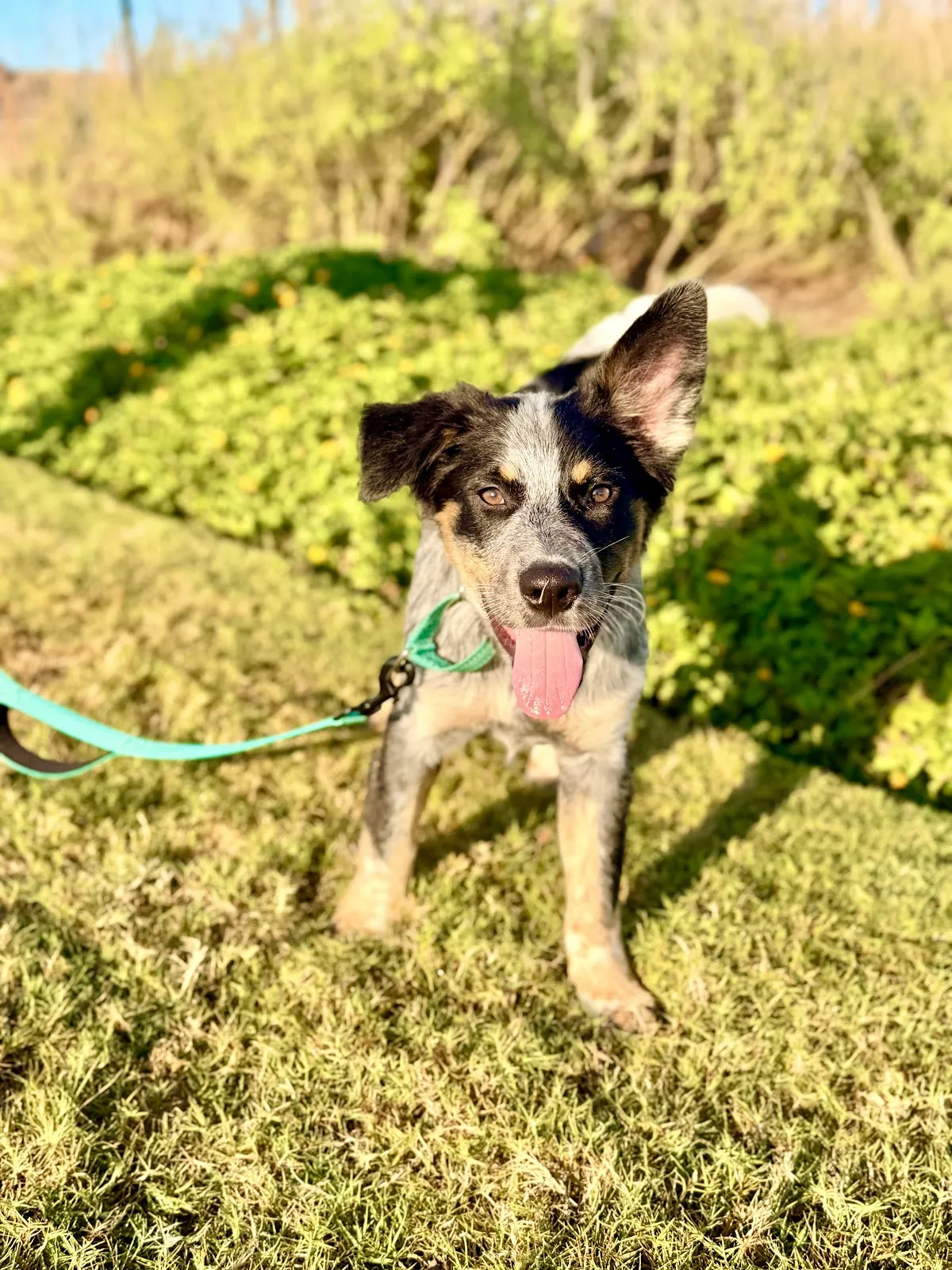
Before you start: the right fit, a quiet room, and ID tags that matter in Houston.
Pick gear that fits: a flat collar you can slide two fingers under, or a harness that does not rub behind the front legs or press on the throat. A step-in harness suits dogs that dislike things going over their heads, and an overhead one suits dogs that dislike having their feet handled. Have small soft treats and a quiet room. Whether a harness or a collar is the right walking tool for your dog is a separate question; this guide is about getting the gear on calmly.
The Houston caveat is identification. Hurricane season runs from June 1 to November 30, July 4 and New Year fireworks send frightened dogs through fences, and a flat collar with ID tags is the quickest way for a finder to reach you. A microchip with current contact details backs it up. In summer, check under a harness after walks for rubbing or damp skin, and take it off in the house so the coat can dry.
- Two fingers under a collar, no rubbing under a harness
- Step-in or overhead, chosen for your dog
- ID tags on the collar all year
- The harness off in the house in summer
The steps
Six short steps from a loop in your hand to gear worn all afternoon.
Do two or three sessions a day of a minute or two each. Take the gear off while the dog is still calm, and never chase the dog with it. If it walks away, let it go and try again later with better food; the dog choosing to come back is the point. A second person can hold the treat on the far side of the loop while you hold the gear.
Show the harness or collar and pay the dog for sniffing it, then leave it on the floor near the food bowl for a day
Hold the head loop open with a treat just beyond it, let the dog push its nose through to take it, and widen the ask until the whole head passes through
With the head through, pay, then slip it off again; repeat until the dog pushes into the loop on sight
Click the buckle away from the dog and pay the sound, then fasten it on the dog for two seconds, pay and unfasten
Fasten it during a meal, a chew or a game indoors, building from one minute to twenty over several days
Clip on a light leash and let it drag indoors while you play, then pick it up and walk a few steps together inside before the first outdoor walk
When it is not working
Freezing in place, rolling on the floor, and a dog that runs from the harness.
A dog that freezes in its new harness, stock-still or creeping low, is not being stubborn; the pressure on its body is new. Do not drag it forward. Toss a treat a step away, then another, and let it move on its own, and most dogs shake it off within a few sessions. A dog that rolls or scratches at the collar may have a poor fit, so check for rubbing, loosen or change the gear, and keep the wear time short.
The dog that runs at the sight of the harness has been caught and wrestled into it before, and the gear now predicts being grabbed. Change the routine: a different harness if you can, a new place to put it on, and the whole plan from the first step. A dog that growls, snaps or bites when you reach for its collar has a handling problem, and the collar grab needs its own work with a trainer.
- Freezing: let the dog move, never drag
- Scratching or rolling: check the fit first
- Running away: new gear, new place, first step
- Snapping at a collar grab: call a trainer
When to get help
When gear turns into a fight, and who can help.
For most dogs this is a home project, but a private lesson at $160 in Cypress or $220 in your home is a fast way to get fit, gear choice and the first steps right, especially for a rescue that arrived with no history of wearing anything. The Puppy Development Bundle, four sessions for $550 in Cypress or $750 at home for puppies under four months, is the place to raise a puppy that never learns to fight its gear, alongside sit, place, stay, recall and crate work.
A dog that bites when its collar is touched fits the Platinum Board & Train, three weeks at $3,750, where behavior modification sits alongside the obedience and the family gets unlimited private lessons after the handover. Our cooperative care page explains how handling is built step by step. On the free phone consultation, tell our team what happens when the harness comes off the hook.
The programs
Help for dogs who fight their gear.
A private lesson for fit and first steps, the puppy bundle for young dogs, Platinum for a dog that bites at a collar grab.

Asked and answered
Questions people ask about this.
Should my dog wear a collar or a harness?
Many dogs wear both: a flat collar all the time for ID tags, and a harness or another walking tool clipped on for walks. Which walking tool suits your dog depends on its size, its pulling and its training, and our team can help you choose on the free consultation or at a lesson.
Should my dog wear a harness all day?
A harness is for walks and outings, not for lounging on the couch. Taking it off at home lets the coat and skin breathe, which matters in Houston humidity, and keeps the harness meaning walk time. The flat collar with its tags stays on.
How long does it take a dog to get used to a harness?
Most dogs accept a new harness within a week of short daily sessions, and some in a single afternoon. A dog that has been wrestled into gear before, or a rescue that never wore any, may take two or three weeks, because you are also changing what the gear predicts.
My puppy bites its collar and leash. Is that normal?
Yes, young puppies mouth everything, including their own gear. Redirect to a chew, keep sessions short and busy with food, and let the leash drag only while you watch. If the leash biting carries on outside, our guide to introducing a puppy to the leash covers it step by step.
Keep reading
Free consultation · 10% off this fall
Gear on, no chase.
Tell our team what happens when the harness comes out. The free phone consultation is a direct call with no obligation.