
Living through the remodel
The dog during a home renovation: contractors, noise and open doors
Every Houston flood, every builder-grade kitchen and every family that adds a suite instead of moving puts a dog in a house full of strangers, saws and open doors for weeks. Contractors are not dog handlers. This is how to keep the dog out of their way and off the street.
Last reviewed September 29, 2026 · by the Best Dog University Team
What changes
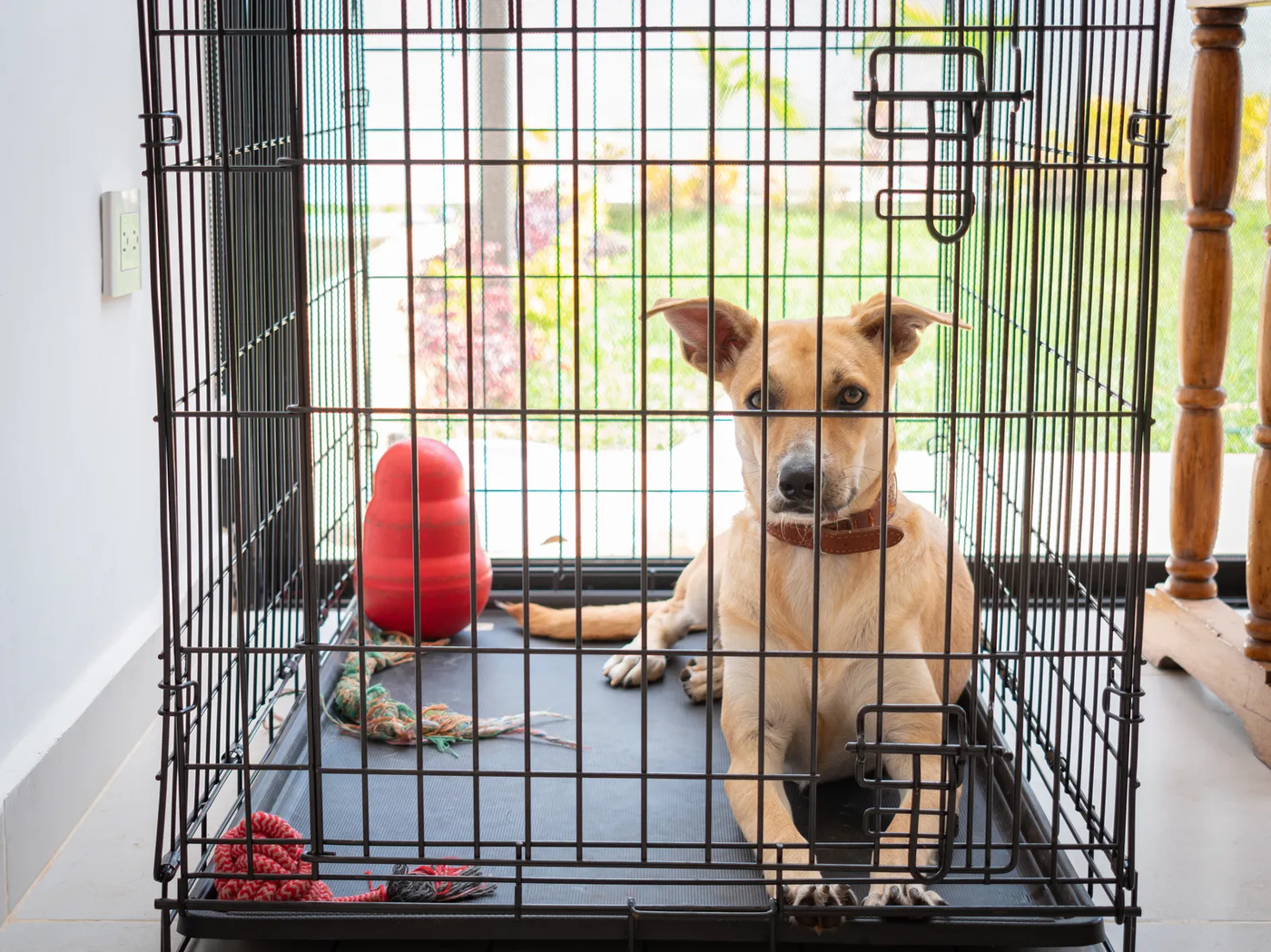
Strangers every morning, noise all day, the front door propped open and the routine gone.
A renovation breaks every rule the dog relied on. The front door that was always closed is propped open for a wheelbarrow. The men who come in are not guests you introduced; they arrive at seven, feed the dog a breakfast taco, and leave the gate open at four. The noise is saws, nail guns, tile cutters and a compressor that kicks on without warning. And the family is stressed and home late, so the walk gets missed.
Dogs respond in three ways. Some bolt: the classic renovation emergency is a dog found two streets over after a subcontractor left the gate open. Some become fearful, hiding from the noise, refusing to eat, shaking through the tile-cutter days. Some become territorial, barking at every worker in the hall and, in a few cases, biting one. All three get worse the longer the job runs, and a six-week Houston remodel often runs four months.
- Doors and gates left open by the crew
- Hiding, shaking or refusing food on loud days
- Barking at every worker in the hall
Week by week
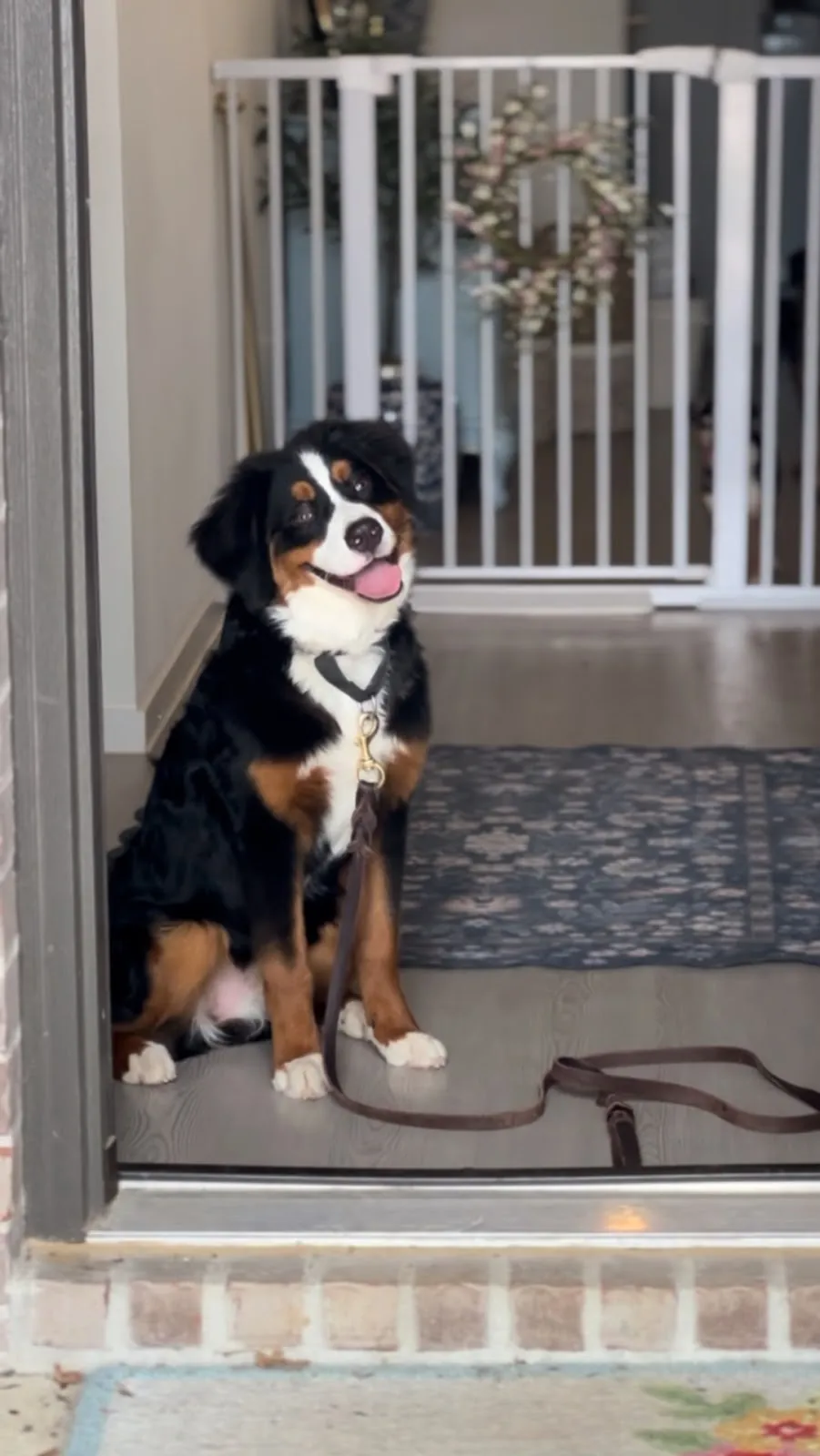
Set up the safe room before demolition, run the loud days elsewhere, and rebuild the routine as the work moves.
The week before the crew arrives, pick the dog's room: one with a door that locks, away from the work, with the crate, water, a fan for white noise and a sign on the door. Put a second latch on the gate. Meet the foreman and agree the rules: nobody opens that door, nobody feeds the dog, nobody lets it into the yard. Feed the dog in the crate and run short crate sessions with the radio loud, so the crate is normal before the noise starts.
The first two weeks of work, the dog is in its room or out of the house from before the crew arrives until after they leave: a walk at six, the crate with a chew, daycare or a friend's house on demolition and tile-cutting days. Weeks three and four, once the noise is predictable, the dog can be on place in the family's space in the evenings, learning that the new smells and the missing wall are not a threat. Keep the walks and meals at the same times throughout; the routine is what holds.
Week 0: safe room with a locking door, crate, fan and a sign; second latch on the gate
Week 0: the foreman briefed: no door, no feeding, no yard
Weeks 1 to 2: dog in the room or out of the house during work hours
Weeks 3 to 4: evening place sessions in the work area once the crew has gone
All the way through: walks and meals at the same times, whatever the schedule
Houston remodels
Flood rebuilds, summer work and the garage as a job site: the local shape of a renovation.
A lot of Houston remodels are flood rebuilds in Meyerland, Kingwood or the older parts of Cypress, where the family lives for months with the drywall cut out and the floors gone, and the dog is stressed by the same disruption the family is. Others are a kitchen or a suite for a parent. Either way, the garage becomes the job site, full of saw blades, adhesives, nails and drywall dust; the dog does not go in it, and if it eats something from the pile, the ASPCA Animal Poison Control line is the first call.
Summer work brings its own trouble: the air conditioning is often off for days at a time, the front door is open to the heat, and a dog shut in a closed room without the AC is in danger by noon. Ask the contractor which days the system will be down and board the dog then. Storm season is the other risk; a house with a tarp for a roof in September is not where a dog that hates thunder should ride out a squall line.
- The garage off limits; poison control number saved
- AC-down days known in advance; the dog elsewhere
- Thunder days planned for a dog with a tarp overhead
When to get help
A dog that has bolted, bitten or stopped eating needs boarding or a program, not a better sign on the door.
If the safe room and the crate hold and the dog is eating and walking normally by week three, you are managing well; keep the rules and repeat the door briefing for every new sub. If the dog has already gotten out, has bitten or snapped at a worker, or has stopped eating and shakes through the day, management is not enough for the dog you have, and the remodel will run longer than the dog can take.
Two options. For returning clients, boarding with training refreshers takes the dog out for the worst weeks and sends it home sharper than it left. For a dog whose door dashing, fear of strangers or reactivity the renovation exposed, the three-week Platinum Board & Train, $3,750, fixes those with structure and controlled exposure, and the unlimited private lessons afterward can run in the finished house. The two-week Gold, $2,500, handles door boundaries and jumping for a dog that is merely rude to the crew. On the free consultation call we work out timing against the contractor's schedule.
- Safe room holding, dog eating: keep managing
- Bolted once: a second latch and door-manners work now
- Bit or snapped at a worker: Platinum, and out of the house until then
- Returning client, loud weeks ahead: boarding with refreshers
The programs
Programs for a dog during a remodel.
Gold for the doors and the jumping, Platinum for the fear or reactivity the crew exposed, boarding with refreshers for returning clients on the loud weeks.


Asked and answered
Questions people ask about this.
Should I board my dog for the whole renovation?
Not usually; a Houston remodel can run months and the dog does better keeping its routine at home in the quieter weeks. Board it for demolition, tile cutting, flooring and any days the AC is off. Boarding with training refreshers is available for our returning clients, and it sends the dog home with its manners tightened.
How do I stop contractors from letting the dog out?
By removing the possibility rather than relying on memory: the dog in a room with a locked door and a sign, a padlock on the gate, and a two-minute briefing with the foreman that nobody opens the dog's door. Subcontractors change weekly, so the briefing repeats. A dog that has bolted once also gets door-boundary training as soon as the job ends.
My dog is terrified of the nail gun and will not eat. What do I do?
Move the dog out of the house on those days, to daycare or a sitter, and run the crate with a fan and a loud radio on the days it stays. Do not try to desensitize a dog to a nail gun mid-job; that is work for a calm month with a trainer. If the dog is not eating for more than a day or two, call your vet.
The remodel is for a mother-in-law suite. Should we train the dog before she moves in?
Yes, and the renovation weeks are a good time, because the dog is out of the house anyway. A Gold or Platinum stay during the loud weeks brings the dog home with the door boundaries, place and calm greetings a multigenerational home needs, and the go-home session can include the parent. Our guide on the dog when a parent moves in covers the rest.
Keep reading
Free consultation · 10% off this fall
Tell our team about the remodel.
One free call with our team, nothing to lose: what the job is, how long it runs, what the dog has done so far, and whether boarding with refreshers or a stay fits the contractor's calendar.