
Fear of strangers
Fear of strangers training in Houston: guests, deliveries and the front door
The dog that barks at every guest from behind the couch and then follows them around the house barking is telling you it is scared, not protective. It is one of the most common calls from the master-planned suburbs, and it is workable in weeks with the right plan and a household that stops making guests pet the dog.
Last reviewed September 11, 2026 · by the Best Dog University Team
What it looks like
Hiding, barking from a distance, and the snap when cornered.
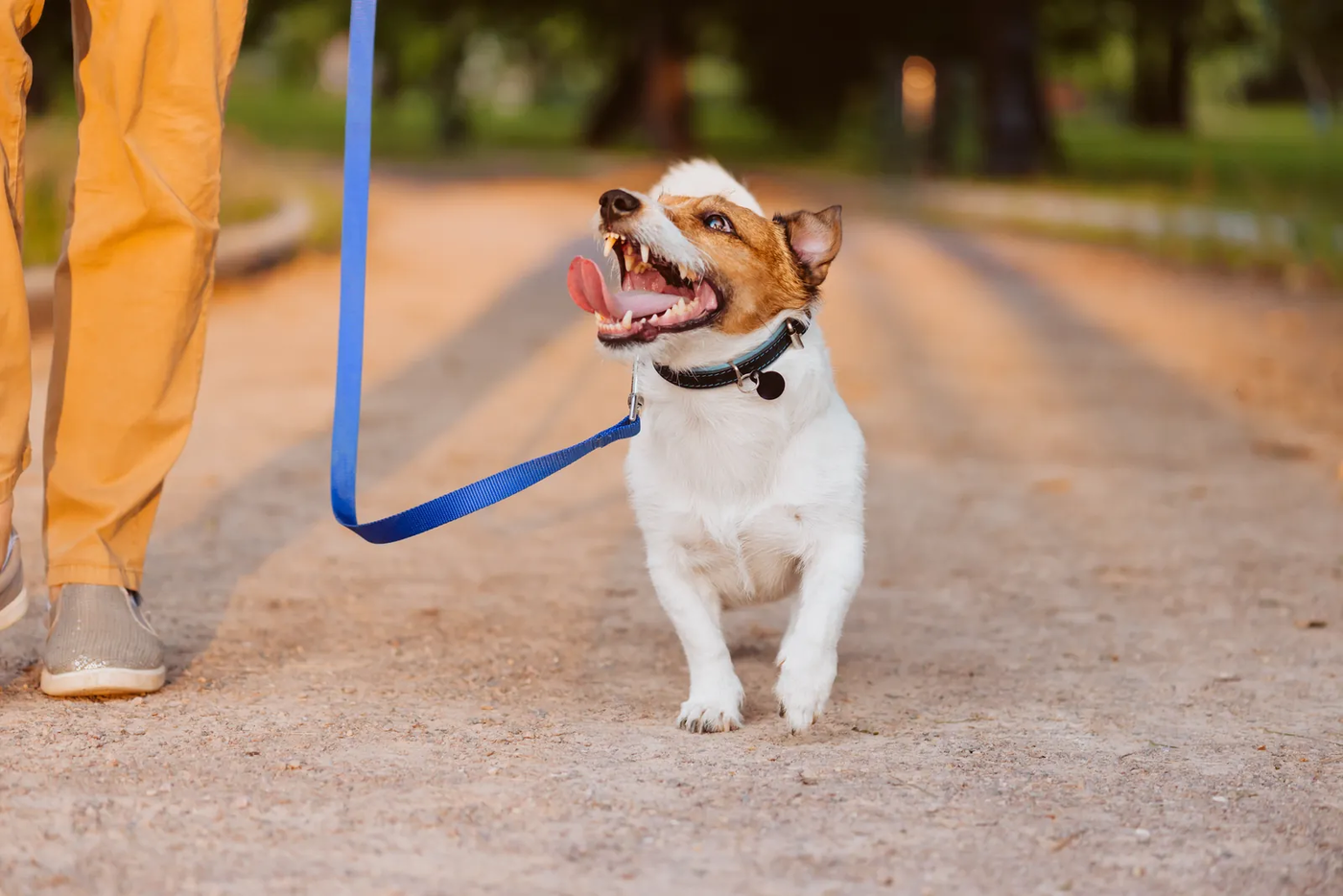
A stranger-fearful dog backs away and barks, hides behind its person or the furniture, watches a guest from across the room and barks again the moment they move, and follows them from behind. If the guest reaches for it, it snaps. Men, hats, beards, sunglasses, deep voices and children are the commonest triggers, and the front door is where it starts, because the door is where strangers appear.
It is not protectiveness. A protective dog moves toward the stranger with confidence; a fearful dog moves away and barks to make the stranger leave. Treating fear as guarding, and correcting it, makes the dog more afraid.
- Backing away and barking, hiding, following from behind
- Men, hats, beards and children as triggers
- A snap when a guest reaches for the dog
- Fear, not protection: the dog moves away
Why it happens here
Deliveries all day, holiday guests, and a puppy that met nobody.
A Houston suburban house gets more strangers at the door in a week than a farmhouse gets in a year: deliveries, lawn crews, pool service, neighbors' children. A dog with no plan for the door rehearses fear a dozen times a day. Holidays bring thirty guests at once. And a puppy raised through a Houston summer indoors, or a rescue from a shelter, often met almost nobody in the window when strangers would have become ordinary.
The family then makes it worse with the best intentions: guests are asked to pet the dog, to offer treats from their hands, to prove they are friendly, and the dog learns that strangers come at it.
- A dozen strangers a day at a suburban door
- Holiday crowds
- Puppies and rescues that met nobody
- Guests made to approach the dog
How we fix it
Place at the door, strangers who ignore the dog, and distance that closes over days.
The first rule is that strangers never approach the dog; the dog approaches, if and when it chooses, and the stranger ignores it. The second is place: a bed with a view of the door, where the dog goes before the door opens and stays while the guest comes in, ignored, and the guest sits down. The third is exposure: people at a distance the dog can hold, with food and calm, closer over days, a man in a hat at forty feet, then twenty, then at the door. Deliveries become place practice a dozen times a day.
In the training home this runs daily with real visitors, real deliveries and our trainers reading the dog, and the go-home session teaches the household the door routine and the rule for guests. A dog that has snapped starts with an in-person consultation and a management plan.
Strangers never approach; the dog does, or does not
Place with a view of the door, before the door opens
The guest comes in, ignores the dog, sits down
Exposure at a distance the dog can hold, closer over days
Deliveries as daily place practice
The household rule for every guest
Unlimited lessons to keep the door routine honest
Which program
Lessons for the dog that hides, Platinum for the one that snaps.
A dog that hides and barks but has never snapped responds to in-home lessons at $220, where our trainer sets up the door routine and the guest rule in your hallway and works the exposure with you. A dog that has snapped at a guest, or that cannot settle at all with a stranger in the house, needs the three-week Platinum program at $3,750 after an in-person consultation: daily structure, controlled exposure with real people, field trips as the dog earns them, and unlimited lessons afterwards. A dog that has bitten a stranger follows the bite plan on this site.
| Case | Program | Price |
|---|---|---|
| Hides and barks, never snapped | In-home lessons | $220 per session |
| Snaps at guests or cannot settle with one in the house | Platinum, 3 weeks, after consultation | $3,750 |
| Has bitten a stranger | Consultation, then Platinum or VIP | $3,750 / $10,000 |
Houston specifics
The delivery van, the holiday door and the store aisle.
Deliveries are the daily rehearsal, and the place routine turns each one into a practice rep; a window with a view of the street is closed to the dog during the work. Thanksgiving and Christmas are the exams, and a dog that started the work in October holds place while the family comes through the door. The pet and hardware stores along 290 are where the exposure happens at a distance the dog controls, with strangers who mostly ignore a dog on a leash, and the store aisle is the summer classroom when the sidewalks are too hot. The ASPCA's guidance on fear covers the body language every household should learn to read.
The programs
Programs for a dog afraid of strangers.
Lessons for the dog that hides, Platinum after an consultation for the one that snaps.


Asked and answered
Questions people ask about this.
Should guests give my dog treats to make friends?
No. A treat from a stranger's hand makes the dog approach a hand it fears, which is how snaps happen. Guests ignore the dog completely; you reward the dog for calm on its bed while the guest is in the room. The dog decides whether and when to approach.
Is my dog protective or scared?
A protective dog moves toward the stranger with confidence. A fearful dog moves away, barks from a distance and follows from behind. Most dogs that bark at guests are afraid, and correcting fear as if it were guarding makes it worse.
My dog is fine with women but barks at men. Why?
Size, voice and movement make men scarier to many dogs, and a dog that met few men as a puppy generalizes. The fix is men at a distance the dog can hold, ignoring the dog, closer over days, and the men in the household running the place routine at the door.
How do I handle deliveries with a stranger-fearful dog?
Turn each one into practice: the dog goes to place before you open the door, the driver is ignored, the dog is rewarded for staying. A dozen deliveries a day is a dozen reps, and a window onto the street is closed during the work.
How long does this take?
The door routine works within days. The exposure that changes how the dog feels about strangers takes weeks of daily practice, which is what a Platinum stay provides, and a season of guests to prove it. Start in the fall and the holidays are the exam, not the disaster.
Keep reading
Free consultation · 10% off this fall
Tell our team who your dog is afraid of.
The free phone consultation is a direct call: what the dog does at the door and whether it has ever snapped, which decides between lessons and a Platinum stay. A $250 deposit holds the dates.