
Breed training guides
How to train a Blue heeler: heel nipping, herding and an off switch
Heelers are the dogs owners describe with pride and a bruise. They are loyal, tireless and funny, and they will herd the family if nobody gives them anything better to do.
Last reviewed September 29, 2026 · by the Best Dog University Team
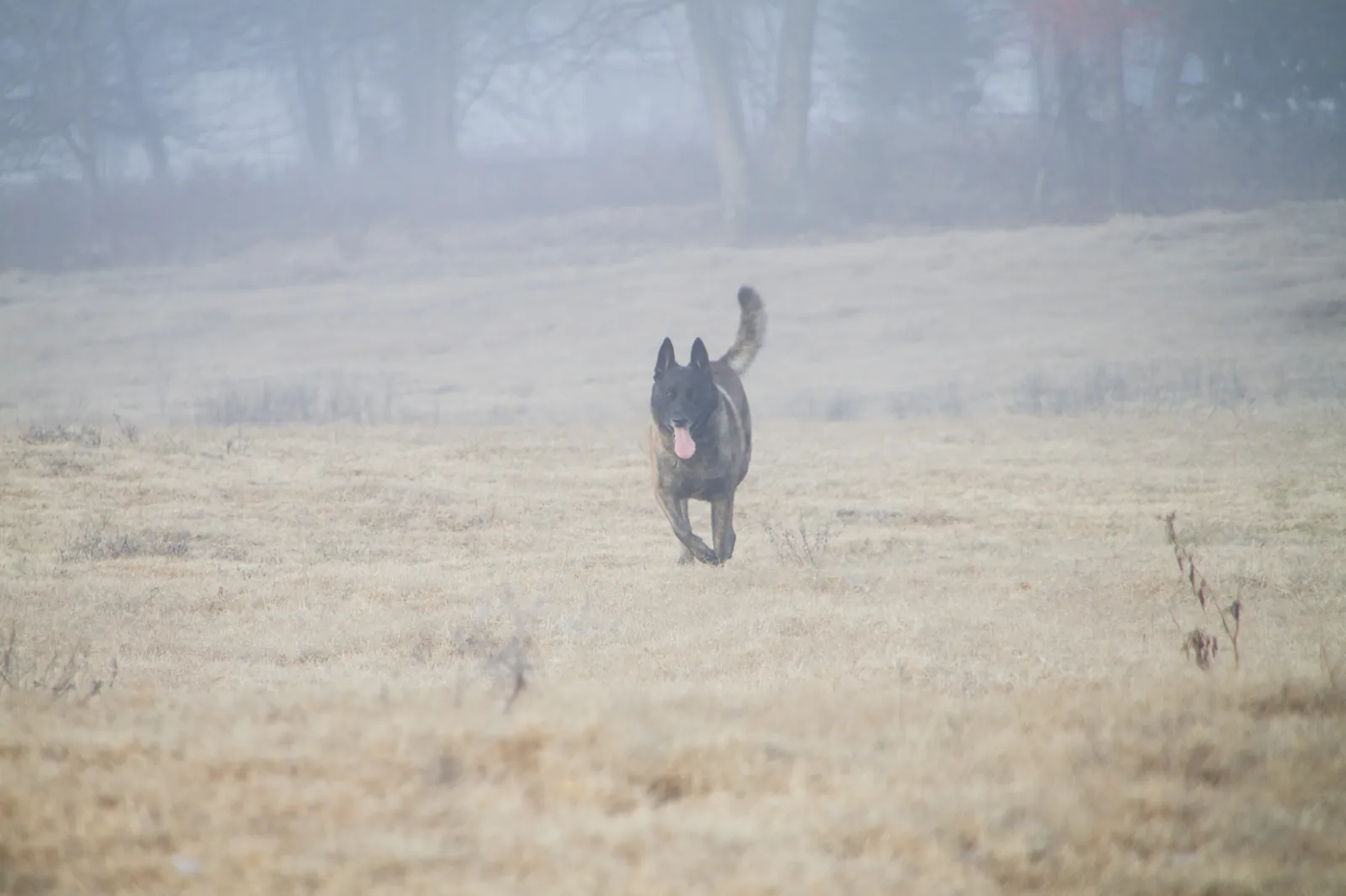
A cattle drover's dog
Bred in Australia to drive cattle by the heels, with a mind of its own.
The Australian cattle dog was developed in nineteenth-century Australia to move cattle over long distances in rough country, and the dingo is among its ancestors. A heeler works by darting in low and nipping the hock of a steer that will not move, then dropping flat to avoid the kick. The blue and red speckled coats gave the breed its nicknames, blue heeler and red heeler, and older books call it the Queensland heeler.
Put that in a Houston house and you get a dog that nips ankles, bonds hard with one person, keeps strangers at arm's length and never seems tired. Heelers are tough, so they shrug off a weak correction, and they are thinkers, so they test every rule twice. Balanced training fits them: generous pay for work done right, and a boundary that is the same every time, delivered without anger.
- Nips low and fast, by design
- Bonds hard with one person
- Reserved with strangers and protective of the house
- Tough, so fairness beats force
Year one
From eight weeks to a year: an off switch first, a job second, freedom last.
The heeler puppy learns to do nothing before it learns anything else. From eight weeks it has a crate schedule with real naps, a place bed where it lies while the family eats, and short sessions that end before it gets wild. Every nip ends play the same way, with a calm pause, and the puppy gets a toy it is allowed to bite. Handling matters too, paws, ears and mouth, so a vet visit and a nail trim never become a fight.
From four months the puppy meets strangers who ignore it, walks at dawn with turns built in, and practices recall on a long line. Six to eighteen months is the loud stretch: the nipping comes back, the guarding appears, and the dog tries to decide who enters the house. Keep the crate naps and the place bed, and give it a daily job: a flirt pole with rules, a nose game, or a short obstacle course in the yard.
Eight to twelve weeks: crate naps, place at mealtimes, a legal toy for the teeth
Three to four months: sit, down, a release word, handling of paws, ears and mouth
Four to six months: dawn walks with turns, strangers who ignore the pup, long-line recall
Six to nine months: nipping answered the same way, guests greeted from place
Nine to eighteen months: guarding watched, a daily job, the crate schedule kept
Eighteen months on: freedom by room and by yard, earned with a proven settle
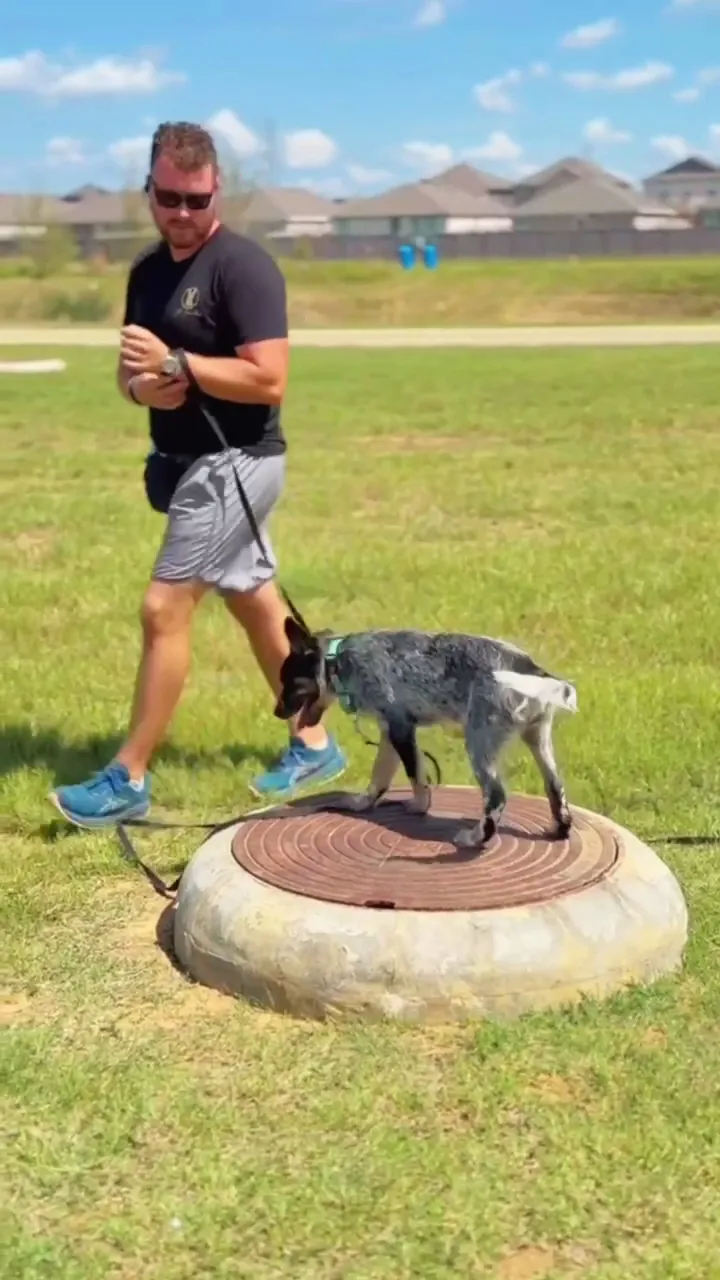
Three problems
Ankle biting, guarding the door, and a dog with no idea how to rest.
Ankle biting is why most heeler families call. The dog is heeling: moving the running child the way it would move a steer. Play ends the moment teeth touch skin, kids stop running around the dog, and the dog goes to place when the house gets loud. A tug game with a start cue and a stop cue gives the mouth a legal job. Scolding a heeler without that outlet usually just teaches it to nip when you are not looking.
Guarding is second: barking at the door, pushing between a guest and its person, a hard stare at the plumber. The family decides who comes in, the dog holds place at a distance, and guests do not reach for it. The third problem is the missing off switch. A heeler will fetch until it drops, so we build place with real duration and crate rest, and the daily job has a clear end. A heeler that is tired but cannot rest is simply a fitter problem.
- Play ends the moment teeth touch
- Kids stand still, the dog goes to place
- Tug with a start cue and a stop cue
- The family decides who comes in
- Place with duration, rest in the crate
Houston heelers
Heat a heeler will not respect, acreage fences and a Katy cul-de-sac.
The heeler's short double coat copes with Houston better than a long coat, but the dog's drive is the danger: it will keep chasing a ball in August long after it should stop. From May through September work happens at dawn and after sunset, the pavement gets a hand test, water rides along, and fetch sessions stay short with rests in the shade. Midday is for indoor work: a place hold, a trick, a search game in the kitchen.
Many heelers we meet live on acreage in Waller, Hockley or Hempstead with horses, goats or chickens. There the question is whether the dog works stock on command or on its own, and the answer is taught with a leash and a boundary long before a free run. In a Katy or Cypress cul-de-sac, bikes, skateboards and kids are the cattle, so the greenbelt is leash practice and the front yard is not a place to leave the dog.
When to get help
When the heeler is herding the family, call us.
The Puppy Development Bundle, four private sessions at $550 in Cypress or $750 at home, suits a heeler under four months and sets the mouth, the crate and handling early. An adolescent that nips and cannot settle is a Gold stay, two weeks at $2,500. Nipping that breaks skin, guarding that frightens visitors or lunging at dogs is Platinum, three weeks at $3,750 with behavior work and unlimited lessons after. A settled graduate that wants a sport is a natural for the Agility Board and Train, two weeks at $2,500.
The Blue heeler training page lays out the options for Houston homes. Waller is about 15 to 20 minutes from the training home outside rush hour and Hempstead about 25, and the $250 transportation service includes the first lesson at your place. Book the free consultation call and tell our team who the dog nips, how it acts at the door, and whether it can lie down for ten minutes.
The programs
Programs Blue heelers usually need.
The puppy bundle for the mouth, Gold for the settle, Platinum for guarding and hard nipping, Agility for the graduate.



Asked and answered
Questions people ask about this.
Why does my Blue heeler nip ankles?
Because nipping heels is the job the breed was built for. Running children, joggers and even your walking feet trigger it. Stop play the moment teeth touch, teach the family to stand still, put the dog on place when the house gets wild, and give it a daily tug game with rules so the drive has a legal outlet.
Do Blue heelers ever calm down?
Most settle noticeably after adolescence, somewhere past eighteen months, if they were taught to rest along the way. A heeler raised on endless fetch and no crate time stays wound up for years. Calm is a skill: place with duration, scheduled naps and a job with a clear end build it faster than extra miles.
Are Blue heelers good with strangers?
They tend to be reserved and watchful, which suits a dog bred to work with one handler. Trouble starts when reserve turns into guarding: blocking the door, staring down guests, a nip on the way out. Guests ignore the dog, the dog holds place, and the family controls the door. A heeler that has bitten a visitor needs professional help.
Can a Blue heeler live in a Houston subdivision?
Yes, with work every day. A dawn walk with training in it, a short fetch or tug session, a nose game indoors and a place hold during dinner cover most of it. The risk in a subdivision is boredom, which shows up as fence running, barking at the neighbor and herding the kids next door.
Is agility a good job for a heeler?
Often an excellent one, once the basics are solid. Agility gives the drive a structured outlet with clear starts and stops, which is exactly what a heeler lacks at home. Our Agility Board and Train is for dogs that already have obedience; a heeler still nipping and guarding needs that foundation first.
Keep reading
Free consultation · 10% off this fall
Give the drover a job and an off switch.
Tell our team who your Blue heeler nips, how it handles visitors and how long it can rest. The free consultation is a direct phone call at no charge.