
Breed training guides
How to train a Mini Australian shepherd: herding instinct in a townhome
The mini Aussie is often chosen because it fits a townhome in the Heights or a small yard in Elyson. The size shrank; the instinct did not, and that is the whole training plan.
Last reviewed September 29, 2026 · by the Best Dog University Team
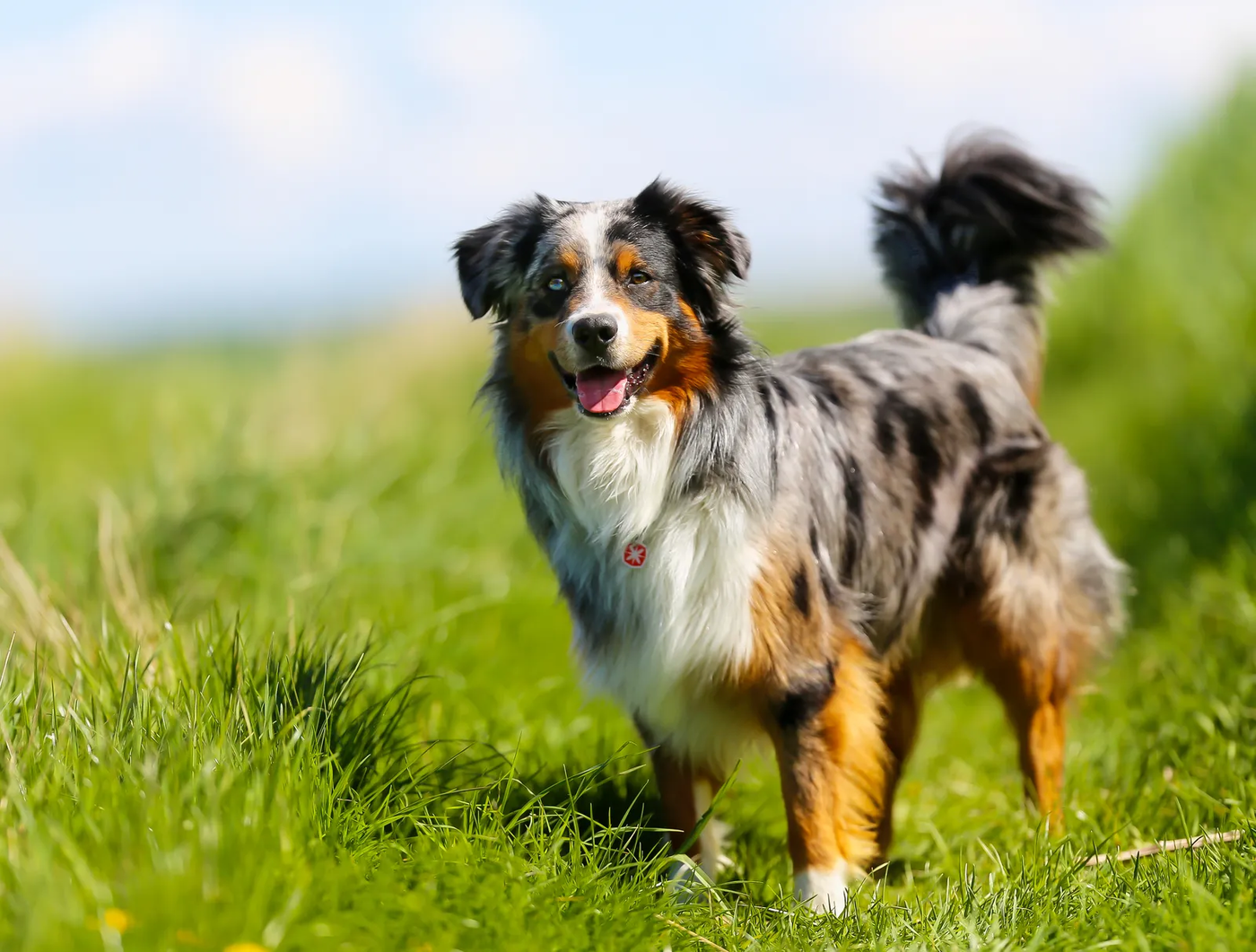
Bred to herd, sized down
A ranch herding dog, bred smaller, with every instinct left in.
The Mini Australian shepherd was bred down in the United States from small Australian shepherds, and the AKC now registers it under the name Miniature American Shepherd. Its parent breed was a ranch dog that gathered sheep and cattle beside a rider and made decisions on its own. Breeding for size changed the frame into a dog you can carry up townhome stairs, but not the job description: watch everything and control whatever moves.
At home that looks like a dog that circles the kids, nips at the heels of whoever runs, stares at the cat and barks at every shadow on the patio. Many are reserved with strangers, which is correct for a herding dog and a problem when nobody teaches it to accept guests. They are also quick and sensitive. Balanced training suits them: the reward for calm comes instantly, the boundary for chasing and nipping is fair, and it never changes from one day to the next.
- Herds kids, cats and other dogs until taught not to
- Watchful and often reserved with strangers
- Alert barker at motion and sound
- Needs brain work every day, not just miles
The first twelve months
Eight weeks to a year: calm first, tricks later, movement always on a leash.
The mini Aussie puppy's first lesson is that motion is not its business. From eight weeks it rests in a covered crate on a schedule, lies on a place bed while the family moves around the kitchen, and meets the world from a distance: a soccer practice watched from a blanket, a skateboard rolling past on the sidewalk. Nipping is answered the same way every time, with the game ending and the puppy going to its bed for a minute.
By five months the dawn walk has direction changes built in, so locking onto a jogger means the handler turns and the puppy follows. Guests arrive and the puppy holds place until invited, which heads off stranger wariness before it sets. Adolescence runs from about seven months to eighteen, and it is when the barking and the herding sharpen. Keep the crate schedule, keep the leash on during family chaos, and add a daily job.
Eight to twelve weeks: crate on a schedule, place bed in the kitchen, teeth end every game
Three to four months: sit, down, a release word, watching moving things from a blanket
Four to six months: dawn walks with turns, guests greeted from place, a first store aisle
Six to nine months: long-line recall, bikes and scooters at a distance, a quiet cue
Nine to eighteen months: adolescence, the leash on during rowdy play, a nose or trick job daily
Eighteen months on: more freedom where the recall and the settle are proven
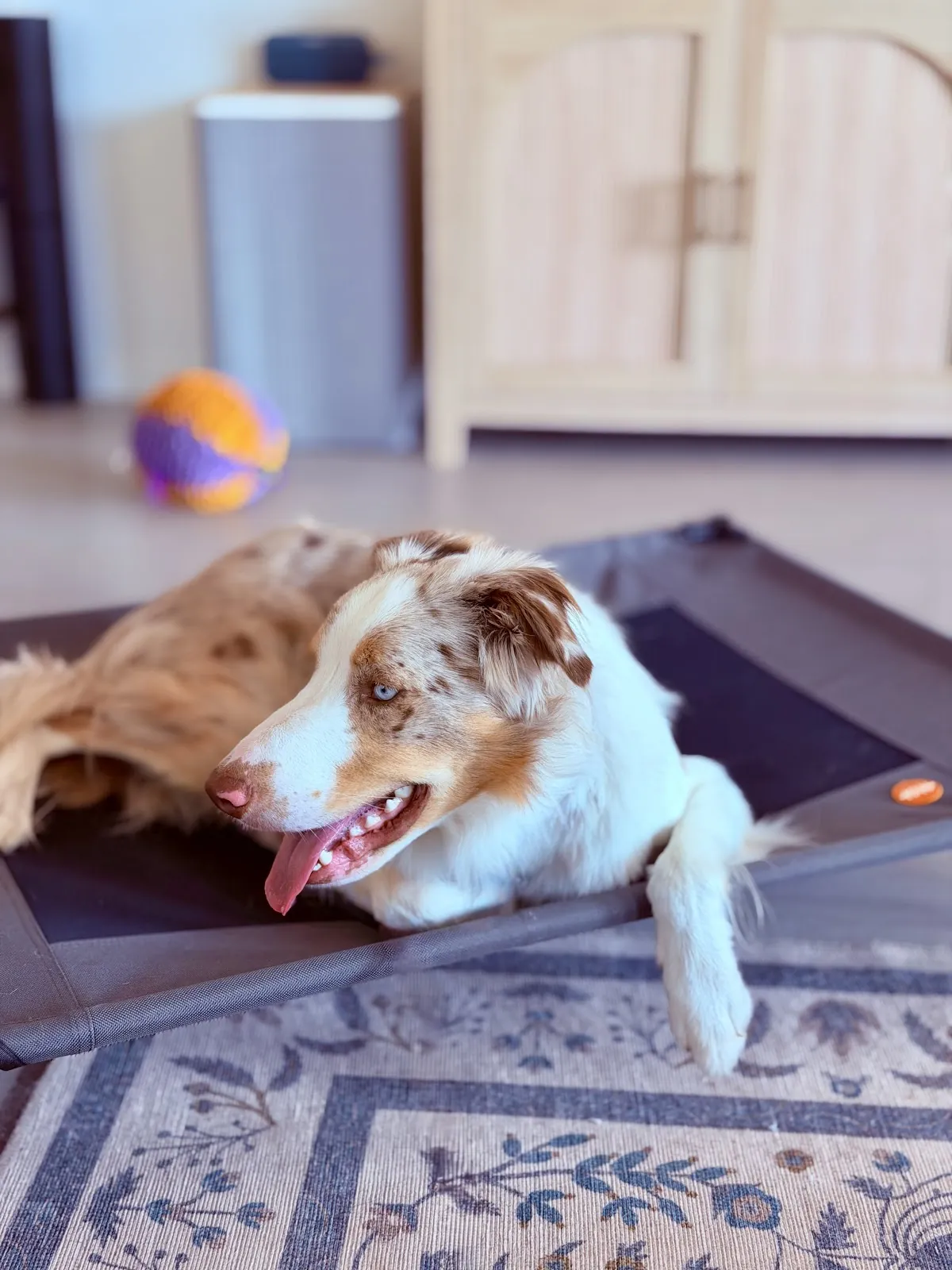
What families call us about
Heel nipping, a bark at every shadow, and a dog that will not switch off.
Heel nipping comes first, usually aimed at children running through the house or a toddler in the yard. The method: play stops the instant teeth touch, the children learn to stand still when the dog gets wild, and the dog goes to its place bed during rowdy play. It also gets a legal outlet, a flirt pole or a tug with rules, so the drive has somewhere to go.
Barking is second. A mini Aussie in a townhome hears the neighbor on the stairs, the dog on the sidewalk and the delivery van, and it reports all of it. Block the street view, teach a quiet cue with duration and pay silence. The third problem is the dog that cannot switch off: pacing, nudging and staring after every walk. Place with duration, a crate for real rest and short brain sessions fix it where more running does not.
- Play ends when teeth touch skin
- Children stand still, the dog goes to place
- A flirt pole or rule-based tug every day
- Street view blocked, quiet cue with duration
- Crate rest is part of the plan
The Houston version
A double coat in August, a townhome with stairs, and a bike trail full of things to herd.
The mini Aussie wears a double coat, and the Houston summer sets its schedule. From May through September walks happen before eight in the morning and after sunset, with the back of your hand on the pavement first, and the loose undercoat gets brushed out when it sheds. Midday belongs to indoor work: a kibble hunt, a trick session, a place hold during dinner. A herding dog will keep working through heat that is hurting it, so the handler decides when to stop.
In a Heights or Montrose townhome, the stairs, the shared walls and the sidewalk under the window are the training ground. In a Towne Lake or Elyson subdivision with a small fenced yard and an HOA, fence running and barking at the neighbor's dog are what draws the letter. The Heights hike-and-bike trail and the greenbelts are full of bikes, exactly what the herding instinct wants to chase, so they are leash practice before they are a leisure walk.
When to call
Call our team when the nipping lands on a child or the barking runs the building.
For a puppy under four months, the Puppy Development Bundle, four private sessions at $550 in Cypress or $750 at your home, builds the settle, the crate and the answer to teeth while the dog is small. A young adult that herds the kids, barks at the window and cannot rest is a good fit for Gold, two weeks at $2,500. Snapping at strangers, lunging on the leash or nipping that has broken skin points to Platinum, three weeks at $3,750 with behavior work and unlimited lessons afterward.
The Mini Australian shepherd training page shows each program for Houston families. From the Heights, the training home in Cypress is about 30 to 45 minutes outside rush hour, and the $250 transportation service handles pickup and return and includes the first lesson at home. Start with the free consultation call and tell our team who the dog nips, what it barks at and how long it can lie still.
The programs
Programs mini Aussies usually need.
The puppy bundle for the mouth and the settle, Gold for herding and barking, Platinum for a dog that snaps or lunges.


Asked and answered
Questions people ask about this.
Is a Mini Australian shepherd easier than a standard Aussie?
Only in size. The herding drive, the alert barking and the need for a daily job are the same, packed into a dog that is easier to carry and harder to take seriously. Families who train it like a full Aussie from the first week have an easy dog; families who treat it like a lapdog usually call us at a year.
Can a Mini Aussie live in a townhome or apartment?
Yes, with a routine that does not bend: two dawn or dusk walks with training in them, ten to twenty minutes of brain work indoors, a place bed away from the window and a covered crate for rest. The size fits; the barking and the restlessness are what neighbors notice, so those get trained first.
Why is my Mini Aussie wary of strangers?
Reserve with strangers is part of the herding temperament: the dog watches and decides. It becomes a problem when it turns into barking, backing away or snapping. Have guests ignore the dog, let it hold place until it relaxes, and pay calm curiosity. A dog that snaps or lunges at people needs a professional plan, not more exposure.
Does a Mini Aussie need a haircut for the Houston summer?
Talk to your groomer before shaving a double coat; many prefer brushing out the loose undercoat. The bigger levers are timing and workload: walk at dawn and after sunset, test the pavement with your hand, carry water, and move training indoors during the hottest hours.
When should I start training a Mini Aussie puppy?
The day it comes home. At eight weeks a mini Aussie can learn a crate schedule, a place bed, its name and the rule that teeth end the game. Waiting until six months means training against habits instead of building on a clean slate.
Keep reading
Free consultation · 10% off this fall
Train the herder, not the size.
Tell our team what your Mini Australian shepherd nips, chases and barks at. The free consultation is a direct phone call with a trainer at no cost.