
Herding breeds
How to train an Australian shepherd
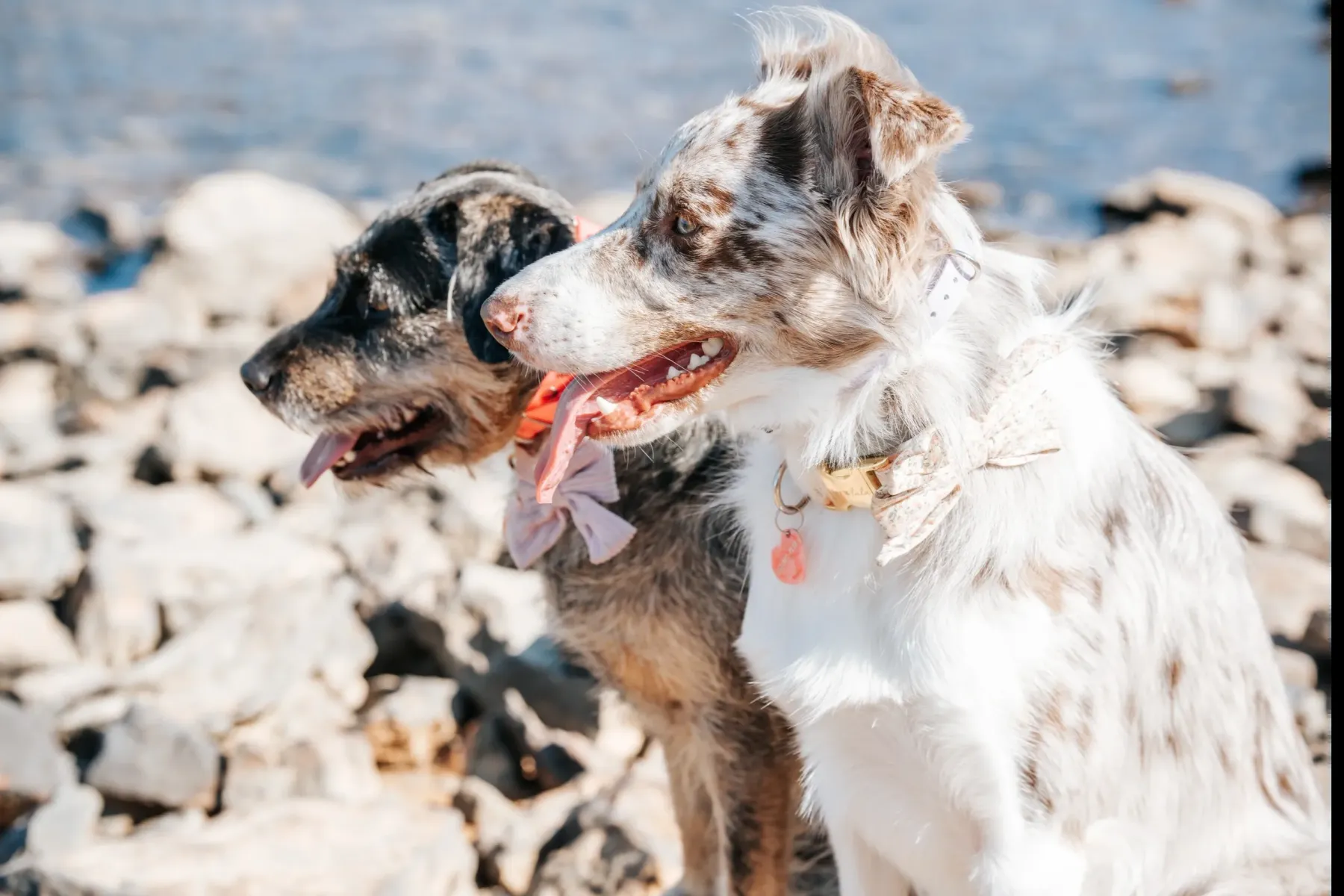
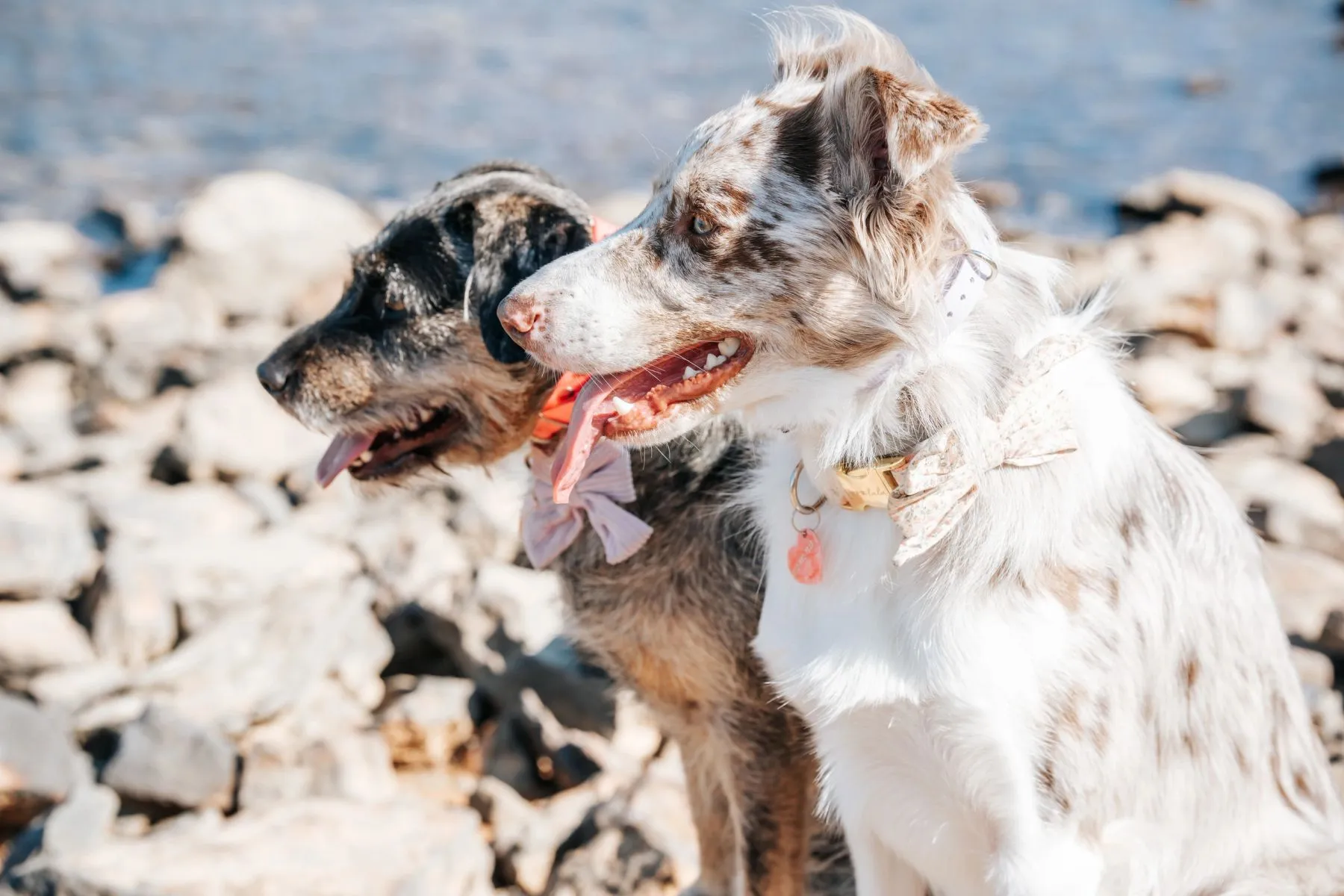
Two of the dogs in our own photos are Australian shepherds, sitting calmly on lakeside rocks. That calm is trained. Out of the box an Aussie is a herding dog with a hair trigger and a heart that takes correction personally, and the families who love them most are the ones who learn to direct all that energy.
Last reviewed September 10, 2026 · by the Best Dog University Team
The herding brain
An Aussie is wired to control movement, and everything in a house moves.
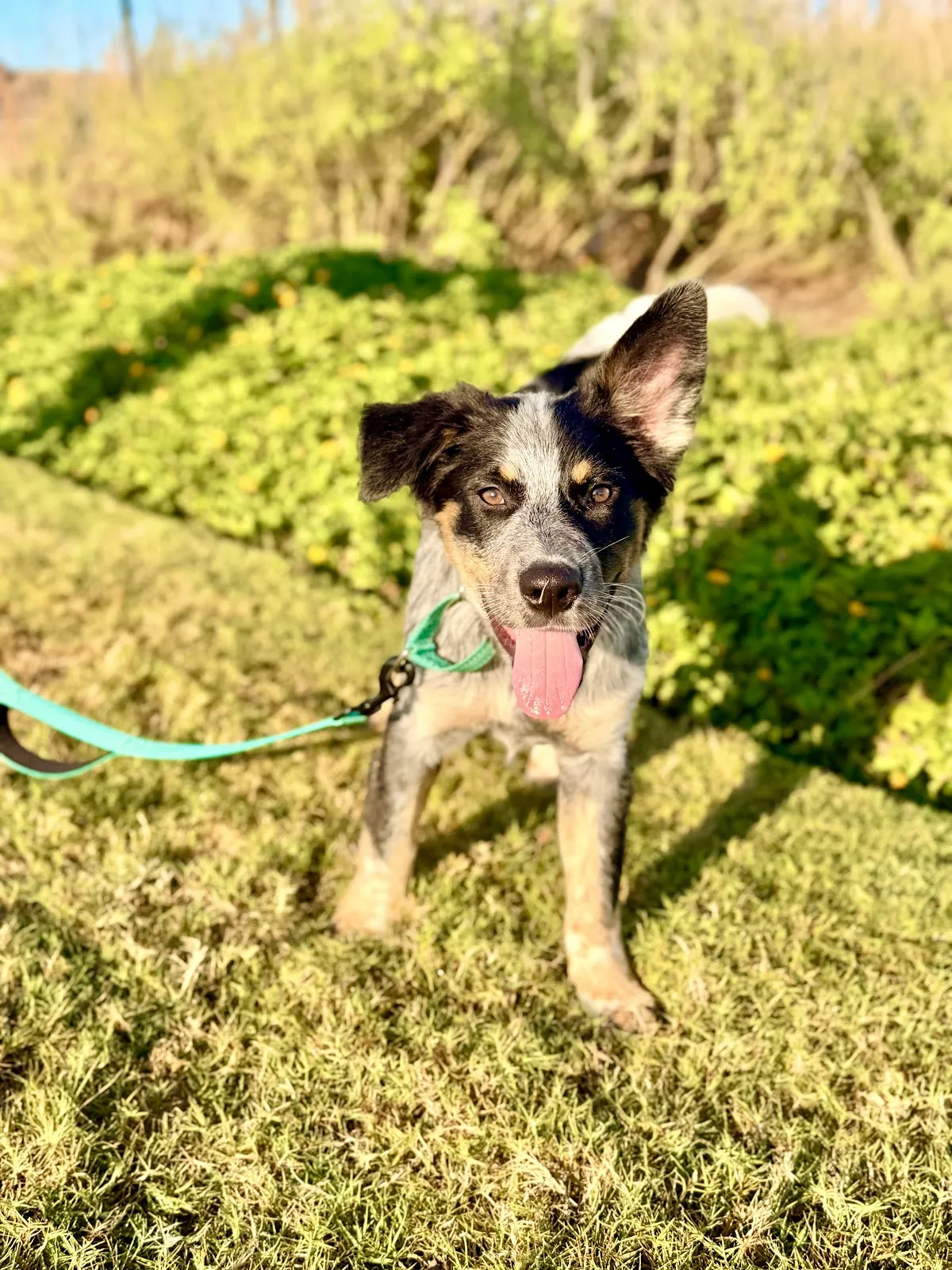
Australian shepherds were built to move sheep and cattle all day with eye, speed and a quick nip. In a Houston house the flock is the kids, the cat, the vacuum, the bikes on the trail and every dog at the park. The breed notices motion before anything else and wants to organize it. That is the nipping at ankles, the circling, the barking at the window and the lunge at a jogger.
They are also sensitive. An Aussie reads tone and body language closely and shuts down under harsh handling, which is why the calm, consistent approach our founder learned on horses works so well with them.
- Controls movement by instinct
- Nips to herd, not to hurt
- Notices everything, barks about most of it
- Sensitive to tone, needs calm handling
What arrives
Herding the kids, barking at the window and leash reactivity are the Aussie set.
The Aussie cases in Cypress follow a pattern: an adolescent that circles and nips running children, barks at everything past the window, and has started lunging at bikes, dogs or joggers on the Bridgeland and Towne Lake trails. Some add a fear layer, backing away from strangers and then barking. Under it all is a dog with too much brain, too little job and no off switch.
Exercise alone does not fix an Aussie; it produces a fitter Aussie. Engagement, place and a job do.
The training order
Engagement, place, the heel, recall, then exposure to what moves.
Engagement first, because an Aussie that looks to its handler instead of the environment has a job. Place with long duration builds the off switch. The structured heel channels the movement drive into walking with you. Recall is built on a long line in open fields and at the lake, because an Aussie's recall is tested by every squirrel. Then the movement triggers are introduced at a distance the dog can hold: bikes, joggers, dogs, kids at play.
Every session is short and ends before the dog is frantic. A tired Aussie is fine; an over-aroused one is learning the wrong thing.
Engagement: eyes on you before anything else.
Place with duration while the household moves around it.
Structured heel on the trail, slack leash past bikes.
Long-line recall in fields and at the lake.
Movement triggers at a distance, shrinking over days.
An outlet: agility, tricks or structured fetch with rules.
Houston Aussies
Heat on a double coat, trails full of bikes, and a lake that solves a lot.
An Aussie's double coat and endless motion make summer dangerous; outdoor work runs at dawn and dusk from May to September with water and a hard stop, and place carries the middle of the day. The suburban trails are full of exactly what an Aussie wants to herd, which makes them ideal exposure environments at the right distance. And the lake near Cypress is where a hot herding dog builds recall and cools down at the same time.
- Dawn and dusk in summer, hard stop
- Trails as exposure environments
- Water work for recall and cooling
Which program
Gold for manners, Platinum for reactivity, Agility for the outlet.
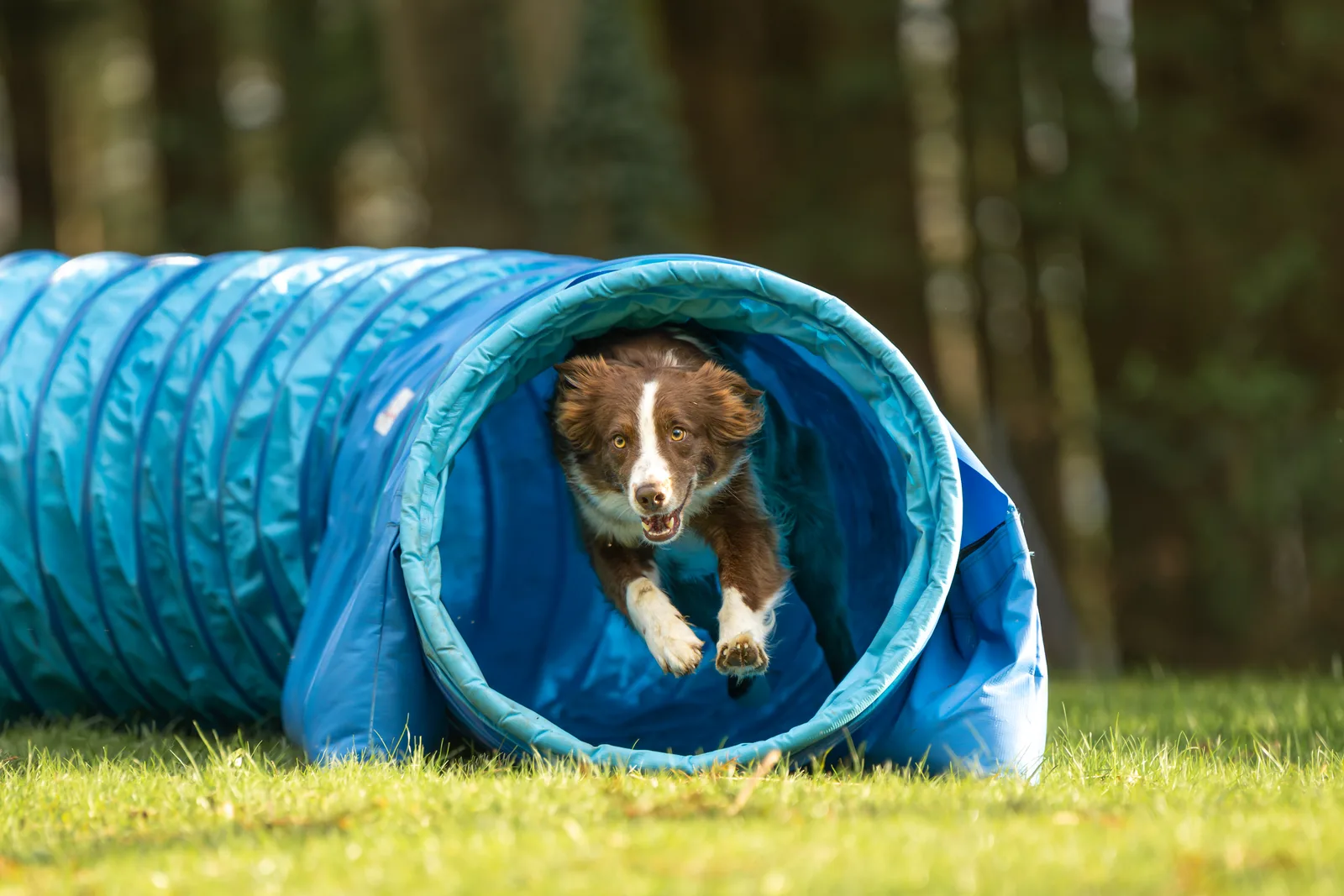
The two-week Gold program ($2,500) covers the herding manners: nipping, jumping, place and a loose leash. The three-week Platinum ($3,750) is for the Aussie that has become reactive or fearful on leash, with field trips and behavior modification and unlimited lessons afterwards. And the two-week Agility program ($2,500) is the outlet the breed was born for: weave poles, jumps, tunnels and the A-frame, for an Aussie that already has obedience and needs a job. Many families do Gold or Platinum first and Agility later.
The programs
Programs for a herding brain.
Manners first, reactivity if it has started, and an outlet the breed loves.


Asked and answered
Questions people ask about this.
Are Australian shepherds easy to train?
They learn very fast and love to work, which makes them easy to train and easy to over-arouse. The skill is keeping sessions short, calm and structured so the dog learns stillness as well as speed. Harsh handling backfires with this sensitive breed.
How do I stop my Aussie nipping the kids?
Nipping running children is herding. Build place so the dog has somewhere to be when the kids run, teach a structured heel so movement means walking with you, and give the drive a legal outlet with fetch or agility. If it has become a habit, the Gold program resets it.
Why does my Australian shepherd bark at everything?
An Aussie notices every movement and announces it. Remove free access to the window, build place with duration through deliveries and noise, and teach a quiet cue. A tired mind barks less than a tired body, so training beats mileage.
Is agility good for an Australian shepherd?
It is the outlet the breed was born for: body awareness, speed under control and a job. Best Dog University's two-week Agility program suits an Aussie that already has basic obedience. Manners come first; agility is the reward.
Which board and train is best for an Aussie?
Gold for the herding manners, Platinum for an Aussie that has become reactive or fearful on leash, and Agility as a second stay for the outlet. Our team recommends the fit on the free phone consultation.
Keep reading
Free consultation · 10% off this fall
Direct the herding brain.
Tell our team what your Aussie herds and barks at. The free phone consultation is a direct call.