
Blue heeler training · Houston
Blue heeler training in Houston: heel nipping, herding and an off switch
Heelers are tough, smart and fiercely loyal, and they wear out families who expected a regular pet. This page covers what the breed is like to train, the nipping and chasing that show up before eighteen months, how our Cypress stay teaches a heeler to switch off, and what each program costs.
Last reviewed September 29, 2026 · by the Best Dog University Team
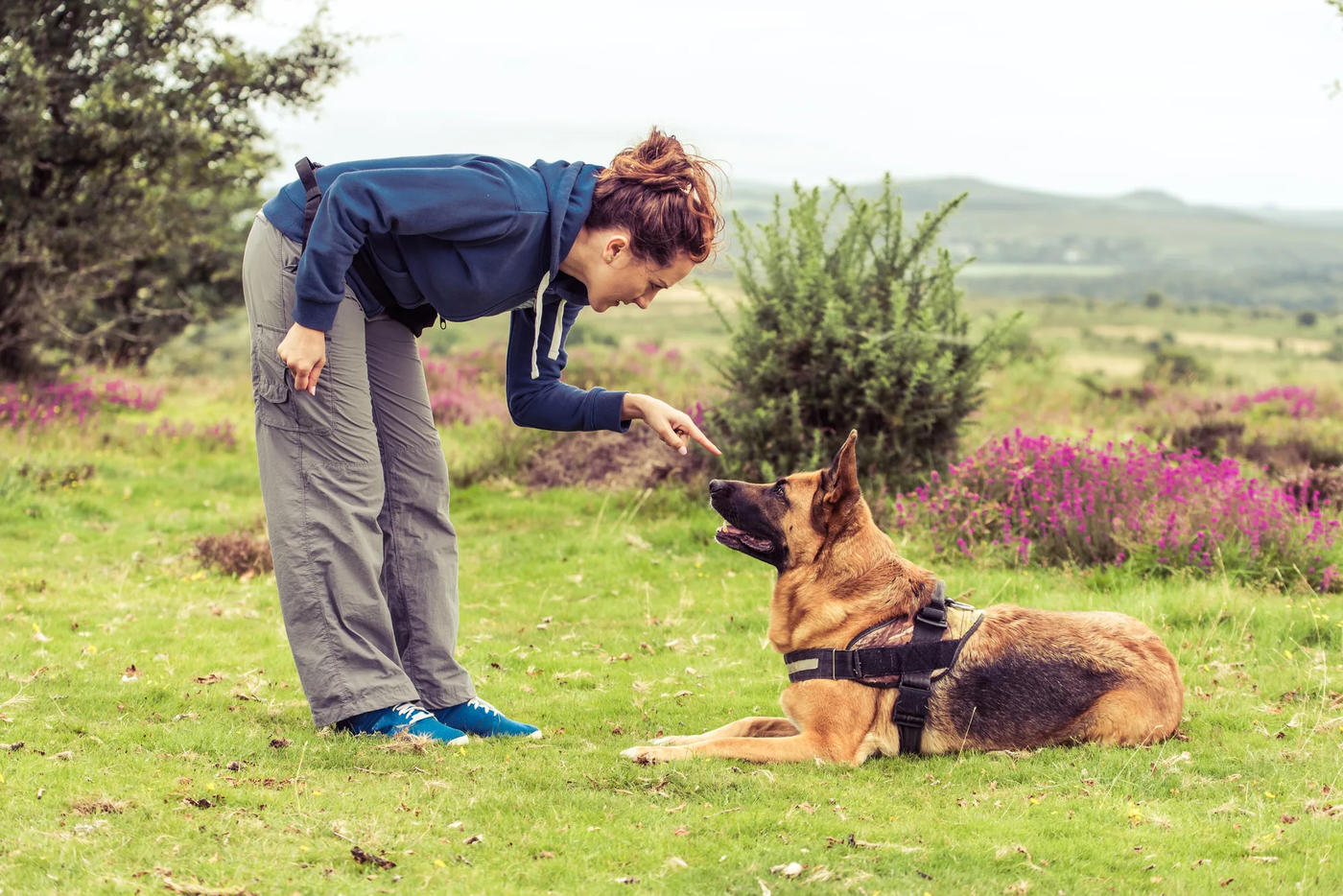
Temperament
A cattle dog built to push, nip and never quit
The Australian cattle dog was developed in the 1800s to drive cattle over long distances in hard country, moving them by nipping at their heels. Heelers are medium-sized, compact and muscular, with a short, dense double coat in blue or red speckle. They are intelligent, alert, very energetic and deeply loyal, often bonding hardest with one person. Many are cautious or protective with strangers.
That toughness is a gift in training and a challenge at home. A heeler does not wilt under a firm boundary, and it loves having a task. It also does not tire. A long walk just gives it a fitter body. Our approach is balanced training with a lot of structured mental work: place with duration, precise heel positions and impulse control that rewards stillness as much as action.
- Bred to drive cattle by nipping heels
- Short, dense double coat in blue or red
- Tough, loyal, often one-person dogs
- Mental work tires them more than miles
8 to 18 months
Nipping heels, chasing wheels and never lying down
The adolescent heeler is where most of our calls begin. It nips the kids when they run, grabs pant legs, chases bikes, cars and the lawn mower, and paces the house until bedtime. Some start guarding a favorite person from visitors or from the other dog. The family has usually tried more exercise, and it made the dog fitter without making it calmer.
What the dog lacks is an off switch. Heelers were bred to work all day and rest hard when the work ended, but a house gives no clear end to the workday. We teach one: a place command that means lie down and stay there, a crate routine that is calm, and a clear stop on nipping. With that in place, exercise starts to settle the dog instead of winding it up.
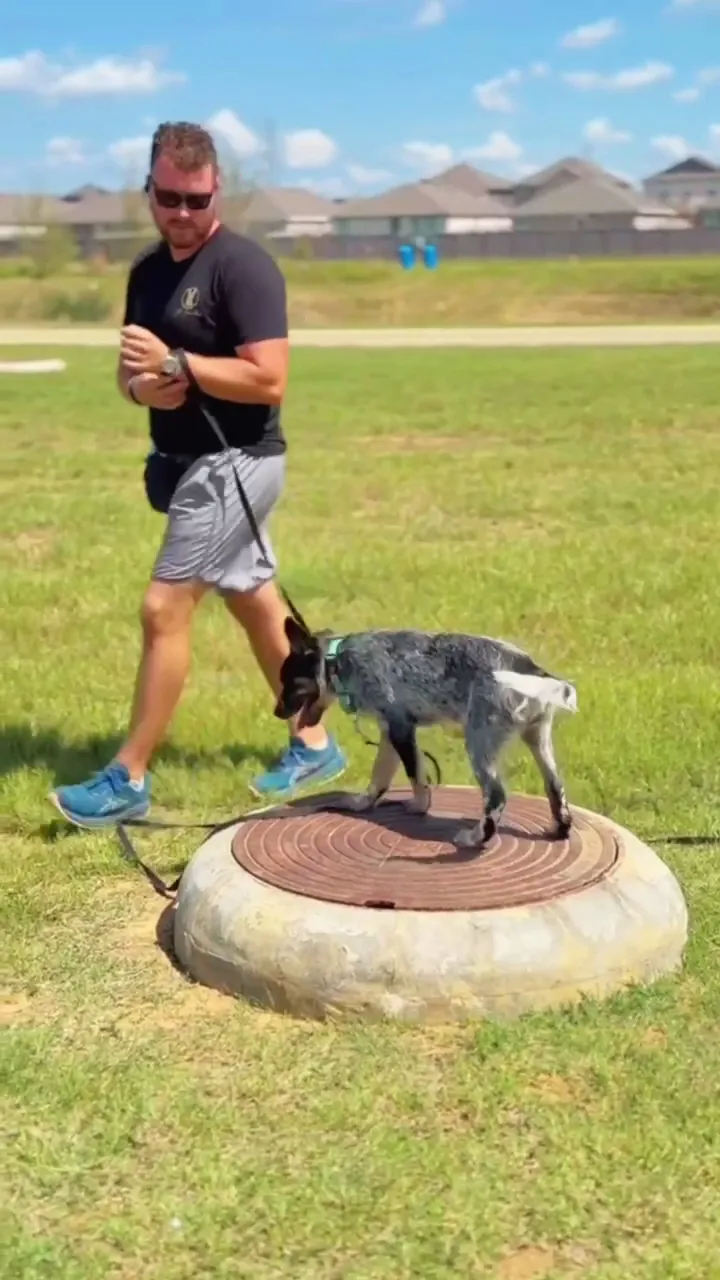
The stay
How we teach a heeler to switch off in three weeks
A heeler stays in our trainer's own home in Cypress with a small number of other dogs. We begin with place and crate, because a dog that can settle is a dog that can learn. Nipping and grabbing get a clear, consistent boundary from day one, and the dog gets a better outlet in structured retrieves and heel work. Photo and video updates reach you on Mondays, Wednesdays and Fridays.
Field trips build the rest. We walk past bikes, strollers and carts in stores and on sidewalks, and we reward the heeler for looking away from moving things. By the last week we can set a heeler on a place bed while people walk and jog nearby. The go-home session shows you how to run the routine, including when to work and when to rest.
Place and crate first, so rest becomes a skill
A clear boundary on nipping and grabbing from day one
Retrieves and heel work as the daily job
Moving triggers at a distance: bikes, carts, strollers
Duration place while people run nearby
Go-home session: work, rest and the family routine
Houston life
Acreage, cul-de-sacs and a hot-weather work ethic
We meet heelers on acreage in Tomball, Magnolia and Waller, where they want to work the horses and goats, and in cul-de-sacs in Cypress and Spring, where they work the neighborhood kids and the mail truck instead. On acreage we teach a recall and a stop that hold near livestock. In the suburbs we focus on fence running, window barking and calm walks past bikes.
A heeler will keep working in heat that should stop it. From May to September we train early and late, test the pavement by hand, and end sessions before the dog asks to stop. The short double coat sheds heavily each season, so a brush-out helps. July 4 and New Year fireworks can also rattle a sound-sensitive heeler, so we build a calm crate before those nights.
- Stop and recall near livestock on acreage
- Fence running and window barking in the suburbs
- Summer sessions ended before the dog quits
- A settled crate ready for fireworks nights
Programs and prices
Platinum for most heelers, Agility as a follow-up job
Platinum Board & Train is three weeks for $3,750 and fits most heelers, because nipping, chasing and guarding need behavior modification and field trips. It includes unlimited private lessons afterward. Gold is two weeks for $2,500 for a young heeler whose main issues are pulling, jumping and the door. VIP, at $10,000 for six weeks with an e-collar included, suits ranch families who want off-leash control.
Heelers that already have basic obedience often love the Agility Board & Train: two weeks for $2,500 of weave poles, jumps, tunnels and the A-frame, a job that burns energy in a useful way. Private lessons are $160 in Cypress or $220 at your place, a good fit for polishing a heeler that is mostly there. A $250 deposit reserves any stay after the free consultation call.
The programs
Programs a blue heeler goes home from.
An off switch first, then a job, from a stay built for cattle-dog energy.



Asked and answered
Questions people ask about this.
How much does blue heeler training cost in Houston?
Platinum Board & Train costs $3,750 for three weeks and is our usual recommendation for heelers with nipping, chasing or guarding. Gold costs $2,500 for two weeks for milder cases. VIP is $10,000 for six weeks, and Agility Board & Train is $2,500 for two weeks for dogs that already have basic obedience. Private lessons are $160 or $220.
How do I stop my blue heeler from nipping my kids?
Nipping is herding behavior, so the dog needs a clear stop and a better job. We teach a firm boundary on mouthing, a place command the dog holds while kids play, and calm around running. At the go-home session we coach the family, because running away from a heeler invites the chase and consistency is what ends it.
Will more exercise calm my heeler down?
Rarely on its own. A heeler bred to work all day gets fitter with every run, and a fitter heeler needs even more. What calms the breed is structure: mental work, impulse control and a trained rest period. Keep physical exercise, especially outside the summer heat, but pair it with place work so the dog learns to switch off.
Is a blue heeler a good dog for a Houston suburb?
It can be, for an active family that gives the dog daily work and clear rules. Heelers in small suburban yards often run fences, bark at passing bikes and herd the kids. With training, a place command and a routine, many live well in Cypress or Katy neighborhoods. Without them, the dog finds its own job.
Keep reading
Free consultation · 10% off this fall
Tell our team about your heeler.
The free consultation is a real conversation with our trainers. Describe the nipping, the chasing or the pacing, hear which stay fits, and reserve it with a $250 deposit.