
Breed training guides
How to train a beagle: nose first, recall second, and how to flip it
Beagles are cheerful, food-driven and easy to live with until they catch a scent. Then the dog you know disappears. Our trainers do not fight the nose; they turn sniffing into the paycheck and build a recall that has something to compete with.
Last reviewed September 29, 2026 · by the Best Dog University Team
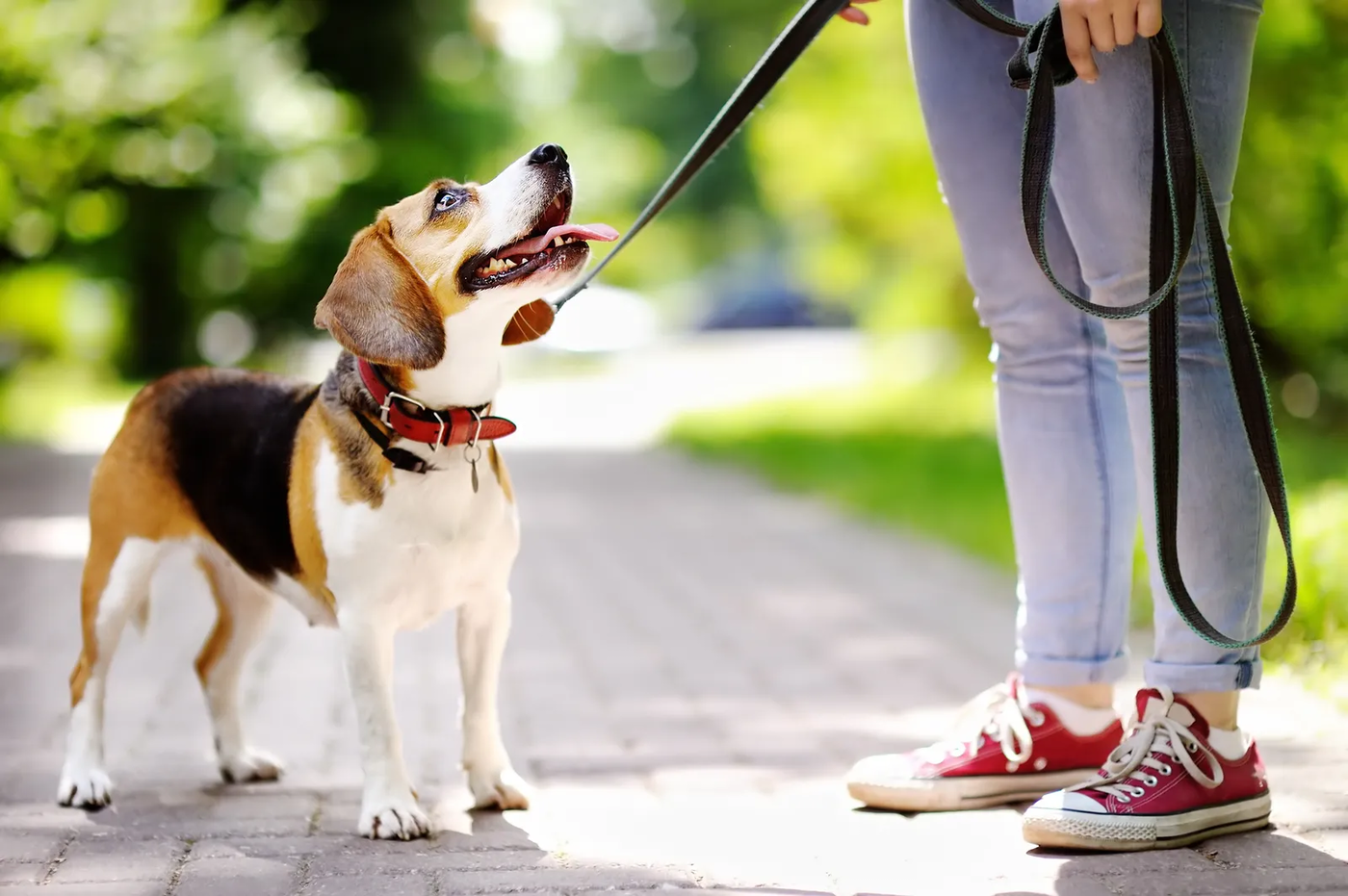
A pack hound at home
Bred to follow a scent for hours, in company, out loud.
The beagle is a scent hound developed in England to hunt rabbits and hares, working in packs ahead of hunters on foot. It needed a superb nose, the stamina to follow a trail for hours, a sociable nature to get along with the pack, and a voice, the bay, that told hunters where the chase was going. It is a small to medium hound with a short, dense coat, and in the United States it is shown in two height varieties.
Each piece of that job shows up in a family home. The nose leads the dog under fences, into the trash and across the street. The pack nature means a beagle usually likes people and dogs and dislikes being alone. The voice becomes baying at the fence line and howling when the family leaves. And the food drive, which makes the breed so easy to reward, also makes an unattended counter irresistible.
- A nose that outranks every sound you make
- A sociable pack dog that dislikes long hours alone
- A bay that carries across a subdivision
- A food drive that is both the lever and the problem
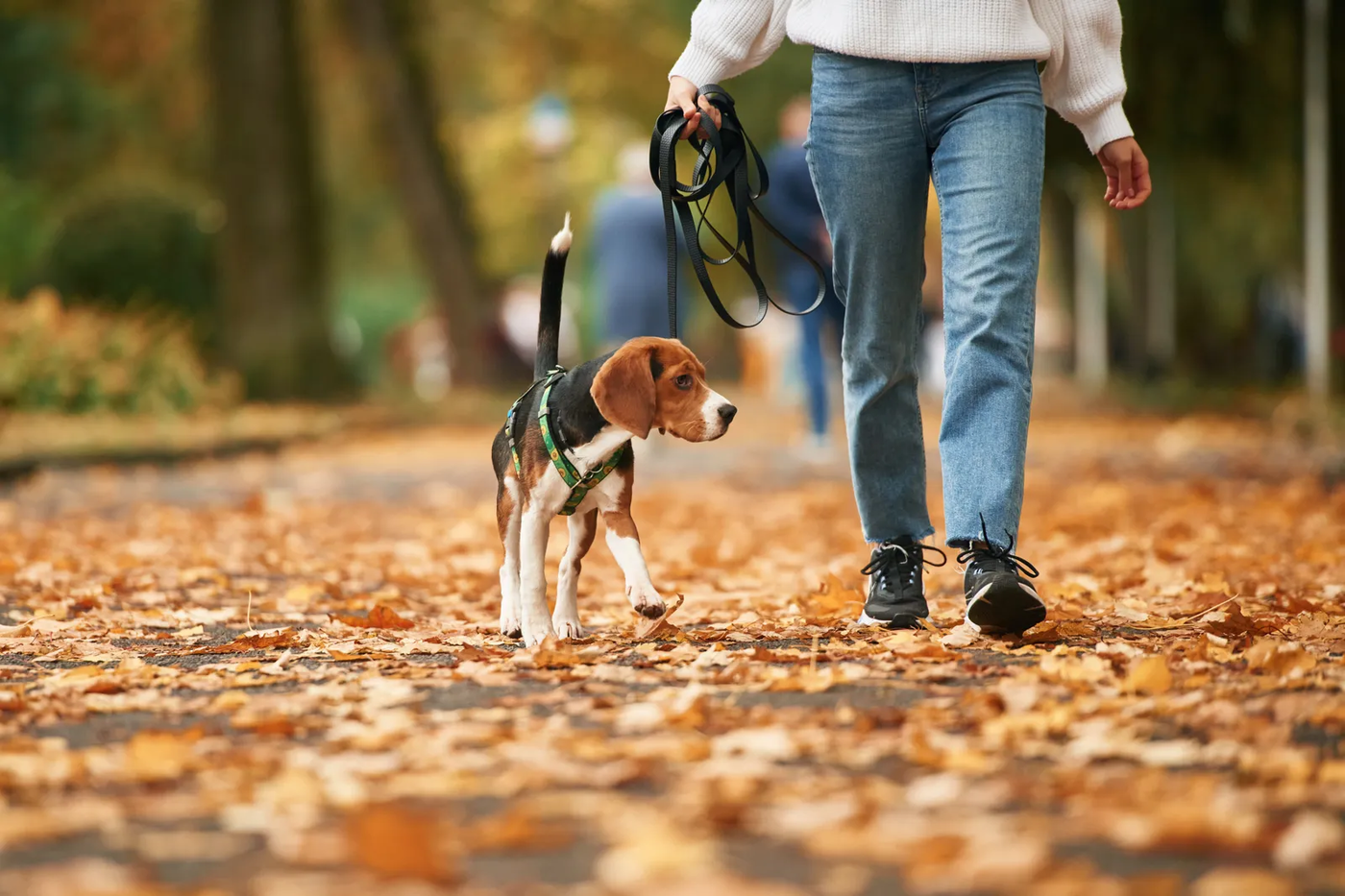
The first year
Stage by stage, with the nose built into every lesson.
A beagle puppy learns sit, down and a name response almost instantly with food. The recall is where the first year is won or lost. Every time the puppy comes to you in the house, pay it well and then let it go back to sniffing, so coming back never ends the fun. Take the puppy outside only on a leash or a long line, and never practice calling it once its nose is down on a fresh trail you cannot reach.
Adolescence arrives around six months, and the beagle discovers that the whole neighborhood is a scent map. The recall that worked in the kitchen falls apart in the yard. Stay on the long line, keep payments high, and add structured sniff breaks on walks as a reward for loose leash. Our trainers treat the long line as normal equipment for a young beagle, not as a sign of failure.
Eight to twelve weeks: crate, leash potty trips, name game, hand-fed meals, first recalls across the kitchen
Three to four months: sit, down, place, leave-it with food on the floor, a trash can with a lid
Four to six months: long-line recalls in the yard, a go-sniff release as the payment
Six to nine months: the scent-map stage, long line on every walk, sniff breaks earned with loose leash
Nine to twelve months: recalls away from real scent trails in fenced areas, alone time in growing doses
What we see
The recall, the counter and the bay, and how to flip each one.
The recall is the first call, and the flip is simple to describe: make sniffing the reward for coming back. Call once, pay with a high-value treat when the dog arrives, then say a release word and let it return to the smell. The beagle learns that coming to you does not end the hunt, it pays and then extends it. Build this on a long line for months before testing it anywhere unfenced.
Food theft is second. Management comes first: clear counters, a locking trash can and a gate across the kitchen while you cook. Then teach leave-it with food on the floor and place during meals, paid well. The bay is third. A beagle that howls when left alone needs alone time taught in small steps and a food puzzle or long-lasting chew; a beagle that bays at the fence needs supervised yard time and a quiet cue.
- Call once, pay, then release the dog back to the smell
- Clear counters, a locking trash can and a kitchen gate
- Leave-it and place during meals
- Alone time in small steps with a food puzzle
Houston life
Bayou trails, alligators, fence gaps after storms and trash day.
Houston's bayou trails and greenbelts are full of rabbit and squirrel scent, and a beagle off leash on Buffalo Bayou or the White Oak trail may follow it straight into traffic or the water. Alligators live in many Houston-area bayous, lakes and retention ponds, so keep a beagle leashed near water and away from the bank. Summer storms can loosen fence boards and dig out gaps under gates; walk the fence line after heavy rain before a beagle finds the hole.
Trash day in a Cypress or Katy subdivision is a buffet for a beagle's nose, and the things it can find on a walk are not all safe. Keep a leave-it sharp and call your vet or ASPCA Animal Poison Control if the dog eats something questionable. From May to September walk early and late. In HOA neighborhoods and townhomes, the bay travels, so the quiet cue and the alone-time plan matter to neighbors.
Getting help
When the recall fails or the baying brings complaints.
Call when your beagle has escaped more than once, when it ignores the recall even on a long line, or when baying brings notes from neighbors. Private lessons at $160 in Cypress or $220 in your home help families learn the long-line recall and the release method. Gold, two weeks at $2,500, builds place, leave-it, a loose leash and impulse control in our trainer's home.
Platinum, three weeks at $3,750, adds field trips into real public places, where the recall is proven around real scent, plus unlimited private lessons afterward. For a family that wants off-leash reliability, the VIP program at $10,000 includes a Mini-Educator e-collar and in-home handover, though with a beagle we still advise a leash anywhere unfenced. The beagle training page explains each option in Houston terms.
The programs
Programs that suit a beagle.
Private lessons for the long-line recall, Gold for manners, Platinum for recall proven around real scent.


Asked and answered
Questions people ask about this.
Can a beagle ever be trusted off leash?
In fenced areas, often yes. In open spaces, rarely, because a fresh rabbit trail can override months of training. Build the recall on a long line with sniffing as the reward, test it in fenced parks, and treat bayou trails, greenbelts and streets as leash-only places. That keeps the dog safe while the training continues.
Why does my beagle ignore me outside?
Because the scent is more interesting than you, and coming back used to end the fun. Flip it by paying the recall with a high-value treat and then releasing the dog back to sniff. Stay on a long line so the dog cannot practice ignoring you. Short, frequent recalls build the habit faster than a few long ones.
How do I stop my beagle stealing food?
Remove the chance first: clear counters, a locking trash can and a gate during meal prep. Then teach leave-it with food on the floor and place during meals, paid heavily. A beagle that has succeeded at stealing will keep trying for months, so management stays in place long after training begins.
Do beagles howl when left alone?
Many do, because they are pack dogs bred to use their voices. Teach alone time in small, boring steps from puppyhood, leave a food puzzle or long-lasting chew, and keep departures calm. A beagle that howls for the whole absence, destroys doors or injures itself needs a separation plan and a talk with your vet.
Keep reading
Free consultation · 10% off this fall
Make the nose work for you.
Tell our team where your beagle goes when it slips away and what it steals. The free phone consultation is a direct call.