
Puppies · First four months
When should you start puppy training?
Most owners hear two conflicting rules: start early, and keep the puppy home until the shots are done. Both are half right. This page sorts out what to teach in which week, what can wait, and how to run those weeks in a city where the pavement is hot and the mosquitoes never leave.
Last reviewed September 10, 2026 · by the Best Dog University Team

The short version
Training starts at 8 weeks because learning already has.
Your puppy is learning from the first hour in your house, whether or not you call it training. He learns where he sleeps, what happens when he whines, whether jumping on the couch works and whether a hand reaching for his collar is good news. If you decide those things on purpose, the first month is easy. If you let him decide, you spend the next year undoing it.
The mistake is thinking training means a sit-stay drill. At 8 to 10 weeks the curriculum is simpler and more important: a crate that feels safe, a potty routine tied to the clock, a name that always predicts something good, and gentle handling of paws, ears and mouth. Our trainers start every puppy client with these because they decide how the rest of the year goes.
- Crate and potty routine from day one
- Name response before any command
- Handling of paws, ears, collar and mouth
- Calm greetings, never jumping for attention
Week by week
Each stage has one job, and the order matters.
Below is the order our team uses with puppies in the Puppy Development Bundle. The weeks are approximate. A confident Lab puppy from a Cypress breeder and a nervous rescue from the shelter will move through them at different speeds, and that is fine. What should not change is the sequence: rules and comfort first, obedience second, distractions last.
| Age | What to build | What to skip |
|---|---|---|
| 8 to 10 weeks | Crate, potty schedule, name, hand feeding, gentle handling | Long walks, dog parks, hot pavement |
| 10 to 12 weeks | Sit, place on a bed, recall in the house, first leash pressure in the yard | Corrections, off-leash time, play groups with unknown dogs |
| 12 to 16 weeks | Sit and place with duration, recall on a long line, carried or cart trips to stores | Marathon sessions, forced greetings with strangers or dogs |
| 4 to 6 months | Loose leash walking on sidewalks, door boundaries, calm around guests | Assuming the job is done; adolescence starts here |
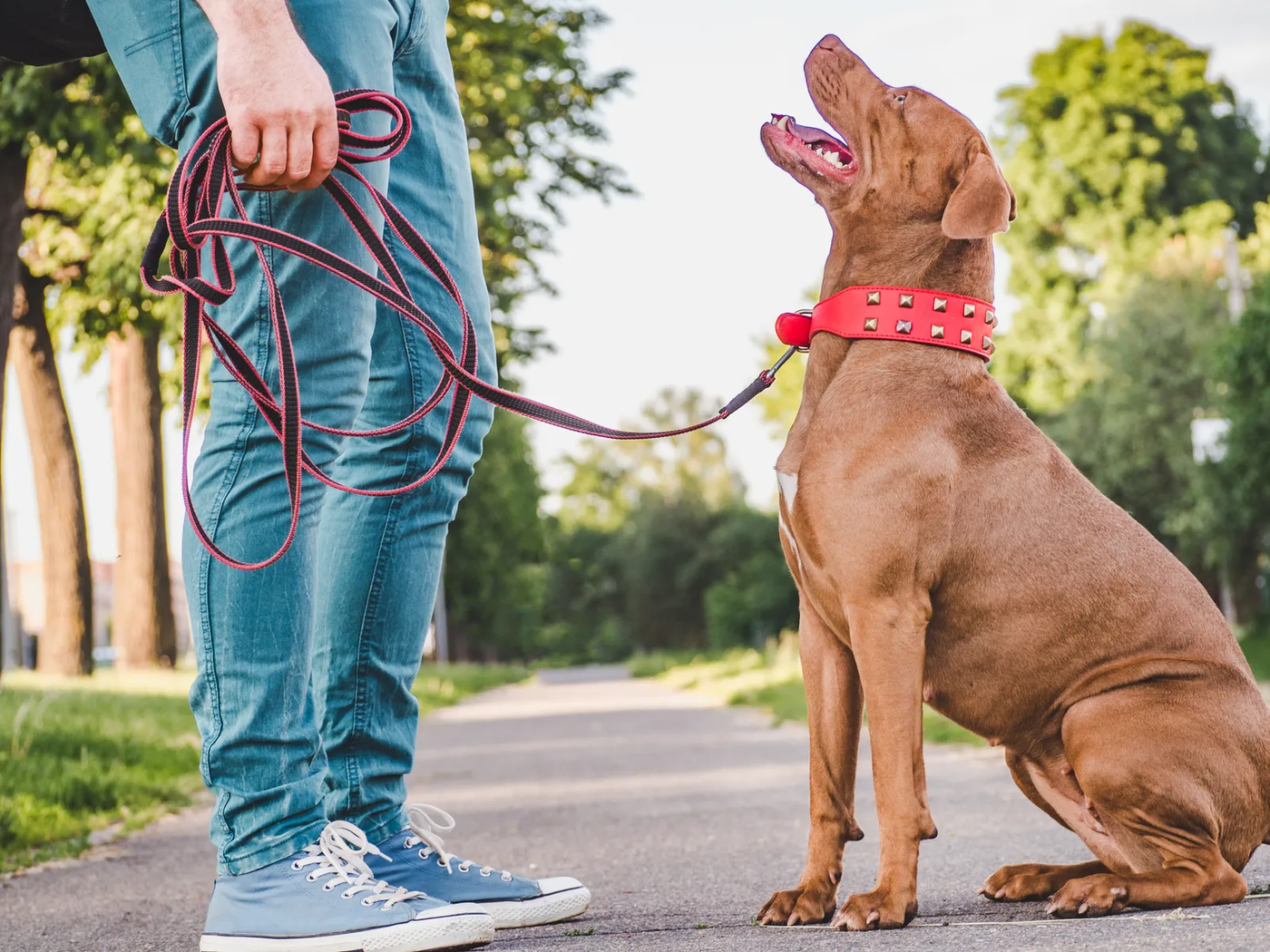
Socialization, done right
Socialization means calm exposure, not a pile of puppies.
The socialization window runs to roughly 12 to 16 weeks, and most puppies have not finished their vaccine series until about 16 weeks. Ask your vet what is safe for your puppy, then work inside that answer. A puppy carried through a hardware store in Cypress, sitting in your lap on a bench in Bridgeland watching cyclists, or riding in a shopping cart while a lawn crew works nearby is being socialized. He does not need to touch the ground or meet a single dog to learn that the world is safe.
Our trainers see the opposite approach every week: a puppy taken to a busy dog park at 12 weeks, bowled over by adult dogs, and reactive by 8 months. Exposure should happen at a distance where the puppy stays curious and relaxed. If he is hiding behind your legs, you are too close. Back up, let him watch, feed him for looking, and leave while it is still going well.
Ask your vet which places are safe before the series is finished, and follow that.
Pick one new sight, sound or surface per outing: a cart, a sliding door, a sprinkler, a bicycle.
Keep the puppy far enough away that he stays soft and curious.
Feed for calm looking, not for rushing toward the thing.
Stay five minutes, then leave on a good note.
Repeat with a new location three or four times a week until 16 weeks.
Houston timing
A summer puppy trains at dawn and indoors.
If your puppy arrives between May and September, the socialization weeks land in Houston's worst heat. Puppies overheat faster than adult dogs, and pavement that has been in the sun since noon will burn pads in minutes. Do the outdoor work before 8 a.m. or after 7 p.m., hold the back of your hand on the concrete for seven seconds first, and move the midday sessions into the house, the garage and air-conditioned stores.
Two more Houston realities. Mosquitoes carry heartworm here in every month, so heartworm prevention starts at the first vet visit, not in spring. And July 4 fireworks fall inside the window for many spring puppies; treat that night as a planned exposure with the puppy inside, the TV on and treats for every boom, rather than a surprise.
- Outdoor sessions early morning or evening from May to September
- Seven-second hand test on pavement before every walk
- Heartworm prevention from the first vet visit
- Fireworks nights planned, indoors, with food
What we offer
Four private sessions cover the first four months.
The Puppy Development Bundle is four private sessions of 45 to 60 minutes for puppies under 4 months, $550 at our training home in Cypress or $750 in your home. It covers sit, place, stay, recall, crate and potty guidance, socialization planning, and nipping and jumping prevention. Families in Katy or Towne Lake are 25 to 35 minutes from Cypress; many prefer the in-home option so the puppy learns the rules in the rooms where he will live by them.
Board and train is not for tiny puppies. We generally start dogs in the live-in programs once they are past the puppy stage and old enough to hold structure, which is a conversation for the free phone consultation. Until then, short private sessions and consistent parents get more done than any drop-off program could.
The programs
Puppy programs at Best Dog University.
Short private sessions in the first four months, then board and train once your puppy is old enough to hold structure.
Asked and answered
Questions people ask about this.
Should I wait until my puppy has all his shots to start training?
No. House training, crate training, name response, handling and calm greetings all happen at home and need no vaccines at all. Socialization can also start before the series is finished by carrying the puppy or using a cart in public places. Ask your vet what is safe, and save ground contact with unknown dogs for later.
What age is best for the Puppy Development Bundle?
The bundle is built for puppies under 4 months, and the earlier the better. Starting at 8 to 10 weeks lets our trainers set the crate, potty and handling routines before habits form. If your puppy is already 14 or 15 weeks, there is still time to shape socialization and stop nipping and jumping.
Can a puppy do board and train?
Not at 8 weeks. Board and train programs are built for dogs who can hold structure for a full day, and very young puppies need short sessions, naps and their own family. Our team will tell you on the free phone consultation when your puppy is old enough for a live-in program, usually well past the four-month mark.
How long should each puppy training session be?
Five minutes, several times a day. A puppy's attention is short and his memory is good, so many small sessions tied to meals and potty breaks beat one long one. In Houston summer, keep the outdoor sessions to the cool hours and use the house, garage and pet store aisles the rest of the day.
Is it too late if my puppy is already 5 months old?
No. You have missed part of the socialization window, but obedience, leash skills and impulse control are wide open at 5 months. Adolescence is starting, so expect some testing. Private lessons at $160 in Cypress or $220 in your home are the usual starting point at that age.
Keep reading
Free consultation · 10% off this fall
Ask our team what your puppy needs this week.
Tell our team your puppy's age and breed on the free phone consultation and they will map out the first month with you, no cost and no obligation.