
Houston questions
Can dogs swim in Houston bayous?
The bayous are some of the best dog walks in the city, and on a hot afternoon the water looks tempting to a retriever. This page explains why the walk is a yes and the swim is a no, and what to do if your dog goes in anyway.
Last reviewed September 29, 2026 · by the Best Dog University Team
Why not
Bayous are drainage channels first, so the water, the current and the banks all work against a swimming dog.
Houston's bayous exist to move rainwater out of the city, and the Flood Control District manages many of them for exactly that job. Whatever washes off streets, parking lots and lawns ends up in them: oil, fertilizer, pet waste, trash and, after heavy storms, overflow from sewer lines. The water is often murky enough that a dog cannot see the bottom or the snag it is swimming toward.
The current is the other problem. After rain a bayou can rise and run fast within hours and stay high for days. Many stretches have steep concrete, riprap or slick mud banks, so a dog that jumps in easily may not be able to climb out, and a person who goes in after it is in danger too.
- Stormwater runoff, not clean water
- Sewer overflows after heavy storms
- Fast current after rain, for days
- Steep or slick banks with no easy exit
Alligators
Alligators live along many of Houston's bayous and ponds, and a splashing dog draws exactly the wrong kind of attention.
Alligators are part of Houston's waterways, from the bayous in the city to the retention ponds behind suburban neighborhoods, and they are most active in the warm months. A dog swimming, splashing or wading at the edge looks and sounds like prey. Most encounters are avoided simply by keeping dogs out of the water and a few steps back from the bank, especially at dawn and dusk.
Never let a dog chase or bark at an alligator, never feed wildlife, and if you see one near the trail, turn around calmly with your dog on a short leash. Snakes use the same banks, particularly after a flood pushes them out of their usual cover.
- Present in bayous and neighborhood ponds
- Most active in warm months, dawn and dusk
- A few steps back from the bank, always
- Short leash and turn around if you see one
Germs you cannot see
Water that looks fine can still make a dog sick, so drinking it is as much of a problem as swimming in it.
Standing and slow water in Houston can carry bacteria that cause illness in dogs, including leptospirosis, which is spread in water contaminated by wildlife urine. Ask your vet whether your dog should be vaccinated for it. In the heat, still ponds can also grow toxic algae, and scummy or discolored water is a hard no for a dog under any circumstances.
The simplest protection is fresh water from home, offered before and during the walk, so the dog is not thirsty enough to drink from the edge. After any walk that included wet grass or a muddy bank, rinse the paws and belly. If your dog shows vomiting, diarrhea, lethargy or loss of appetite in the days after contact with bayou or pond water, call your vet and mention the water.
- Leptospirosis: ask your vet about the vaccine
- Toxic algae in warm, still water
- Fresh water from home on every walk
- Rinse paws and belly after a wet walk
Walking the bayou trails
The trails are a great walk when the dog stays on the path, so teach the few skills that keep it there.
Most bayou trails in Houston are run by Houston Parks and Recreation, the Flood Control District or a partner organization, and the rules and closures for each stretch are posted by whoever operates it. At the time of writing, leashes are expected on these trails, and many close or flood after heavy rain. Check before you go and give the trails about a week after a big storm.
The skills below make the walk safe even when the water is right there. They are taught on a quiet stretch first and moved to busier sections once they hold. In summer, walk the trails at dawn or after dark, because much of the bayou path network is concrete in full sun, and the pavement test applies there as much as on your own street.
A six-foot leash, never a long retractable line near the water
A structured walk on the path side, away from the bank
A leave-it for the water's edge, rewarded every time
A calm pass of bikes and runners on the narrow sections
Fresh water offered every fifteen minutes in warm weather
A rinse at home after any wet or muddy stretch
At Best Dog University
We teach water manners at a controlled lake edge on a long line, never in a bayou.
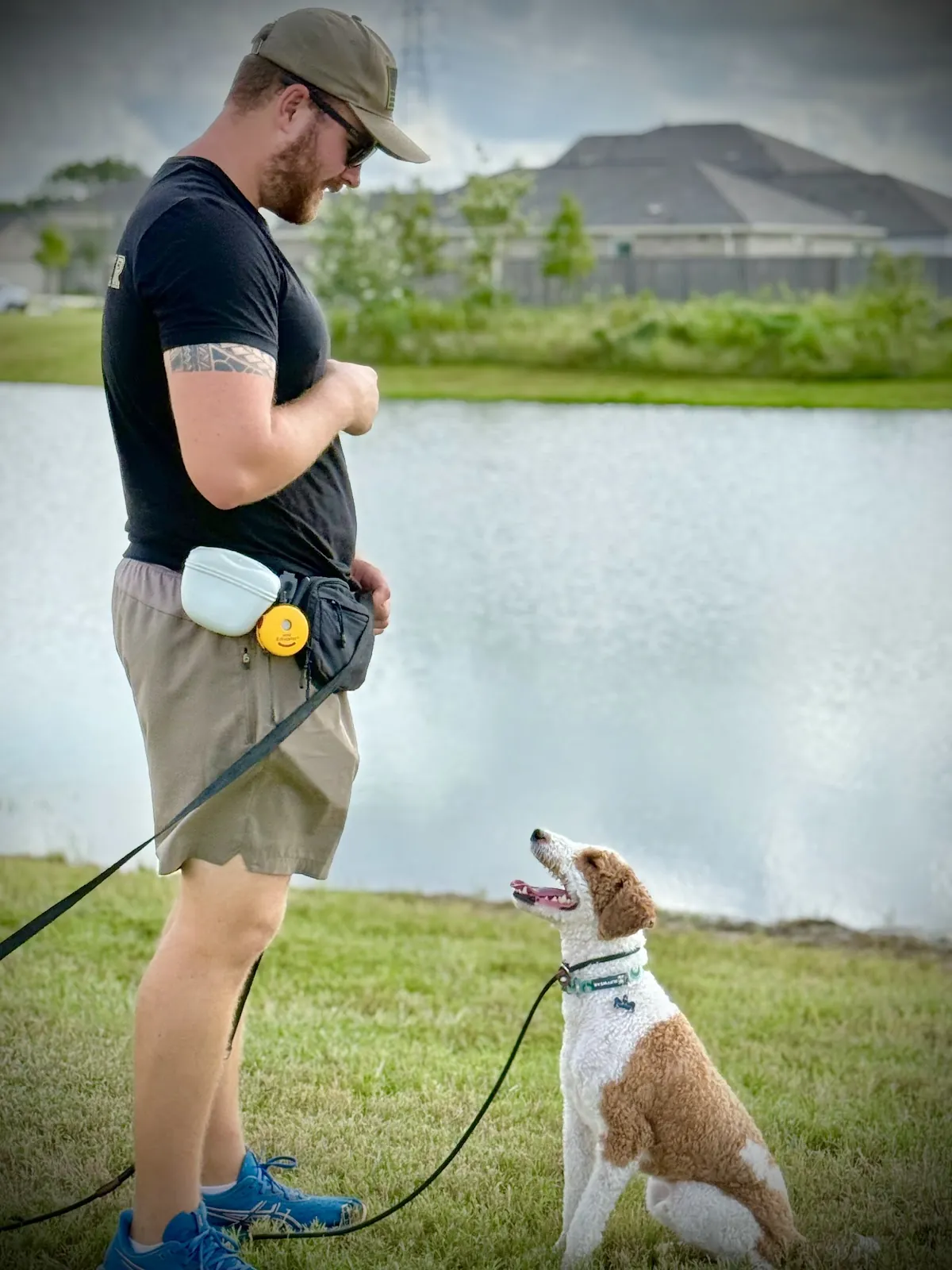
Field trips from our training home in Cypress include a neighborhood lake, where our trainers teach a wait at the edge and a recall out of the water on a long line, in clear water with an easy exit. That recall is what gets a dog back when it heads for a bayou bank or a retention pond. Platinum at $3,750 builds it as part of recall and impulse control, and VIP at $10,000 proofs it off leash.
For a dog that loves to swim, the right outlets are a backyard pool with the steps taught, or a sanctioned dog park pond when it is open. Our team is happy to talk it through on the free consultation call. If your dog already bolts for the water on the Cypress Creek or Buffalo Bayou trails, tell us, because a dog that has practiced it needs the recall rebuilt carefully before the leash ever gets longer.
The programs
A recall that works near water.
Platinum for a reliable recall and a leave-it at the bank, VIP for off-leash water reliability, Gold for leash manners on the trails.



Asked and answered
Questions people ask about this.
What should I do if my dog jumps into a bayou?
Do not go in after it. Call your dog to the lowest, easiest point of the bank and encourage it out, using a leash or a long stick only to guide it. Once out, rinse it thoroughly at home, watch for vomiting, lethargy or not eating over the next days, and call your vet if anything seems wrong.
Are neighborhood retention ponds any safer?
No. Retention ponds are still stormwater, the water is warm and still, algae grows in summer, and alligators often live in them unnoticed. Many homeowner associations also ban swimming in them. Treat them like the bayous: walk the path, keep the dog back from the edge.
Where can my dog swim in Houston?
A backyard pool is the safest swim, once the dog knows where the steps are. Some city dog parks have dedicated dog ponds, separate from the bayous, which open and close with conditions; Houston Parks and Recreation lists them. A friend's pool or a family dock on a big lake, with a recall already built, are other options.
Is it safe to walk the bayou trails after a storm?
Give them about a week after heavy rain. The water runs high and fast, sections of trail flood or wash out, and snakes and fire ants move onto higher ground. Check the operator's posted closures before you go, and keep your dog on the leash and away from the edge when you do return.
My retriever pulls toward every body of water. Can that be fixed?
Yes. A leave-it for the water's edge, built on a long line at a distance the dog can handle, and a recall that works when the dog is excited are both teachable. It takes consistency, and the dog should never be allowed to rehearse the plunge while it is learning.
Keep reading
Free consultation · 10% off this fall
Keep the walk, skip the swim.
Tell our team how your dog behaves near water. On the free consultation call we will say whether lessons or a stay fits, and a $250 deposit reserves a start date.