
Senior dogs
Senior dog training in Houston: joints, patience and a real plan
The nine-year-old that has snapped at the new puppy, growled at the baby or started guarding the couch was not a problem for nine years and is not a bad dog now. It is an old dog whose world changed, with no structure to hold onto, and often with a hip that hurts.
Last reviewed September 11, 2026 · by the Best Dog University Team
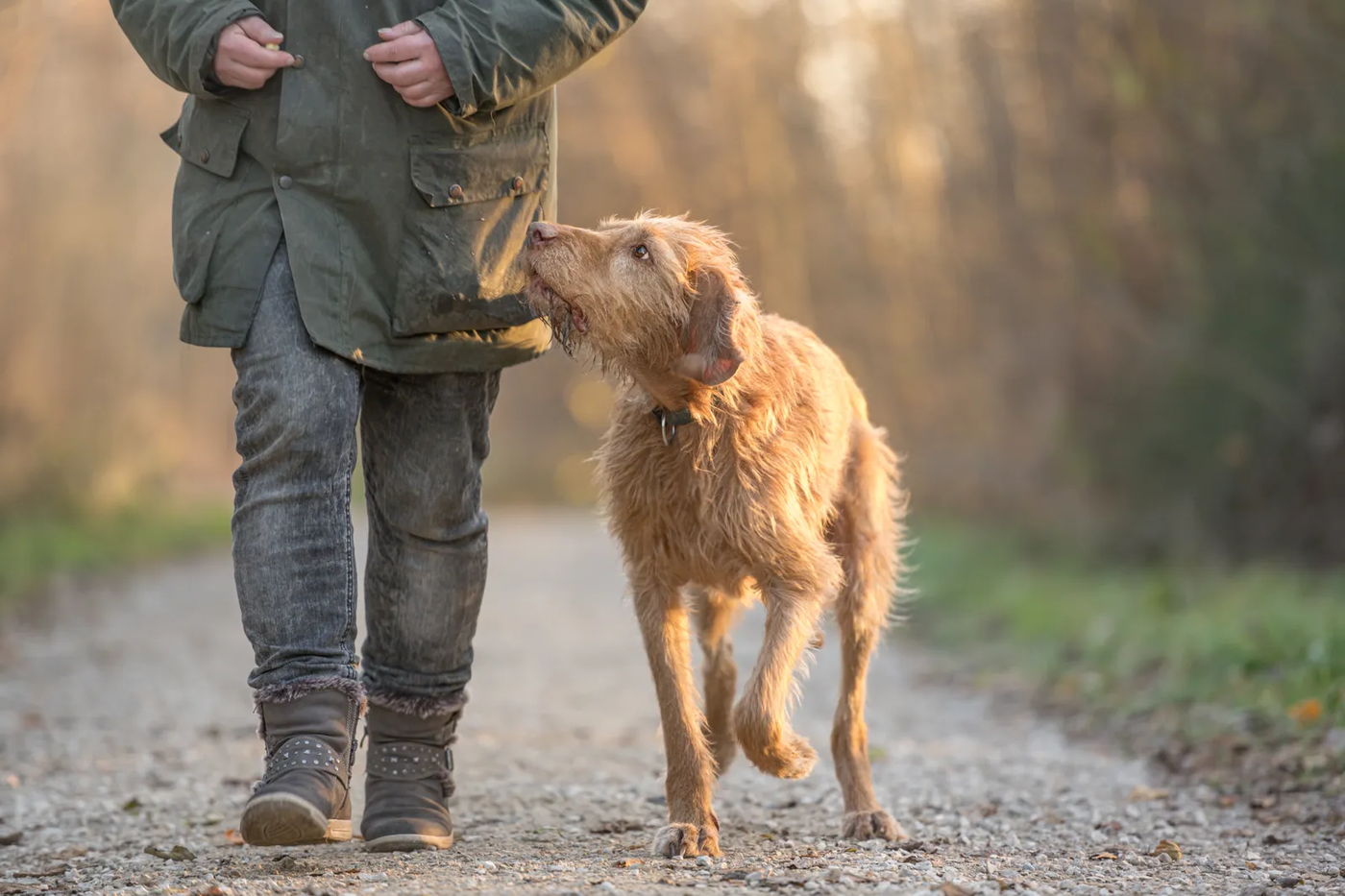
What the senior cases are
A change in the house, and a body that hurts.
The senior dog that comes to us has usually been fine for years, and then the family added a puppy, a baby, a new partner or a new house, and the old dog started guarding, snapping, hiding, soiling or barking at things it used to ignore. Underneath is a dog with no structure, because it never needed any, and often a dog in pain, because a nine-year-old with stiff hips snaps when a puppy lands on it.
The first step is always the vet: pain, hearing, vision, thyroid and cognition all change behavior, and training a medical problem as a behavior problem is unfair to the dog and does not work.
- A puppy, a baby, a partner or a move as the trigger
- Guarding, snapping, hiding, soiling or new barking
- Pain, hearing, vision and thyroid as hidden causes
- The vet before the trainer
What changes with age
Stamina, joints, senses and patience, not the ability to learn.
An old dog picks up place, leave-it and a calm greeting about as fast as a two-year-old. What it cannot do is fifty repetitions on tile, an hour-long walk to burn energy first, or hear a cue from the next room. So the sessions are five minutes, three times a day, on a rug; the exercises avoid jumping and stairs; a hand signal is paired with every word from the first session in case the hearing goes; and down replaces sit if the hips complain.
Exercise is a walk at the dog's pace, and in a Houston summer that is a short walk on grass at dawn, because a senior overheats faster and recovers slower than a young dog.
- Five-minute sessions, three a day, on a rug
- No jumping, no stairs, down instead of sit if needed
- Hand signals beside every cue from day one
- Short walks on grass at the cool hours
How we train a senior
Structure that gives an old dog a place to be while the house changes.
Place is the core: a raised bed beside the couch where the old dog goes at meals, when the puppy is loose, when the baby is on the floor and when guests arrive, and where nobody bothers it. A calm greeting rule protects old joints from a jumping puppy and a hugging toddler. A quiet cue handles the new barking at the window. Leave-it and a trade handle the couch and the bone. The puppy or the child gets rules too: the old dog's bed is off limits, and the old dog is never followed there.
Most of this is done in your home, because the problem lives in your living room and the old dog does not need a stay to learn a rule. Our trainer sets it up in a lesson, the family runs the five minutes a day, and a second lesson checks it.
Vet check: pain, hearing, vision, thyroid, cognition
A raised place bed the puppy and the child cannot reach
Place at meals and whenever the house is busy
A calm greeting rule for the old dog's joints
A quiet cue for the new barking
Leave-it and a trade for the couch and the bone
Rules for the puppy and the child about the old dog's bed
Which program
Lessons at home for most seniors, Gold for the household that needs the reset.
In-home lessons at $220 are the right format for nearly every senior: the trainer comes to the house, the old dog learns in the room where the problem lives, and the family gets the plan. Two or three lessons handle most senior cases. A healthy senior in a household where the whole structure has collapsed, usually because a young dog arrived and neither dog has rules, can do a two-week Gold stay at $2,500 in the training home, which is a house with soft beds rather than a kennel; the young dog often comes too. A senior with a bite history gets an in-person consultation and an honest plan that respects its age.
| Senior | Program | Price |
|---|---|---|
| Guarding, snapping or unraveling after a change | In-home lessons, two or three | $220 per session |
| Healthy senior, whole household needs the reset | Gold, 2 weeks | $2,500 |
| Senior with a bite history | Consultation, then an honest plan | $220 and up |
Houston specifics
Heat, tile floors and a summer that is hard on old dogs.
Houston is hard on a senior: heat from May to October, tile floors that slide under stiff hips, storms that frighten a dog whose hearing is going, and a summer with no long walks. An old dog's summer is early walks on grass, a rug on the tile, a place bed it can get onto without a jump, and water in every room. The AVMA's heat guidance applies with more force to a senior, and a dog that starts panting on a short morning walk is done for the day. The senior at home page on this site covers the daily method; this page is the plan for the senior that needs us.
The programs
Programs for a senior dog.
Lessons at home for most seniors, a Gold stay for the household that needs the whole reset.

Asked and answered
Questions people ask about this.
Is my old dog too old to train?
No. Learning does not stop with age; stamina, joints and senses change. Seniors learn place, leave-it and calm greetings in a few weeks of five-minute sessions, and the structure usually makes an old dog steadier and happier.
My senior snapped at the new puppy. Is it aggressive now?
Usually it is an old dog in pain or with no escape from a puppy that will not leave it alone. A vet check first, then a raised bed the puppy cannot reach, rules for the puppy, and a lesson at home to set the structure for both dogs.
My old dog has started barking at nothing and pacing at night. Training or medical?
Medical first. Cognitive decline, pain, hearing loss and thyroid problems all show as new behavior in a senior, and a vet visit comes before any training plan. Structure and a predictable routine help alongside whatever the vet finds.
Can a senior do board and train?
A healthy senior can, and the training home is a house with soft beds rather than a kennel. Most seniors do better with lessons at home, because the problem usually lives in the household and the old dog does not need a stay to learn a rule.
How do I keep my senior safe in the Houston heat?
Short walks on grass at dawn, a rug on the tile, a place bed without a jump, water everywhere and a hard stop at any heavy panting. Seniors overheat faster and recover slower, and the AVMA's heat guidance applies with extra force.
Keep reading
Free consultation · 10% off this fall
Tell our team about the old dog.
The free phone consultation is a direct call: what changed in the house, what the senior is doing, and whether a lesson at home is the answer.