
Older dogs · Honest answer
Is my dog too old to train?
The question usually hides a second one: is it worth it. Owners of older dogs have lived with the pulling or the barking for years and wonder if the dog is too set in his ways. This page answers both, with the adjustments our trainers make for gray muzzles and Houston weather.
Last reviewed September 10, 2026 · by the Best Dog University Team
The honest answer
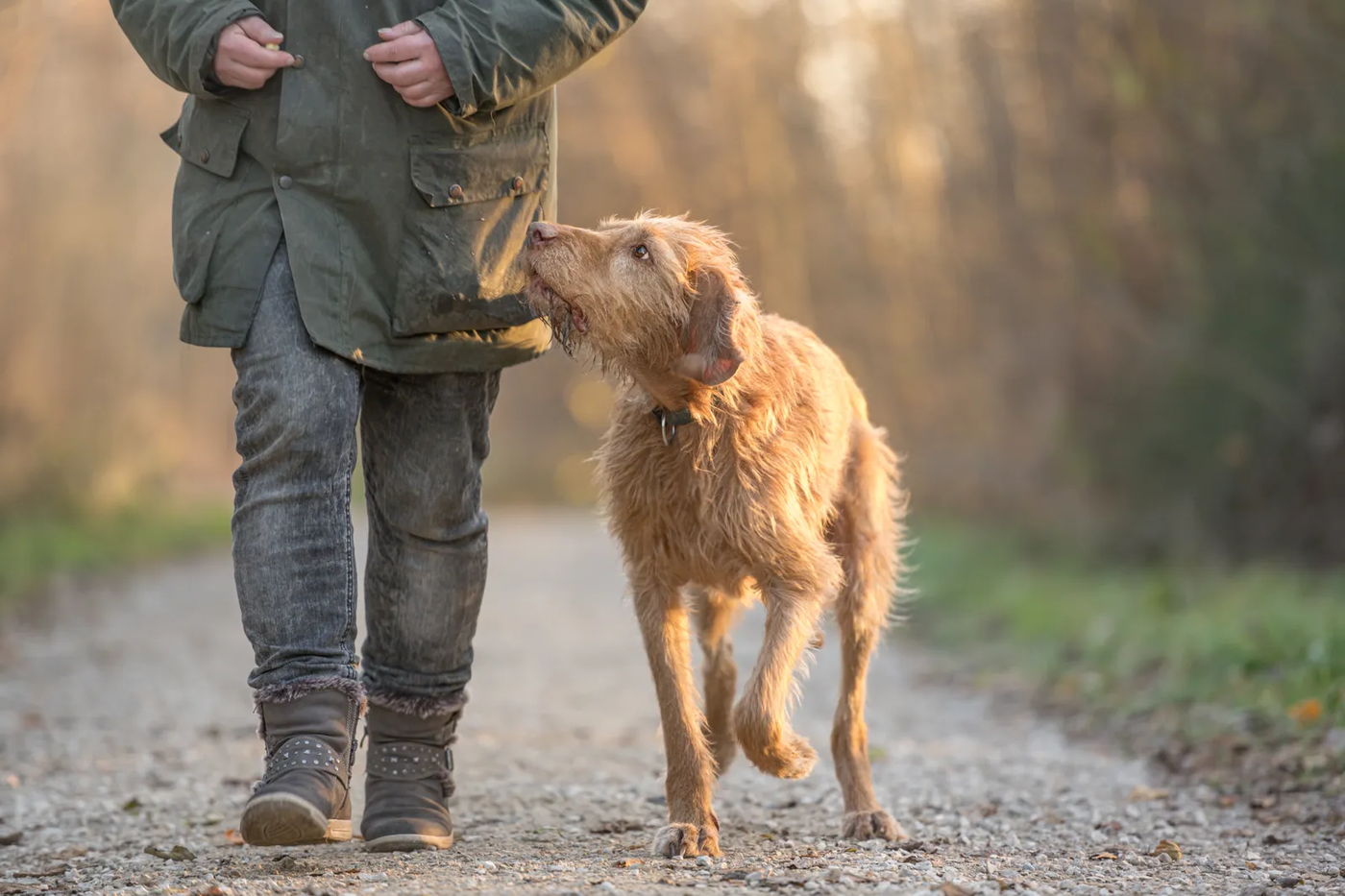
Age slows the body, not the ability to learn.
Dogs learn by association for their whole lives. The rescue you adopted at 8 who has never worn a collar properly can learn loose leash walking in the same weeks a puppy would, and often faster, because he is not fighting adolescent hormones and a two-second attention span. Our oldest students have been well into double digits, and the gray-faced dogs tend to be our easiest houseguests.
What age changes is the habit you are replacing. A 10-year-old dog who has pulled on every walk since he was a puppy has practiced pulling thousands of times. That does not stop him from learning; it means the new rule needs more consistency from you for the first month than it would for a young dog with no history. The dog is ready. The owner has to be ready too.
- Learning ability holds steady in healthy senior dogs
- Older dogs are calmer, which makes sessions easier
- Long-practiced habits need more consistency, not more force
- Physical limits shape the method, never the goal
Before you start
A vet check comes first, because pain looks like stubbornness.
An older dog who refuses to sit, snaps when touched on the hips or lags on walks is often not being difficult. Arthritis, dental pain, failing eyesight, hearing loss and thyroid problems all show up as behavior changes, and no training plan fixes pain. Before any lessons, our team asks that senior dogs have a recent vet visit so both of you know what the body can do.
Houston adds a medical layer of its own. Heartworm is transmitted year-round here, and an older rescue with an unknown history should be tested before he starts working. Heat tolerance also drops with age. From May through September, an older dog's walks and outdoor sessions belong in the early morning or after sunset, on grass where possible, with water in the truck.
Book a vet visit and ask specifically about joints, teeth, eyes, ears and thyroid.
Note which movements your dog avoids: stairs, sitting, jumping into the car.
Swap a sit for a stand or a down if the hips say so.
Pick a cool time of day and a shaded route.
Start with five-minute sessions and one skill.
Add duration before you add distractions.
What we change
The method stays balanced; the demands get softer.
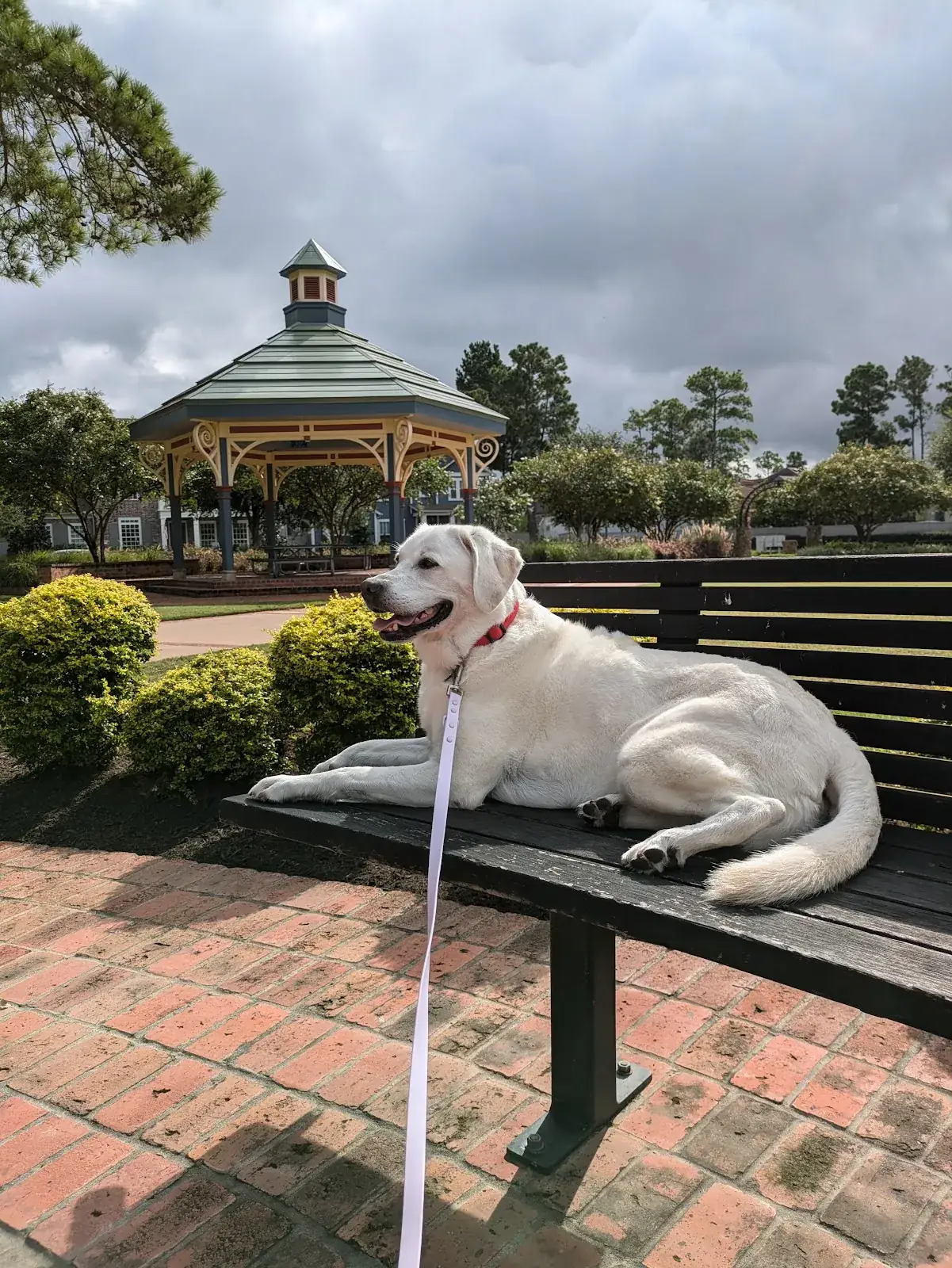
Our trainers use the same balanced approach with a senior that they use with a young dog: rewards for the behavior you want, fair and consistent boundaries for the behavior you do not, and the right tool for that dog. What softens is the physical side. Fewer repetitions per session, more rest between them, a place bed with padding, and no jumping, no long heeling on hard sidewalks and no lake work unless the vet is fine with it.
For an older dog with a specific problem, private lessons are usually the right format. A session runs $160 at our training home in Cypress or $220 in your house, and an in-home lesson lets the trainer see the couch, the door and the window where the barking happens. For an older dog with good manners who has simply gotten rusty, the one-week Silver program at $1,500 is a refresher that resets the leash and the doors without a long stay.
- Shorter sessions, more rest
- Padded place bed, stands or downs instead of repeated sits
- Grass and shade over concrete
- Private lessons or the one-week Silver for most seniors
Where age helps
Older dogs give you calm to work with.
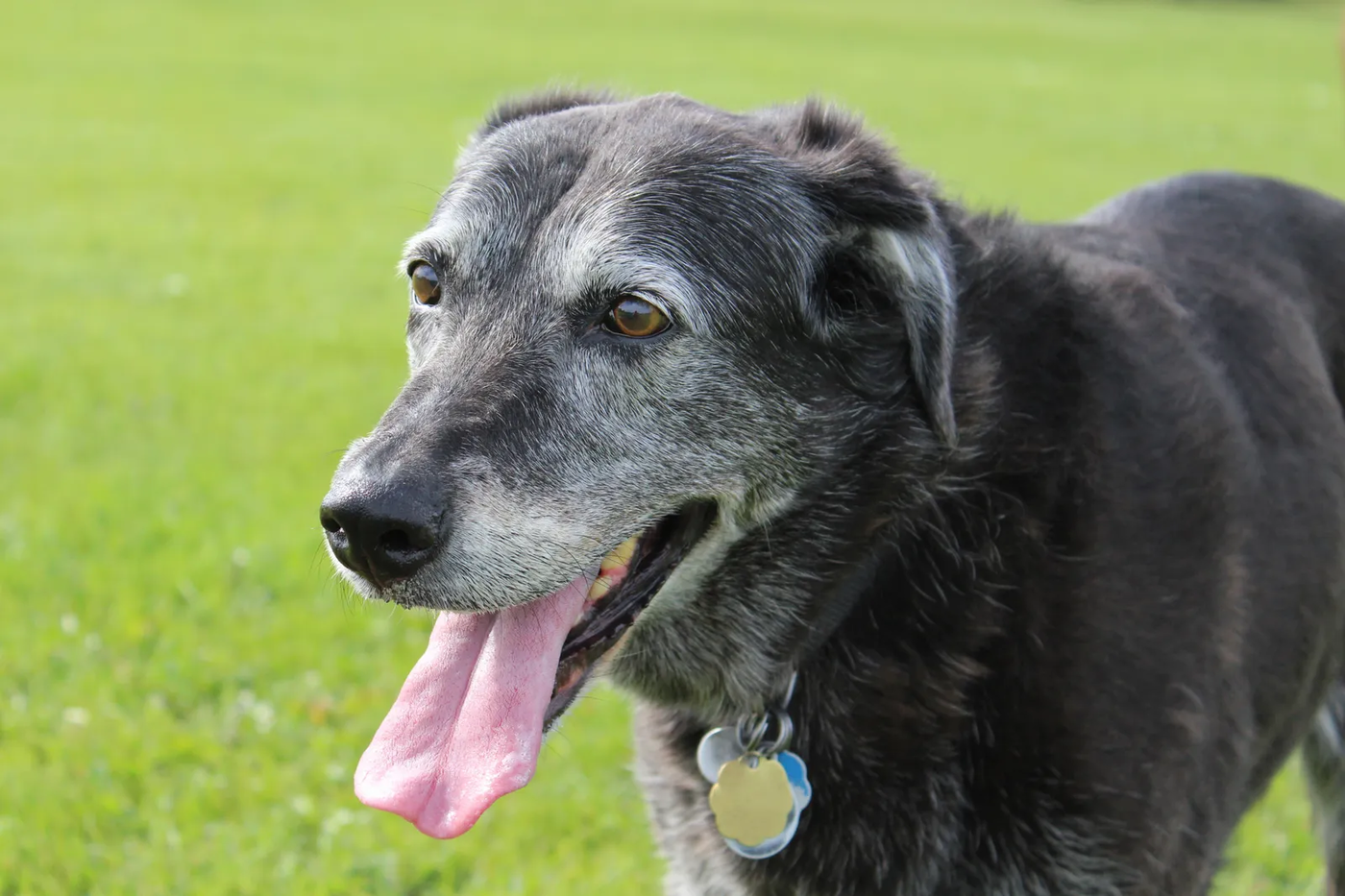
Adolescent dogs are the hard cases: big bodies, no impulse control, and a brain that resets every time a squirrel moves. A 9-year-old does not have that problem. He can hold a down-stay on a patio in Memorial while the neighbors' kids ride past, learn a solid place in a few days and stop barking at the window once someone finally shows him what to do instead. Many older dogs are simply waiting for a clear set of rules.
The families who see the biggest change are often the ones who adopted a senior from a shelter or through Harris County Pets. That dog arrives with habits from a life you know nothing about, and three weeks of clear, kind structure gives him the first predictable routine he has had. From The Woodlands or Spring, Cypress is 35 to 45 minutes; from The Heights, about 30 to 45. Many senior owners simply book in-home lessons and skip the drive.
The programs
Programs that suit older dogs.
Most seniors do best with private lessons or a short refresher stay. Our team recommends the format on the free phone consultation.


Asked and answered
Questions people ask about this.
Can a 10-year-old dog still learn to walk on a loose leash?
Yes. Loose leash walking is a rule about where the dog's shoulder is, and a healthy 10-year-old can learn it in the same few weeks a young dog can. The one adjustment is the surface and the hour: in Houston summer, keep the lessons on grass and in the cool morning so joints and pads stay comfortable.
Is it worth paying for training on a senior dog?
If the behavior is costing you daily, yes. A dog who barks at every passing truck, bolts through the front door or drags you to the mailbox does not get better at 11 on his own. Most seniors need a handful of private lessons rather than a long program, so the cost is usually the lowest of any age group.
My old dog seems stubborn. Is that just his age?
Often it is discomfort. Sore hips make a sit unpleasant, a bad tooth makes a treat unpleasant, and fading hearing makes your cue disappear. Have your vet check him before you assume attitude. Once pain is ruled out or managed, our trainers can adjust positions and rewards so the dog can say yes.
Can an older dog do board and train?
Yes, if the vet is happy with his health and he tolerates being away from home. The training home is a quiet house, not a kennel, and older dogs often settle in well. Our team will usually recommend a shorter stay such as the one-week Silver or two-week Gold, with the pace and rest adjusted for the dog.
Does a deaf or partly blind dog need a different method?
The principles are identical; only the signals change. A deaf dog learns hand signals and a vibration cue on a collar. A dog losing his sight learns verbal cues and a consistent house layout. Our trainers have worked with both and build the plan around what the dog can still perceive.
How long does it take to change a habit that is years old?
Expect two to four weeks of real consistency before the new behavior is the default, and a few months before the old one is truly gone. The dog learns quickly. The time goes into every person in the house enforcing the same rule at the same door every single time.
Keep reading
Free consultation · 10% off this fall
Tell our team about your older dog.
A free phone consultation with our team covers age, health and the one or two habits you want gone. They will recommend lessons or a stay, whichever fits.