
Puppy biting
Puppy biting training in Houston: nipping, mouthing and the hands-off house
Every family with a new Lab or doodle in Houston calls about the teeth around week two. The puppy is not aggressive, and the fix is not a squeeze on the muzzle; it is a house where mouths on skin end the game every single time.
Last reviewed September 29, 2026 · by the Best Dog University Team
What it is
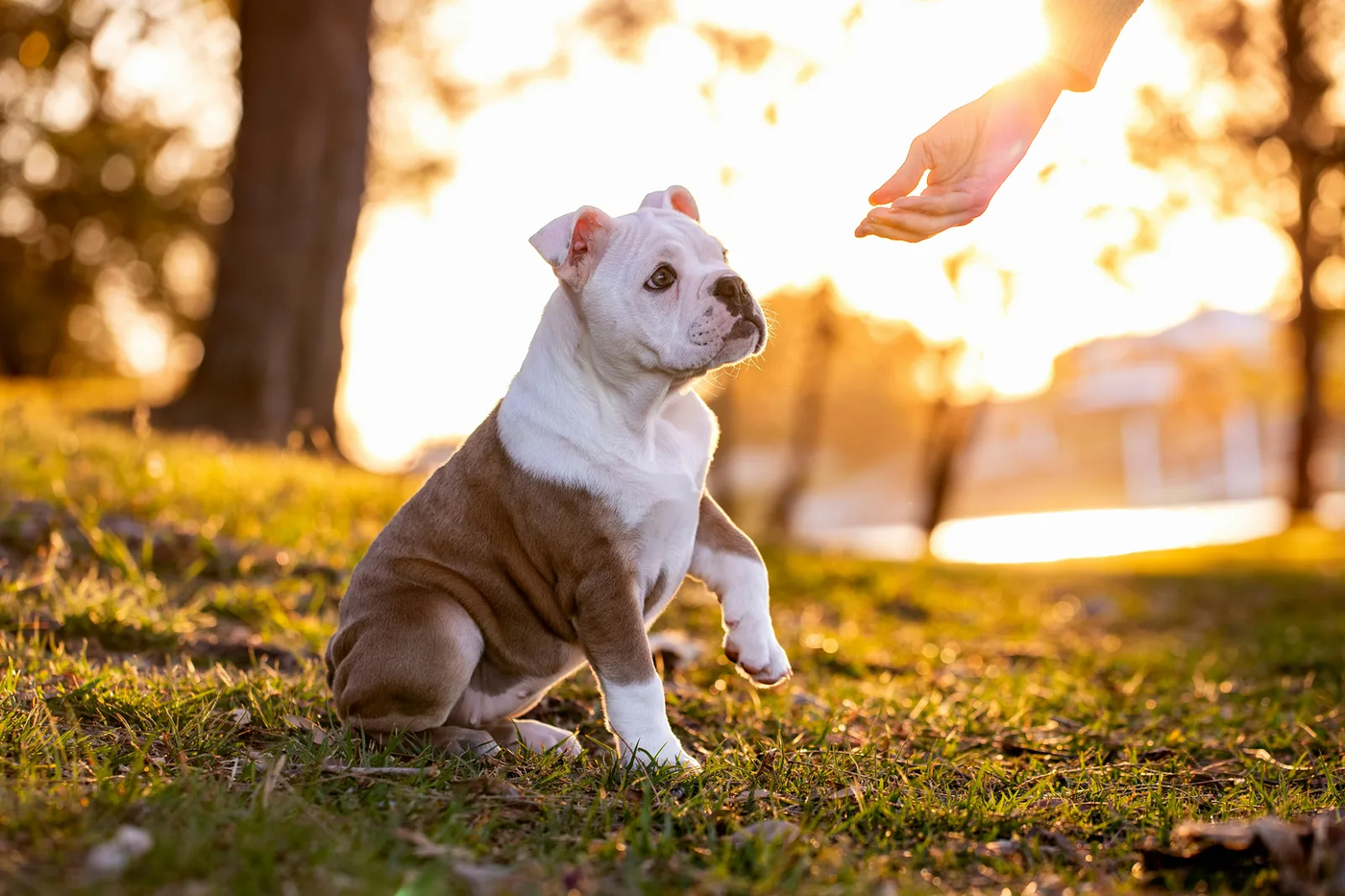
Mouthing is how a puppy plays, and it stops being cute at ten weeks.
A puppy bites because it explores the world with its mouth, plays with its littermates by grabbing, and from about twelve weeks is cutting adult teeth into sore gums. It grabs sleeves, ankles, hair and hands, harder when it is tired or overstimulated, and hardest in the last hour before bed. Puppies from big litters usually arrive with softer mouths, because their siblings taught them what too hard feels like; a puppy taken home early often has no idea.
What it is not is aggression. A puppy mouthing a hand is loose, wiggly and coming back for more. A puppy that stiffens, goes silent and bites over a bowl or a chew is guarding, which is a different page and a different plan. The line to watch is the one between play that got too rough and a puppy that means it, and our trainers ask about that on the first call.
- Grabbing sleeves, ankles and hair during play
- Harder when tired, worst before bed
- Loose and wiggly, coming back for more
- A stiff, silent bite over food is guarding, not mouthing
Why it happens here
Summer break, cool tile and a puppy that never gets tired enough.
Houston puppies arrive in spring and early summer, right as school lets out, and a house full of children running and squealing is the best biting game a puppy has ever seen. The heat then keeps everyone inside from May through September: the pavement fails the seven-second hand test by mid-morning, the puppy's walks shrink to dawn and dusk, and a puppy with nowhere to put its energy puts it into teeth.
Add the wrestling. Dads and teenagers rough-house with the puppy on the living room floor, the puppy learns that hands are toys, and then the same hands are surprised when the puppy bites the toddler. Wide-open floor plans in Bridgeland and Cinco Ranch do not help, because the puppy has the run of the house and nobody is holding the leash when the zoomies start.
- Kids home all summer, squealing and running
- Walks shrink to dawn and dusk in the heat
- Rough-housing that teaches hands are toys
- Free run of an open-plan house with no leash on
How we fix it
Teeth on skin end the game, every time, and the puppy gets a better job.
The plan has three parts. Structure first: the puppy is on a leash, in a crate or on a place bed whenever it is not being actively supervised, it naps on a schedule, and it works for its meals. A rested puppy on a leash cannot chase ankles. Then the rule: any tooth on skin means the person goes still and the fun ends, calmly, for thirty seconds, and a chew appears the moment the puppy is soft. No yelping, no muzzle grabs, no shoving, which is just more play.
Then outlets and handover. The puppy learns tug with a drop, fetch in the hallway, and a place command that gives it an off switch, and the family learns the same handling in every session so the rules hold in the kitchen at 9pm. In the Puppy Development Bundle the four sessions run over a few weeks, and each one adds a piece while the last one settles.
Leash, crate or place whenever the puppy is not being watched
Naps on a schedule, meals earned
Tooth on skin: go still, end the game, calmly
A chew or a tug the moment the mouth is soft
Tug with a drop and fetch as the daily outlets
Place as the off switch before the evening zoomies
The whole family handles the puppy the same way
Which program
The Puppy Development Bundle for the young ones, lessons or Gold for a puppy that kept it up.
A puppy under four months fits the Puppy Development Bundle: four private sessions of 45 to 60 minutes, $550 at our Cypress training home or $750 in your home, covering biting and jumping prevention along with sit, place, stay, recall, crate and potty guidance. That is the honest starting point for most families, because the biting is one of five things a puppy this age needs to learn.
A puppy past four months that still draws blood fits private lessons, $160 per session in Cypress or $220 in your home, where our trainer sets up the leash-and-place structure in the room where the biting happens. An adolescent of six months or more that mouths, jumps and has no off switch fits the two-week Gold Board & Train at $2,500: place, impulse control and the leash, then a go-home session, one more lesson and lifelong support.
| Puppy | Program | Price |
|---|---|---|
| Under 4 months, normal mouthing | Puppy Development Bundle, 4 sessions | $550 Cypress, $750 in-home |
| 4 to 6 months, still biting hard | Private lessons | $160 Cypress, $220 in-home |
| 6 months and up, mouthing plus jumping | Gold Board & Train, 2 weeks | $2,500 |
Houston specifics
The 290 store aisles, the pool deck and a July puppy's schedule.
A Houston puppy's socialization happens indoors for half the year, and the pet and hardware stores along 290 and Fry Road are where our trainers take a bundle puppy to practice calm around strangers without teeth. Pool season is the biting season: wet kids, towels and bare feet are irresistible, so the puppy is leashed or on place while the pool is open. A July puppy needs its exercise before 8am, so a fetch session in the hallway at noon is part of the plan.
Families in Katy and Tomball are about 25 to 35 minutes from Cypress outside rush hour, close enough for the bundle sessions at our training home. Inside the loop the in-home version usually makes more sense at $750, with our trainer working in the kitchen and the hallway where the biting actually happens, and with the children present so they learn the rules too.
The programs
Programs for a puppy that bites.
The Puppy Development Bundle for puppies under four months, private lessons for the older puppy, Gold for the adolescent with no off switch.

Asked and answered
Questions people ask about this.
At what age do puppies stop biting?
Most puppies soften their mouths between four and six months, once the adult teeth are in and the household has been consistent; a puppy still biting hard at six months has usually been taught that it works. The age matters less than the rule: teeth on skin end the fun, every time.
Should I yelp like a puppy when my puppy bites?
It works on some soft puppies and winds up most Labs and doodles, who hear it as a squeaky toy. Going still and quiet, then ending the game for half a minute, is more reliable. Our trainers show the family the version that fits the puppy in the first session.
Is my puppy aggressive if it growls while it bites?
A play growl during tug or a wrestle is normal noise. A puppy that goes stiff and silent, bites over a bowl or a bone, or bites when picked up or cornered is showing something different, and that puppy needs a phone call rather than a page.
Can you board and train a puppy for biting?
A puppy under four months does better with the bundle at home, because biting is a household rule and the household has to learn it. An adolescent of six months or more with mouthing, jumping and no off switch fits the two-week Gold program at $2,500, with the handover teaching you the rules.
My kids are the ones getting bitten. What do we do this week?
Leash the puppy indoors, put it on a place bed or in the crate when the kids are running, and make the kids the boring ones: no squealing, no running, no wrestling. Then book the bundle; four sessions with the children present is the fastest fix our trainers know.
Keep reading
Free consultation · 10% off this fall
Tell our team how old the puppy is and how hard it bites.
The free phone consultation is a short call about the puppy's age, the biting and who is getting bitten, and whether the bundle, lessons or Gold is the honest fit. A $250 reservation deposit holds your sessions or the board and train dates.