
Pomeranian training · Houston
Pomeranian training in Houston: barking, bossiness and calm on cue
A Pomeranian is a big dog's brain and a big dog's opinions in a five-pound frame, and most of the calls we get come from families who have been laughing at the bossiness for a year and have stopped finding it funny. This page covers the barking, the house rules and what the fix costs.
Last reviewed September 29, 2026 · by the Best Dog University Team
The breed
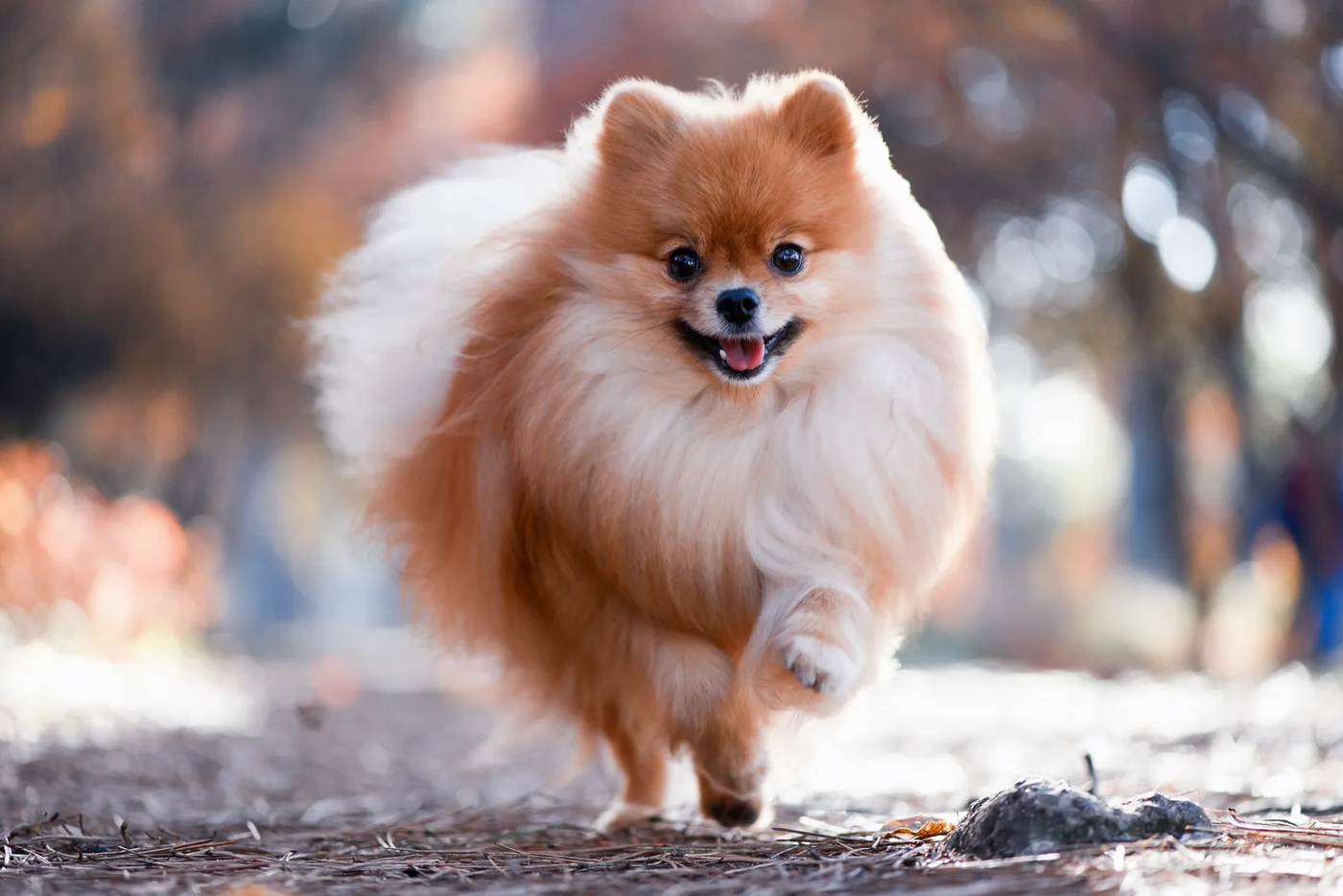
What a Pomeranian is like to train: a bright, watchful spitz that thinks it is in charge.
The Pomeranian descends from the larger spitz dogs of northern Europe and was bred down to a toy companion, keeping the thick double coat, the curled tail and the alert, fox-like expression. The AKC calls the breed inquisitive, bold and lively. It is smart and it learns tricks quickly, which is why so many Poms know how to spin and so few know how to be quiet. It was built to notice things, and in a Houston subdivision there is something to notice every minute.
Between eight and eighteen months the noticing becomes a job. The Pom barks at the doorbell, the neighbor's car, the ceiling fan and the dog on the television, and it barks until someone picks it up. It guards a lap or a couch cushion with a growl. It nips at a hand that reaches for its collar or tries to brush the coat. It refuses to settle, pacing and yapping through dinner. The household adjusts around it, which is exactly how a Pomeranian ends up in charge.
- A toy spitz with a double coat and a working alarm
- Barking at every sound until it gets picked up
- Growling over laps and cushions
- Nipping at the collar and the brush
The stay
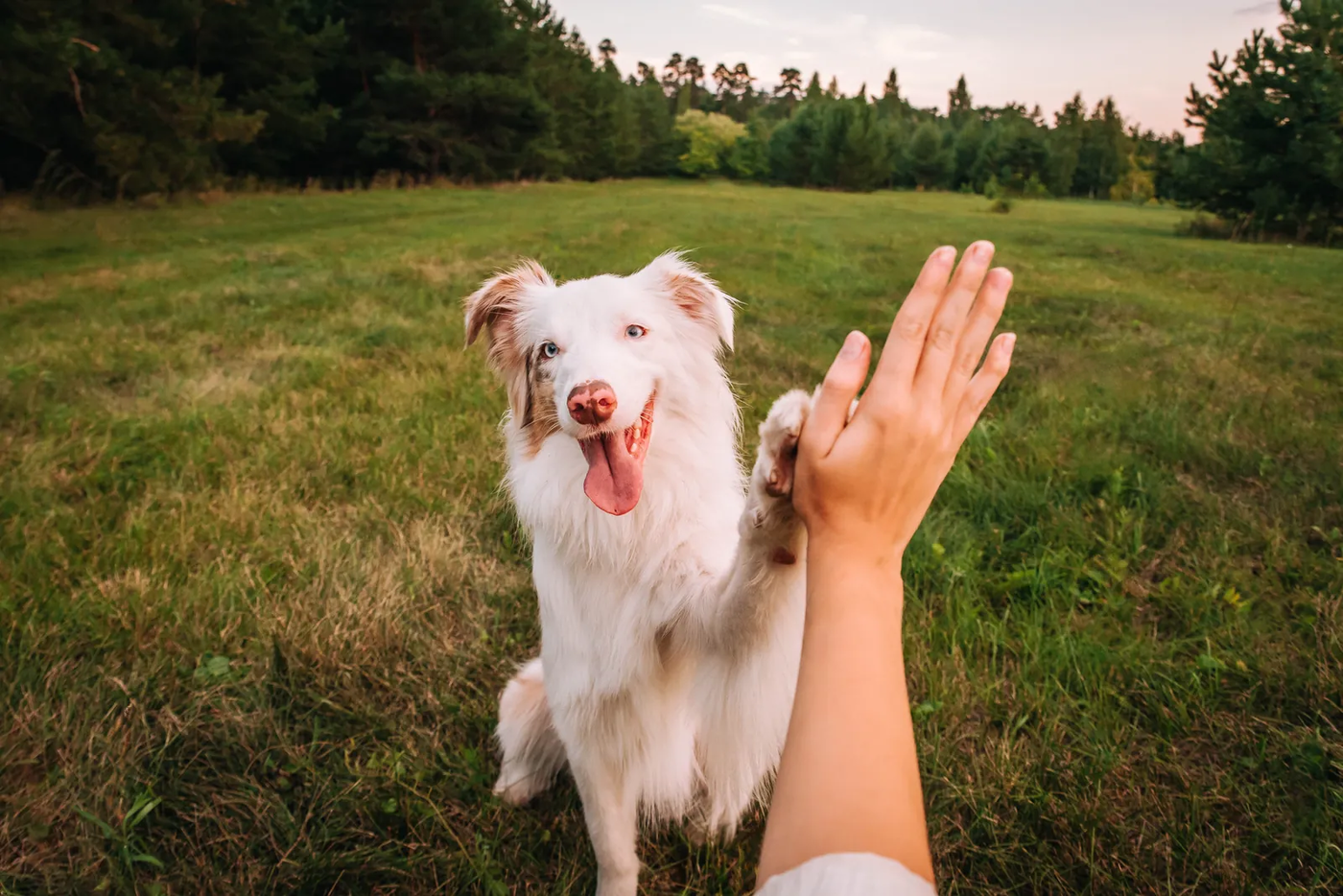
How a Pomeranian's stay works: calm is taught first and rewarded most.
In our Cypress home a Pomeranian learns that quiet is what gets rewarded. The first days are place and crate with duration, earned meals and door waits, so the dog experiences somebody else making the decisions and discovers it can relax. A quiet cue is taught before the barking starts, at the window and at the doorbell, and paid generously. Nobody picks the dog up to stop a bark, because that is how the bark got built.
Handling is worked in seconds with the reward first, until a hand at the collar or a brush in the coat predicts something good. The structured walk teaches the Pom to pass other dogs without a performance. You see it in the photo and video updates three times a week, and the go-home session shows every adult how to use the quiet cue the same way so it holds at home.
Place and crate with duration, earned meals, door waits: structure before anything else.
A quiet cue at the window and doorbell, taught early and paid every time.
No pick-ups to end a bark; the dog learns that place is where barking ends.
Collar, brush and lift handled a few seconds at a time, reward first.
A structured walk on Cypress sidewalks and then the busier paths at Bill Archer Bark Park, passing dogs calmly.
The go-home session, with the quiet cue and the lap rule practiced by everyone in the family.
Houston
Houston specifics for a Pomeranian: a sled-dog coat in a subtropical summer.
A Pomeranian wears the coat of a dog built for northern winters, and Houston is not that. From May through September our outdoor sessions with the breed happen at dawn and after sunset, the pavement is tested with the back of a hand and walks are short. We follow the AVMA's guidance on thick-coated dogs and heat and stop before heavy panting. A groom before the stay helps, though a Pom's double coat should be trimmed, not shaved. Midday is store aisles and place work in the air conditioning.
Poms live everywhere from Galleria high-rises to Fairfield cul-de-sacs, and the barking has a different trigger in each: the hallway, the elevator, the delivery truck, the neighbor's Lab through the fence. A five-pound dog in a yard on the edge of Cypress or Tomball is small enough for a hawk to consider, so yard time is supervised and fire ant mounds are checked first. July 4 and New Year's Eve fireworks set off a lot of Poms, and hurricane season brings long indoor days; the crate is built as a calm place for both.
- A double coat: dawn and dusk from May through September, trimmed not shaved
- Hallway, elevator and fence-line triggers mapped to your home
- Supervised yard time at the suburban edge
- A calm crate before fireworks and storm season
Program and price
Gold at $2,500 for most Poms, Platinum at $3,750 for the biter, lessons for a single problem.
The two-week Gold Board & Train is $2,500 and it is where most Pomeranians land: sit/stay, place/stay, loose leash walking, door boundaries, the quiet cue and impulse control, with a go-home session, one additional lesson and lifelong support. A Pom that has bitten a person, guards a lap with teeth or lunges at other dogs needs the three-week Platinum at $3,750, which adds behavior modification, field trips and unlimited private lessons.
Private lessons at $160 in Cypress or $220 in your home suit a Pom with one problem, usually the doorbell. A Pomeranian puppy under four months starts in the Puppy Development Bundle, $550 in Cypress or $750 in-home, which is the cheapest time to teach handling and quiet. Door-to-door transport is $250, and it includes the first lesson at your house.
| Program | Length | Price | The Pomeranian it fits |
|---|---|---|---|
| Private lesson | 1 session | $160 / $220 | One problem, usually the doorbell |
| Gold Board & Train | 2 weeks | $2,500 | Barking, bossiness, no settle, no place |
| Platinum Board & Train | 3 weeks | $3,750 | Biting, lap guarding with teeth, lunging at dogs |
The programs
The programs a Pomeranian goes home from.
Gold for the barker, Platinum for the biter, a lesson for the doorbell and a bundle for the puppy.


Asked and answered
Questions people ask about this.
How much does Pomeranian training cost in Houston?
At Best Dog University most Pomeranians take the two-week Gold Board & Train at $2,500. A Pom that bites or lunges at dogs takes the three-week Platinum at $3,750. Private lessons are $160 in Cypress or $220 in your home, and the Puppy Development Bundle for a puppy under four months is $550 or $750.
Can you stop a Pomeranian from barking?
You can teach it a quiet cue that works and a place bed where barking ends, which is what most families mean. A Pom will still announce the doorbell; the goal is two barks and a settle rather than a five-minute alarm. The cue is built in the stay and handed to your family at the go-home session.
Is a Pomeranian too small for a board and train?
No. The training home is a house, not a kennel, and a Pom lives in it the way it would live in yours, with a crate, a place bed and a routine. It trains on leash and on the floor rather than in someone's arms. Dogs are managed separately, so a five-pound dog is never loose with a big one.
Why does my Pom nip when I reach for its collar?
Because reaching has come to predict something it dislikes, and a nip made the hand leave. Our trainers rebuild it in seconds at a time, reward first, until the collar and the brush predict good things. A Pom that has actually bitten needs the Platinum stay; most nippers are Gold cases, and the fix holds if the family keeps the routine.
How do you handle a Pomeranian's coat in the Houston heat?
Outdoor sessions run early and late from May through September, walks are short and the pavement is tested first. A trim before the stay helps, but a Pom's double coat should not be shaved, because it insulates against heat as well as cold. Most summer work happens indoors, in stores and at the training home, where the barking work is anyway.
Keep reading
Free consultation · 10% off this fall
Tell our team about your Pom.
Start with the free consultation: describe the barking, the growl on the couch or the nip at the collar, get a program recommendation from our trainers, and hold the spot with a $250 reservation deposit.