
Breed training guides
How to train a pomeranian: barking, bossiness and calm on cue
Pomeranians look like toys and think like watchdogs. Our trainers find that most bossy Poms are overexcited dogs with no off switch, and that a real calm cue changes the whole household within weeks.
Last reviewed September 29, 2026 · by the Best Dog University Team
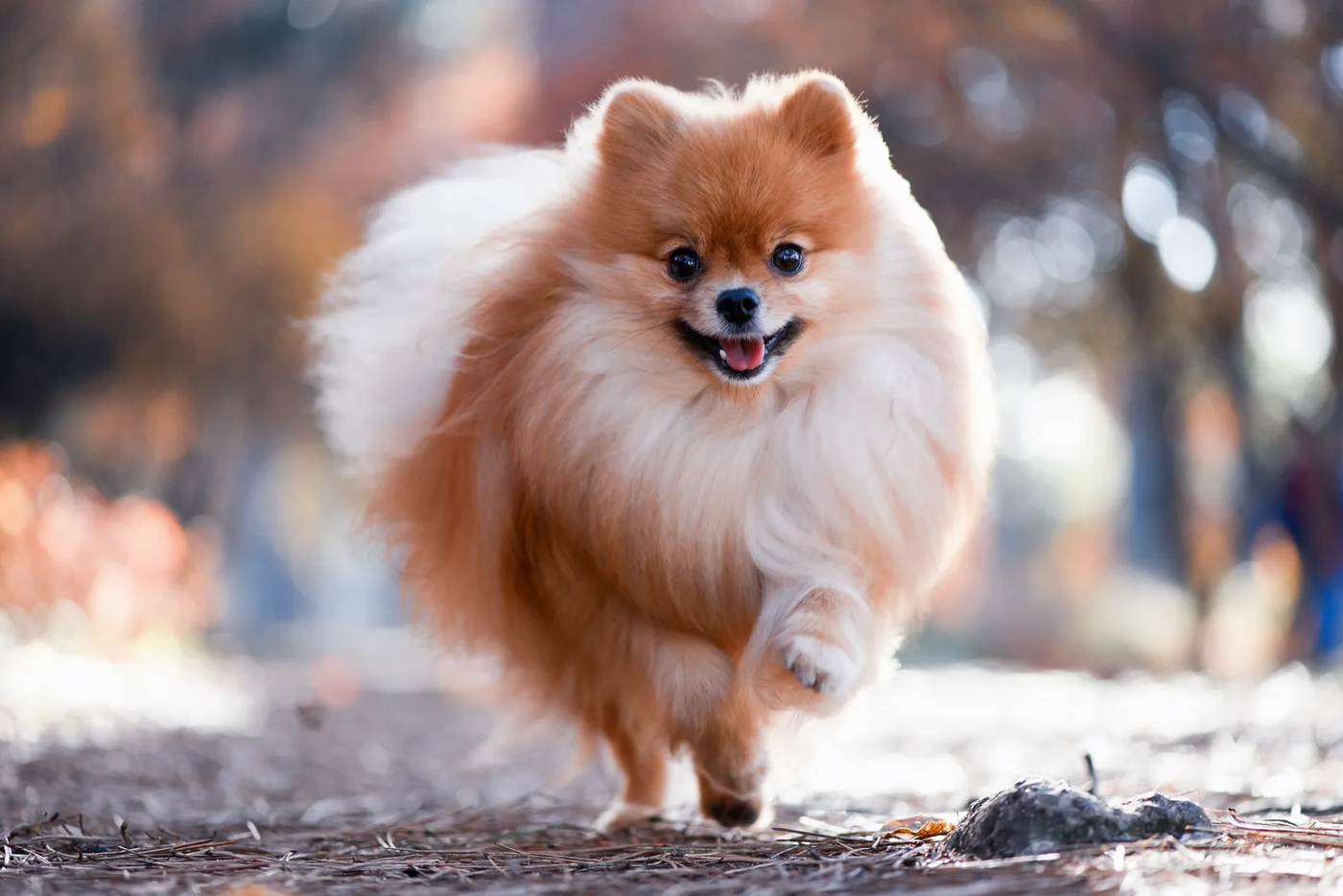
The spitz behind the fluff
A northern spitz shrunk to toy size, with the watchdog kept intact.
The pomeranian descends from larger spitz dogs of northern Europe and was bred down in size in the Pomerania region along the Baltic, then popularized in Britain in the 1800s. It sits in the toy group with a thick double coat, a plumed tail over the back and a fox-like face. Temperament tends toward alert, curious, confident and vocal. It notices everything and has an opinion about most of it.
Those traits make a great little watchdog and a hard dog to live with if nobody sets limits. A Pom that learns barking makes things happen will bark at the doorbell, the television and the refrigerator. One that learns growling keeps people off the couch will guard it. None of this is about size. The fix is the same structure any dog needs: clear rules, paid calm and no rewards for demanding behavior.
- A watchdog alertness that needs an off switch
- A bold, bossy streak with people and dogs
- A thick double coat that shapes summer plans
- A quick mind that learns demands as fast as manners
What we see
The bark, the boss and the spin, with a method for each.
The bark is first. Separate alert barking from demand barking. For alerts, let the dog bark once or twice, say quiet, and pay the silence, then send it to place. For demands, barking at you for food, attention or the couch, turn away and wait for silence before giving anything. A demand that works once will be repeated a hundred times, so everyone in the house needs to follow the same rule.
Bossiness is second. A Pom that guards the couch, snaps when moved or bosses a bigger dog needs clear rules: furniture by invitation only, a sit before anything it wants, and supervised, short play with other dogs. The spin is third. Excited Poms spin, yap and bounce, and the answer is a calm cue taught on a place bed, where settled behavior earns food and attention and frantic behavior earns nothing.
- Pay the silence after an alert bark
- Wait out demand barking every time
- Furniture by invitation only
- A place bed where calm earns the attention
The first year
Calm on cue, built in five stages.
The most useful thing a Pom puppy can learn is that calm pays. Reward the puppy for lying quietly at your feet, in its crate and on its bed, several times a day, without asking for it. Add a place cue by four months and build duration slowly. House training takes a strict schedule and a crate, since toy breeds need more frequent trips and accidents are easy to miss on a busy floor.
From six months the Pom's opinions grow. It may start barking at walkers, bossing a visiting dog or refusing to leave the couch. Hold the rules steady and keep the dog on a leash or drag line indoors so you can guide it off furniture without reaching in. By the end of the first year, a well-trained Pom barks once at the door, goes to place and waits for permission.
Eight to twelve weeks: crate, leash potty trips, paying calm at your feet, gentle brushing
Three to four months: sit, down, a place bed, a quiet cue, furniture by invitation
Four to six months: place with duration, loose leash walks, store trips, calm greetings
Six to nine months: opinions grow, a drag line indoors, unchanged rules
Nine to twelve months: one bark then place at the door, calm around visiting dogs
Houston life
A double coat in a hot city, thin walls and a thunder season.
A pomeranian's dense double coat insulates it, and a Houston summer tests that. Train outdoors at dawn and after dark from May to September, keep sessions brief, give shade and water, and check the pavement with your hand. Ask your groomer before shaving a double coat, since a close shave can change how the coat protects the skin. Afternoon training belongs in air-conditioned store aisles and hallways.
Houston's summer storms and July 4 and New Year fireworks trigger a lot of Pom barking. A covered crate in an interior room, white noise and a chew help on those nights. In townhomes and apartments with shared walls, and in HOA neighborhoods like Cinco Ranch or Bridgeland, a barking Pom is the kind of dog neighbors write notes about, so the quiet cue and place are worth practicing daily.
Getting help
When the bark or the bossiness rules the house.
Call when barking fills the day, when the dog snaps at family members who move it, or when it picks fights with bigger dogs. Private lessons at $160 in Cypress or $220 in your home help most families set up the calm cue and the house rules. A Pom puppy younger than four months is better served by the Puppy Development Bundle: four private sessions, $550 in Cypress or $750 at home.
Gold, two weeks at $2,500, builds place with duration, door boundaries, a loose leash and impulse control, followed by a go-home session and an extra lesson. A Pom that snaps or bites, or reacts hard to other dogs, fits Platinum at $3,750 with behavior modification and unlimited private lessons afterward. The pomeranian training page describes each option, and the free consultation call helps you choose.
The programs
Programs that suit a pomeranian.
Private lessons for the calm cue, Gold for full manners, Platinum for a Pom that snaps or reacts to dogs.


Asked and answered
Questions people ask about this.
How do I stop my pomeranian from barking at everything?
Split the barking in two. For alerts, allow a bark or two, say quiet and pay the silence, then send the dog to place. For demands, wait for silence before giving anything. Close blinds where the dog watches the street. Consistency from every family member matters more than any tool.
Why is my pomeranian so bossy?
Because bossiness has worked. A Pom that growls and keeps the couch, or barks and gets fed, learns to repeat it. Set clear rules: furniture by invitation, a sit before anything it wants, and nothing for demands. Most Poms relax once the rules are predictable and the calm cue pays.
Can you teach a pomeranian to be calm?
Yes. Calm is a skill. Pay quiet moments without asking for them, teach a place bed with slowly growing duration, and give nothing for spinning or yapping. Within a few weeks most Poms start choosing calm because it is the behavior that gets attention, food and freedom.
Should I shave my pomeranian for the Houston summer?
Talk to your groomer and vet first. A double coat helps protect against heat and sun, and a close shave can change how it grows back. A tidy trim, walks at dawn and after dark, shade and water, and indoor afternoon sessions usually do more for a Pom's comfort than shaving.
Keep reading
Free consultation · 10% off this fall
Teach calm as a skill.
Tell our team what sets your pomeranian off and who it bosses. The free phone consultation is a direct call with no obligation.